Downloaded 43 times



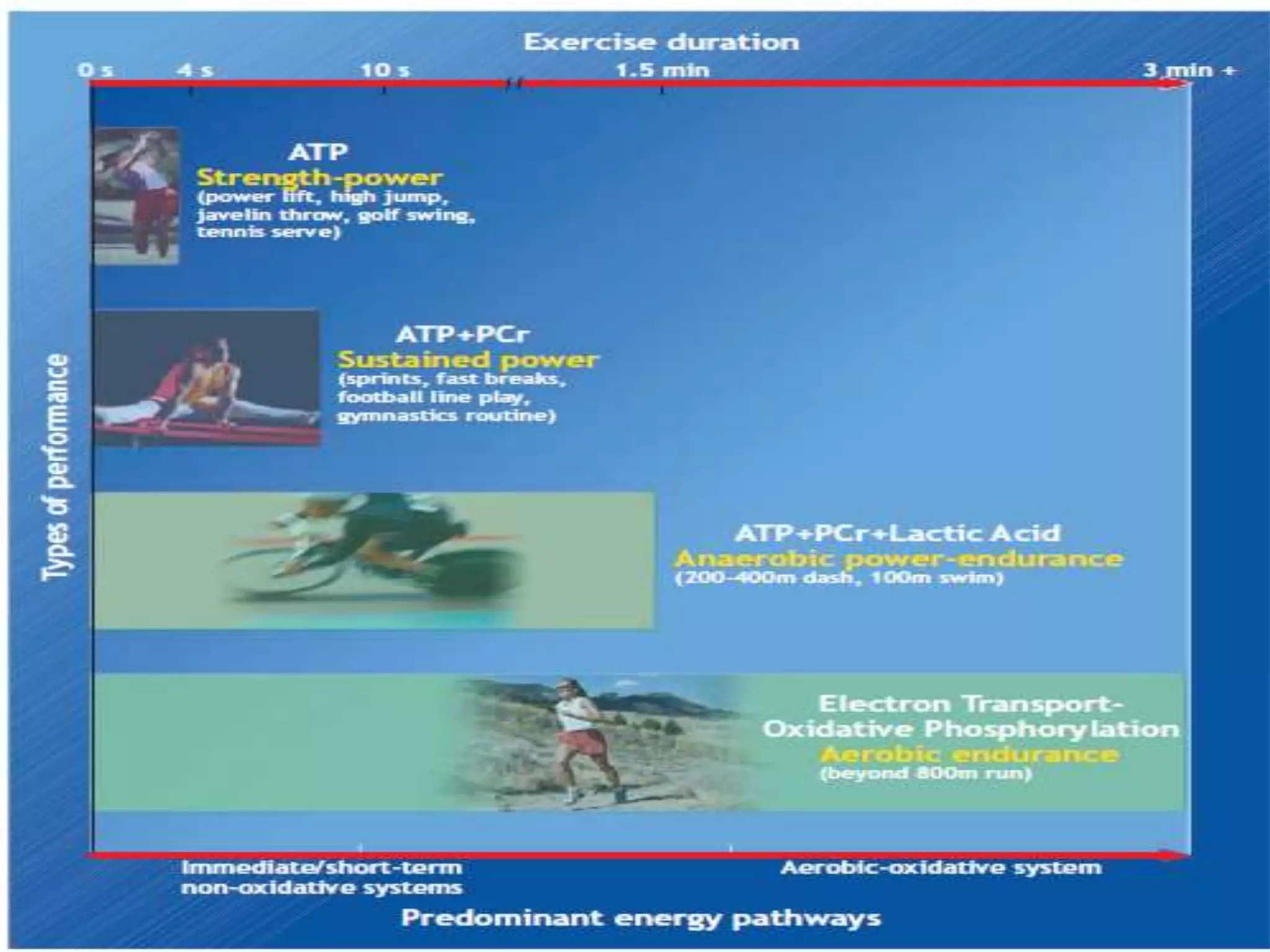













This document discusses training the aerobic and anaerobic energy systems. It explains that aerobic respiration uses oxygen to produce energy while anaerobic respiration produces lactic acid without oxygen. Aerobic exercise can be sustained for longer periods while anaerobic exercise involves short bursts of maximum effort. The document also outlines adaptations to aerobic and anaerobic training including increased enzyme levels and muscle fiber changes as well as cardiovascular adaptations like increased stroke volume and decreased blood pressure. It provides general guidelines for formulating aerobic and anaerobic training programs.


