Physics 2 WAVES ppt. by Robin D. Seamon (Heat & Temperature Energy Waves)
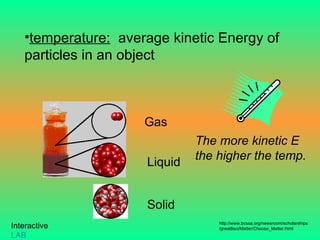
temperature:   average kinetic Energy of particles in an object Solid Liquid Gas http://www.bcssa.org/newsroom/scholarships/great8sci/Matter/Choose_Matter.html The more kinetic E the higher the temp. Interactive  LAB
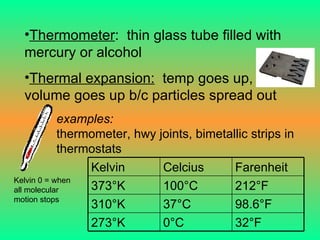
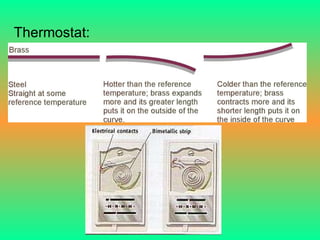
Thermometer :  thin glass tube filled with mercury or alcohol Thermal expansion:   temp goes up, volume goes up b/c particles spread out examples:   thermometer, hwy joints, bimetallic strips in  thermostats Kelvin 0 = when all molecular motion stops 32 °F 0 °C 273 °K 98.6 °F 37 °C 310 °K 212 °F 100 °C 373 °K Farenheit Celcius Kelvin
Thermostat:
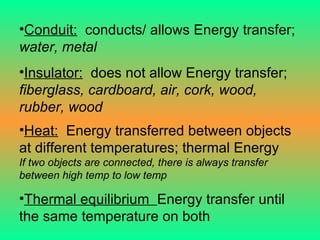
Conduit:   conducts/ allows Energy transfer;  water, metal Insulator:   does not allow Energy transfer;  fiberglass, cardboard, air, cork, wood, rubber, wood Heat:   Energy transferred between objects at different temperatures; thermal Energy If two objects are connected, there is always transfer between high temp to low temp Thermal equilibrium  Energy transfer until the same temperature on both
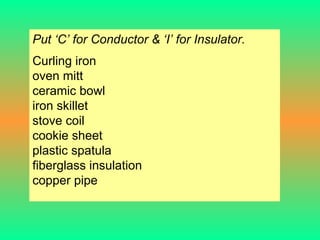
Put ‘C’ for Conductor & ‘I’ for Insulator. Curling iron oven mitt ceramic bowl iron skillet stove coil cookie sheet plastic spatula fiberglass insulation copper pipe
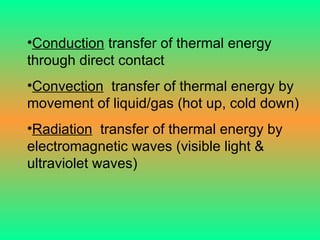
Conduction  transfer of thermal energy through direct contact  Convection   transfer of thermal energy by movement of liquid/gas (hot up, cold down) Radiation   transfer of thermal energy by electromagnetic waves (visible light & ultraviolet waves)
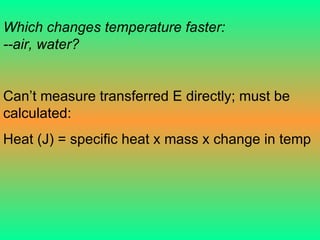
Which changes temperature faster:  --air, water? Can’t measure transferred E directly; must be calculated: Heat (J) = specific heat x mass x change in temp
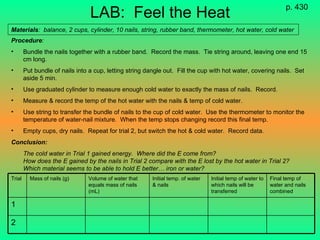
LAB:  Feel the Heat Procedure : Bundle the nails together with a rubber band.  Record the mass.  Tie string around, leaving one end 15 cm long. Put bundle of nails into a cup, letting string dangle out.  Fill the cup with hot water, covering nails.  Set aside 5 min. Use graduated cylinder to measure enough cold water to exactly the mass of nails.  Record. Measure & record the temp of the hot water with the nails & temp of cold water. Use string to transfer the bundle of nails to the cup of cold water.  Use the thermometer to monitor the temperature of water-nail mixture.  When the temp stops changing record this final temp. Empty cups, dry nails.  Repeat for trial 2, but switch the hot & cold water.  Record data. Conclusion: The cold water in Trial 1 gained energy.  Where did the E come from? How does the E gained by the nails in Trial 2 compare with the E lost by the hot water in Trial 2?  Which material seems to be able to hold E better… iron or water? p. 430 Materials :  balance, 2 cups, cylinder, 10 nails, string, rubber band, thermometer, hot water, cold water 2 1 Final temp of water and nails combined Initial temp of water to which nails will be transferred Initial temp. of water & nails  Volume of water that equals mass of nails (mL) Mass of nails (g)  Trial
WAVES SCIENCE SONGS
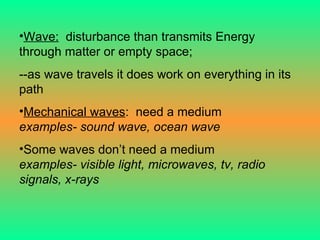
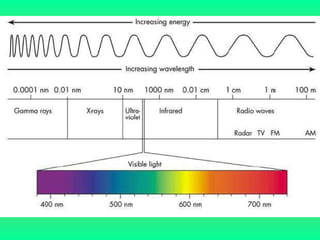
Wave:   disturbance than transmits Energy through matter or empty space; --as wave travels it does work on everything in its path Mechanical waves :  need a medium examples- sound wave, ocean wave Some waves don’t need a medium examples- visible light, microwaves, tv, radio signals, x-rays
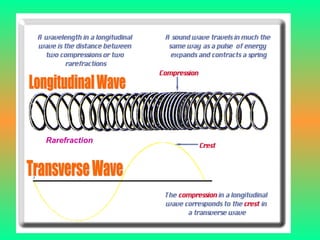
Compression  waves pressed close together  Rarefraction  waves stretched farther apart Example:  sound wave
Rarefraction Transverse Wave Longitudinal Wave
 
 
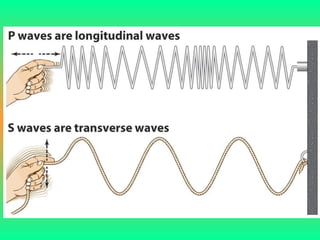
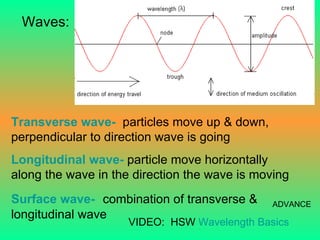
Waves: Transverse wave-    particles move up & down, perpendicular to direction wave is going Longitudinal wave-   particle move horizontally along the wave in the direction the wave is moving Surface wave -    combination of transverse & longitudinal wave VIDEO:  HSW  Wavelength Basics ADVANCE
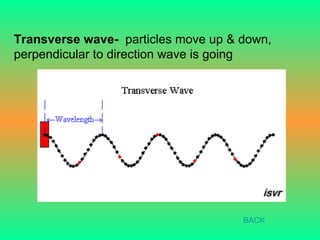
Transverse wave-   particles move up & down, perpendicular to direction wave is going BACK
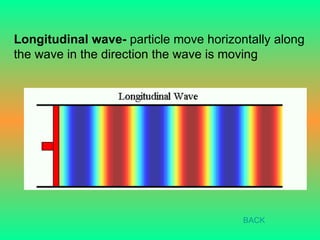
Longitudinal wave-  particle move horizontally along the wave in the direction the wave is moving BACK
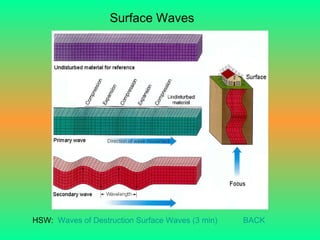
Surface Waves HSW:  Waves of Destruction Surface Waves (3 min) BACK
 
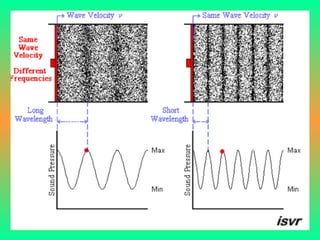
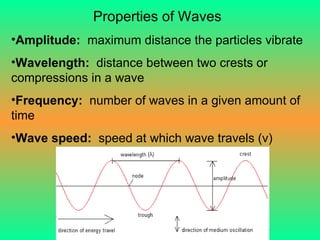
Properties of Waves Amplitude:   maximum distance the particles vibrate Wavelength:  distance between two crests or compressions in a wave Frequency:   number of waves in a given amount of time Wave speed:   speed at which wave travels (v)
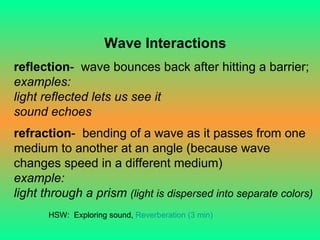
Wave Interactions reflection -  wave bounces back after hitting a barrier; examples:  light reflected lets us see it sound echoes refraction -  bending of a wave as it passes from one medium to another at an angle (because wave changes speed in a different medium) example: light through a prism   (light is dispersed into separate colors) HSW:  Exploring sound,  Reverberation (3 min)
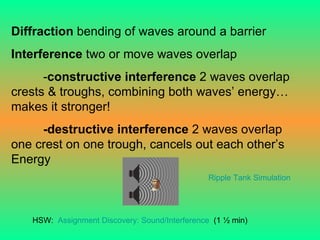
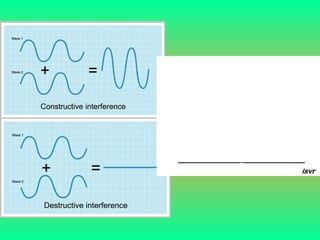
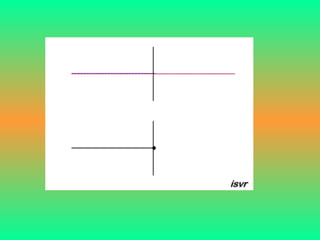
Diffraction  bending of waves around a barrier Interference  two or move waves overlap - constructive interference  2 waves overlap crests & troughs, combining both waves’ energy… makes it stronger! -destructive interference  2 waves overlap one crest on one trough, cancels out each other’s Energy HSW:  Assignment Discovery: Sound/Interference   (1 ½ min) Ripple Tank Simulation
 
 
Standing waves:   pattern looks like wave is standing still Resonance:  two objects naturally vibrate at the same frequency; sound of one causes the other to vibrate VIDEO:  Sound/Resonance-Shattering glass (15 min) United Streaming
 
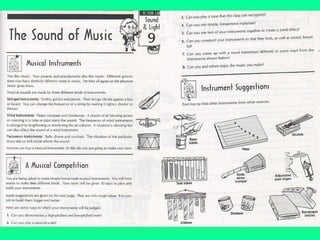
LAB: Musical Instruments
SCIENCE SONGS
HSW:  Exploring Sound (23 min)   not saved HSW:  Exploring Light ( 3 min)  not saved Physical Science: Light ( 20 min) Physical Science:  Sound ( 20 min)

Physics 2 notes: WAVES ONLY- Notes on the difference between longitudinal, transverse, & electromagnetic waves with illustrations, LABS, and video links

  • 1.
    Physics 2 WAVESppt. by Robin D. Seamon (Heat & Temperature Energy Waves)
  • 2.
    temperature: average kinetic Energy of particles in an object Solid Liquid Gas http://www.bcssa.org/newsroom/scholarships/great8sci/Matter/Choose_Matter.html The more kinetic E the higher the temp. Interactive LAB
  • 3.
    Thermometer : thin glass tube filled with mercury or alcohol Thermal expansion: temp goes up, volume goes up b/c particles spread out examples: thermometer, hwy joints, bimetallic strips in thermostats Kelvin 0 = when all molecular motion stops 32 °F 0 °C 273 °K 98.6 °F 37 °C 310 °K 212 °F 100 °C 373 °K Farenheit Celcius Kelvin
  • 4.
  • 5.
    Conduit: conducts/ allows Energy transfer; water, metal Insulator: does not allow Energy transfer; fiberglass, cardboard, air, cork, wood, rubber, wood Heat: Energy transferred between objects at different temperatures; thermal Energy If two objects are connected, there is always transfer between high temp to low temp Thermal equilibrium Energy transfer until the same temperature on both
  • 6.
    Put ‘C’ forConductor & ‘I’ for Insulator. Curling iron oven mitt ceramic bowl iron skillet stove coil cookie sheet plastic spatula fiberglass insulation copper pipe
  • 7.
    Conduction transferof thermal energy through direct contact Convection transfer of thermal energy by movement of liquid/gas (hot up, cold down) Radiation transfer of thermal energy by electromagnetic waves (visible light & ultraviolet waves)
  • 8.
    Which changes temperaturefaster: --air, water? Can’t measure transferred E directly; must be calculated: Heat (J) = specific heat x mass x change in temp
  • 9.
    LAB: Feelthe Heat Procedure : Bundle the nails together with a rubber band. Record the mass. Tie string around, leaving one end 15 cm long. Put bundle of nails into a cup, letting string dangle out. Fill the cup with hot water, covering nails. Set aside 5 min. Use graduated cylinder to measure enough cold water to exactly the mass of nails. Record. Measure & record the temp of the hot water with the nails & temp of cold water. Use string to transfer the bundle of nails to the cup of cold water. Use the thermometer to monitor the temperature of water-nail mixture. When the temp stops changing record this final temp. Empty cups, dry nails. Repeat for trial 2, but switch the hot & cold water. Record data. Conclusion: The cold water in Trial 1 gained energy. Where did the E come from? How does the E gained by the nails in Trial 2 compare with the E lost by the hot water in Trial 2? Which material seems to be able to hold E better… iron or water? p. 430 Materials : balance, 2 cups, cylinder, 10 nails, string, rubber band, thermometer, hot water, cold water 2 1 Final temp of water and nails combined Initial temp of water to which nails will be transferred Initial temp. of water & nails Volume of water that equals mass of nails (mL) Mass of nails (g) Trial
  • 10.
  • 11.
    Wave: disturbance than transmits Energy through matter or empty space; --as wave travels it does work on everything in its path Mechanical waves : need a medium examples- sound wave, ocean wave Some waves don’t need a medium examples- visible light, microwaves, tv, radio signals, x-rays
  • 12.
    Compression wavespressed close together Rarefraction waves stretched farther apart Example: sound wave
  • 13.
  • 14.
  • 15.
  • 16.
    Waves: Transverse wave- particles move up & down, perpendicular to direction wave is going Longitudinal wave- particle move horizontally along the wave in the direction the wave is moving Surface wave - combination of transverse & longitudinal wave VIDEO: HSW Wavelength Basics ADVANCE
  • 17.
    Transverse wave- particles move up & down, perpendicular to direction wave is going BACK
  • 18.
    Longitudinal wave- particle move horizontally along the wave in the direction the wave is moving BACK
  • 19.
    Surface Waves HSW: Waves of Destruction Surface Waves (3 min) BACK
  • 20.
  • 21.
    Properties of WavesAmplitude: maximum distance the particles vibrate Wavelength: distance between two crests or compressions in a wave Frequency: number of waves in a given amount of time Wave speed: speed at which wave travels (v)
  • 22.
    Wave Interactions reflection- wave bounces back after hitting a barrier; examples: light reflected lets us see it sound echoes refraction - bending of a wave as it passes from one medium to another at an angle (because wave changes speed in a different medium) example: light through a prism (light is dispersed into separate colors) HSW: Exploring sound, Reverberation (3 min)
  • 23.
    Diffraction bendingof waves around a barrier Interference two or move waves overlap - constructive interference 2 waves overlap crests & troughs, combining both waves’ energy… makes it stronger! -destructive interference 2 waves overlap one crest on one trough, cancels out each other’s Energy HSW: Assignment Discovery: Sound/Interference (1 ½ min) Ripple Tank Simulation
  • 24.
  • 25.
  • 26.
    Standing waves: pattern looks like wave is standing still Resonance: two objects naturally vibrate at the same frequency; sound of one causes the other to vibrate VIDEO: Sound/Resonance-Shattering glass (15 min) United Streaming
  • 27.
  • 28.
  • 29.
  • 30.
    HSW: ExploringSound (23 min) not saved HSW: Exploring Light ( 3 min) not saved Physical Science: Light ( 20 min) Physical Science: Sound ( 20 min)