 50,000 or more species of mollusks.
 Characteristics:
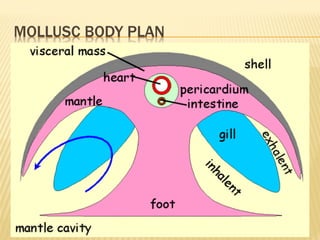
 Bilateral symmetry.
 Body enclosed by the mantle that may secrete a
shell made of minerals.
 A muscular foot that is highly modified among the various
groups of mollusks.
 Head withy sensory organs and a mouth.
 Characteristics:
 Aquatic mollusks have gills. Terrestrial mollusks have
lungs.
 Herbivorous or carnivorous. All of them with a complex
digestive system.
 Most of them are hermaphrodites.
 Most of them lay eggs from which a larvae emerges. It
will go under metamorphosis.
 Have a true heart
 Simple to complex nervous system
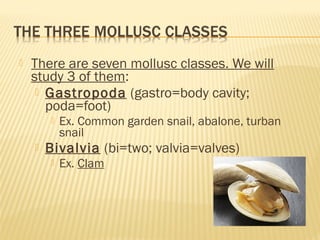
 There are seven mollusc classes. We will
study 3 of them:
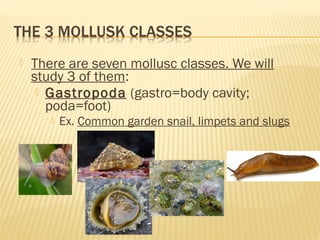
 Gastropoda (gastro=body cavity;
poda=foot)
 Ex. Common garden snail, limpets and slugs
 There are seven mollusc classes. We will
study 3 of them:
 Gastropoda (gastro=body cavity;
poda=foot)
 Ex. Common garden snail, abalone, turban
snail
 Bivalvia (bi=two; valvia=valves)
 Ex. Clam
 There are seven mollusc classes. We will
study 3 of them:
 Gastropoda (gastro=body cavity;
poda=foot)
 Ex. Common garden snail, abalone, turban
snail
 Bivalvia (bi=two; valvia=valves)
 Ex. Clam
 Cephalopoda (cephalo=dealing with
head; poda=foot)
 Ex. Squid, octopus, sepia, nautilus, etc.
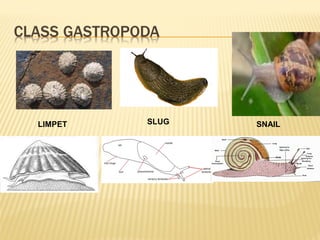
LIMPET SLUG SNAIL
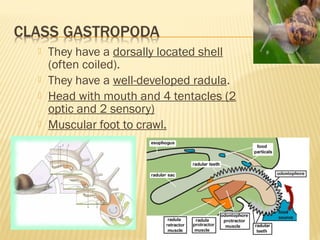
 They have a dorsally located shell
(often coiled).
 They have a well-developed radula.
 Head with mouth and 4 tentacles (2
optic and 2 sensory)
 Muscular foot to crawl.
MUSSEL CLAM
COCKLE
SWORD RAZOR
 They have no head.
 They have two shells held
together by powerful
muscles.
 They tend to burrow using
the foot.
 Large gills are used for
respiration and filter feeding.
 Water enters and exits
through siphons.
OCTOPUS
NAUTILUS SEPIA
SQUID
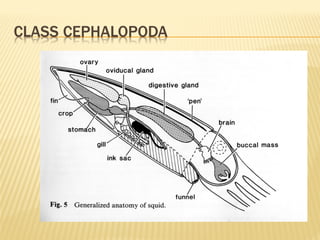
 Internal shell or no shell (like an octopus)
 The foot is highly modified to form a group of
tentacles around the mouth.
 Squids & Nautilus are free-swimming and
move very quickly. Octopuses are found
among rocks or crawling on the bottom of
the ocean.
 Complex brain, two lateral eyes, excellent
eyesight.
 Strong jaw and radula
 Closed circulatory system
https://es.educaplay.com/es/recursoseducativos/3732064/

Phylum mollusca

  • 2.
     50,000 ormore species of mollusks.  Characteristics:  Bilateral symmetry.  Body enclosed by the mantle that may secrete a shell made of minerals.  A muscular foot that is highly modified among the various groups of mollusks.  Head withy sensory organs and a mouth.
  • 3.
     Characteristics:  Aquaticmollusks have gills. Terrestrial mollusks have lungs.  Herbivorous or carnivorous. All of them with a complex digestive system.  Most of them are hermaphrodites.  Most of them lay eggs from which a larvae emerges. It will go under metamorphosis.  Have a true heart  Simple to complex nervous system
  • 5.
     There areseven mollusc classes. We will study 3 of them:  Gastropoda (gastro=body cavity; poda=foot)  Ex. Common garden snail, limpets and slugs
  • 6.
     There areseven mollusc classes. We will study 3 of them:  Gastropoda (gastro=body cavity; poda=foot)  Ex. Common garden snail, abalone, turban snail  Bivalvia (bi=two; valvia=valves)  Ex. Clam
  • 7.
     There areseven mollusc classes. We will study 3 of them:  Gastropoda (gastro=body cavity; poda=foot)  Ex. Common garden snail, abalone, turban snail  Bivalvia (bi=two; valvia=valves)  Ex. Clam  Cephalopoda (cephalo=dealing with head; poda=foot)  Ex. Squid, octopus, sepia, nautilus, etc.
  • 8.
  • 9.
     They havea dorsally located shell (often coiled).  They have a well-developed radula.  Head with mouth and 4 tentacles (2 optic and 2 sensory)  Muscular foot to crawl.
  • 10.
  • 11.
     They haveno head.  They have two shells held together by powerful muscles.  They tend to burrow using the foot.  Large gills are used for respiration and filter feeding.  Water enters and exits through siphons.
  • 13.
  • 14.
     Internal shellor no shell (like an octopus)  The foot is highly modified to form a group of tentacles around the mouth.  Squids & Nautilus are free-swimming and move very quickly. Octopuses are found among rocks or crawling on the bottom of the ocean.  Complex brain, two lateral eyes, excellent eyesight.  Strong jaw and radula  Closed circulatory system
  • 16.