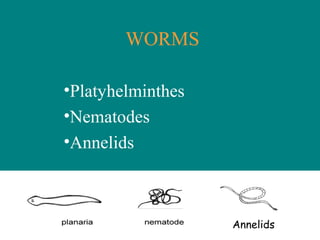
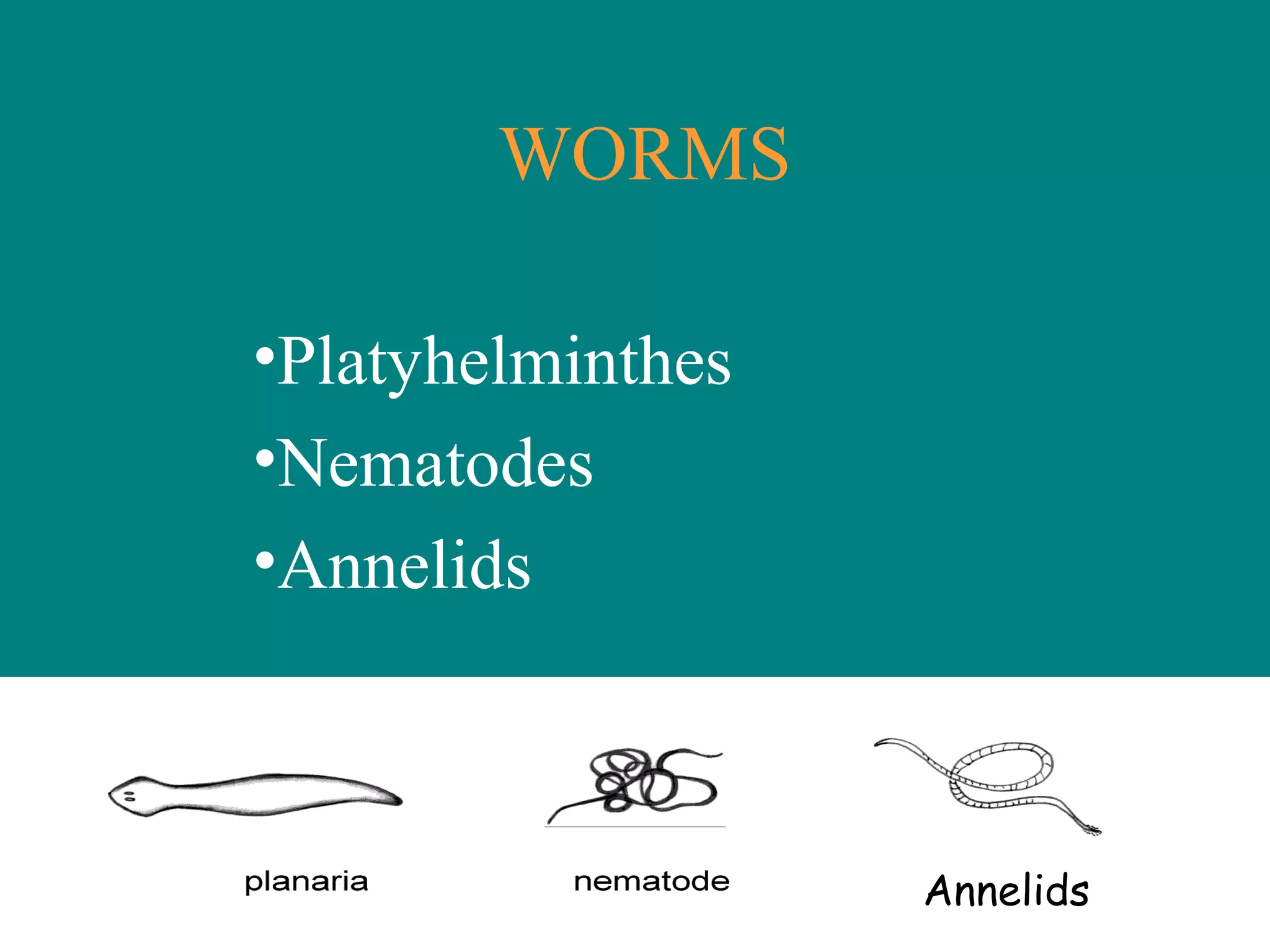
WORMS
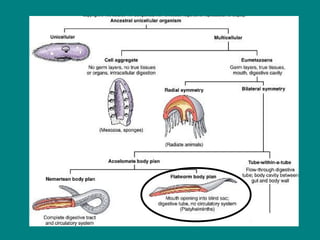
•Platyhelminthes
•Nematodes
•Annelids
Annelids
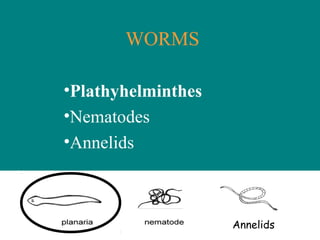
WORMS
•Plathyhelminthes
•Nematodes
•Annelids
Annelids
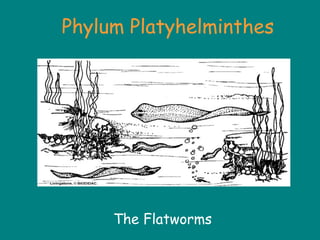
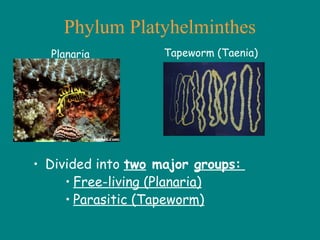
Phylum Platyhelminthes
The Flatworms
Phylum Platyhelminthes
• Divided into two major groups:
• Free-living (Planaria)
• Parasitic (Tapeworm)
Planaria Tapeworm (Taenia)
Flatworms
• Head at the front of the body with
nerve centers.
• No locomotive organs
• Range in size
– Some microscopic free-living
forms
– Parasitic forms over 20 meters
long
• Show many advances over Cnidaria
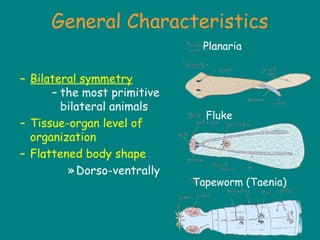
General Characteristics
– Bilateral symmetry
– the most primitive
bilateral animals
– Tissue-organ level of
organization
– Flattened body shape
»Dorso-ventrally
Planaria
Tapeworm (Taenia)
Fluke
Planaria
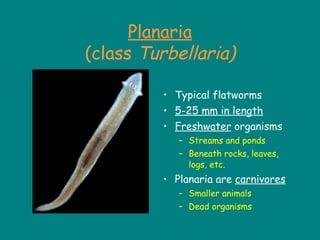
(class Turbellaria)
• Typical flatworms
• 5-25 mm in length
• Freshwater organisms
– Streams and ponds
– Beneath rocks, leaves,
logs, etc.
• Planaria are carnivores
– Smaller animals
– Dead organisms
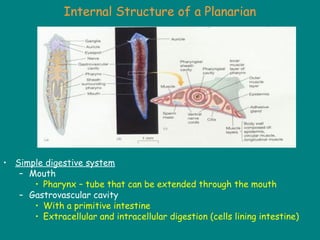
Internal Structure of a Planarian
• Simple digestive system
– Mouth
• Pharynx – tube that can be extended through the mouth
– Gastrovascular cavity
• With a primitive intestine
• Extracellular and intracellular digestion (cells lining intestine)
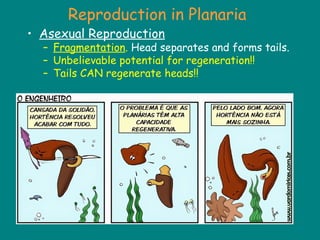
Reproduction in Planaria
• Asexual Reproduction
– Fragmentation. Head separates and forms tails.
– Unbelievable potential for regeneration!!
– Tails CAN regenerate heads!!
Reproduction in Planaria
• Sexual Reproduction
– Hermaphrodites . . . Again!
– REMEMBER: self-fertilization does not occur
– Fertilization is INTERNAL
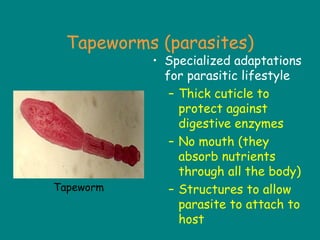
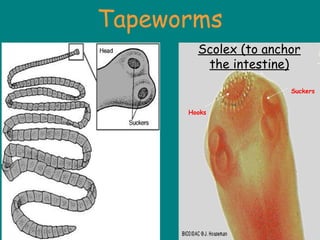
Tapeworms (parasites)
• Specialized adaptations
for parasitic lifestyle
– Thick cuticle to
protect against
digestive enzymes
– No mouth (they
absorb nutrients
through all the body)
– Structures to allow
parasite to attach to
host
Tapeworm
Tapeworms
Scolex (to anchor
the intestine)
Suckers
Hooks
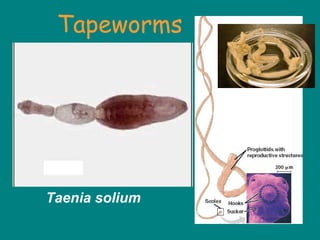
Taenia solium
Tapeworms
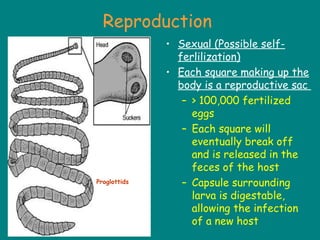
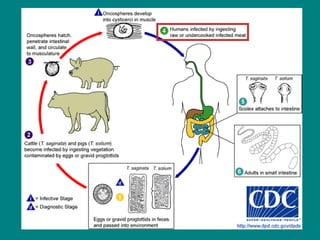
Reproduction
• Sexual (Possible self-
ferlilization)
• Each square making up the
body is a reproductive sac
– > 100,000 fertilized
eggs
– Each square will
eventually break off
and is released in the
feces of the host
– Capsule surrounding
larva is digestable,
allowing the infection
of a new host
Proglottids
Platyhelminthes: Advances over
cnidarians:
• Bilateral symmetry
• Cephalization
• Internal fertilization
• Parasitism
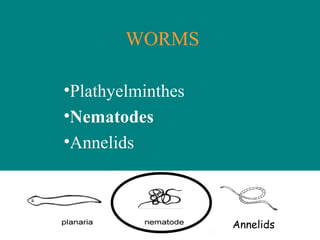
WORMS
•Plathyelminthes
•Nematodes
•Annelids
Annelids
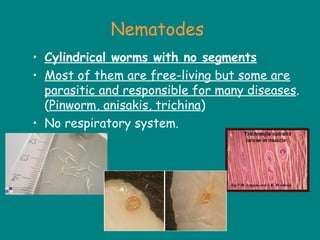
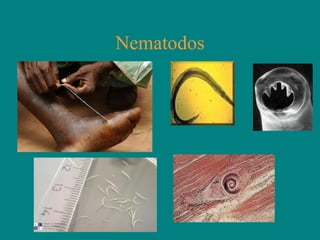
Nematodes
• Cylindrical worms with no segments
• Most of them are free-living but some are
parasitic and responsible for many diseases.
(Pinworm, anisakis, trichina)
• No respiratory system.
Nematodos
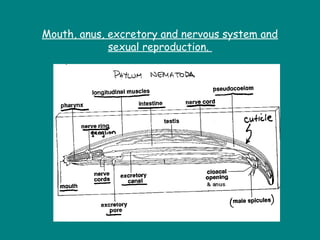
Mouth, anus, excretory and nervous system and
sexual reproduction.
WORMS
•Plathyelminthes
•Nematodes
•Annelids
Annelids
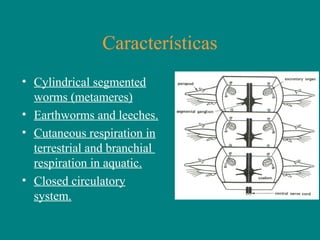
Características
• Cylindrical segmented
worms (metameres)
• Earthworms and leeches.
• Cutaneous respiration in
terrestrial and branchial
respiration in aquatic.
• Closed circulatory
system.
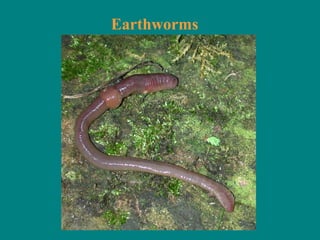
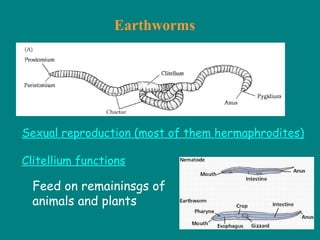
Earthworms
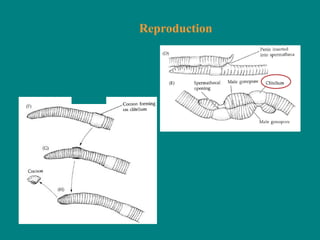
Sexual reproduction (most of them hermaphrodites)
Clitellium functions
Feed on remaininsgs of
animals and plants
Earthworms
Reproduction
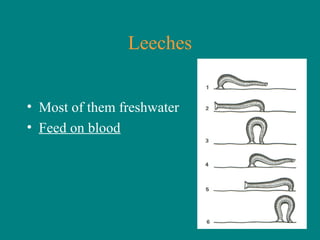
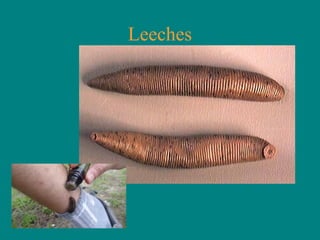
Leeches
• Most of them freshwater
• Feed on blood
Leeches

Platyhelminthes

Editor's Notes