Overview
• Autosomal recessive metabolic genetic disorder
• Mutation in the gene for phenylalanine
hydroxylase(PAH).
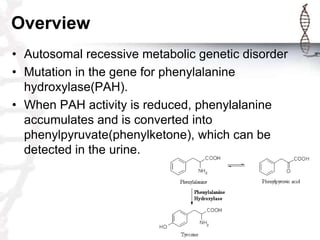
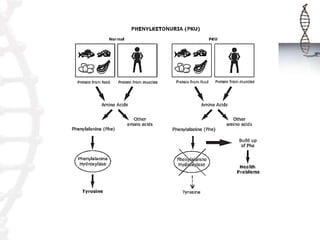
• When PAH activity is reduced, phenylalanine
accumulates and is converted into
phenylpyruvate(phenylketone), which can be
detected in the urine.
Overview
• Untreated PKU can lead to intellectual
disability, seizures, and other serious medical
problems.
• Patients who are diagnosed early and
maintain a strict diet can have a normal life
span with normal mental development.
• PKU is rare – it is estimated to affect 1 in
every 10,000 babies.
Etiology
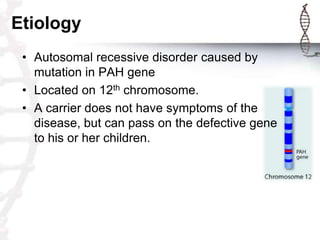
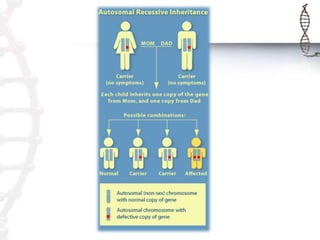
• Autosomal recessive disorder caused by
mutation in PAH gene
• Located on 12th chromosome.
• A carrier does not have symptoms of the
disease, but can pass on the defective gene
to his or her children.
Symptoms
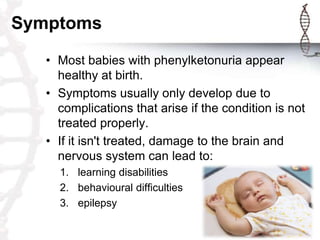
• Most babies with phenylketonuria appear
healthy at birth.
• Symptoms usually only develop due to
complications that arise if the condition is not
treated properly.
• If it isn't treated, damage to the brain and
nervous system can lead to:
1. learning disabilities
2. behavioural difficulties
3. epilepsy
Symptoms
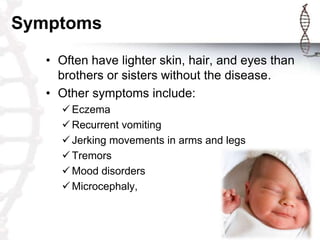
• Often have lighter skin, hair, and eyes than
brothers or sisters without the disease.
• Other symptoms include:
 Eczema
 Recurrent vomiting
 Jerking movements in arms and legs
 Tremors
 Mood disorders
 Microcephaly,
Diagnosis
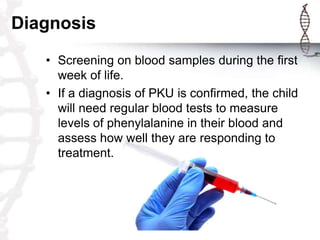
• Screening on blood samples during the first
week of life.
• If a diagnosis of PKU is confirmed, the child
will need regular blood tests to measure
levels of phenylalanine in their blood and
assess how well they are responding to
treatment.
Treatment
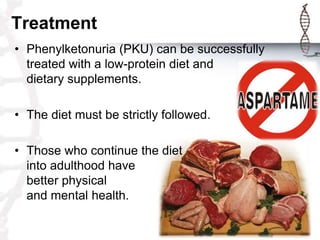
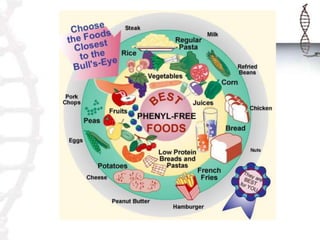
• Phenylketonuria (PKU) can be successfully
treated with a low-protein diet and
dietary supplements.
• The diet must be strictly followed.
• Those who continue the diet
into adulthood have
better physical
and mental health.
Prognosis
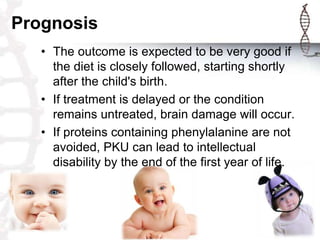
• The outcome is expected to be very good if
the diet is closely followed, starting shortly
after the child's birth.
• If treatment is delayed or the condition
remains untreated, brain damage will occur.
• If proteins containing phenylalanine are not
avoided, PKU can lead to intellectual
disability by the end of the first year of life.
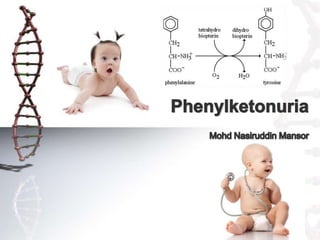
Phenylketonuria

Phenylketonuria

  • 2.
    Overview • Autosomal recessivemetabolic genetic disorder • Mutation in the gene for phenylalanine hydroxylase(PAH). • When PAH activity is reduced, phenylalanine accumulates and is converted into phenylpyruvate(phenylketone), which can be detected in the urine.
  • 4.
    Overview • Untreated PKUcan lead to intellectual disability, seizures, and other serious medical problems. • Patients who are diagnosed early and maintain a strict diet can have a normal life span with normal mental development. • PKU is rare – it is estimated to affect 1 in every 10,000 babies.
  • 5.
    Etiology • Autosomal recessivedisorder caused by mutation in PAH gene • Located on 12th chromosome. • A carrier does not have symptoms of the disease, but can pass on the defective gene to his or her children.
  • 7.
    Symptoms • Most babieswith phenylketonuria appear healthy at birth. • Symptoms usually only develop due to complications that arise if the condition is not treated properly. • If it isn't treated, damage to the brain and nervous system can lead to: 1. learning disabilities 2. behavioural difficulties 3. epilepsy
  • 8.
    Symptoms • Often havelighter skin, hair, and eyes than brothers or sisters without the disease. • Other symptoms include:  Eczema  Recurrent vomiting  Jerking movements in arms and legs  Tremors  Mood disorders  Microcephaly,
  • 9.
    Diagnosis • Screening onblood samples during the first week of life. • If a diagnosis of PKU is confirmed, the child will need regular blood tests to measure levels of phenylalanine in their blood and assess how well they are responding to treatment.
  • 10.
    Treatment • Phenylketonuria (PKU)can be successfully treated with a low-protein diet and dietary supplements. • The diet must be strictly followed. • Those who continue the diet into adulthood have better physical and mental health.
  • 12.
    Prognosis • The outcomeis expected to be very good if the diet is closely followed, starting shortly after the child's birth. • If treatment is delayed or the condition remains untreated, brain damage will occur. • If proteins containing phenylalanine are not avoided, PKU can lead to intellectual disability by the end of the first year of life.

Editor's Notes

  • #6 meaning that you need to inherit mutations in both copies of the gene to develop the symptoms of the disorder.