Tay-Sach’s Disease
A genetic metabolic disorder

caused by deficiency of
the enzyme hexosaminidase
A (hex-A) that results in a
failure to process a
lipid called GM2 ganglioside
that accumulates in the brain
and other tissues. 
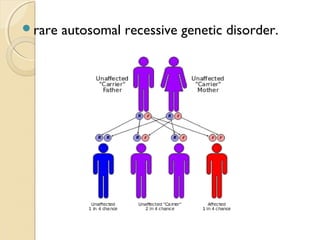
rare autosomal

recessive genetic disorder.
History:
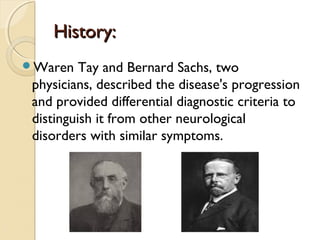
Waren

Tay and Bernard Sachs, two
physicians, described the disease's progression
and provided differential diagnostic criteria to
distinguish it from other neurological
disorders with similar symptoms.
Types of Tay-Sachs
Infantile

TSD
Juvenile TSD
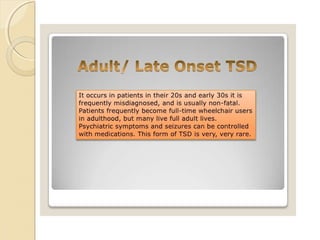
Adult/late onset TSD
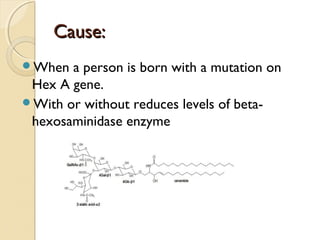
Cause:
When

a person is born with a mutation on
Hex A gene.
With or without reduces levels of betahexosaminidase enzyme
Effects:
 it

causes a progressive deterioration of
nerve cells and of mental and physical
the disease occurs when harmful
quantities of cell membrane components
known as gangliosides accumulate in
the brain's nerve cells, eventually leading
to the premature death of the cells.
Inheritance:
This

condition is inherited in an
autosomal recessive pattern.The parents
of an individual with an autosomal
recessive condition each carry one copy
of the mutated gene.
Signs and Symptoms
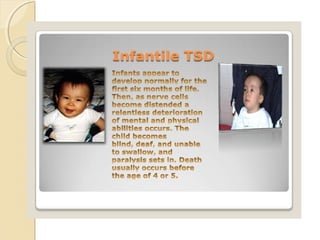
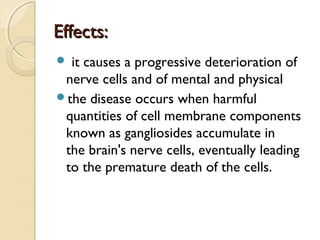
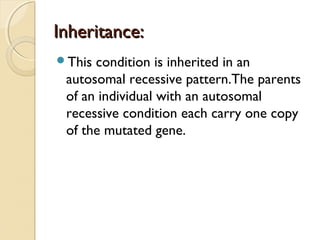
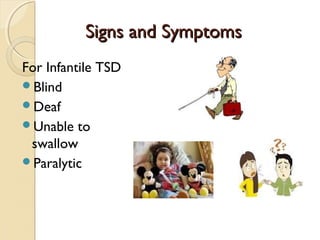
For Infantile TSD
Blind
Deaf
Unable to
swallow
Paralytic
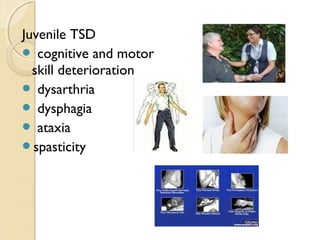
Juvenile TSD
 cognitive and motor
skill deterioration
 dysarthria
 dysphagia
 ataxia
spasticity
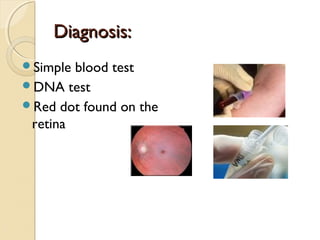
Diagnosis:
Simple

blood test
DNA test
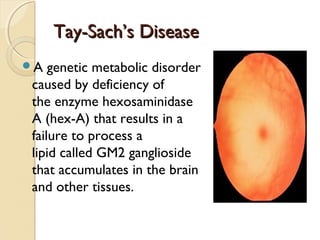
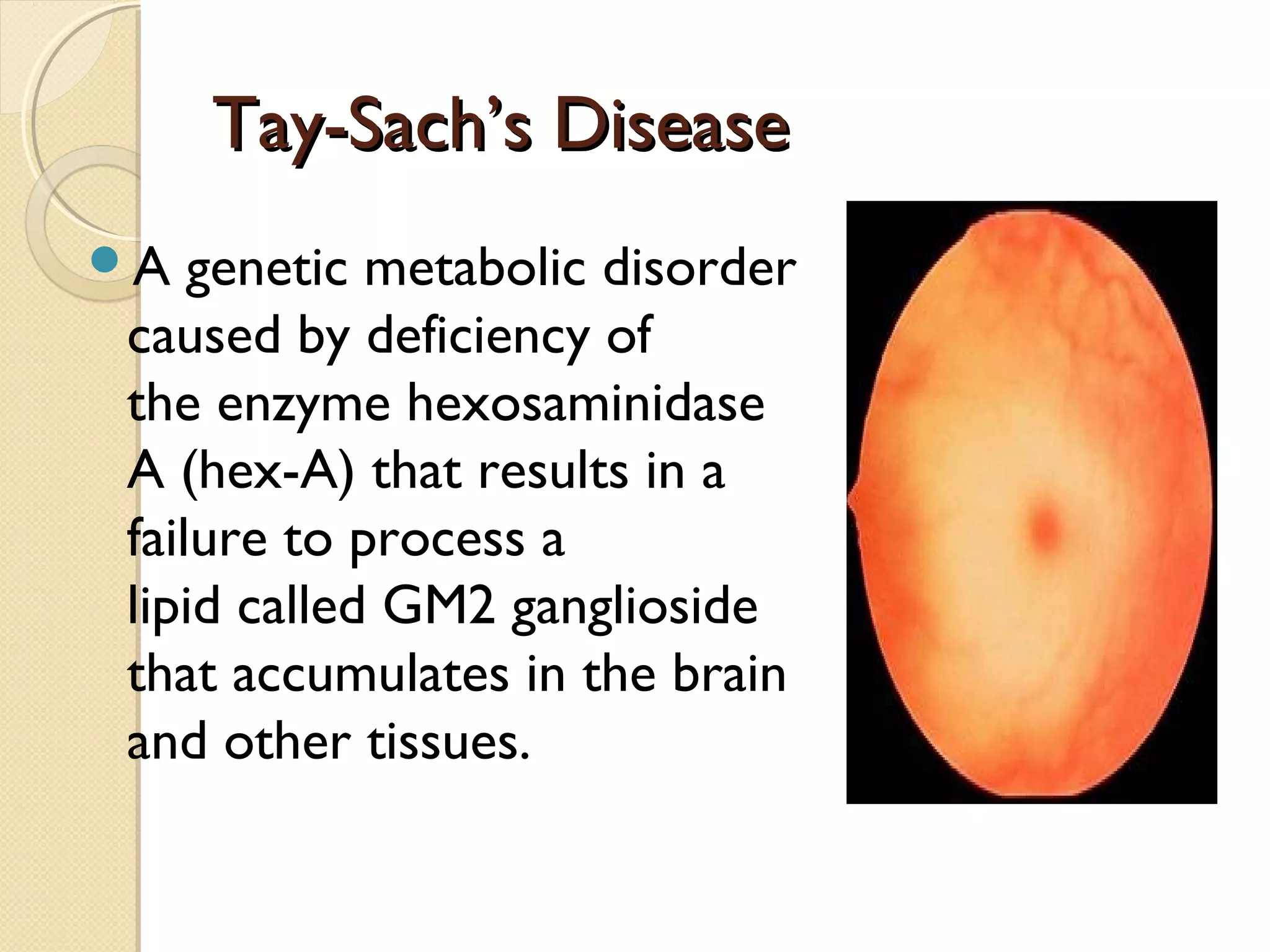
Red dot found on the
retina
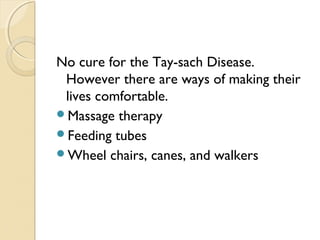
No cure for the Tay-sach Disease.
However there are ways of making their
lives comfortable.
Massage therapy
Feeding tubes
Wheel chairs, canes, and walkers
Prevention:
Prenatal

diagnosis
Preimplantation genetic diagnosis
Mate selection
Tay-Sach’s Disease

Tay-Sach’s Disease

Editor's Notes

  • #2 Explain Hex A,GM2
  • #3 Explain WHY IS A BABY BORN WITH TAY-SACHS DISEASE?
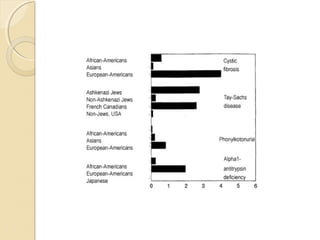
  • #5 This disease a very rare. Tay-Sachs disease is very rare in the general population. The genetic mutations that cause this disease are more common in people of Ashkenazi (eastern and central European) Jewish heritage than in those with other backgrounds. The mutations responsible for this disease are also more common in certain French-Canadian communities of Quebec, the Old Order Amish community in Pennsylvania, and the Cajun population of Louisiana.