Downloaded 55 times
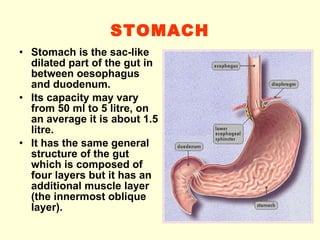
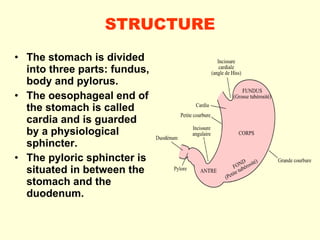

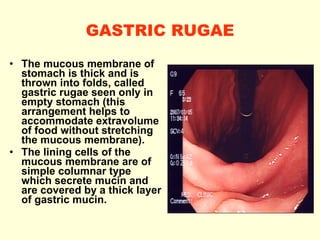
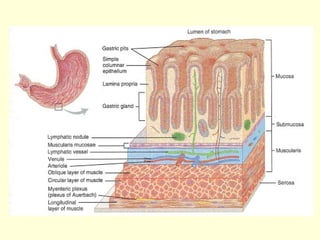


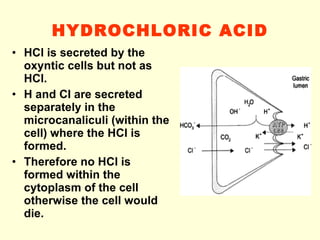

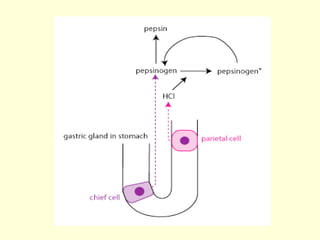


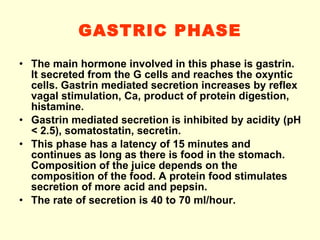

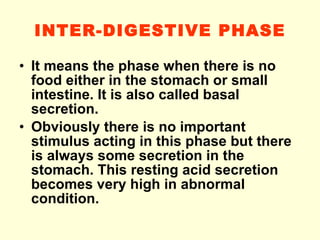


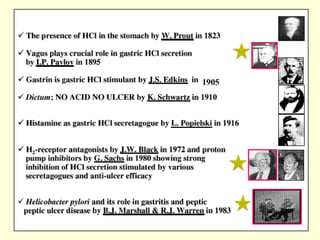


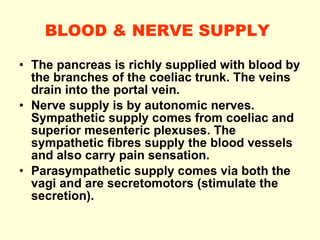







The stomach is divided into three parts and contains gastric glands that secrete hydrochloric acid and digestive enzymes like pepsin. The gastric juice contains hydrochloric acid which kills bacteria and activates pepsin. Pepsin breaks down proteins into smaller fragments. Gastric secretion is regulated by nerves, hormones, and feedback mechanisms and occurs in several phases including cephalic, gastric, and intestinal phases in response to eating. The pancreas contains acini that secrete digestive enzymes and bicarbonate into the small intestine to break down proteins, lipids, carbohydrates, and nucleic acids to aid in absorption.


