PHENYLKETONURIA
BY:
HARISH K
ANNAMALAI UNIVERSITY.
THE LIFE OF BIOCHEMISTRY
DEFINITION:
• The high concentration of phenylalanine is accumulated in the blood is called
hyperphenylalaninaemia leads to the excretion of phenylalanine in the urine
this condition is known as the phenylketonuria.
• This condition occurs due to the some enzyme deficiency or absence in the
Tyrosine metabolism.
DISCOVERY:
• In 1934 Dr.Asbiorh Folling ,First discovery of phenylketonuria.
NORMAL LEVEL IN BLOOD:
• 1-2mg %
• Classical phenylketonuria - >1200 μmol / L
• Mild – 600 – 1200 μmol / L
• Incidence :
• 1 In 10,000 in India .Recent 1 in 18,300
DEFECTS OF CHROMOSOME
• Classical PKU is an autosomal recessive disorder, caused by mutations in both alleles
of the gene for phenylalanine hydroxylase (PAH), found on chromosome 12. In the
body, phenylalanine hydroxylase converts the amino acid phenylalanine to tyrosine,
another amino acid. Mutations in both copies of the gene for PAH means that the
enzyme is inactive or is less efficient, and the concentration of phenylalanine in the
body can build up to toxic levels. In some cases, mutations in PAH will result in a
phenotypically mild form of PKU called hyperphenylalanemia. Both diseases are the
result of a variety of mutations in the PAH locus; in those cases where a patient is
heterozygous for two mutations of PAH (ie each copy of the gene has a different
mutation), the milder mutation will predominate.
HERITITY:
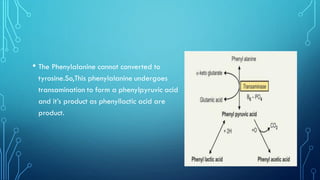
• The Phenylalanine cannot converted to
tyrosine.So,This phenylalanine undergoes
transamination to form a phenylpyruvic acid
and it’s product as phenyllactic acid are
product.
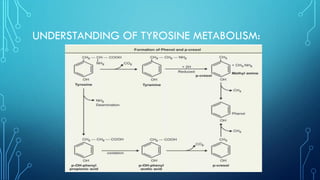
UNDERSTANDING OF TYROSINE METABOLISM:
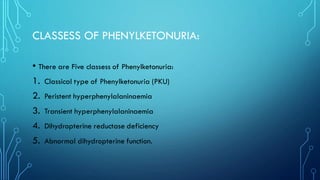
CLASSESS OF PHENYLKETONURIA:
• There are Five classess of Phenylketonuria:
1. Classical type of Phenylketonuria (PKU)
2. Peristent hyperphenylalaninaemia
3. Transient hyperphenylalaninaemia
4. Dihydropterine reductase deficiency
5. Abnormal dihydropterine function.
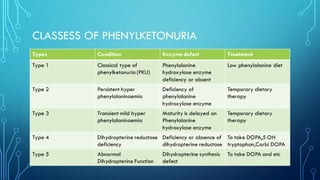
CLASSESS OF PHENYLKETONURIA
Types Condition Enzyme defect Treatment
Type 1 Classical type of
phenylketonuria (PKU)
Phenylalanine
hydroxylase enzyme
deficiency or absent
Low phenylalanine diet
Type 2 Persistent hyper
phenylalaninaemia
Deficiency of
phenylalanine
hydroxylase enzyme
Temporary dietary
therapy
Type 3 Transient mild hyper
phenylalaninaemia
Maturity is delayed on
Phenylalanine
hydroxylase enzyme
Temporary dietary
therapy
Type 4 Dihydropterine reductase
deficiency
Deficiency or absence of
dihydropterine reductase
To take DOPA,5 OH
tryptophan,Carbi DOPA
Type 5 Abnormal
Dihydropterine Function
Dihydropterine synthesis
defect
To take DOPA and etc
SYMPTOMS:
Decrease the metabolic product of phenyl acedic acid is mingled with glutamine
it’s responsible for mousy odour of urine .
• The phenylalanine accumulated in the urine is leads to the :
1. Odour of breath and skin
2. Eczema
3. Fair skin and blue eye , Because, phenylalanine cannot transform into
Melanin.
4. Decrease or defect of serotonin formation.
5. Psychiatric disorder.
SYMPTOMS
6. Hyperactivity
7. Shaking or jerking movement in the arm and legs.
8. Slow growth
9. Abnormalities of phenotype including growth failure, Microcephaly .
DIAGNOSIS:
• Newborn blood testing identifies almost all cases of phenylketonuria. All 50 states in
the United States require newborns to be screened for PKU. Many other countries
also routinely screen infants for PKU.
• If you have PKU or a family history of it, your doctor may recommend screening tests
before pregnancy or birth. It’s possible to identify PKU carriers through a blood test.
• Estimated of plasma phenylalanine level.
• Screening test for presence of phenylpyruvate with FeCl3 in urine.
• Phenylalanine tolerance test.
TREATMENT:
1. Control the dietary supplements. Cannot take up phenylalanine foods. That’s like.
1. Eggs
2. Nuts
3. Fish
4. Beans
5. Chicken and etc….
2. The United States Food and Drug Administration (FDA) recently approved sapropterin for
the treatment of PKU. Sapropterin helps lower phenylalanine levels. This medication must be
used in combination with a special PKU meal plan. However, it doesn’t work for everyone
with PKU. It’s most effective in children with mild cases of PKU.
REFERENCE:
1. Chattarjee in clinical Biochemis
2. https://www.mayoclinic.org/about-this-site/welcome
3. https://www.ncbi.nlm.nih.gov/
4. Medically reviewed by Melanie Santos — Written by Cindie Slightham on
July 24, 2017
5. Robin a William, Cyril DS, Mamotle John R Burnett

Phenylketonuria

  • 1.
  • 2.
    DEFINITION: • The highconcentration of phenylalanine is accumulated in the blood is called hyperphenylalaninaemia leads to the excretion of phenylalanine in the urine this condition is known as the phenylketonuria. • This condition occurs due to the some enzyme deficiency or absence in the Tyrosine metabolism.
  • 3.
    DISCOVERY: • In 1934Dr.Asbiorh Folling ,First discovery of phenylketonuria.
  • 4.
    NORMAL LEVEL INBLOOD: • 1-2mg % • Classical phenylketonuria - >1200 μmol / L • Mild – 600 – 1200 μmol / L • Incidence : • 1 In 10,000 in India .Recent 1 in 18,300
  • 5.
    DEFECTS OF CHROMOSOME •Classical PKU is an autosomal recessive disorder, caused by mutations in both alleles of the gene for phenylalanine hydroxylase (PAH), found on chromosome 12. In the body, phenylalanine hydroxylase converts the amino acid phenylalanine to tyrosine, another amino acid. Mutations in both copies of the gene for PAH means that the enzyme is inactive or is less efficient, and the concentration of phenylalanine in the body can build up to toxic levels. In some cases, mutations in PAH will result in a phenotypically mild form of PKU called hyperphenylalanemia. Both diseases are the result of a variety of mutations in the PAH locus; in those cases where a patient is heterozygous for two mutations of PAH (ie each copy of the gene has a different mutation), the milder mutation will predominate.
  • 6.
  • 7.
    • The Phenylalaninecannot converted to tyrosine.So,This phenylalanine undergoes transamination to form a phenylpyruvic acid and it’s product as phenyllactic acid are product.
  • 8.
  • 9.
    CLASSESS OF PHENYLKETONURIA: •There are Five classess of Phenylketonuria: 1. Classical type of Phenylketonuria (PKU) 2. Peristent hyperphenylalaninaemia 3. Transient hyperphenylalaninaemia 4. Dihydropterine reductase deficiency 5. Abnormal dihydropterine function.
  • 10.
    CLASSESS OF PHENYLKETONURIA TypesCondition Enzyme defect Treatment Type 1 Classical type of phenylketonuria (PKU) Phenylalanine hydroxylase enzyme deficiency or absent Low phenylalanine diet Type 2 Persistent hyper phenylalaninaemia Deficiency of phenylalanine hydroxylase enzyme Temporary dietary therapy Type 3 Transient mild hyper phenylalaninaemia Maturity is delayed on Phenylalanine hydroxylase enzyme Temporary dietary therapy Type 4 Dihydropterine reductase deficiency Deficiency or absence of dihydropterine reductase To take DOPA,5 OH tryptophan,Carbi DOPA Type 5 Abnormal Dihydropterine Function Dihydropterine synthesis defect To take DOPA and etc
  • 11.
    SYMPTOMS: Decrease the metabolicproduct of phenyl acedic acid is mingled with glutamine it’s responsible for mousy odour of urine . • The phenylalanine accumulated in the urine is leads to the : 1. Odour of breath and skin 2. Eczema 3. Fair skin and blue eye , Because, phenylalanine cannot transform into Melanin. 4. Decrease or defect of serotonin formation. 5. Psychiatric disorder.
  • 12.
    SYMPTOMS 6. Hyperactivity 7. Shakingor jerking movement in the arm and legs. 8. Slow growth 9. Abnormalities of phenotype including growth failure, Microcephaly .
  • 13.
    DIAGNOSIS: • Newborn bloodtesting identifies almost all cases of phenylketonuria. All 50 states in the United States require newborns to be screened for PKU. Many other countries also routinely screen infants for PKU. • If you have PKU or a family history of it, your doctor may recommend screening tests before pregnancy or birth. It’s possible to identify PKU carriers through a blood test. • Estimated of plasma phenylalanine level. • Screening test for presence of phenylpyruvate with FeCl3 in urine. • Phenylalanine tolerance test.
  • 14.
    TREATMENT: 1. Control thedietary supplements. Cannot take up phenylalanine foods. That’s like. 1. Eggs 2. Nuts 3. Fish 4. Beans 5. Chicken and etc…. 2. The United States Food and Drug Administration (FDA) recently approved sapropterin for the treatment of PKU. Sapropterin helps lower phenylalanine levels. This medication must be used in combination with a special PKU meal plan. However, it doesn’t work for everyone with PKU. It’s most effective in children with mild cases of PKU.
  • 15.
    REFERENCE: 1. Chattarjee inclinical Biochemis 2. https://www.mayoclinic.org/about-this-site/welcome 3. https://www.ncbi.nlm.nih.gov/ 4. Medically reviewed by Melanie Santos — Written by Cindie Slightham on July 24, 2017 5. Robin a William, Cyril DS, Mamotle John R Burnett