
Michelle Donnison
Senior Pharmacy Technician
•

BTEC National Diploma in Health Studies (2004)

•

NVQ Level 3 in Pharmacy Services (2007)

•

BSc (Hons) Medical Physiology (2011)

•

Started working at York Hospital (2011)

•

Postgraduate Certificate in Health Research (in
progress)
•
•

Commercial (pharmaceutical companies)
Non-commercial / Academic (NHS,
charities, universities)

Observational studies
• Medical Device studies
• Drug Studies (CTIMP)
•
•

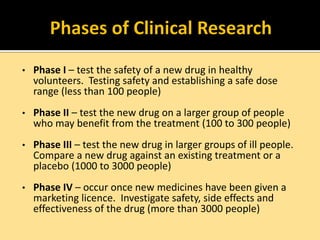
Phase I – test the safety of a new drug in healthy
volunteers. Testing safety and establishing a safe dose
range (less than 100 people)

•

Phase II – test the new drug on a larger group of people
who may benefit from the treatment (100 to 300 people)

•

Phase III – test the new drug in larger groups of ill people.
Compare a new drug against an existing treatment or a
placebo (1000 to 3000 people)

•

Phase IV – occur once new medicines have been given a
marketing licence. Investigate safety, side effects and
effectiveness of the drug (more than 3000 people)
•
•
•
•
•
•
•

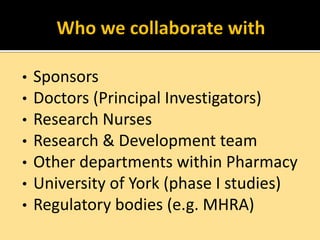
Sponsors
Doctors (Principal Investigators)
Research Nurses
Research & Development team
Other departments within Pharmacy
University of York (phase I studies)
Regulatory bodies (e.g. MHRA)
•
•
•
•
•
•
•
•
•
•
•

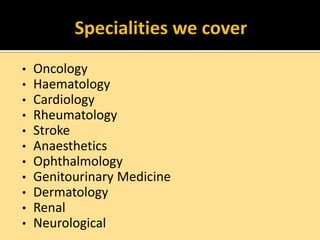
Oncology
Haematology
Cardiology
Rheumatology
Stroke
Anaesthetics
Ophthalmology
Genitourinary Medicine
Dermatology
Renal
Neurological
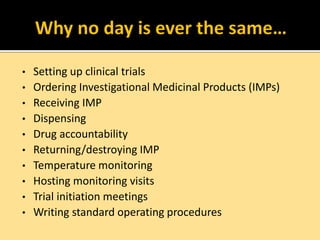
Setting up clinical trials
• Ordering Investigational Medicinal Products (IMPs)
• Receiving IMP
• Dispensing
• Drug accountability
• Returning/destroying IMP
• Temperature monitoring
• Hosting monitoring visits
• Trial initiation meetings
• Writing standard operating procedures
•
•

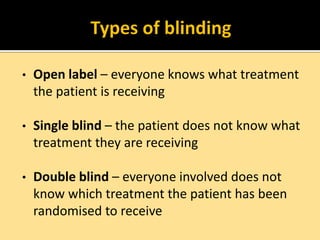
Open label – everyone knows what treatment
the patient is receiving

•

Single blind – the patient does not know what
treatment they are receiving

•

Double blind – everyone involved does not
know which treatment the patient has been
randomised to receive
•
•
•
•

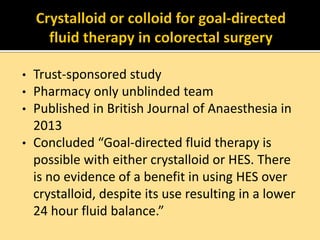
Trust-sponsored study
Pharmacy only unblinded team
Published in British Journal of Anaesthesia in
2013
Concluded “Goal-directed fluid therapy is
possible with either crystalloid or HES. There
is no evidence of a benefit in using HES over
crystalloid, despite its use resulting in a lower
24 hour fluid balance.”
•
•
•
•
•
•
•
•

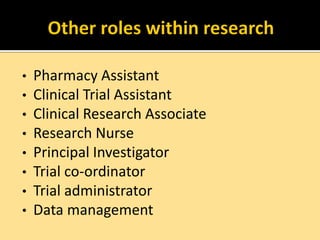
Pharmacy Assistant
Clinical Trial Assistant
Clinical Research Associate
Research Nurse
Principal Investigator
Trial co-ordinator
Trial administrator
Data management
Pharmacy in clinical trials

Pharmacy in clinical trials