
Medicine and Beyond
Dr Andrew S. Lindsay
Emergency Medicine SpR
North East and Central London
12th February 2014
About me…
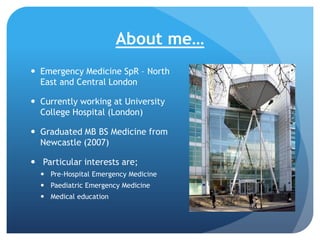
 Emergency Medicine SpR – North
East and Central London
 Currently working at University
College Hospital (London)
 Graduated MB BS Medicine from
Newcastle (2007)
 Particular interests are;
 Pre-Hospital Emergency Medicine

 Paediatric Emergency Medicine
 Medical education
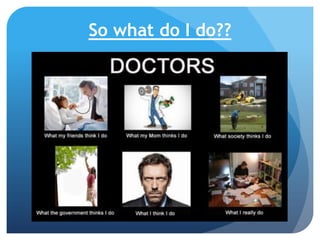
So what do I do??
What I actually do…
 Medical practitioner for 7 years, (6 within the
NHS)
 Part of a total of 1.3 million NHS Employees
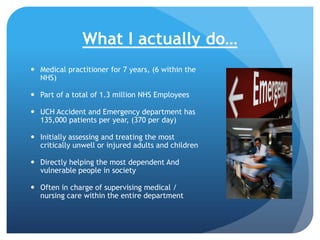
 UCH Accident and Emergency department has
135,000 patients per year, (370 per day)

 Initially assessing and treating the most
critically unwell or injured adults and children
 Directly helping the most dependent And
vulnerable people in society

 Often in charge of supervising medical /
nursing care within the entire department
My average day…….
 No two days are ever the same, always
depends on what comes through the front door
 Have to be prepared for anything – No matter
how weird or wonderful
 Often very physically and mentally demanding
on 10-12 hours shift

 Can be exciting edge of the seat stuff like
“ER” on TV!!
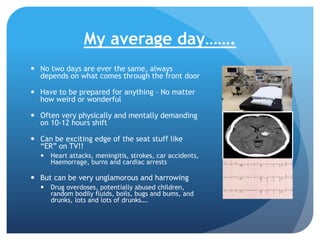
 Heart attacks, meningitis, strokes, car accidents,
Haemorrage, burns and cardiac arrests

 But can be very unglamorous and harrowing
 Drug overdoses, potentially abused children,
random bodily fluids, boils, bugs and bums, and
drunks, lots and lots of drunks….
How did I get to where I am now??
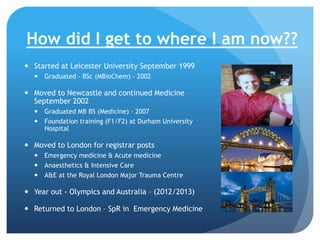
 Started at Leicester University September 1999
 Graduated - BSc (MBioChem) - 2002

 Moved to Newcastle and continued Medicine
September 2002
 Graduated MB BS (Medicine) – 2007
 Foundation training (F1/F2) at Durham University
Hospital

 Moved to London for registrar posts
 Emergency medicine & Acute medicine
 Anaesthetics & Intensive Care
 A&E at the Royal London Major Trauma Centre

 Year out - Olympics and Australia – (2012/2013)
 Returned to London – SpR in Emergency Medicine
Why pursue a career in
medicine?
 Rewarding career
 Helping to care for the vulnerable and unwell
 Providing support to patients, families, the
desperate and terminally ill
 Challenging and stimulating
 Many career options and specialties
 Opportunity for foreign travel and practice

 Respected profession
 Similar opportunities throughout the UK
 Quite well paid compared to many other careers
 High level of job security
Disadvantages to medicine


High level of pressure, particularly with time pressures and
targets



Very strict codes of conduct and professional ethics



Can be extremely physically and mentally draining



High levels of stress, long hours and can be hard to plan things
around the job



Decisions are often life changing and can be difficult to deal with
if you get it wrong



Can see some of the worst sides of human nature



NHS is ever changing environment, particularly because of
multiple changes in DOH / Government policy



Never ending requirement for further professional assessments,
exams and revalidation
How do you get into medicine?
The Application bit…
 Decide early as possible
 Get any kind of work experience possible
(or volunteering, SJA, nursing homes)
 Choose medical schools wisely (Graduate
course / entry requirements / Bursaries
available)
 26 Medical schools now require the UK-CAT
(UK-Clinical aptitude Test to apply)
 Get input from someone in the profession
on your UCAS personal statement (if
possible)
 Get someone good at English to proof read
and check it
How do you get into medicine?
Prepare hard for the interview





Medical stories in the media
Current NHS / DOH / Government policies
Know course benefits / structure / ethos at your chosen
university
Modernising Medical Careers (MMC) and foundation
programme websites to understand current career path
and training

 Obtain a person specification from the MMC website



Slant your personal statement to show those qualities
Same qualities in potential medical students as required
in junior doctors to training posts

 Good communications skills are vital



Find anything that demonstrates you have excellent
communications skills
Involved in everything we do
Other medical opportunities (1)
 Medical research

 Teaching activities and medical education
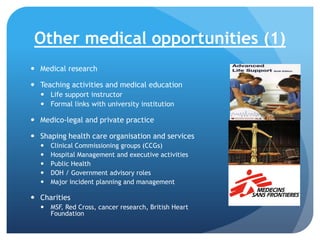
 Life support instructor
 Formal links with university institution

 Medico-legal and private practice

 Shaping health care organisation and services






Clinical Commissioning groups (CCGs)
Hospital Management and executive activities
Public Health
DOH / Government advisory roles
Major incident planning and management

 Charities
 MSF, Red Cross, cancer research, British Heart
Foundation
Other medical opportunities (2)
 Working abroad
 Australia
 New Zealand
 Canada
 Middle East

 USA / South Africa

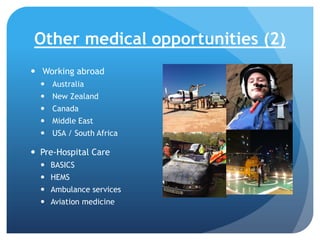
 Pre-Hospital Care
 BASICS
 HEMS
 Ambulance services
 Aviation medicine
Other medical opportunities (3)
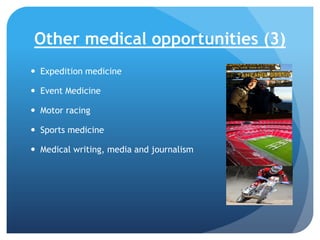
 Expedition medicine

 Event Medicine
 Motor racing
 Sports medicine
 Medical writing, media and journalism
Medicine and beyond (1)
 Life support instructor
 ALS
 APLS
 MIMMS
 BASICS

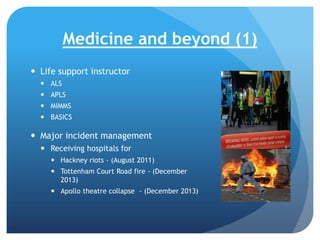
 Major incident management
 Receiving hospitals for
 Hackney riots - (August 2011)
 Tottenham Court Road fire - (December
2013)
 Apollo theatre collapse - (December 2013)
Medicine and beyond (2)
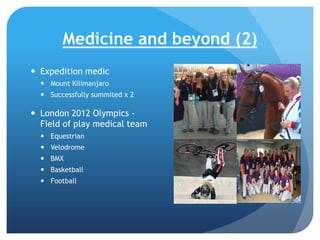
 Expedition medic
 Mount Kilimanjaro
 Successfully summited x 2

 London 2012 Olympics Field of play medical team
 Equestrian
 Velodrome
 BMX
 Basketball
 Football
Medicine and beyond (3)
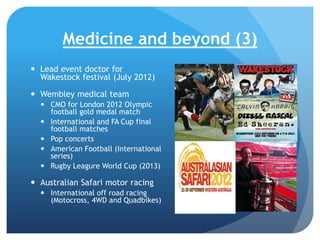
 Lead event doctor for
Wakestock festival (July 2012)
 Wembley medical team
 CMO for London 2012 Olympic
football gold medal match
 International and FA Cup final
football matches
 Pop concerts
 American Football (International
series)
 Rugby Leagure World Cup (2013)

 Australian Safari motor racing
 International off road racing
(Motocross, 4WD and Quadbikes)
Medicine and Beyond (4)
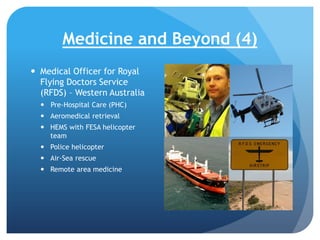
 Medical Officer for Royal
Flying Doctors Service
(RFDS) – Western Australia
 Pre-Hospital Care (PHC)
 Aeromedical retrieval
 HEMS with FESA helicopter
team
 Police helicopter
 Air-Sea rescue
 Remote area medicine
Summary
 Medicine is an exciting and varied career
 Different specialties and opportunities
allow many different career paths
 Its very demanding but the benefits
massively outweigh the downsides

 Plan any application as early as possible
 Tailor it to demonstrate the attributes
medical schools are looking for
 Work experience is a MUST!!!

 Prepare well for the interview
 Know the course structure
 Recent developments in medicine and
within the media
THANK YOU

Any Questions??

Medicine and beyond

  • 1.
    Medicine and Beyond DrAndrew S. Lindsay Emergency Medicine SpR North East and Central London 12th February 2014
  • 2.
    About me…  EmergencyMedicine SpR – North East and Central London  Currently working at University College Hospital (London)  Graduated MB BS Medicine from Newcastle (2007)  Particular interests are;  Pre-Hospital Emergency Medicine  Paediatric Emergency Medicine  Medical education
  • 3.
    So what doI do??
  • 4.
    What I actuallydo…  Medical practitioner for 7 years, (6 within the NHS)  Part of a total of 1.3 million NHS Employees  UCH Accident and Emergency department has 135,000 patients per year, (370 per day)  Initially assessing and treating the most critically unwell or injured adults and children  Directly helping the most dependent And vulnerable people in society  Often in charge of supervising medical / nursing care within the entire department
  • 5.
    My average day……. No two days are ever the same, always depends on what comes through the front door  Have to be prepared for anything – No matter how weird or wonderful  Often very physically and mentally demanding on 10-12 hours shift  Can be exciting edge of the seat stuff like “ER” on TV!!  Heart attacks, meningitis, strokes, car accidents, Haemorrage, burns and cardiac arrests  But can be very unglamorous and harrowing  Drug overdoses, potentially abused children, random bodily fluids, boils, bugs and bums, and drunks, lots and lots of drunks….
  • 6.
    How did Iget to where I am now??  Started at Leicester University September 1999  Graduated - BSc (MBioChem) - 2002  Moved to Newcastle and continued Medicine September 2002  Graduated MB BS (Medicine) – 2007  Foundation training (F1/F2) at Durham University Hospital  Moved to London for registrar posts  Emergency medicine & Acute medicine  Anaesthetics & Intensive Care  A&E at the Royal London Major Trauma Centre  Year out - Olympics and Australia – (2012/2013)  Returned to London – SpR in Emergency Medicine
  • 7.
    Why pursue acareer in medicine?  Rewarding career  Helping to care for the vulnerable and unwell  Providing support to patients, families, the desperate and terminally ill  Challenging and stimulating  Many career options and specialties  Opportunity for foreign travel and practice  Respected profession  Similar opportunities throughout the UK  Quite well paid compared to many other careers  High level of job security
  • 8.
    Disadvantages to medicine  Highlevel of pressure, particularly with time pressures and targets  Very strict codes of conduct and professional ethics  Can be extremely physically and mentally draining  High levels of stress, long hours and can be hard to plan things around the job  Decisions are often life changing and can be difficult to deal with if you get it wrong  Can see some of the worst sides of human nature  NHS is ever changing environment, particularly because of multiple changes in DOH / Government policy  Never ending requirement for further professional assessments, exams and revalidation
  • 9.
    How do youget into medicine? The Application bit…  Decide early as possible  Get any kind of work experience possible (or volunteering, SJA, nursing homes)  Choose medical schools wisely (Graduate course / entry requirements / Bursaries available)  26 Medical schools now require the UK-CAT (UK-Clinical aptitude Test to apply)  Get input from someone in the profession on your UCAS personal statement (if possible)  Get someone good at English to proof read and check it
  • 10.
    How do youget into medicine? Prepare hard for the interview     Medical stories in the media Current NHS / DOH / Government policies Know course benefits / structure / ethos at your chosen university Modernising Medical Careers (MMC) and foundation programme websites to understand current career path and training  Obtain a person specification from the MMC website   Slant your personal statement to show those qualities Same qualities in potential medical students as required in junior doctors to training posts  Good communications skills are vital   Find anything that demonstrates you have excellent communications skills Involved in everything we do
  • 11.
    Other medical opportunities(1)  Medical research  Teaching activities and medical education  Life support instructor  Formal links with university institution  Medico-legal and private practice  Shaping health care organisation and services      Clinical Commissioning groups (CCGs) Hospital Management and executive activities Public Health DOH / Government advisory roles Major incident planning and management  Charities  MSF, Red Cross, cancer research, British Heart Foundation
  • 12.
    Other medical opportunities(2)  Working abroad  Australia  New Zealand  Canada  Middle East  USA / South Africa  Pre-Hospital Care  BASICS  HEMS  Ambulance services  Aviation medicine
  • 13.
    Other medical opportunities(3)  Expedition medicine  Event Medicine  Motor racing  Sports medicine  Medical writing, media and journalism
  • 14.
    Medicine and beyond(1)  Life support instructor  ALS  APLS  MIMMS  BASICS  Major incident management  Receiving hospitals for  Hackney riots - (August 2011)  Tottenham Court Road fire - (December 2013)  Apollo theatre collapse - (December 2013)
  • 15.
    Medicine and beyond(2)  Expedition medic  Mount Kilimanjaro  Successfully summited x 2  London 2012 Olympics Field of play medical team  Equestrian  Velodrome  BMX  Basketball  Football
  • 16.
    Medicine and beyond(3)  Lead event doctor for Wakestock festival (July 2012)  Wembley medical team  CMO for London 2012 Olympic football gold medal match  International and FA Cup final football matches  Pop concerts  American Football (International series)  Rugby Leagure World Cup (2013)  Australian Safari motor racing  International off road racing (Motocross, 4WD and Quadbikes)
  • 17.
    Medicine and Beyond(4)  Medical Officer for Royal Flying Doctors Service (RFDS) – Western Australia  Pre-Hospital Care (PHC)  Aeromedical retrieval  HEMS with FESA helicopter team  Police helicopter  Air-Sea rescue  Remote area medicine
  • 18.
    Summary  Medicine isan exciting and varied career  Different specialties and opportunities allow many different career paths  Its very demanding but the benefits massively outweigh the downsides  Plan any application as early as possible  Tailor it to demonstrate the attributes medical schools are looking for  Work experience is a MUST!!!  Prepare well for the interview  Know the course structure  Recent developments in medicine and within the media
  • 19.