WHOOPING COUGH
Sanu Santhosh Daniel
503
Infectious Diseases PPT
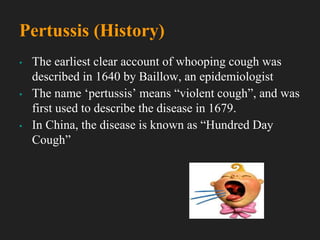
▪ The earliest clear account of whooping cough was
described in 1640 by Baillow, an epidemiologist
▪ The name ‘pertussis’ means “violent cough”, and was
first used to describe the disease in 1679.
▪ In China, the disease is known as “Hundred Day
Cough”
Pertussis (History)
▪ An acute infectious disease, usually of young children
caused by B.pertussis.
▪ Insidious onset with mild fever and an irritating cough
gradually becoming paroxyamal with the characteristic
“whoop”
Pertussis
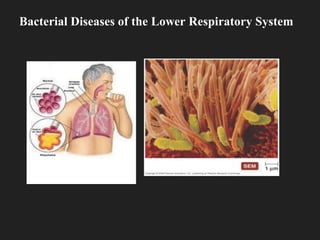
Bacterial Diseases of the Lower Respiratory System
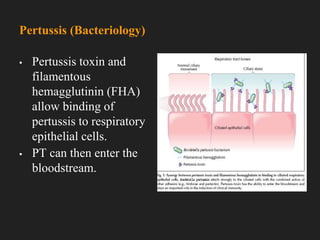
▪ Pertussis toxin and
filamentous
hemagglutinin (FHA)
allow binding of
pertussis to respiratory
epithelial cells.
▪ PT can then enter the
bloodstream.
Pertussis (Bacteriology)
▪ AGENT FACTORS
▪ B. pertussis is very contagious, and attack rates
among susceptible groups range from 50-100%
depending on the nature of the exposure.
▪ B. pertusis occurs in smooth and rough phases,
capsulated and non-capsulated form, elaborates an
exotoxins and endotoxins
▪ B. pertusis is antigenically highly complex. It carries
3 major agglutinogens-1,2,3 and several minor ones
▪ Survives only for very short periods outside the
human body
Epidemiological determinants
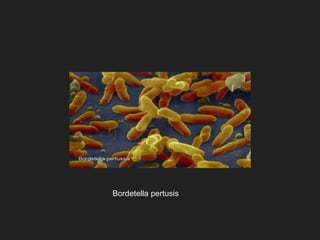
Bordetella pertusis
AGE: disease of infants and pre-school children;
however, children under the age of 5 years are at the
highest risk of developing more serious symptoms.
Being in close contact with an infected person for
extended periods of time increases the risk of
becoming infected
IMMUNITY: recovery from whooping cough or
adequate immunization is followed by immunity.
Infants are susceptible to infection from birth bec.
Maternal antibody does not appear to give them
protection. no cross immunity with B. Parapertussis
HOST FACTORS
▪ B. pertusis infects only man, source is a case of
pertusis
▪ Transmission is felt to occur by aerosol droplet, and
exposure to a coughing patient.
▪ There are no known animal reservoirs for B pertussis,
and the organism does not survive for prolonged
periods in the environment.
▪ No long-term carrier state had been identified, but
asymptomatic culture positive persons can be
detected during known exposures.
Source of infection
▪ The bacilli occurs abundantly in the nasopharyngeal
and bronchial secretions, which are infective
▪ Objects freshly contaminated by such discharges are
also infective
Infective material
▪ Whooping cough is most infectious during catarrhal
stage.
▪ The infective period may be considered to extend
from a week after exposure to about 3 weeks after the
onset of paroxysmal stage
Infective period
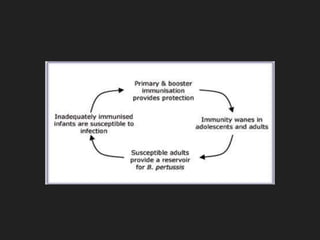
▪ Whole cell pertussis vaccine has been responsible for
a major reduction in disease incidence, but has caused
a shift in the peak age of disease.
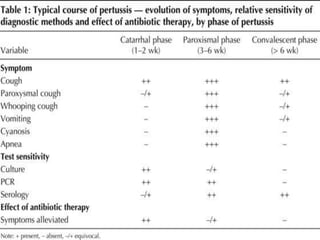
Stage 1 (Catarrhal):
▪ Cold, runny nose and irritating cough
▪ Most infectious stage
Stage 2 (Paroxysmal):
▪ Severe series of coughs usually ending with a high-
pitched whoop
▪ The whoop starts 1 to 2 weeks after the cold
symptoms and lasts 1 to 2 months
▪ Thick, clear, sticky mucous may be coughed up at the
end of the coughing spasm
▪ Coughing spasms are more frequent at night
CLINICAL COURSE
Stage 3 (Convalescent):
▪ Gradual disappearance of symptoms occurring over
2 to 4 weeks, however, coughing spells can last for
weeks or months
▪ Cough may become louder and may sound like it is
getting worse as the person is getting better
▪ Coughing may flare up again later in a cold or upper
respiratory illness. This does not mean that the
person has been re-infected with pertussis
▪ After an incubation period of 1-3 weeks, signs and
symptoms of the catarrhal phase begin
▪ Symptoms include rhinorrhea, lacrimation,
conjunctival injection, malaise, low grade fever, and
are indistinguishable from those of many other
URI’s.
▪ After a few days and up to a week of these
symptoms, a dry nonproductive cough develops, and
this evolves into a characteristic paroxysmal phase.
Pertussis (Clinical Manifestations)
▪ Patients are most contagious during the catarrhal
phase and during the first two weeks after the onset
of coughing.
▪ Prodromal symptoms during this phase can include
complaints of pharyngeal discomfort.
▪ During this phase, patients can develop a marked
leukocytosis, with WBC counts greater than 50,000,
with a relative lymphocytosis (less common in
adults).
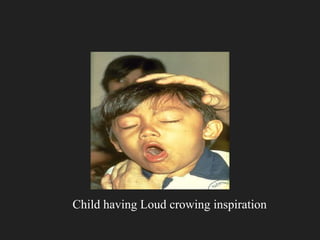
▪ The cough paroxysm consists of a short series of
expiratory bursts, followed by an inspiratory gasp,
which results in the typical “whoop”.
▪ The paroxysmal phase usually lasts 1-6 weeks, but
can last up to 10 weeks
▪ Not all children with pertussis exhibit the
characteristic whoop, and it is fairly uncommon in
infants, who may have apneic episodes
Child having Loud crowing inspiration
▪ In adults, whooping is variable, ranging from 20-40%
in various studies. The disease is generally milder,
but the paroxysmal cough may be just as prolonged.
▪ Paroxysms can number more than 30 per 24 hours,
and are more frequent at night, and can be stimulated
by external stimuli, such as noises or cold air.
▪ Classically they may end with a vomiting episode.
They can be associated with sweating, flushing and
syncope. Patients may cough up thick yellow plugs.
▪ Pertussis is generally more severe in infants, but
presentation can be more atypical in infants, as well
as partially immunized children and previously
immunized adolescents and adults.
▪ In these groups the catarrhal phase can be shortened,
and the true whooping phase may be absent.
▪ The convalescent phase begins with a decrease in the
intensity of the cough and paroxysms, but can still
last for weeks.
▪ It is not clear if pertussis can cause long term
impairment of pulmonary function.
▪ Complications occurs in 5-6 percent of cases
▪ The chief complications of pertussis are bronchitis,
bronchopneumonia and bronchiactasis
▪ secondary infections-otitis media or pneumonia
(either secondary to pertussis or other organisms)
▪ Aspiration can occur secondary to the whooping and
associated gasping
▪ Patients can develop subconjunctival hemorrhages,
epistaxis, haemoptysis and punctate cerebral
haemorrhages which may cause convulsions and
coma
▪ CNS abnormalities can occur particularly in children
6 months and younger.
▪ Direct fluorescent antibody tests (DFA) are often
used as well, but they can be less sensitive and less
specific, and may lead to overdiagnosis and
overtreatment (higher false positives from cross
reaction with normal naso-pharyngeal flora).
▪ With new PCR technology becoming available, the
ability to diagnose Bordetella infection has been
greatly enhanced
▪ A clinical case is defined as a cough illness lasting at
least 2 weeks without other apparent cause
accompanied by one of the following
✔ Paroxysms of coughing
✔ Inspiratory ‘whoop’
✔ Posttussive vomiting
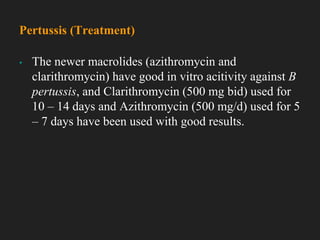
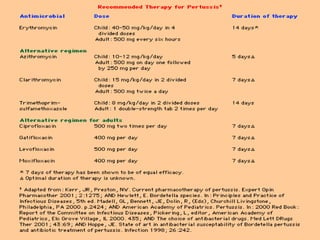
▪ The newer macrolides (azithromycin and
clarithromycin) have good in vitro acitivity against B
pertussis, and Clarithromycin (500 mg bid) used for
10 – 14 days and Azithromycin (500 mg/d) used for 5
– 7 days have been used with good results.
Pertussis (Treatment)
▪ Steroids may reduce the number and severity of
cough paroxysms, but are generally only
recommended for infants with serious disease.
▪ Antibiotics can be used for 2 purposes in the control
and prevention of pertussis :
1. Treatment to modify clinical symptoms of pertussis
by administering to symptomatic patients
Pertussis (Control & Prevention)
▪ Prevention of secondary spread of pertussis by
administering to:
▪ Symptomatic patients (treatment) and interrupting
infectiousness and transmission by eliminating the
organism from the respiratory system.
▪ Asymptomatic contacts (prophylaxis) and
interrupting transmission by eliminating any
organisms that may have been contracted
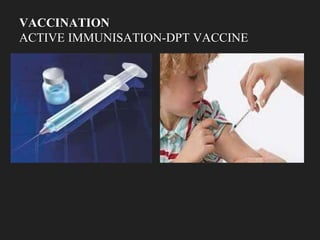
VACCINATION
ACTIVE IMMUNISATION-DPT VACCINE
▪ Other methods of preventing the spread of Pertussis
include:
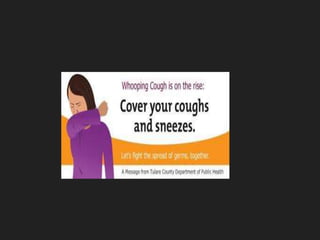
▪ Washing hands with soap and warm water.
▪ Teaching children to cover mouth and nose if
coughing or sneezing and to wash hands after doing
so.
▪ Not sharing eating utensils and drinking glasses.
▪ Minimizing the amount of contact you have with
someone you know is infected or if you are infected,
minimizing the amount of time you are around
others.
Are there other ways to prevent
Pertussis?
Whooping Cough infectious diseases presentation

Whooping Cough infectious diseases presentation

  • 1.
    WHOOPING COUGH Sanu SanthoshDaniel 503 Infectious Diseases PPT
  • 2.
    ▪ The earliestclear account of whooping cough was described in 1640 by Baillow, an epidemiologist ▪ The name ‘pertussis’ means “violent cough”, and was first used to describe the disease in 1679. ▪ In China, the disease is known as “Hundred Day Cough” Pertussis (History)
  • 3.
    ▪ An acuteinfectious disease, usually of young children caused by B.pertussis. ▪ Insidious onset with mild fever and an irritating cough gradually becoming paroxyamal with the characteristic “whoop” Pertussis
  • 4.
    Bacterial Diseases ofthe Lower Respiratory System
  • 5.
    ▪ Pertussis toxinand filamentous hemagglutinin (FHA) allow binding of pertussis to respiratory epithelial cells. ▪ PT can then enter the bloodstream. Pertussis (Bacteriology)
  • 7.
    ▪ AGENT FACTORS ▪B. pertussis is very contagious, and attack rates among susceptible groups range from 50-100% depending on the nature of the exposure. ▪ B. pertusis occurs in smooth and rough phases, capsulated and non-capsulated form, elaborates an exotoxins and endotoxins ▪ B. pertusis is antigenically highly complex. It carries 3 major agglutinogens-1,2,3 and several minor ones ▪ Survives only for very short periods outside the human body Epidemiological determinants
  • 8.
  • 9.
    AGE: disease ofinfants and pre-school children; however, children under the age of 5 years are at the highest risk of developing more serious symptoms. Being in close contact with an infected person for extended periods of time increases the risk of becoming infected IMMUNITY: recovery from whooping cough or adequate immunization is followed by immunity. Infants are susceptible to infection from birth bec. Maternal antibody does not appear to give them protection. no cross immunity with B. Parapertussis HOST FACTORS
  • 10.
    ▪ B. pertusisinfects only man, source is a case of pertusis ▪ Transmission is felt to occur by aerosol droplet, and exposure to a coughing patient. ▪ There are no known animal reservoirs for B pertussis, and the organism does not survive for prolonged periods in the environment. ▪ No long-term carrier state had been identified, but asymptomatic culture positive persons can be detected during known exposures. Source of infection
  • 12.
    ▪ The bacillioccurs abundantly in the nasopharyngeal and bronchial secretions, which are infective ▪ Objects freshly contaminated by such discharges are also infective Infective material
  • 13.
    ▪ Whooping coughis most infectious during catarrhal stage. ▪ The infective period may be considered to extend from a week after exposure to about 3 weeks after the onset of paroxysmal stage Infective period
  • 14.
    ▪ Whole cellpertussis vaccine has been responsible for a major reduction in disease incidence, but has caused a shift in the peak age of disease.
  • 15.
    Stage 1 (Catarrhal): ▪Cold, runny nose and irritating cough ▪ Most infectious stage Stage 2 (Paroxysmal): ▪ Severe series of coughs usually ending with a high- pitched whoop ▪ The whoop starts 1 to 2 weeks after the cold symptoms and lasts 1 to 2 months ▪ Thick, clear, sticky mucous may be coughed up at the end of the coughing spasm ▪ Coughing spasms are more frequent at night CLINICAL COURSE
  • 16.
    Stage 3 (Convalescent): ▪Gradual disappearance of symptoms occurring over 2 to 4 weeks, however, coughing spells can last for weeks or months ▪ Cough may become louder and may sound like it is getting worse as the person is getting better ▪ Coughing may flare up again later in a cold or upper respiratory illness. This does not mean that the person has been re-infected with pertussis
  • 17.
    ▪ After anincubation period of 1-3 weeks, signs and symptoms of the catarrhal phase begin ▪ Symptoms include rhinorrhea, lacrimation, conjunctival injection, malaise, low grade fever, and are indistinguishable from those of many other URI’s. ▪ After a few days and up to a week of these symptoms, a dry nonproductive cough develops, and this evolves into a characteristic paroxysmal phase. Pertussis (Clinical Manifestations)
  • 18.
    ▪ Patients aremost contagious during the catarrhal phase and during the first two weeks after the onset of coughing. ▪ Prodromal symptoms during this phase can include complaints of pharyngeal discomfort. ▪ During this phase, patients can develop a marked leukocytosis, with WBC counts greater than 50,000, with a relative lymphocytosis (less common in adults).
  • 19.
    ▪ The coughparoxysm consists of a short series of expiratory bursts, followed by an inspiratory gasp, which results in the typical “whoop”. ▪ The paroxysmal phase usually lasts 1-6 weeks, but can last up to 10 weeks ▪ Not all children with pertussis exhibit the characteristic whoop, and it is fairly uncommon in infants, who may have apneic episodes
  • 20.
    Child having Loudcrowing inspiration
  • 21.
    ▪ In adults,whooping is variable, ranging from 20-40% in various studies. The disease is generally milder, but the paroxysmal cough may be just as prolonged. ▪ Paroxysms can number more than 30 per 24 hours, and are more frequent at night, and can be stimulated by external stimuli, such as noises or cold air.
  • 22.
    ▪ Classically theymay end with a vomiting episode. They can be associated with sweating, flushing and syncope. Patients may cough up thick yellow plugs. ▪ Pertussis is generally more severe in infants, but presentation can be more atypical in infants, as well as partially immunized children and previously immunized adolescents and adults. ▪ In these groups the catarrhal phase can be shortened, and the true whooping phase may be absent.
  • 23.
    ▪ The convalescentphase begins with a decrease in the intensity of the cough and paroxysms, but can still last for weeks. ▪ It is not clear if pertussis can cause long term impairment of pulmonary function.
  • 25.
    ▪ Complications occursin 5-6 percent of cases ▪ The chief complications of pertussis are bronchitis, bronchopneumonia and bronchiactasis ▪ secondary infections-otitis media or pneumonia (either secondary to pertussis or other organisms) ▪ Aspiration can occur secondary to the whooping and associated gasping
  • 26.
    ▪ Patients candevelop subconjunctival hemorrhages, epistaxis, haemoptysis and punctate cerebral haemorrhages which may cause convulsions and coma ▪ CNS abnormalities can occur particularly in children 6 months and younger.
  • 27.
    ▪ Direct fluorescentantibody tests (DFA) are often used as well, but they can be less sensitive and less specific, and may lead to overdiagnosis and overtreatment (higher false positives from cross reaction with normal naso-pharyngeal flora). ▪ With new PCR technology becoming available, the ability to diagnose Bordetella infection has been greatly enhanced
  • 28.
    ▪ A clinicalcase is defined as a cough illness lasting at least 2 weeks without other apparent cause accompanied by one of the following ✔ Paroxysms of coughing ✔ Inspiratory ‘whoop’ ✔ Posttussive vomiting
  • 29.
    ▪ The newermacrolides (azithromycin and clarithromycin) have good in vitro acitivity against B pertussis, and Clarithromycin (500 mg bid) used for 10 – 14 days and Azithromycin (500 mg/d) used for 5 – 7 days have been used with good results. Pertussis (Treatment)
  • 30.
    ▪ Steroids mayreduce the number and severity of cough paroxysms, but are generally only recommended for infants with serious disease.
  • 32.
    ▪ Antibiotics canbe used for 2 purposes in the control and prevention of pertussis : 1. Treatment to modify clinical symptoms of pertussis by administering to symptomatic patients Pertussis (Control & Prevention)
  • 33.
    ▪ Prevention ofsecondary spread of pertussis by administering to: ▪ Symptomatic patients (treatment) and interrupting infectiousness and transmission by eliminating the organism from the respiratory system. ▪ Asymptomatic contacts (prophylaxis) and interrupting transmission by eliminating any organisms that may have been contracted
  • 34.
  • 35.
    ▪ Other methodsof preventing the spread of Pertussis include: ▪ Washing hands with soap and warm water. ▪ Teaching children to cover mouth and nose if coughing or sneezing and to wash hands after doing so. ▪ Not sharing eating utensils and drinking glasses. ▪ Minimizing the amount of contact you have with someone you know is infected or if you are infected, minimizing the amount of time you are around others. Are there other ways to prevent Pertussis?