

A Journey Into The Mind Of…  Carl Jung "Everything that irritates us about others can lead us to an understanding of ourselves."
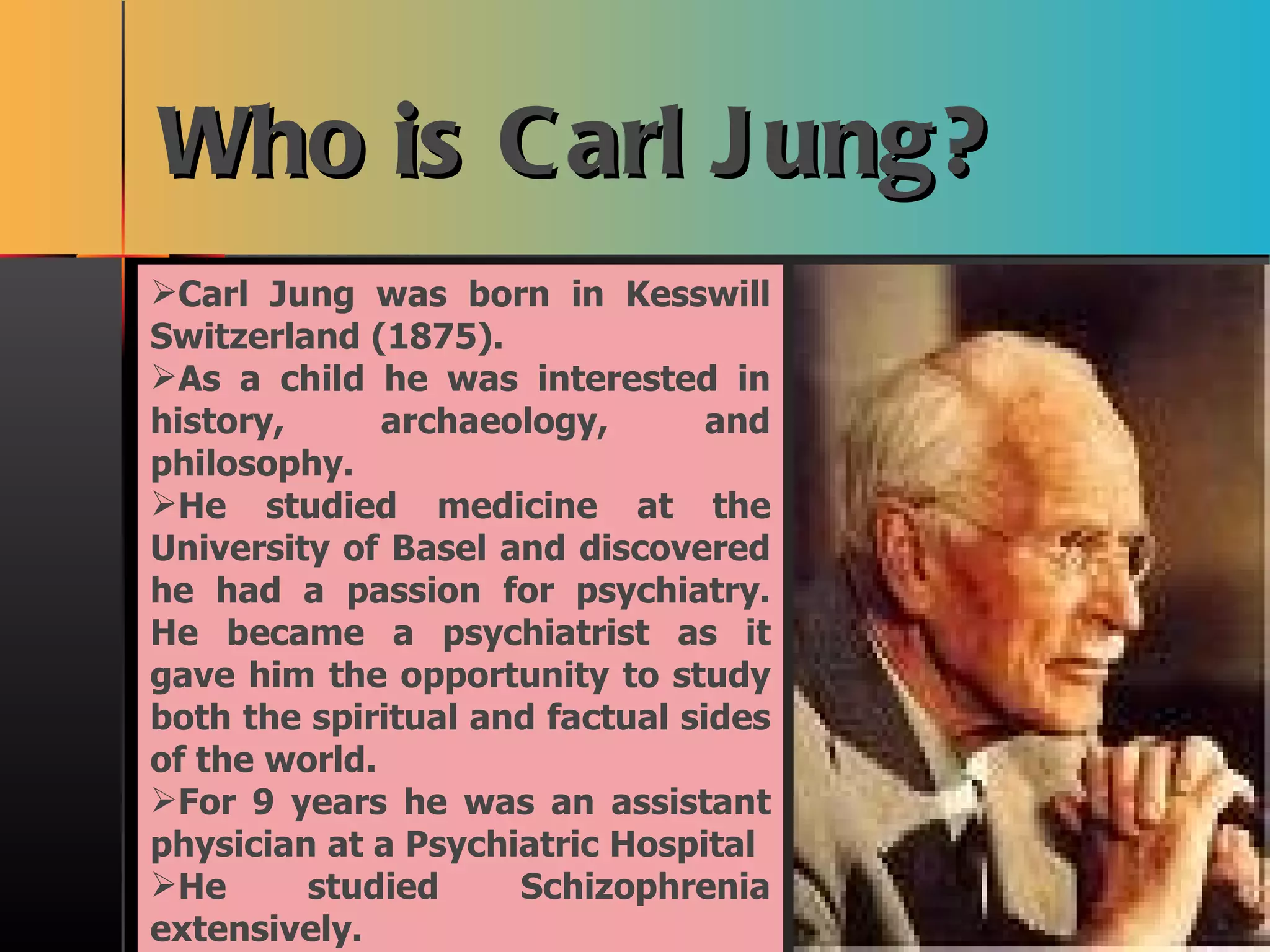
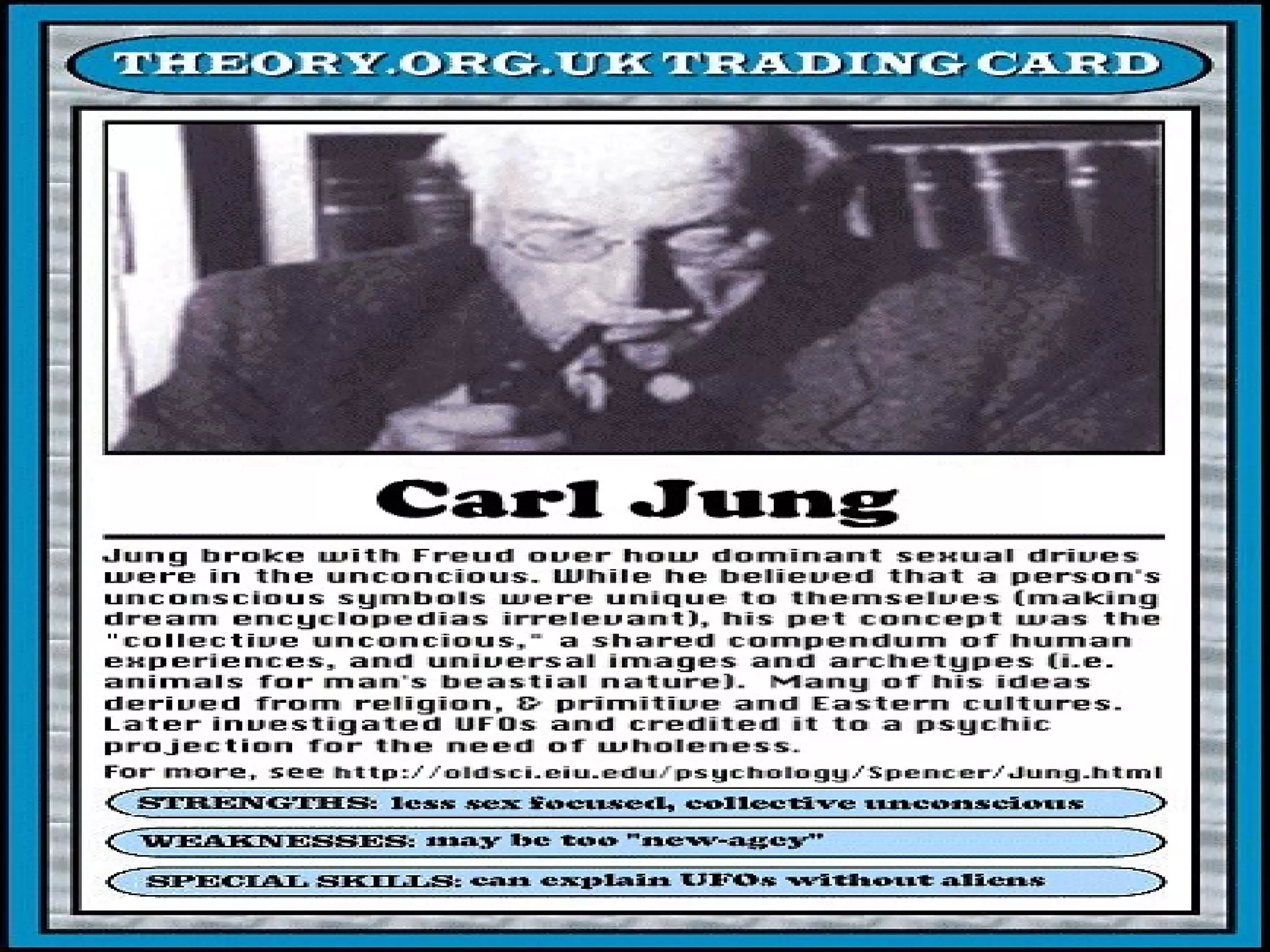
Who is Carl Jung? Carl Jung was born in Kesswill Switzerland (1875).  As a child he was interested in history, archaeology, and philosophy. He studied medicine at the University of Basel and discovered he had a passion for psychiatry. He became a psychiatrist as it gave him the opportunity to study both the spiritual and factual sides of the world. For 9 years he was an assistant physician at a Psychiatric Hospital He studied Schizophrenia extensively.
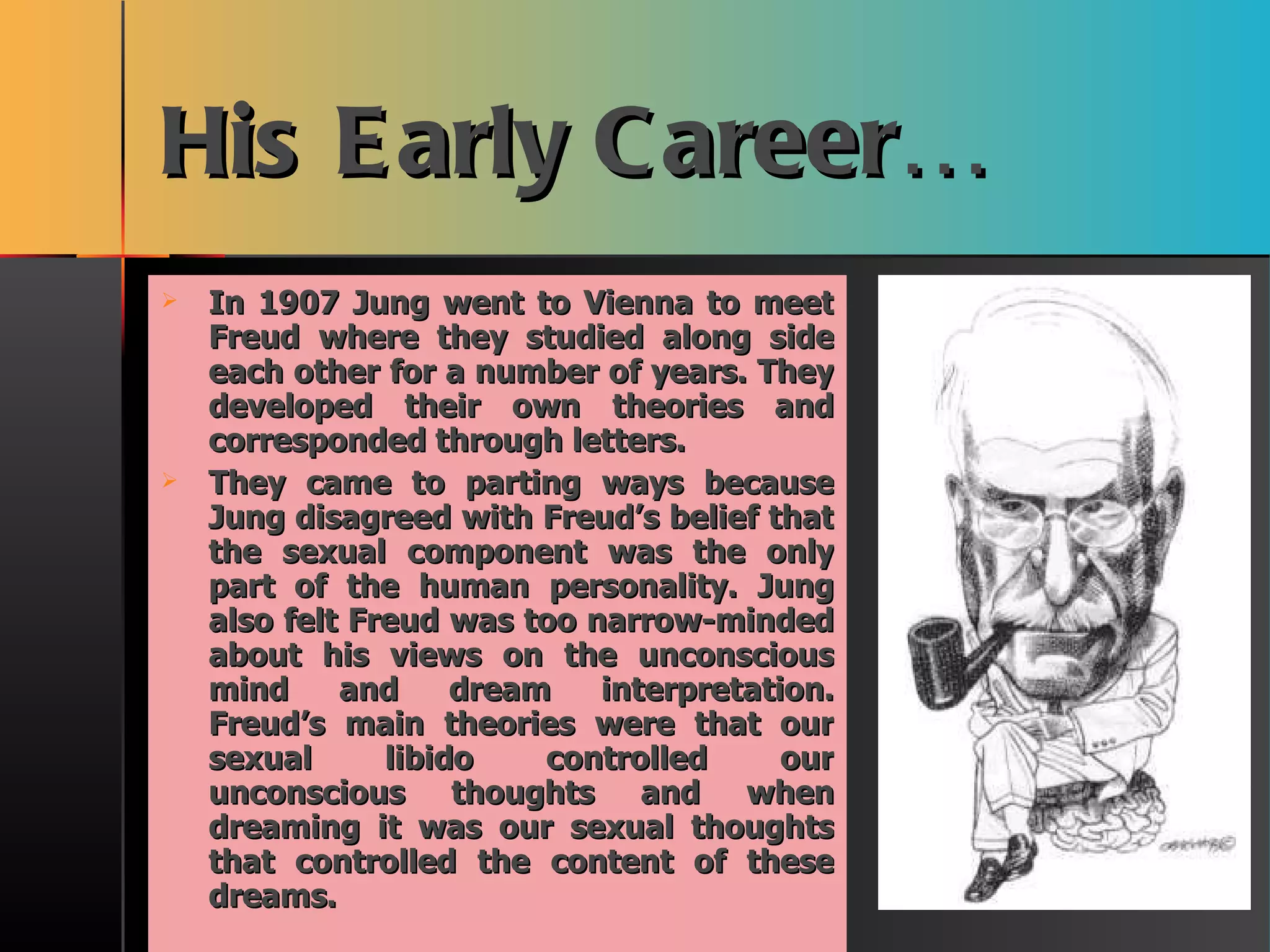
His Early Career… In 1907 Jung went to Vienna to meet Freud where they studied along side each other for a number of years. They developed their own theories and corresponded through letters. They came to parting ways because Jung disagreed with Freud’s belief that the sexual component was the only part of the human personality. Jung also felt Freud was too narrow-minded about his views on the unconscious mind and dream interpretation. Freud’s main theories were that our sexual libido controlled our unconscious thoughts and when dreaming it was our sexual thoughts that controlled the content of these dreams.
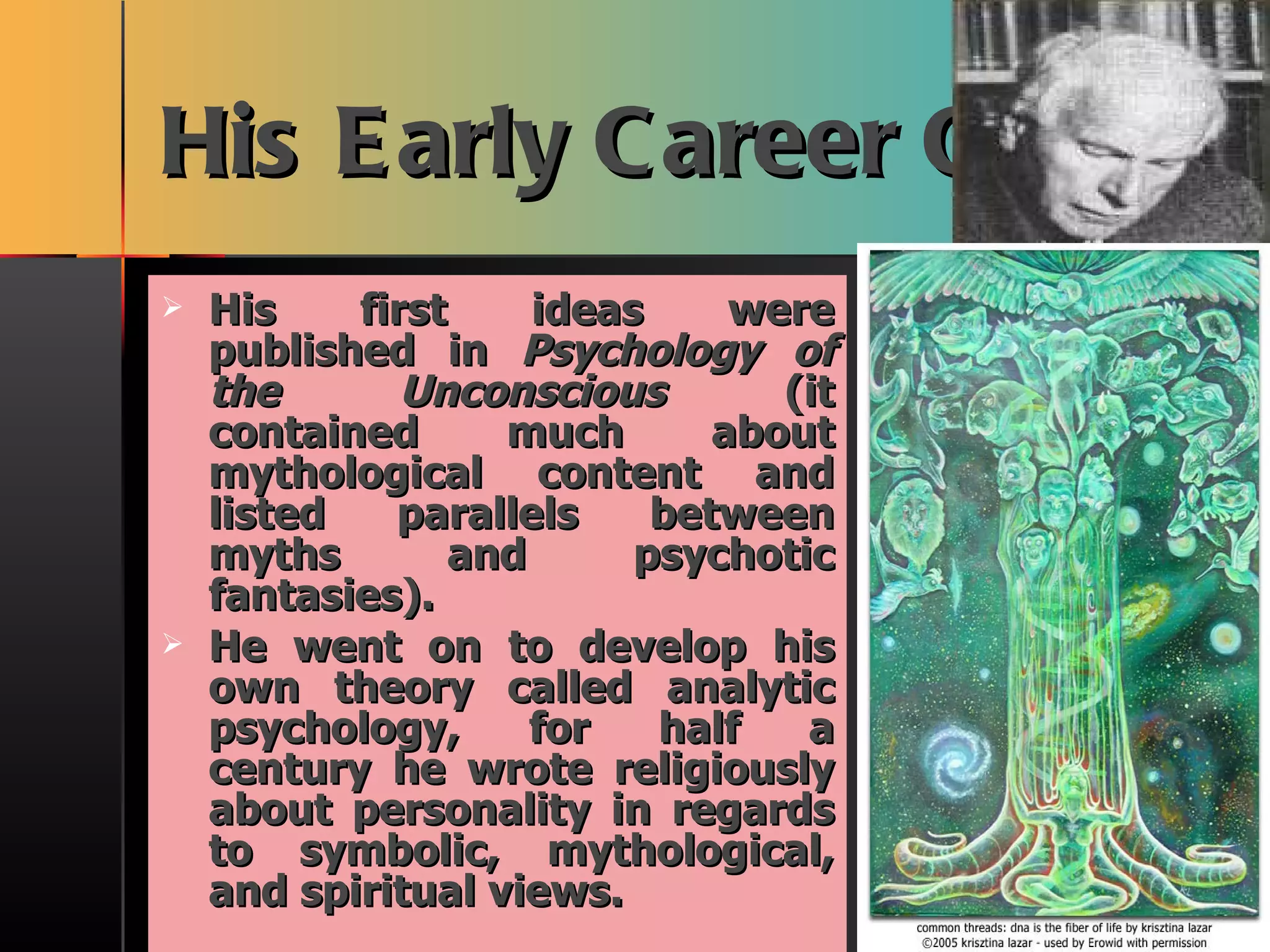
His Early Career Cont. His first ideas were published in  Psychology of the Unconscious  (it contained much about mythological content and listed parallels between myths and psychotic fantasies). He went on to develop his own theory called analytic psychology, for half a century he wrote religiously about personality in regards to symbolic, mythological, and spiritual views.
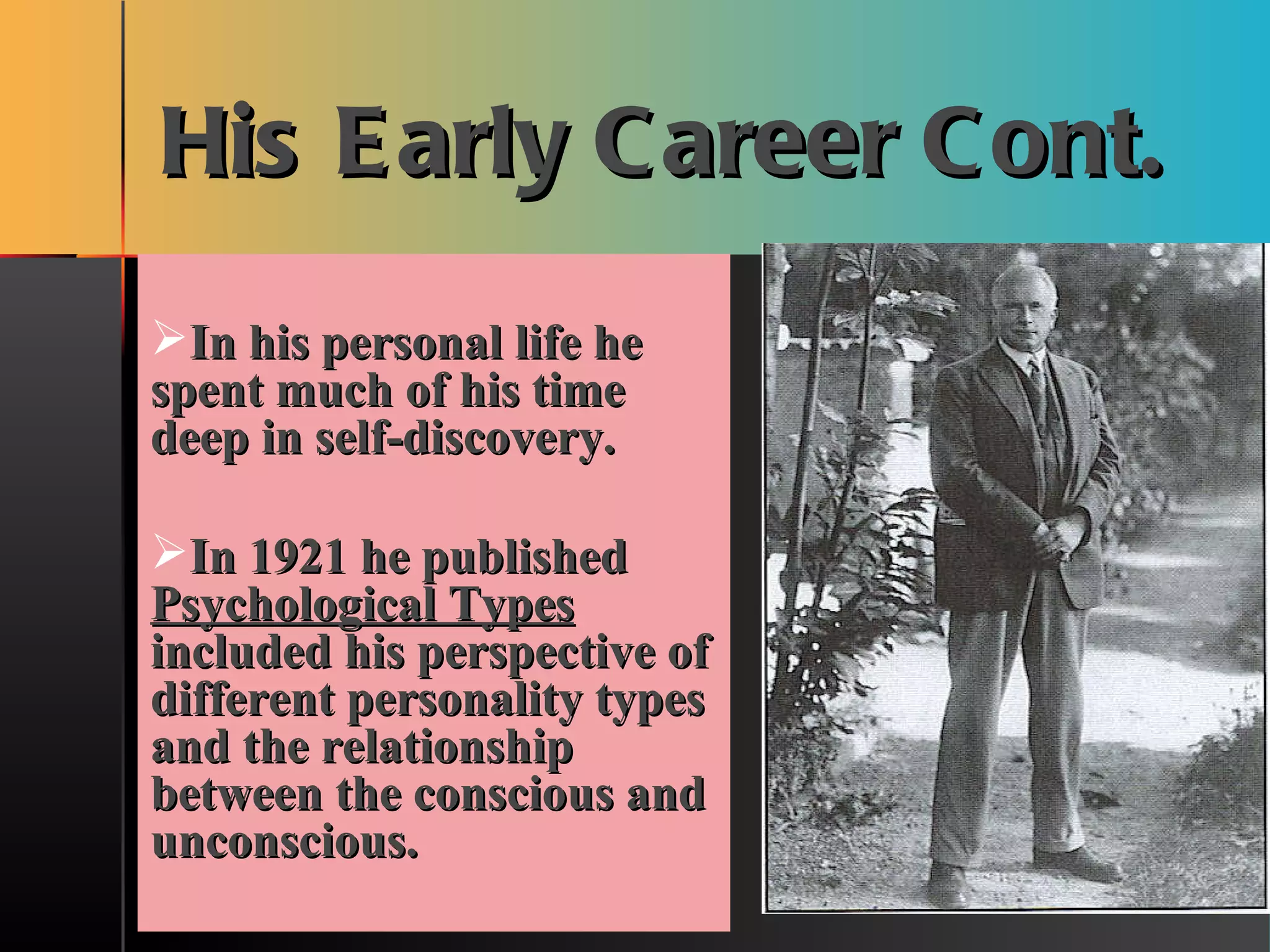
His Early Career Cont. In his personal life he spent much of his time deep in self-discovery. In 1921 he published  Psychological Types  included his perspective of different personality types and the relationship between the conscious and unconscious.
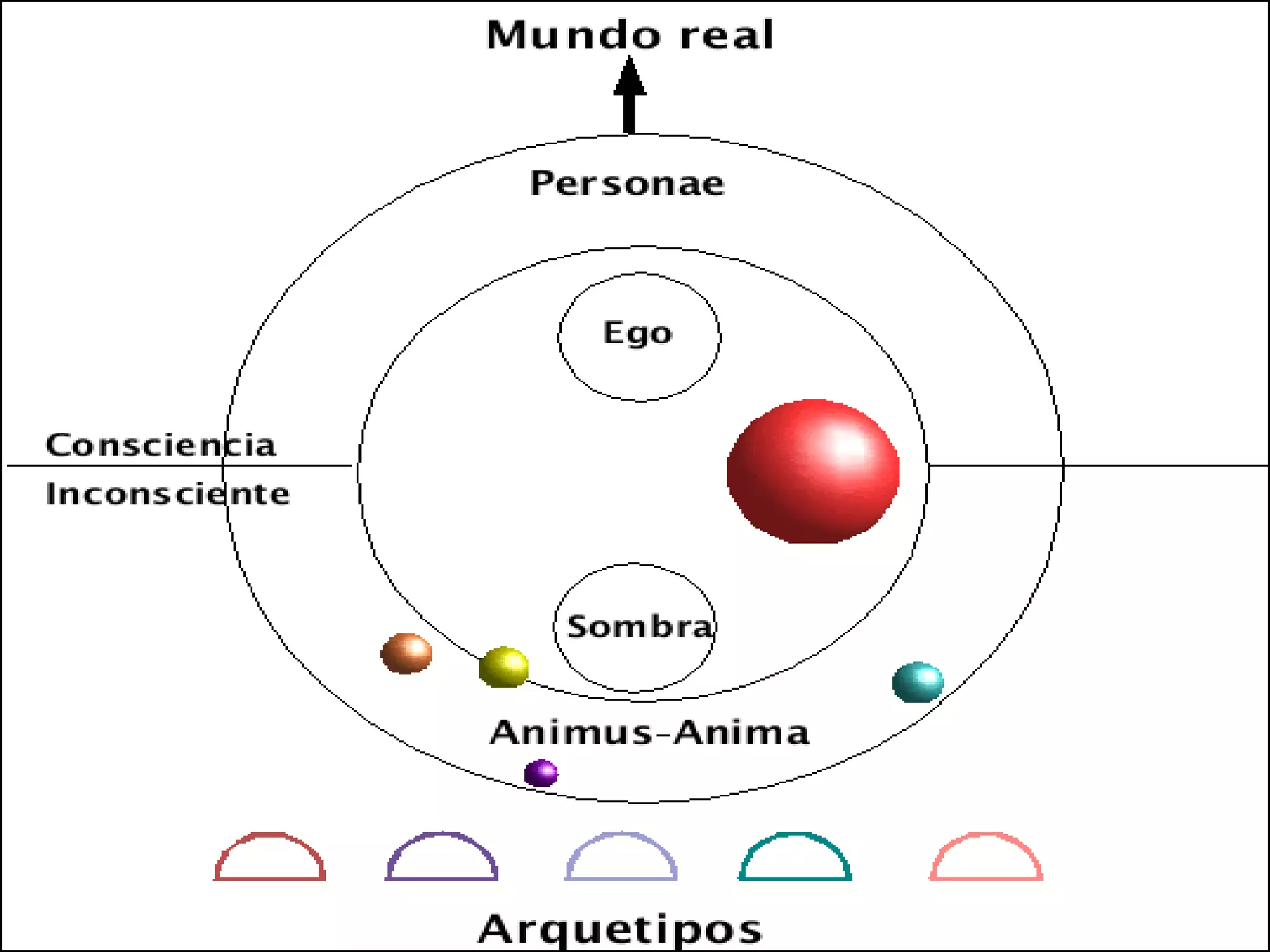
His Major Theories… · Focused on the unconscious and conscious mind…he believed that the unconscious played more of a role in controlling our thought process (especially during dreaming) ·The collective unconscious was also more dominant factor in the development of human personality
His Major Theories Cont… · He believed in two personality types ·Introvert – someone who keeps to themselves and is emotionally self-sufficient Extrovert- someone who is outgoing and use their psychological power to draw people towards them
 
A Final Word on Carl  Jung… ·      Jung’s theories and beliefs are still used amoung therapists today ·     Much of his work can be applied to dream interpretation ·     Due to poor health he retired and started teaching in 1947  He died in Zürich 1961
 
 
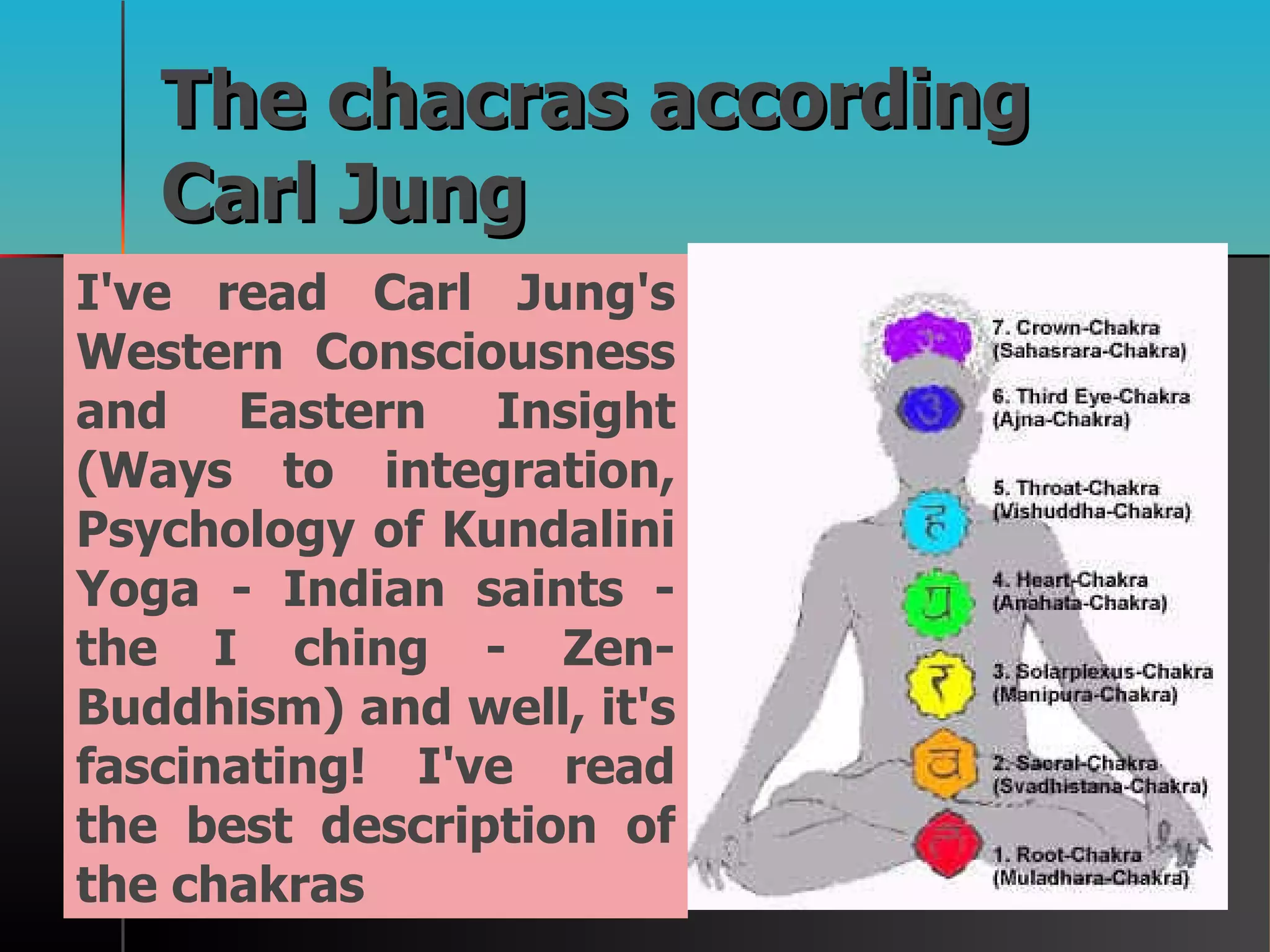
The chacras according Carl Jung I've read Carl Jung's Western Consciousness and Eastern Insight (Ways to integration, Psychology of Kundalini Yoga - Indian saints - the I ching - Zen-Buddhism) and well, it's fascinating! I've read the best description of the chakras
r 4 PRINCIPLES ON THE PATH OF VIPASSANA MEDITATION (ONE OF THE MANY WAYS TO LIBERATION):  1. Mindfulness.. Cultivate and deepen and abide in a skill of being attentive in the now. Have continuity of awareness, instead of gaps. 2. Equanimity. Be accepting of the way whatever makes you feel. Don't fight with feeling, if you fight feeling you fight yourself. 3. Relativity. Don't be too judgemental of yourself. An attempt to be more mindful, have more equanimity and consistency than usual is ok. 4. Consistency. Even if you encounter the blisfull or the demonic, which could happen along the line, just observe mindfully as everything else. Then the purification will continue. Even if fear comes up, the generic phenomenon of fear - the phence - that is arising without any reason, observe the fear. Because you're close to going beyond the limited identity. All along the vipassana path if you apply these 4 principles, you will always have the answer for what to do.
 
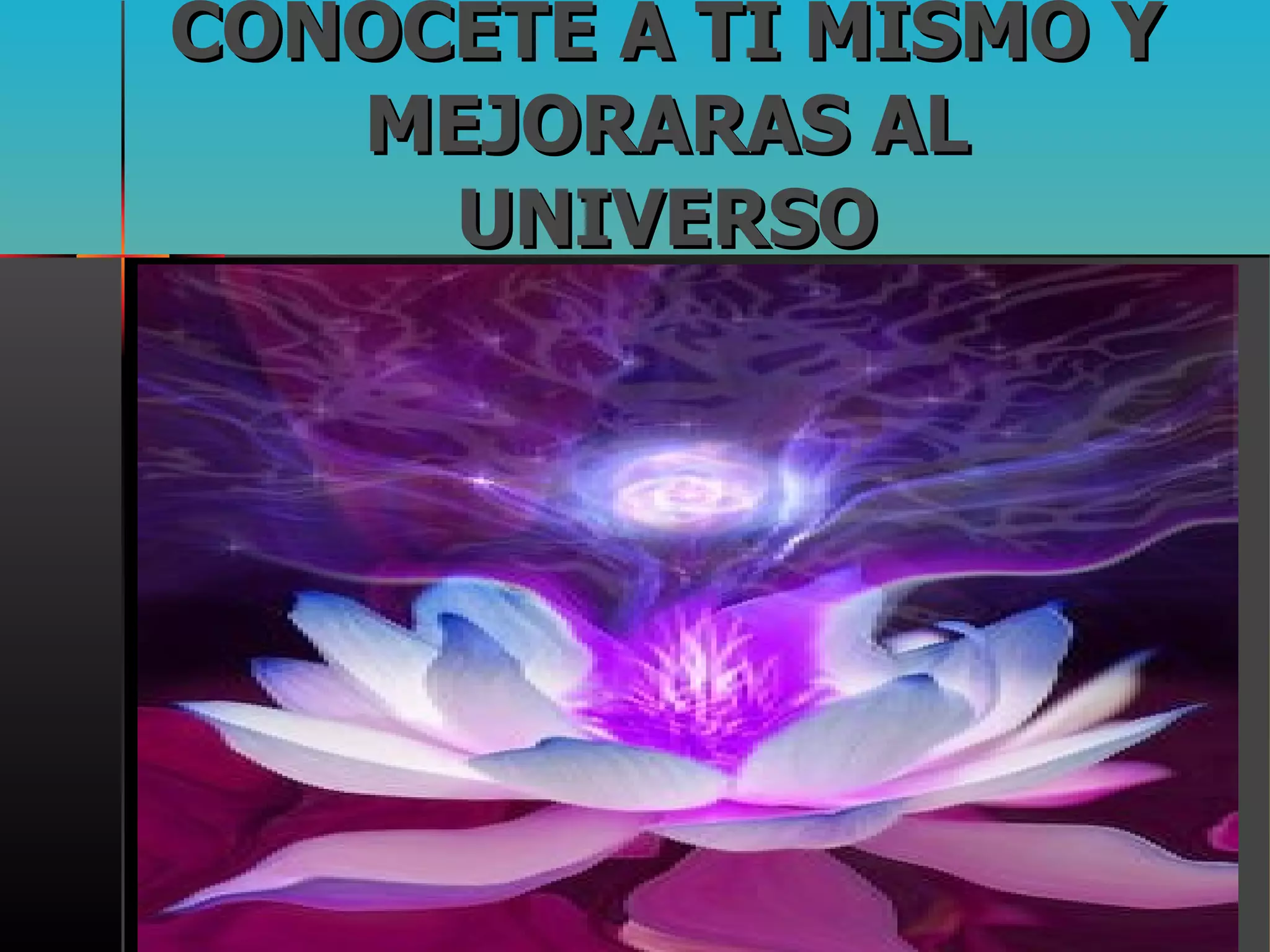
CONOCETE A TI MISMO Y MEJORARAS AL UNIVERSO
 

Karl jung

  • 1.
    A Journey IntoThe Mind Of… Carl Jung "Everything that irritates us about others can lead us to an understanding of ourselves."
  • 2.
    Who is CarlJung? Carl Jung was born in Kesswill Switzerland (1875). As a child he was interested in history, archaeology, and philosophy. He studied medicine at the University of Basel and discovered he had a passion for psychiatry. He became a psychiatrist as it gave him the opportunity to study both the spiritual and factual sides of the world. For 9 years he was an assistant physician at a Psychiatric Hospital He studied Schizophrenia extensively.
  • 3.
    His Early Career…In 1907 Jung went to Vienna to meet Freud where they studied along side each other for a number of years. They developed their own theories and corresponded through letters. They came to parting ways because Jung disagreed with Freud’s belief that the sexual component was the only part of the human personality. Jung also felt Freud was too narrow-minded about his views on the unconscious mind and dream interpretation. Freud’s main theories were that our sexual libido controlled our unconscious thoughts and when dreaming it was our sexual thoughts that controlled the content of these dreams.
  • 4.
    His Early CareerCont. His first ideas were published in Psychology of the Unconscious (it contained much about mythological content and listed parallels between myths and psychotic fantasies). He went on to develop his own theory called analytic psychology, for half a century he wrote religiously about personality in regards to symbolic, mythological, and spiritual views.
  • 5.
    His Early CareerCont. In his personal life he spent much of his time deep in self-discovery. In 1921 he published Psychological Types included his perspective of different personality types and the relationship between the conscious and unconscious.
  • 6.
    His Major Theories…· Focused on the unconscious and conscious mind…he believed that the unconscious played more of a role in controlling our thought process (especially during dreaming) ·The collective unconscious was also more dominant factor in the development of human personality
  • 7.
    His Major TheoriesCont… · He believed in two personality types ·Introvert – someone who keeps to themselves and is emotionally self-sufficient Extrovert- someone who is outgoing and use their psychological power to draw people towards them
  • 8.
  • 9.
    A Final Wordon Carl Jung… ·     Jung’s theories and beliefs are still used amoung therapists today ·     Much of his work can be applied to dream interpretation ·     Due to poor health he retired and started teaching in 1947 He died in Zürich 1961
  • 10.
  • 11.
  • 12.
    The chacras accordingCarl Jung I've read Carl Jung's Western Consciousness and Eastern Insight (Ways to integration, Psychology of Kundalini Yoga - Indian saints - the I ching - Zen-Buddhism) and well, it's fascinating! I've read the best description of the chakras
  • 13.
    r 4 PRINCIPLESON THE PATH OF VIPASSANA MEDITATION (ONE OF THE MANY WAYS TO LIBERATION): 1. Mindfulness.. Cultivate and deepen and abide in a skill of being attentive in the now. Have continuity of awareness, instead of gaps. 2. Equanimity. Be accepting of the way whatever makes you feel. Don't fight with feeling, if you fight feeling you fight yourself. 3. Relativity. Don't be too judgemental of yourself. An attempt to be more mindful, have more equanimity and consistency than usual is ok. 4. Consistency. Even if you encounter the blisfull or the demonic, which could happen along the line, just observe mindfully as everything else. Then the purification will continue. Even if fear comes up, the generic phenomenon of fear - the phence - that is arising without any reason, observe the fear. Because you're close to going beyond the limited identity. All along the vipassana path if you apply these 4 principles, you will always have the answer for what to do.
  • 14.
  • 15.
    CONOCETE A TIMISMO Y MEJORARAS AL UNIVERSO
  • 16.