Downloaded 482 times
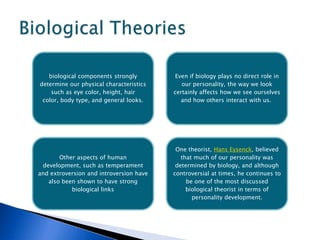
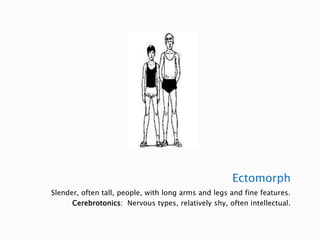
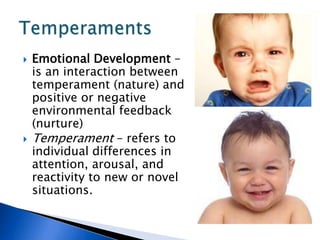
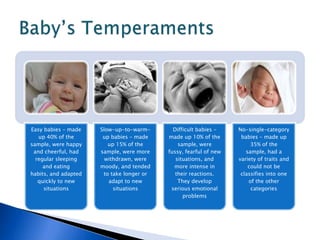

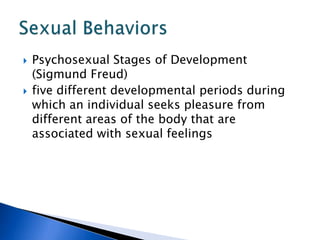


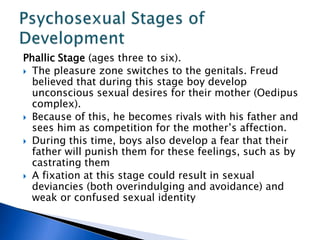
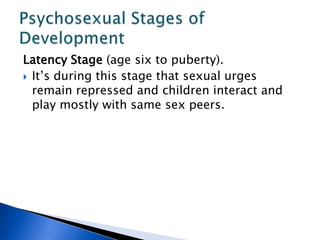



1) Hans Eysenck argued that personality involves both biology and environment. Using factor analysis, he concluded that personality can be categorized into two dimensions: extraversion-introversion and neuroticism. 2) Temperament refers to innate individual differences in attention, arousal, and reactivity that are genetically based. Various theorists have proposed between three to five dimensions of temperament. 3) Sigmund Freud proposed five psychosexual stages of development from infancy to adulthood that influence personality: oral, anal, phallic, latency, and genital stages. Fixations during these stages can result in certain personality traits and behaviors.


