Peritoneum II
To -MBBS 2nd Year
Dr Laxman Khanal
Asst prof. department of Anatomy
BPKIHS, Dharan
06-09-2016
Q. All are the derivatives of dorsal mesogastrium except
a. Greater omentum
b. Gastro splenic ligament
c. Splenorenal ligament
d. Lesser omentum
Q. Which of the following organ is secondary
retroperitoneal organ?
a. Kidney
b. Suprarenal gland
c. Abdominal aorta
d. Duodenum
Q. Most dependent peritoneal space in supine position is-
a. Pouch of Douglas
b. Lesser sac
c. Pouch of Morrison
d. Rectovesicle pouch
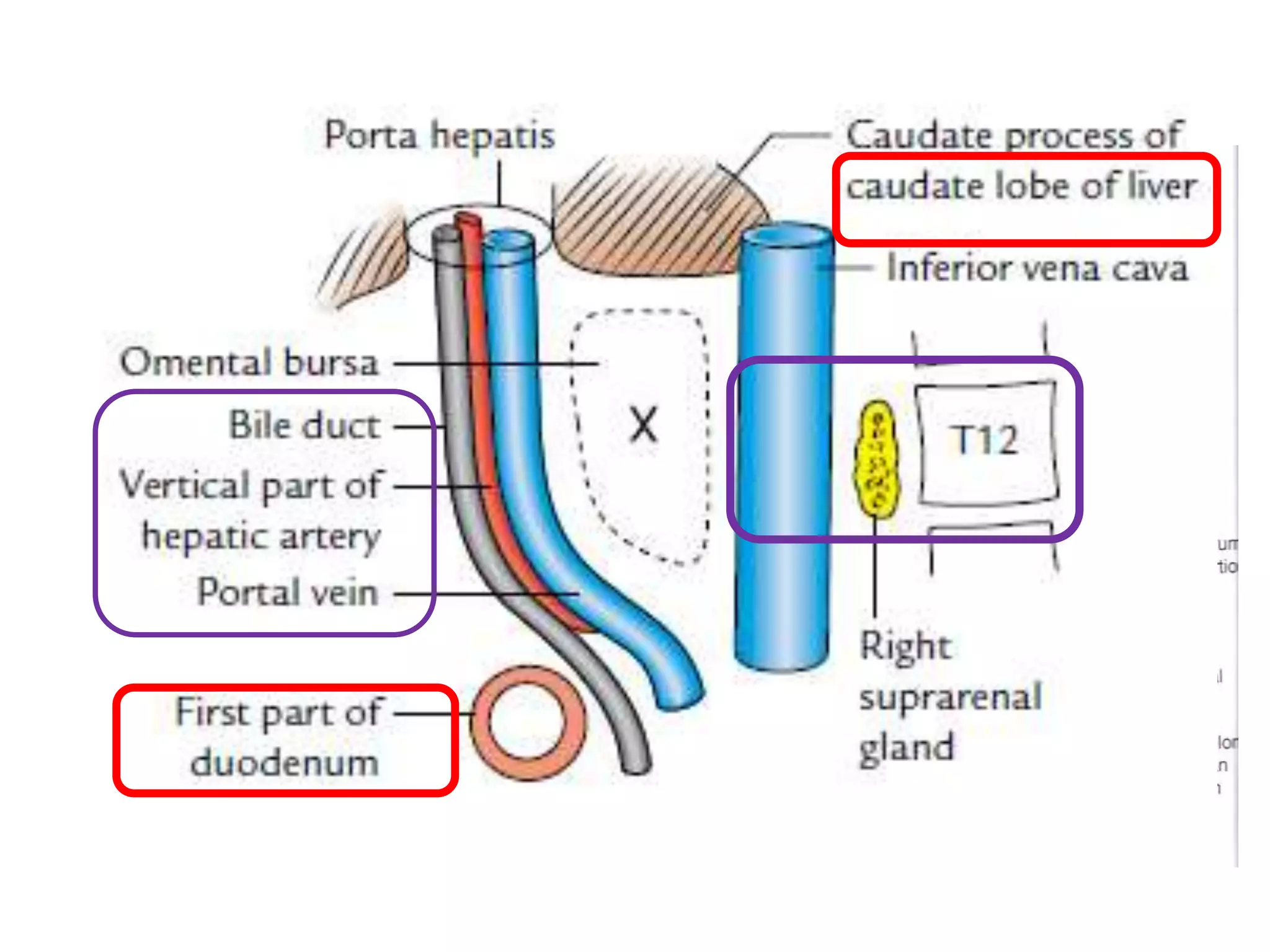
Q. All of the following structure form the posterior
boundary of Epiploic foramen except.
a. IVC
b. Rt suprarenal gland
c. Lt suprarenal gland
d. T12 vertebra
Lesser Sac
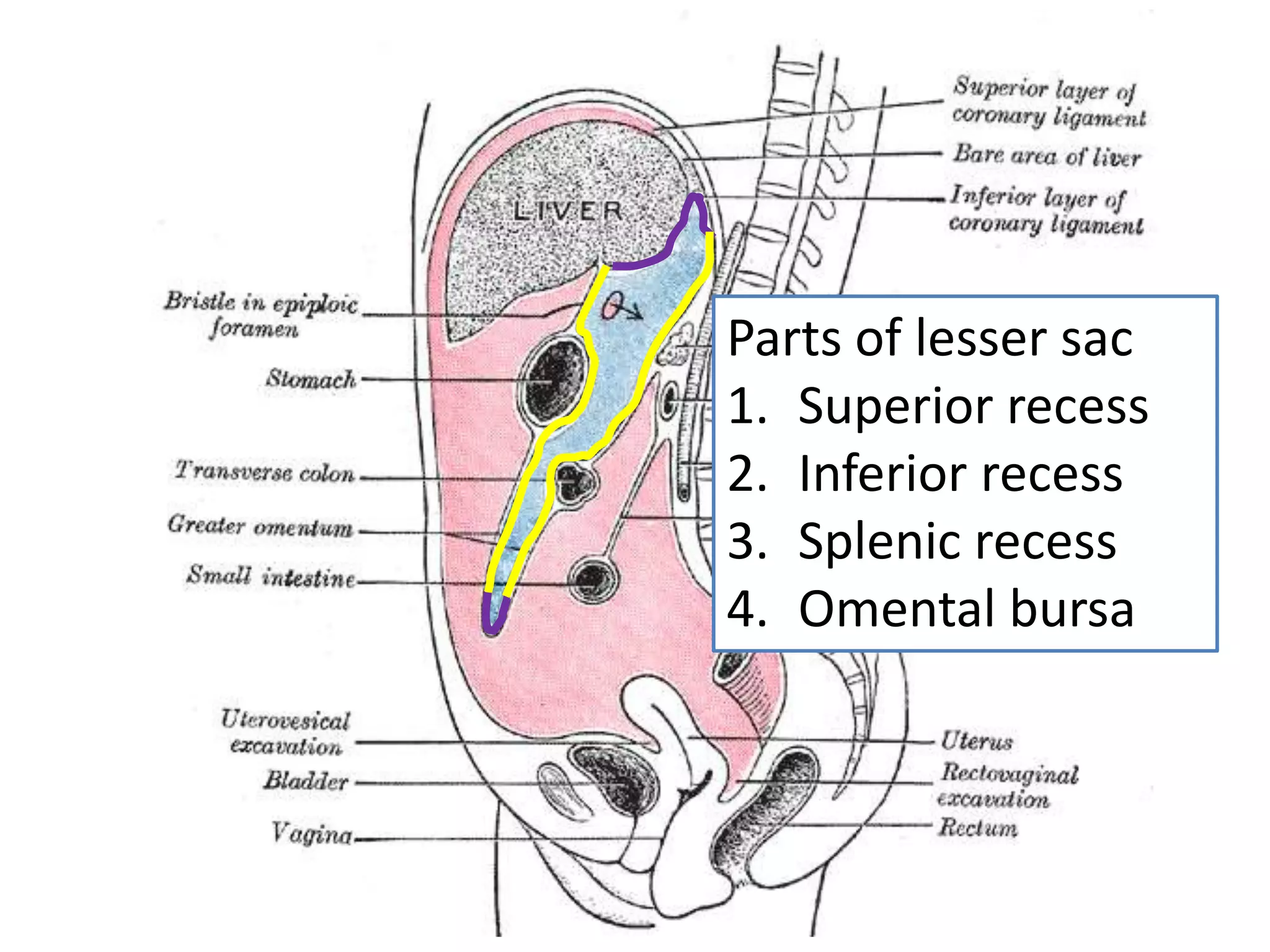
Parts of lesser sac
1. Superior recess
2. Inferior recess
3. Splenic recess
4. Omental bursa
Lesser sac
Position: Behind the lesser omentum and stomach
Walls
• Superior-peritoneum which covers the caudate lobe of
liver and diaphragm
• Anterior: lesser omentum, peritoneum of posterior wall
of stomach, and anterior two layers of greater omentum
• Inferior: Continuative area of anterior and posterior two
layers of greater omentum
• Posterior: Posterior two layers of greater omentum,
transverse colon and transverse mesocolon, peritoneum
covering pancreas, left kidney and suprarenal gland
Supra and infracolic compartment
• The transverse mesocolon divides the abdominal
cavity into a supracolic compartment, containing the
stomach, liver, and spleen, and an infracolic
compartment, containing the small intestine and
ascending and descending colon.
• The infracolic compartment is divided into right and
left infracolic spaces by the mesentery of the small
intestine.
• Free communication occurs between the supracolic
and the infracolic compartments through the
paracolic gutters
Supracolic
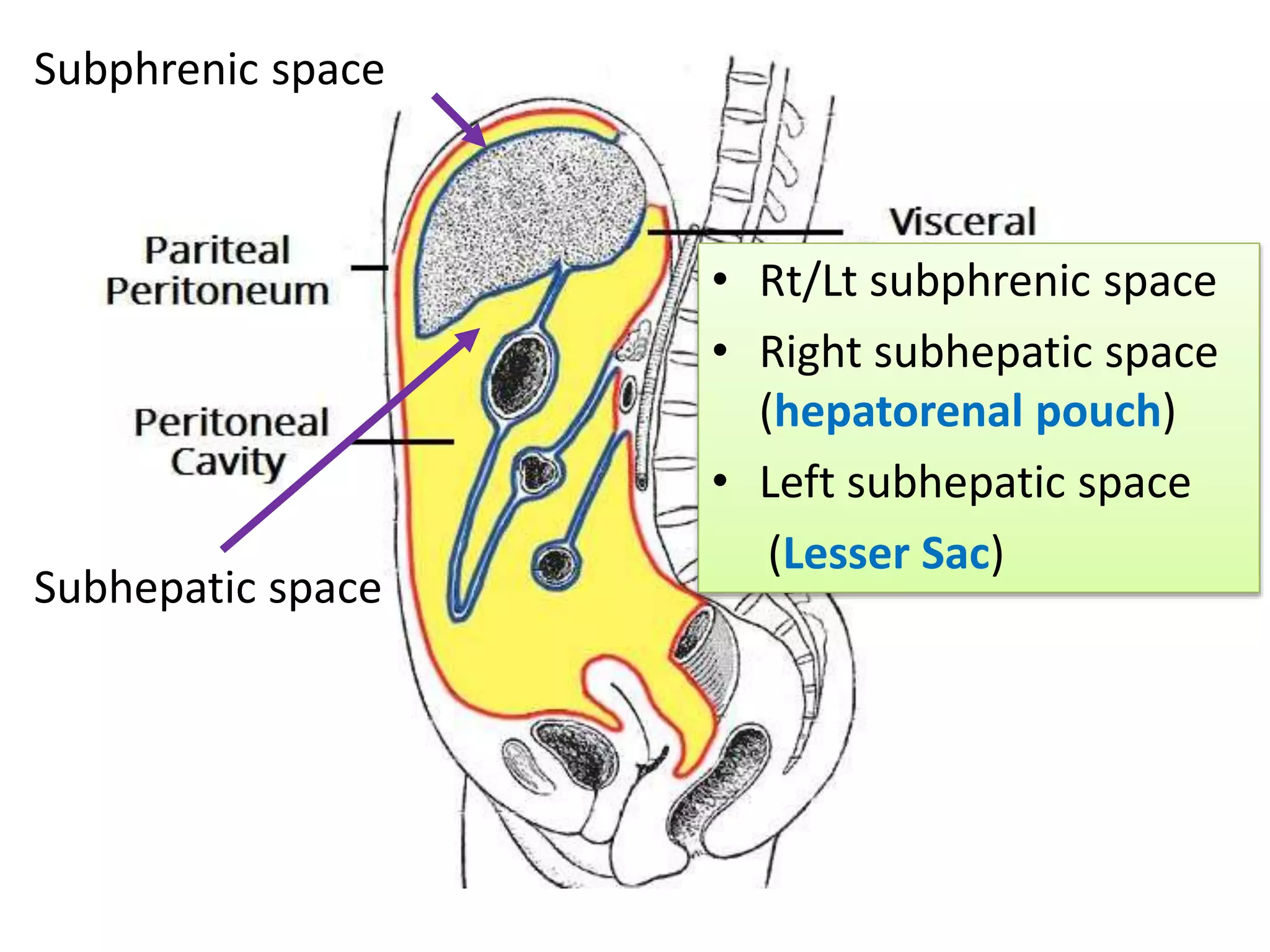
• Rt/Lt subphrenic space
• Right subhepatic space
(hepatorenal pouch)
• Left subhepatic space
(Lesser Sac)
Infracolic
• Rt/Lt infracolic space
• Paracolic gutters
Subphrenic space
Subhepatic space
• Rt/Lt subphrenic space
• Right subhepatic space
(hepatorenal pouch)
• Left subhepatic space
(Lesser Sac)
Rt subhepatic space
(Hepatorenal pouch)
Lt subhepatic space
(Lesser Sac)
Inf layer of coronary
ligaments
Open to Rt paracolic
gutter
Rt lobe of liver Rt Kidney
Morrison’s Pouch
Hepatorenal pouch
Rt subhepatic pouch
• Most dependent part of the peritoneal cavity in supine
position
• Most common site of subphrenic abscess
Infracolic
compartment
• Rt/Lt infracolic space
• Paracolic gutters
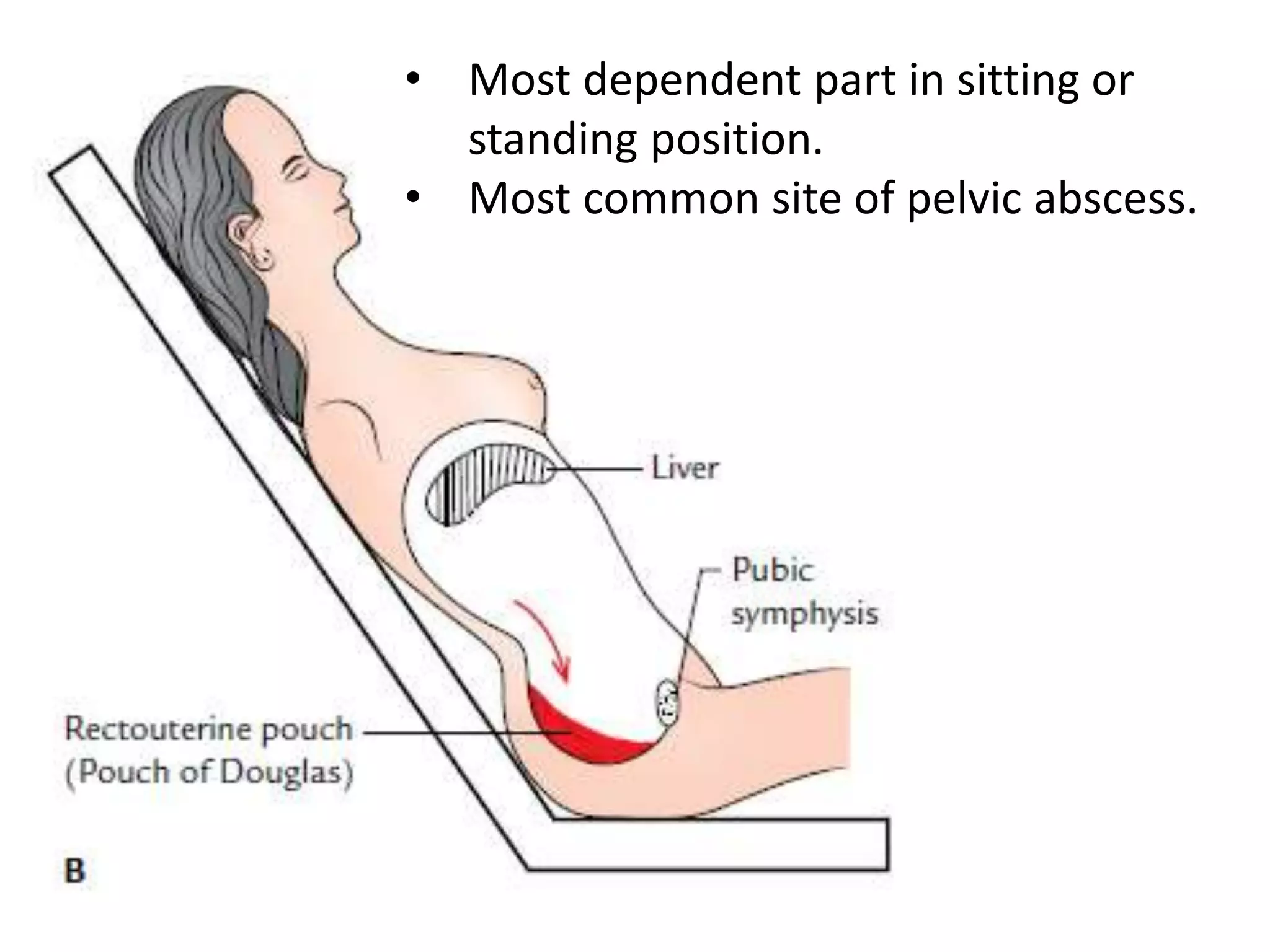
Pelvic part of peritoneal cavity
• Vesicouterine pouch
• Rectouterine pouch
• Most dependent part in sitting or
standing position.
• Most common site of pelvic abscess.
Peritoneal recesses
• These are small spaces of peritoneal cavity
with in large peritoneal cavity. These are
guarded by folds which contain blood vessel.
• Duodenal recesses
• Caecal recess
• Intersigmoid recesses
• Duodenal recesses
• Exist around the fourth part of the duodenum and the
duodenojejunal junction forming a number of named recesses.
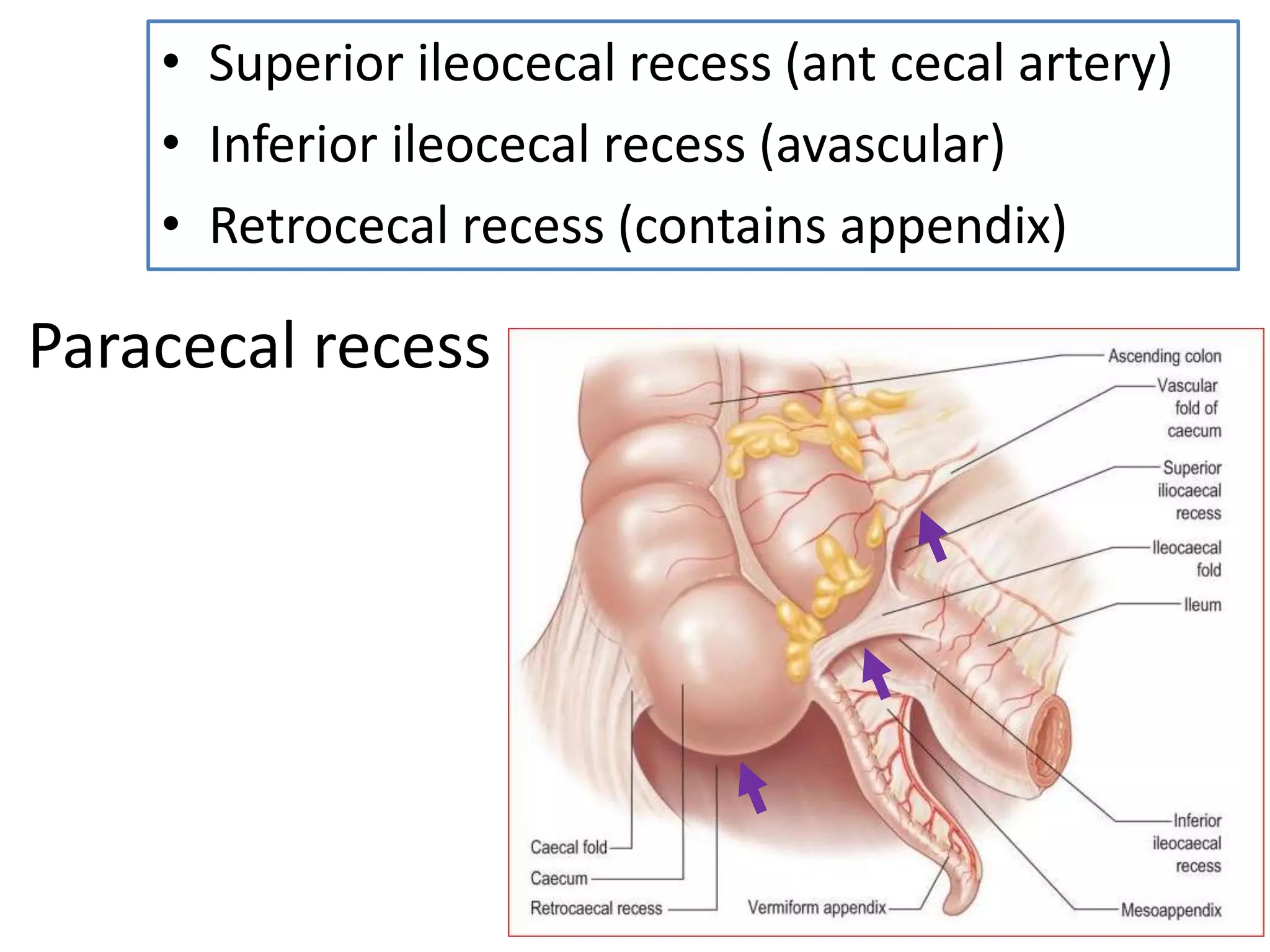
Paracecal recess
• Superior ileocecal recess (ant cecal artery)
• Inferior ileocecal recess (avascular)
• Retrocecal recess (contains appendix)
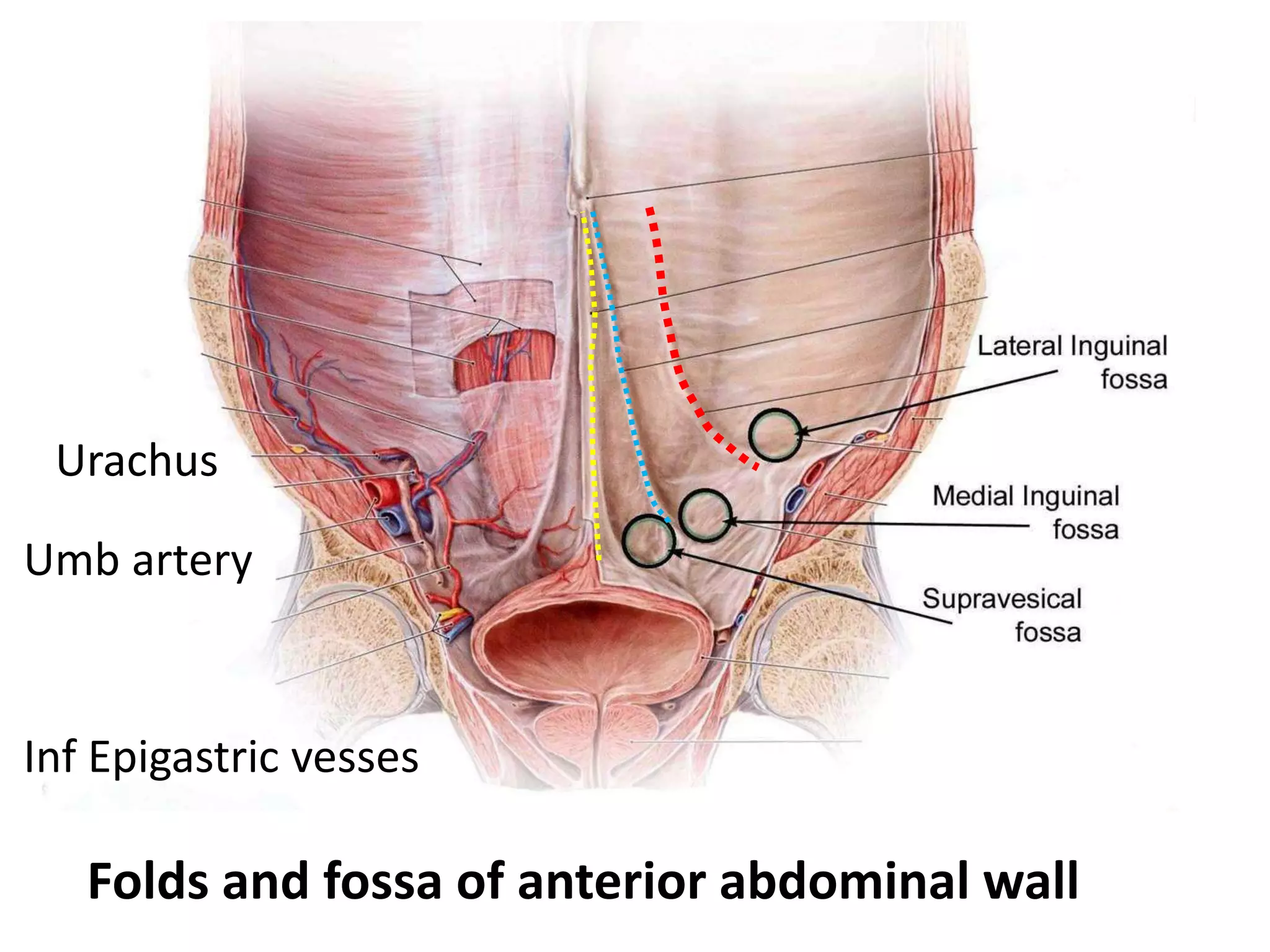
Urachus
Umb artery
Inf Epigastric vesses
Folds and fossa of anterior abdominal wall
Folds and fossas of anterior abdominal wall
• Median umbilical fold -
contain the remnant of
urachus (median umbilical
ligaments)
• Medial umbilical fold -
contains remnants of the
umbilical arteries (medial
umbilical ligaments)
• Lateral umbilical fold
contains the inferior
epigastric vessels
Supravesical fossa
Medial inguinal fossa
Lateral inguinal fossa
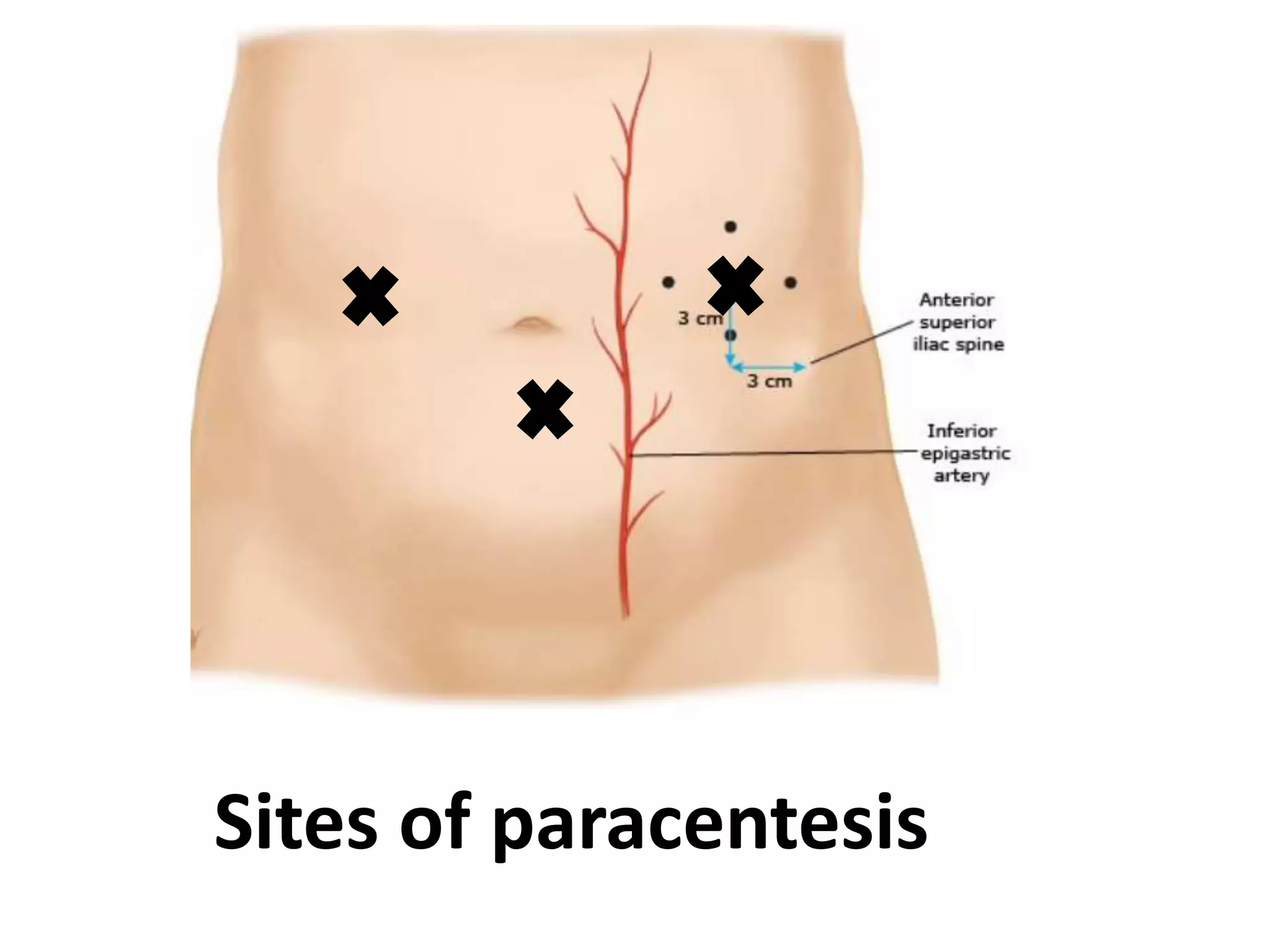
Sites of paracentesis
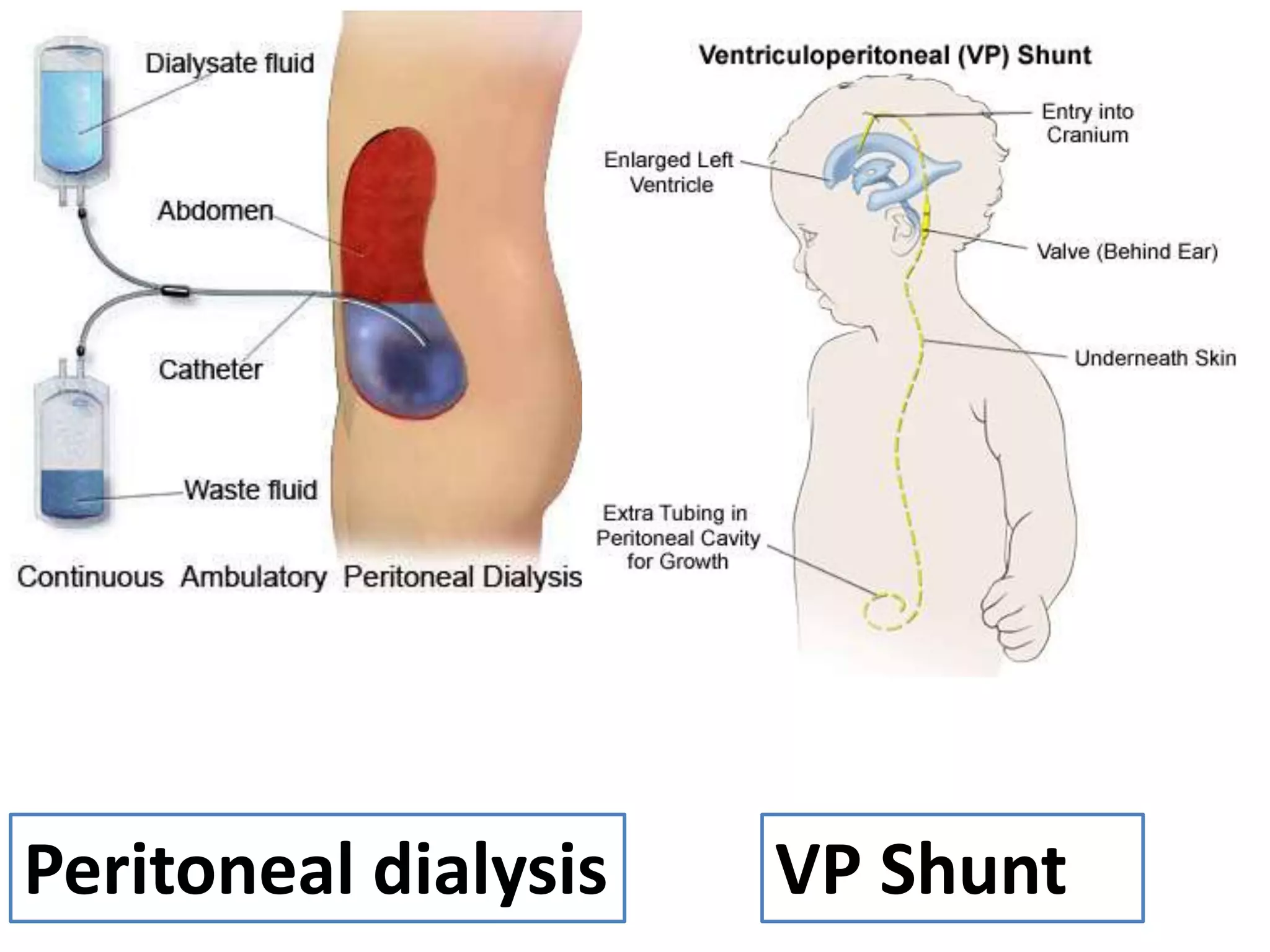
Peritoneal dialysis VP Shunt
Peritoneum ii

Peritoneum ii

  • 1.
    Peritoneum II To -MBBS2nd Year Dr Laxman Khanal Asst prof. department of Anatomy BPKIHS, Dharan 06-09-2016
  • 2.
    Q. All arethe derivatives of dorsal mesogastrium except a. Greater omentum b. Gastro splenic ligament c. Splenorenal ligament d. Lesser omentum Q. Which of the following organ is secondary retroperitoneal organ? a. Kidney b. Suprarenal gland c. Abdominal aorta d. Duodenum
  • 3.
    Q. Most dependentperitoneal space in supine position is- a. Pouch of Douglas b. Lesser sac c. Pouch of Morrison d. Rectovesicle pouch Q. All of the following structure form the posterior boundary of Epiploic foramen except. a. IVC b. Rt suprarenal gland c. Lt suprarenal gland d. T12 vertebra
  • 5.
  • 6.
    Parts of lessersac 1. Superior recess 2. Inferior recess 3. Splenic recess 4. Omental bursa
  • 7.
    Lesser sac Position: Behindthe lesser omentum and stomach Walls • Superior-peritoneum which covers the caudate lobe of liver and diaphragm • Anterior: lesser omentum, peritoneum of posterior wall of stomach, and anterior two layers of greater omentum • Inferior: Continuative area of anterior and posterior two layers of greater omentum • Posterior: Posterior two layers of greater omentum, transverse colon and transverse mesocolon, peritoneum covering pancreas, left kidney and suprarenal gland
  • 13.
    Supra and infracoliccompartment • The transverse mesocolon divides the abdominal cavity into a supracolic compartment, containing the stomach, liver, and spleen, and an infracolic compartment, containing the small intestine and ascending and descending colon. • The infracolic compartment is divided into right and left infracolic spaces by the mesentery of the small intestine. • Free communication occurs between the supracolic and the infracolic compartments through the paracolic gutters
  • 14.
    Supracolic • Rt/Lt subphrenicspace • Right subhepatic space (hepatorenal pouch) • Left subhepatic space (Lesser Sac) Infracolic • Rt/Lt infracolic space • Paracolic gutters
  • 15.
    Subphrenic space Subhepatic space •Rt/Lt subphrenic space • Right subhepatic space (hepatorenal pouch) • Left subhepatic space (Lesser Sac)
  • 16.
    Rt subhepatic space (Hepatorenalpouch) Lt subhepatic space (Lesser Sac)
  • 17.
    Inf layer ofcoronary ligaments Open to Rt paracolic gutter Rt lobe of liver Rt Kidney Morrison’s Pouch Hepatorenal pouch Rt subhepatic pouch
  • 18.
    • Most dependentpart of the peritoneal cavity in supine position • Most common site of subphrenic abscess
  • 19.
  • 21.
    Pelvic part ofperitoneal cavity • Vesicouterine pouch • Rectouterine pouch
  • 22.
    • Most dependentpart in sitting or standing position. • Most common site of pelvic abscess.
  • 25.
    Peritoneal recesses • Theseare small spaces of peritoneal cavity with in large peritoneal cavity. These are guarded by folds which contain blood vessel. • Duodenal recesses • Caecal recess • Intersigmoid recesses
  • 26.
    • Duodenal recesses •Exist around the fourth part of the duodenum and the duodenojejunal junction forming a number of named recesses.
  • 27.
    Paracecal recess • Superiorileocecal recess (ant cecal artery) • Inferior ileocecal recess (avascular) • Retrocecal recess (contains appendix)
  • 28.
    Urachus Umb artery Inf Epigastricvesses Folds and fossa of anterior abdominal wall
  • 29.
    Folds and fossasof anterior abdominal wall • Median umbilical fold - contain the remnant of urachus (median umbilical ligaments) • Medial umbilical fold - contains remnants of the umbilical arteries (medial umbilical ligaments) • Lateral umbilical fold contains the inferior epigastric vessels Supravesical fossa Medial inguinal fossa Lateral inguinal fossa
  • 31.
  • 32.