Downloaded 4,549 times


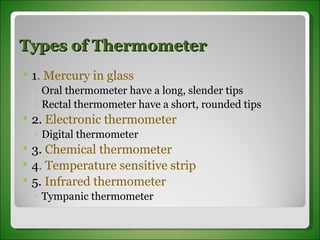

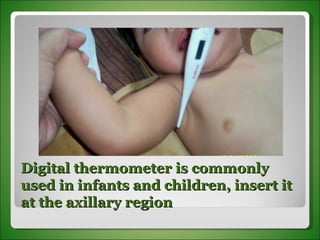

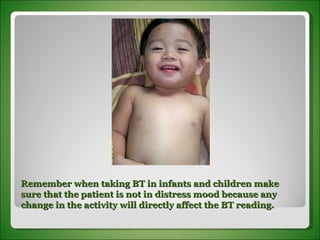


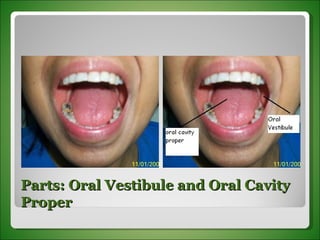


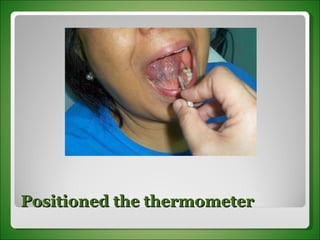

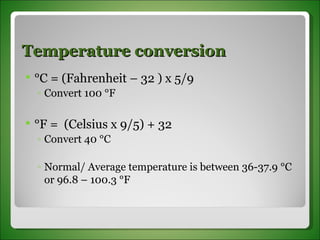

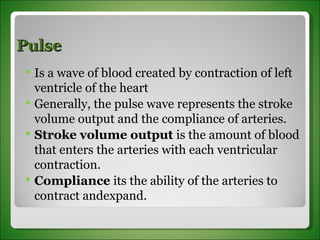
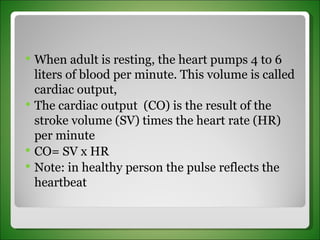
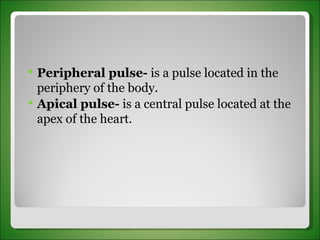
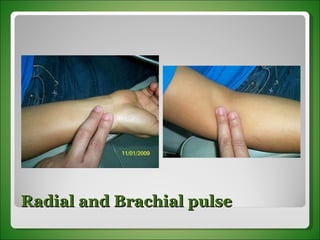


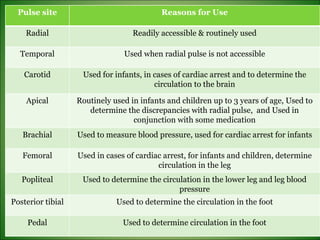
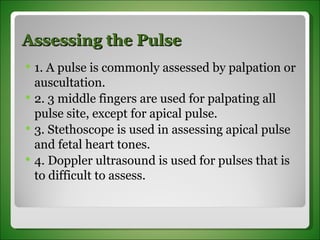

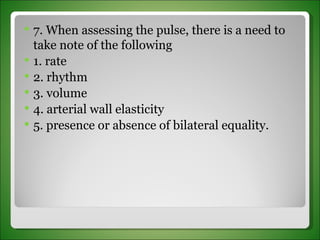
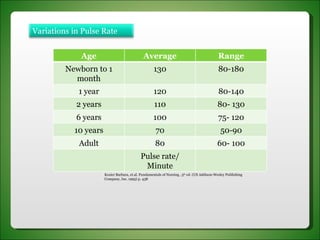
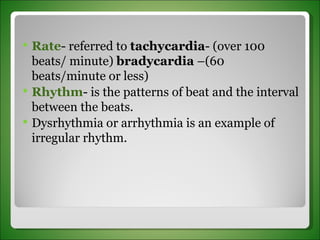
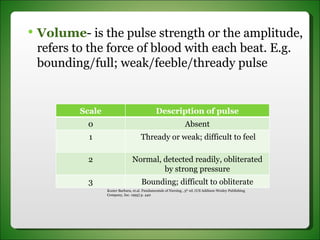
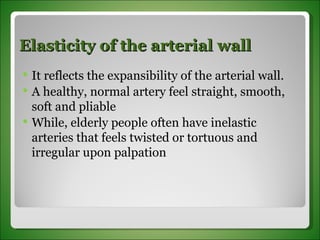

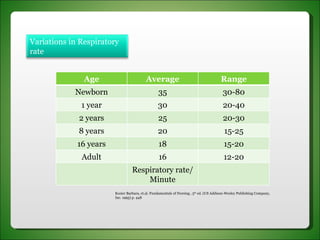
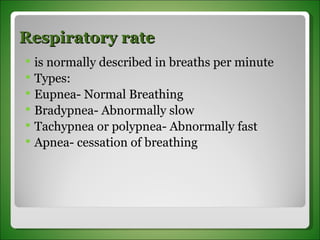
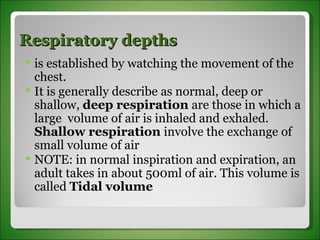
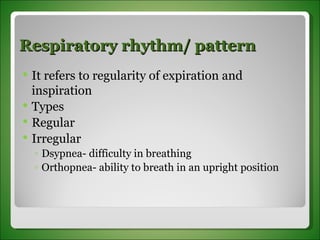
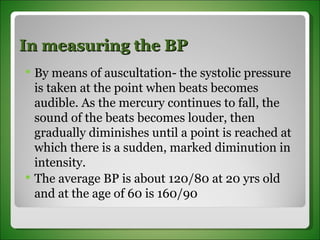
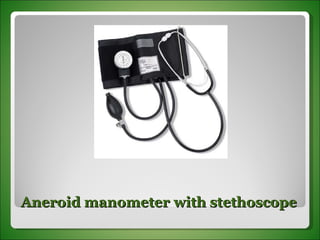
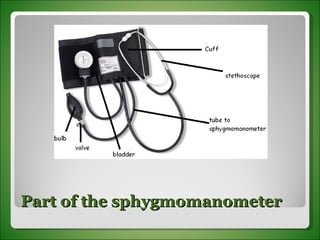
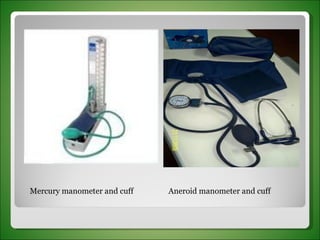
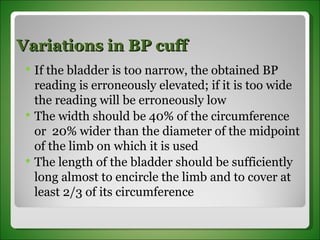
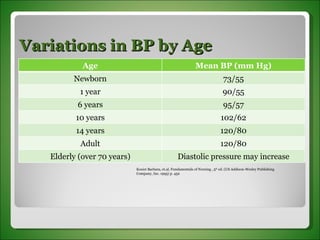


This document provides an overview of assessing vital signs, including body temperature, pulse, respiration, and blood pressure. It discusses normal ranges and factors that can affect each vital sign. Body temperature is usually measured orally, axillary, or rectally. Pulse is normally assessed at the radial artery and factors like age, exercise, and medications can impact pulse rate. Respiration is usually measured by observing chest and abdominal movement and normal respiratory rate ranges from 12-20 breaths per minute. Blood pressure is measured using a sphygmomanometer and stethoscope, with normal systolic pressure around 120 mmHg and diastolic around 80 mmHg in adults.


