Networking
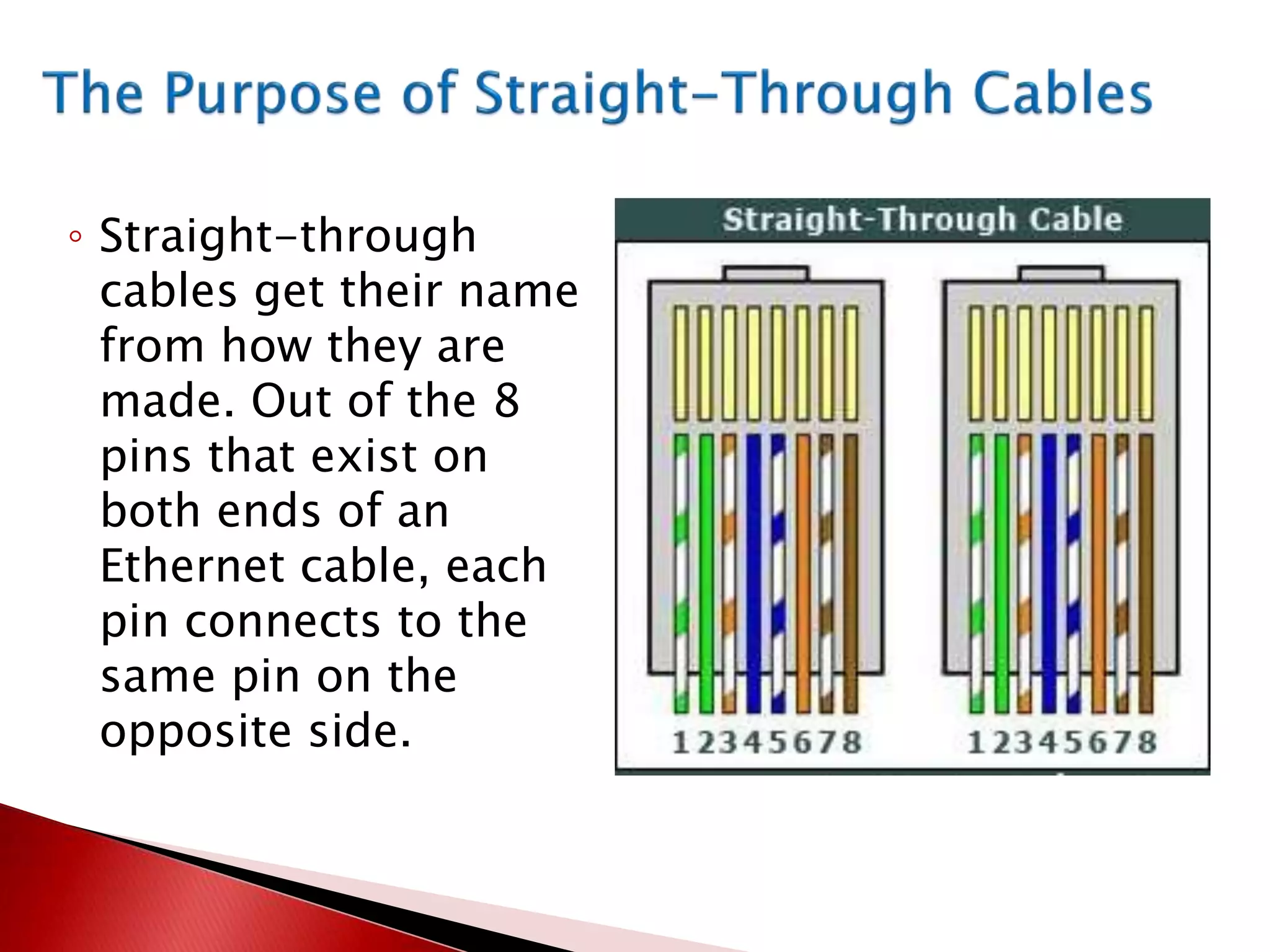
◦ Straight-through
cables get their name
from how they are
made. Out of the 8
pins that exist on
both ends of an
Ethernet cable, each
pin connects to the
same pin on the
opposite side.
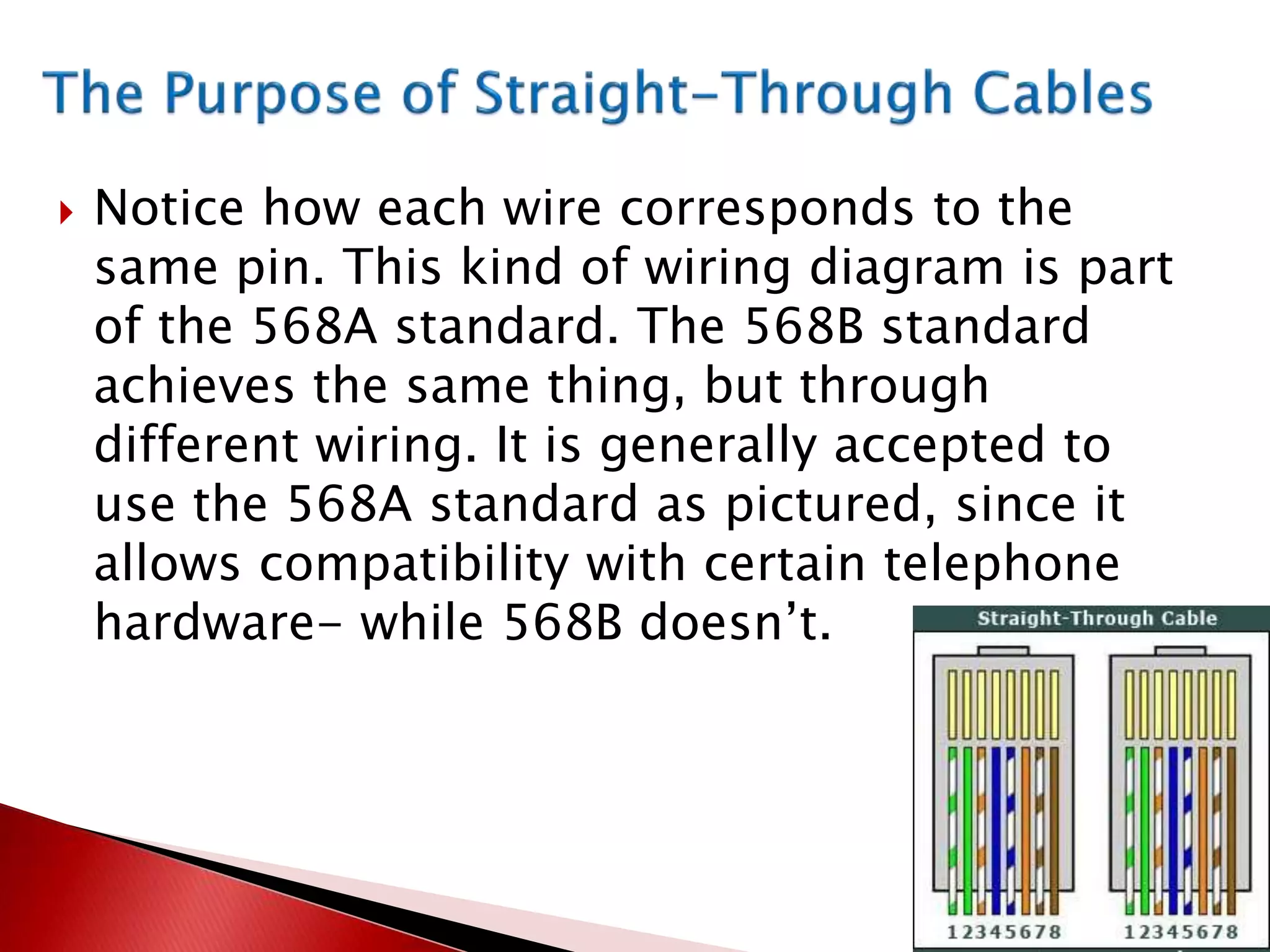
 Notice how each wire corresponds to the
same pin. This kind of wiring diagram is part
of the 568A standard. The 568B standard
achieves the same thing, but through
different wiring. It is generally accepted to
use the 568A standard as pictured, since it
allows compatibility with certain telephone
hardware- while 568B doesn’t.
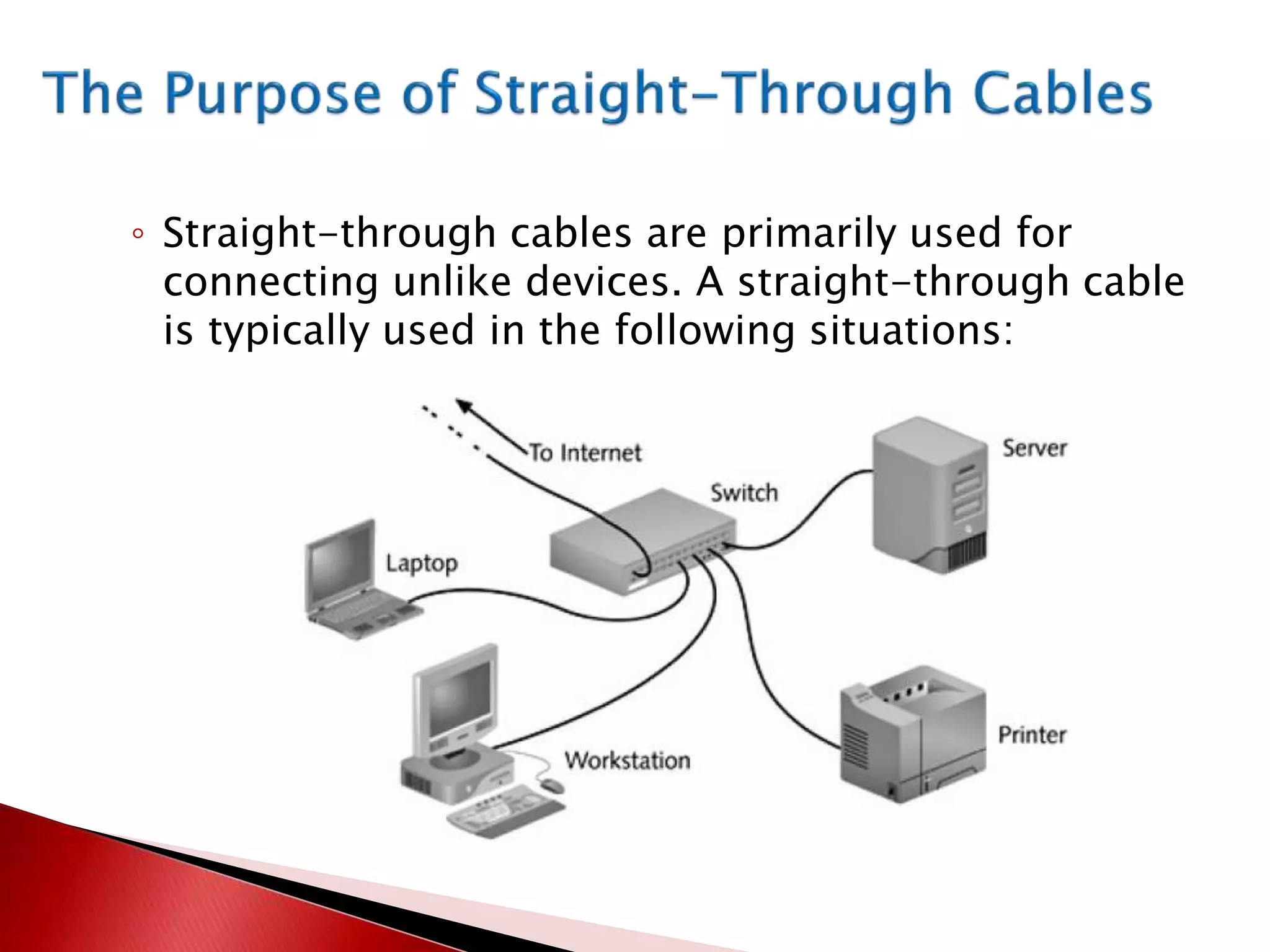
◦ Straight-through cables are primarily used for
connecting unlike devices. A straight-through cable
is typically used in the following situations:
◦ Connecting a router to a hub
◦ Connecting a computer to a switch
◦ Connecting a LAN port to a switch, hub, or
computer
Note: That some devices such as routers will have
advanced circuitry, which enables them to use both
crossover and straight-through cables. In general,
however, straight-through cables will not connect a
computer and router because they are not “unlike
devices.”
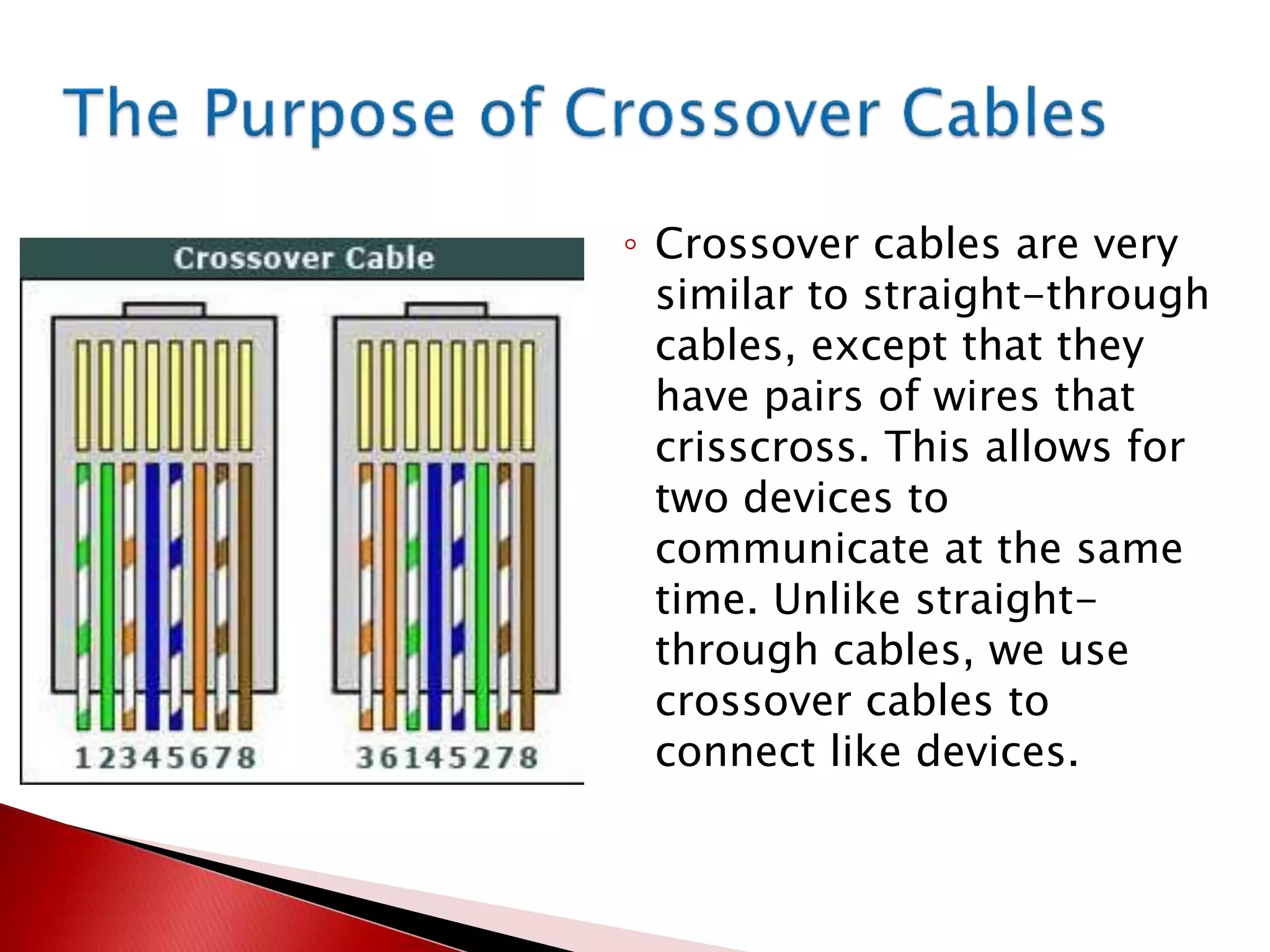
◦ Crossover cables are very
similar to straight-through
cables, except that they
have pairs of wires that
crisscross. This allows for
two devices to
communicate at the same
time. Unlike straight-
through cables, we use
crossover cables to
connect like devices.
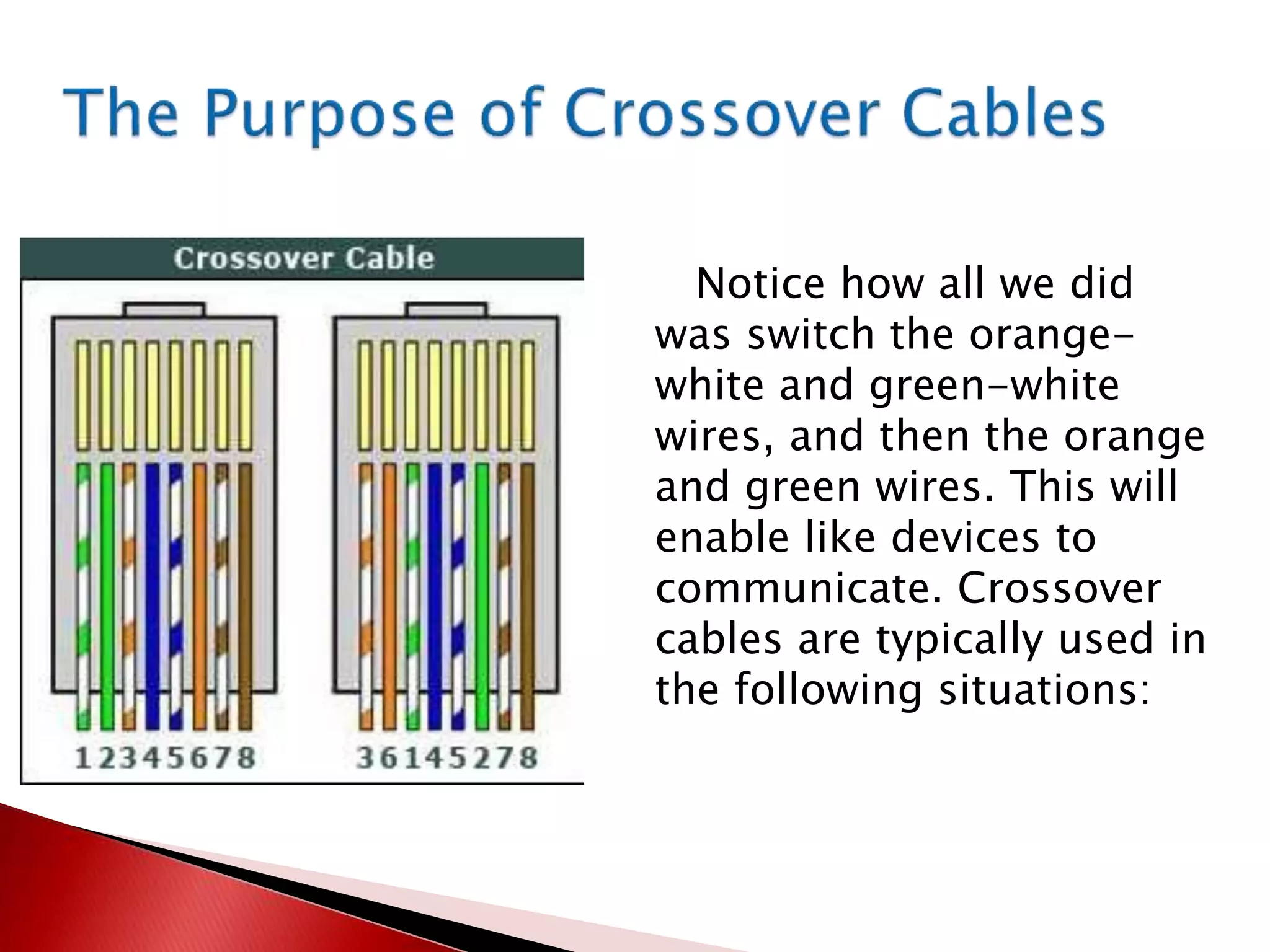
Notice how all we did
was switch the orange-
white and green-white
wires, and then the orange
and green wires. This will
enable like devices to
communicate. Crossover
cables are typically used in
the following situations:
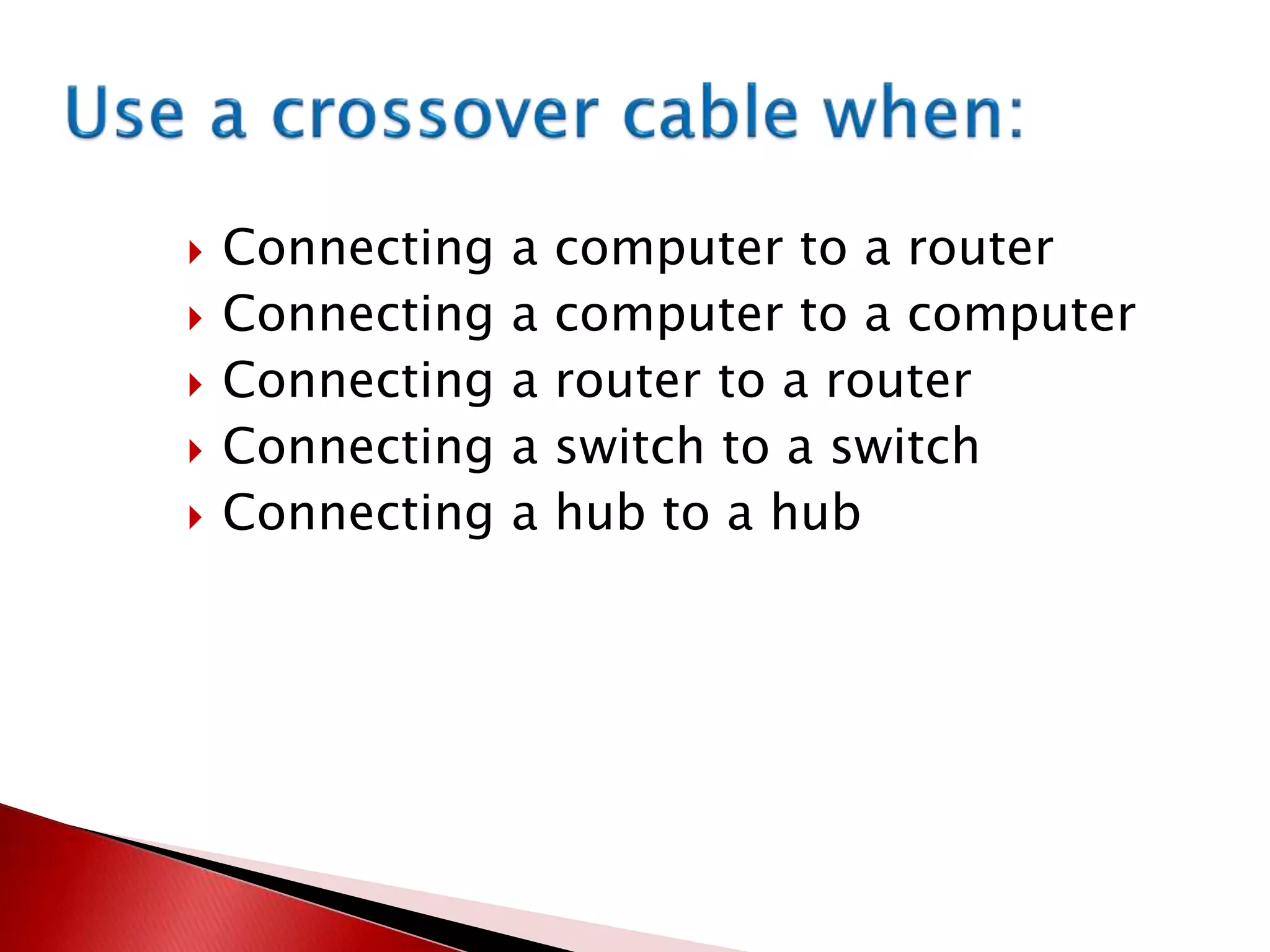
 Connecting a computer to a router
 Connecting a computer to a computer
 Connecting a router to a router
 Connecting a switch to a switch
 Connecting a hub to a hub
◦ While the rule of thumb is to use crossover cables
with like devices, some devices do not follow
standards. Others provide support for both types
of cables. However, there is still something that
both crossover and straight-through cables can’t
do.
04 The Purpose of Straight-Through and Crossover Cables.pptx

04 The Purpose of Straight-Through and Crossover Cables.pptx

  • 1.
  • 3.
    ◦ Straight-through cables gettheir name from how they are made. Out of the 8 pins that exist on both ends of an Ethernet cable, each pin connects to the same pin on the opposite side.
  • 4.
     Notice howeach wire corresponds to the same pin. This kind of wiring diagram is part of the 568A standard. The 568B standard achieves the same thing, but through different wiring. It is generally accepted to use the 568A standard as pictured, since it allows compatibility with certain telephone hardware- while 568B doesn’t.
  • 5.
    ◦ Straight-through cablesare primarily used for connecting unlike devices. A straight-through cable is typically used in the following situations:
  • 6.
    ◦ Connecting arouter to a hub ◦ Connecting a computer to a switch ◦ Connecting a LAN port to a switch, hub, or computer
  • 7.
    Note: That somedevices such as routers will have advanced circuitry, which enables them to use both crossover and straight-through cables. In general, however, straight-through cables will not connect a computer and router because they are not “unlike devices.”
  • 9.
    ◦ Crossover cablesare very similar to straight-through cables, except that they have pairs of wires that crisscross. This allows for two devices to communicate at the same time. Unlike straight- through cables, we use crossover cables to connect like devices.
  • 10.
    Notice how allwe did was switch the orange- white and green-white wires, and then the orange and green wires. This will enable like devices to communicate. Crossover cables are typically used in the following situations:
  • 11.
     Connecting acomputer to a router  Connecting a computer to a computer  Connecting a router to a router  Connecting a switch to a switch  Connecting a hub to a hub
  • 12.
    ◦ While therule of thumb is to use crossover cables with like devices, some devices do not follow standards. Others provide support for both types of cables. However, there is still something that both crossover and straight-through cables can’t do.