Peer-to-Peer Network
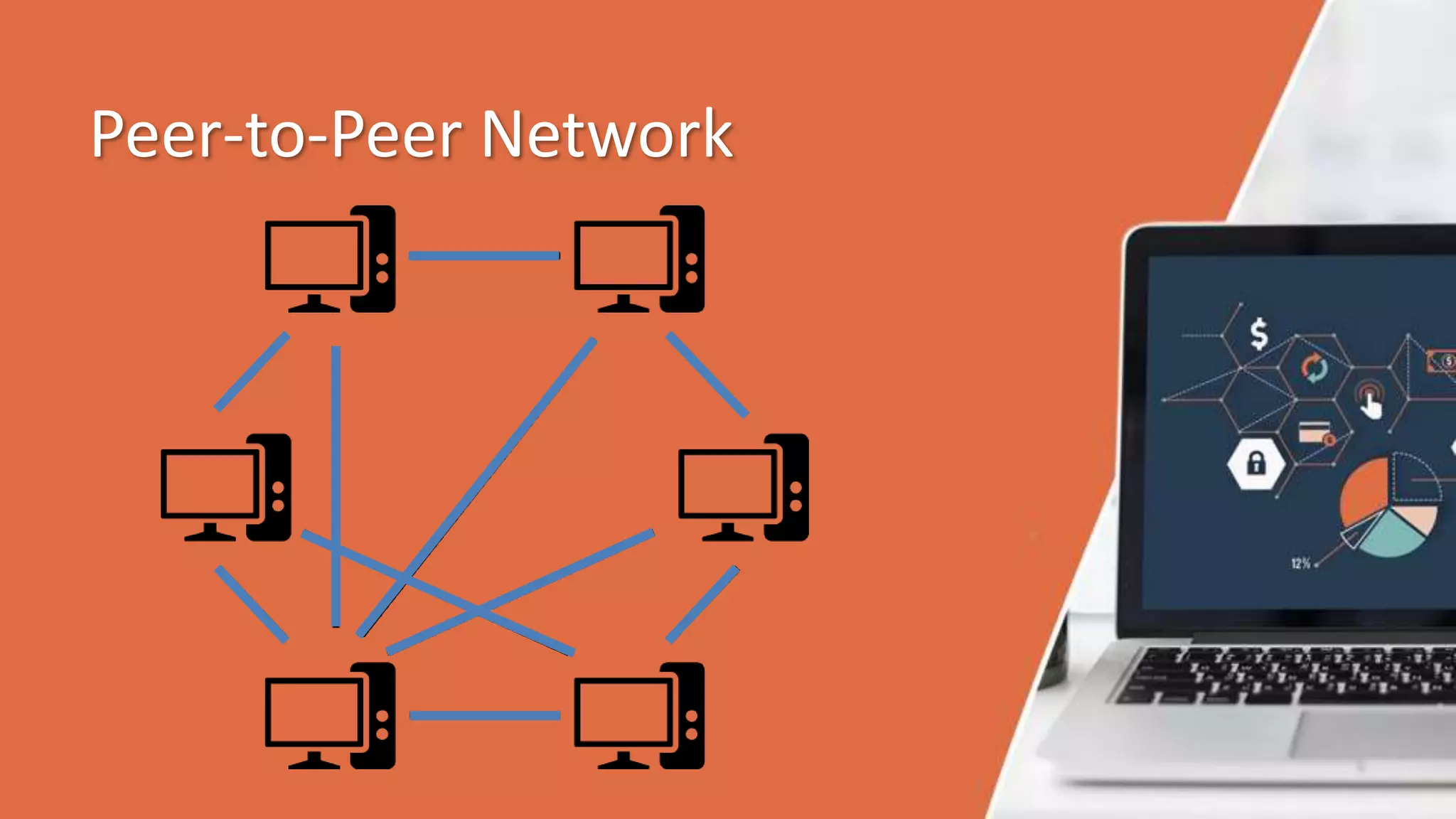
In a peer-to-peer network, devices are connected
directly to each other without any additional
networking devices between them. In this type of
network, each device has equivalent capabilities
and responsibilities. Individual users are
responsible for their own resources and can decide
which data and devices to share. Because of that,
the network has no central point of control or
administration.
Peer-to-Peer Network
It allows certain files and folders to be shared with
everyone or with selected users. Peer-to-peer
networks are quite common in small offices that do
not use a dedicated file server. Files and folders can
be configured to allow network users to copy them,
but not alter them in their original location, which is a
common safety precaution. However, files and folders
can also be assigned a "read/write" status that allows
either selected users or all users on the network to
change them.
Peer-to-peer networking differs from
client-server networking, where certain
devices have responsibility for providing
or "serving" data and other devices
consume or otherwise act as "clients" of
those servers.
Client-Server Network
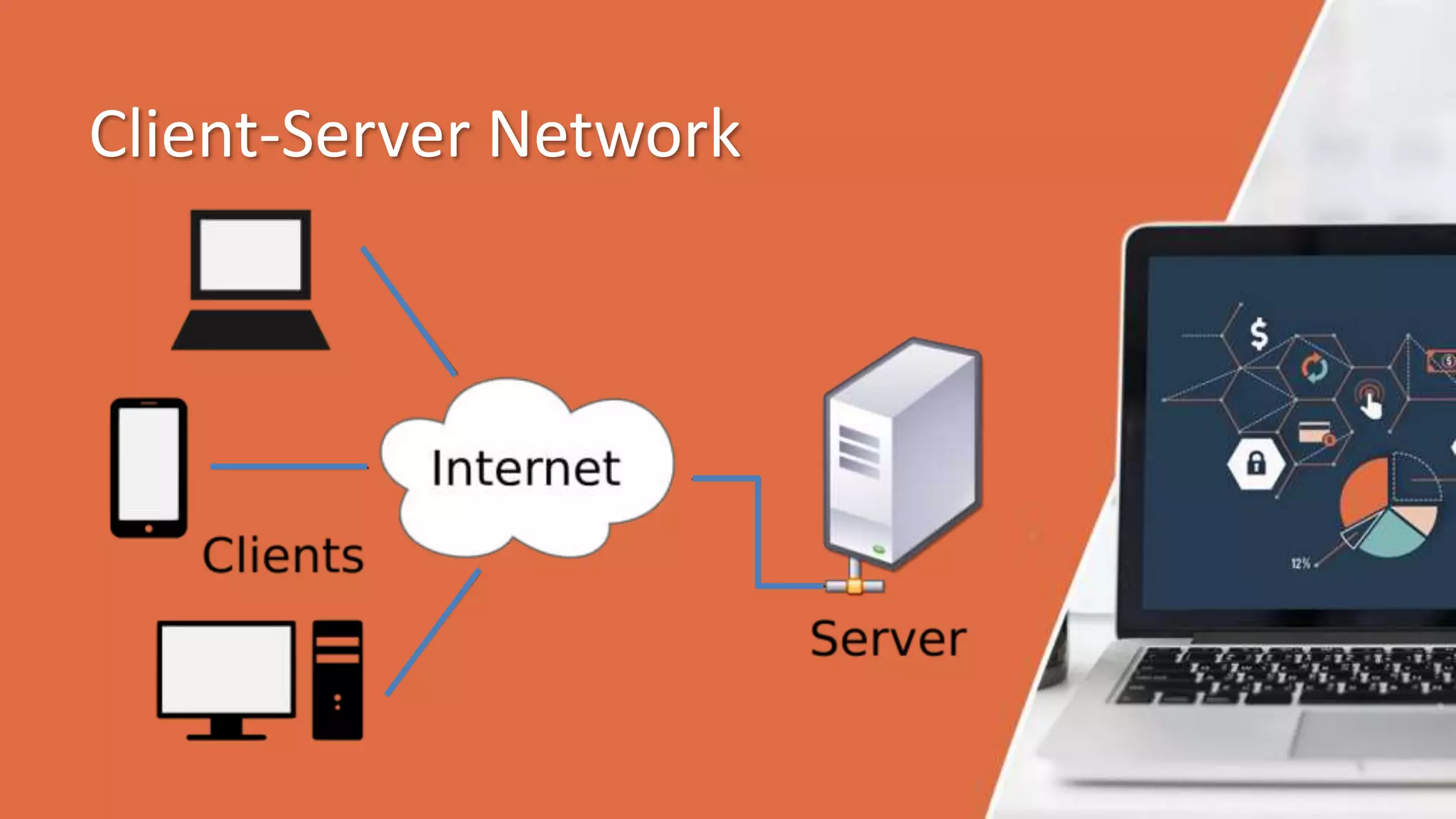
In a client/server network, the server provides
the requested information or service to the client.
Servers on a client/server network commonly
perform some of the processing work for client
machines, such as sorting through a database
before delivering only the records requested by
the client.
Client-Server Network
One example of a client/server network is a
corporate environment in which employees use a
company e-mail server to send, receive, and store
e-mail. The e-mail client on an employee computer
issues a request to the e-mail server for any unread
e-mail. The server responds by sending the
requested e-mail to the client.
In a client/server model, the servers are maintained
by network administrators. Data backups and
security measures are implemented by the network
administrator. The network administrator also
controls user access to the network resources. All
the data on the network is stored on a centralized
file server.
Shared printers on the network are managed by a
centralized print server. Network users with the
proper permissions can access both the data and
shared printers. Each user must provide an
authorized username and password to gain access
to network resources that he or she is permitted to
use. For data protection, an administrator performs
a routine backup of all the files on the servers. If a
computer crashes, or data is lost, the administrator
can easily recover the data from a recent backup.
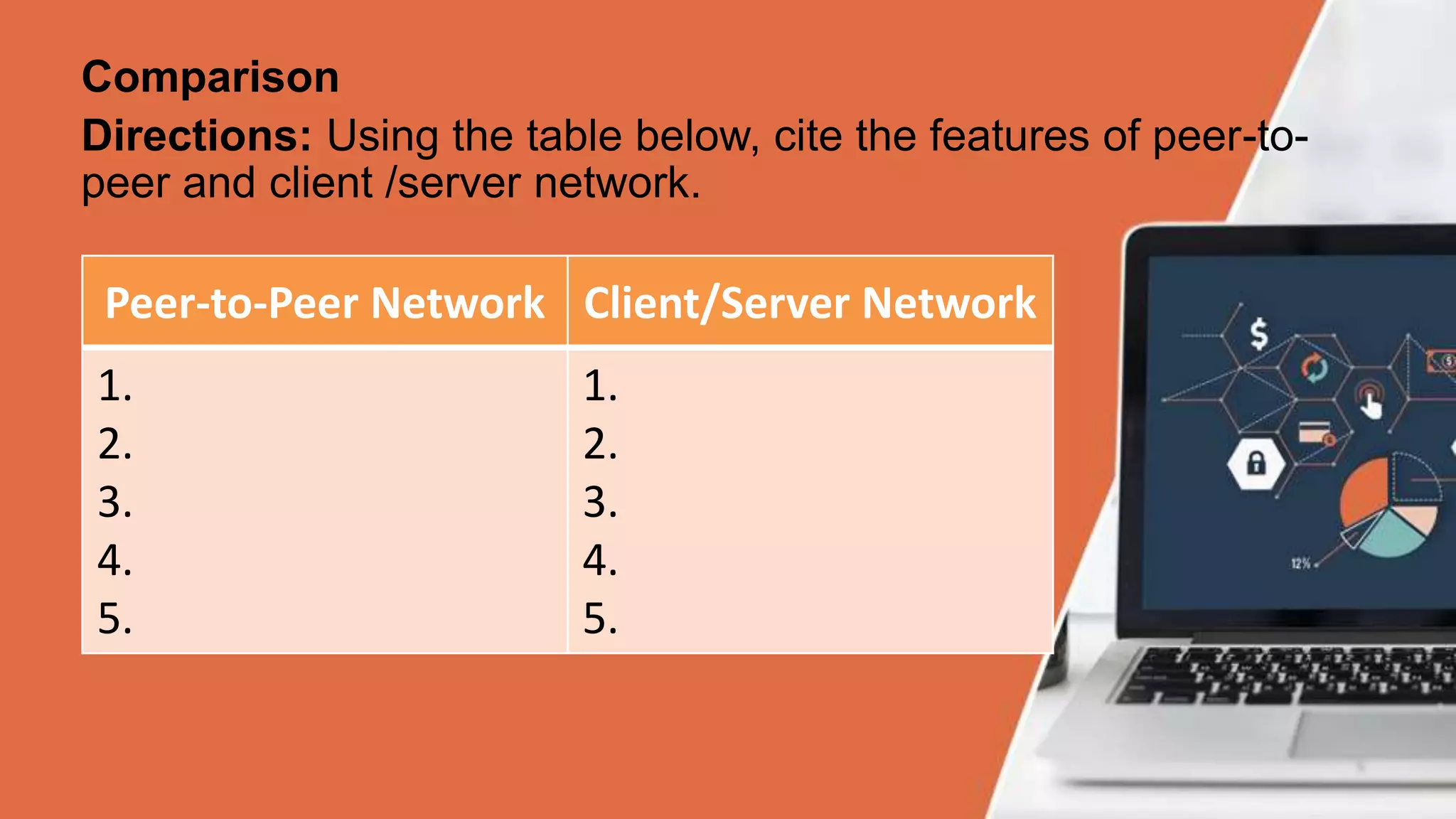
Comparison
Directions: Using the table below, cite the features of peer-to-
peer and client /server network.
Peer-to-Peer Network Client/Server Network
1.
2.
3.
4.
5.
1.
2.
3.
4.
5.

Peer-to-Peer Network

  • 1.
  • 2.
    Peer-to-Peer Network In apeer-to-peer network, devices are connected directly to each other without any additional networking devices between them. In this type of network, each device has equivalent capabilities and responsibilities. Individual users are responsible for their own resources and can decide which data and devices to share. Because of that, the network has no central point of control or administration.
  • 3.
  • 4.
    It allows certainfiles and folders to be shared with everyone or with selected users. Peer-to-peer networks are quite common in small offices that do not use a dedicated file server. Files and folders can be configured to allow network users to copy them, but not alter them in their original location, which is a common safety precaution. However, files and folders can also be assigned a "read/write" status that allows either selected users or all users on the network to change them.
  • 5.
    Peer-to-peer networking differsfrom client-server networking, where certain devices have responsibility for providing or "serving" data and other devices consume or otherwise act as "clients" of those servers.
  • 6.
  • 7.
    Client-Server Network In aclient/server network, the server provides the requested information or service to the client. Servers on a client/server network commonly perform some of the processing work for client machines, such as sorting through a database before delivering only the records requested by the client.
  • 8.
  • 9.
    One example ofa client/server network is a corporate environment in which employees use a company e-mail server to send, receive, and store e-mail. The e-mail client on an employee computer issues a request to the e-mail server for any unread e-mail. The server responds by sending the requested e-mail to the client.
  • 10.
    In a client/servermodel, the servers are maintained by network administrators. Data backups and security measures are implemented by the network administrator. The network administrator also controls user access to the network resources. All the data on the network is stored on a centralized file server.
  • 11.
    Shared printers onthe network are managed by a centralized print server. Network users with the proper permissions can access both the data and shared printers. Each user must provide an authorized username and password to gain access to network resources that he or she is permitted to use. For data protection, an administrator performs a routine backup of all the files on the servers. If a computer crashes, or data is lost, the administrator can easily recover the data from a recent backup.
  • 12.
    Comparison Directions: Using thetable below, cite the features of peer-to- peer and client /server network. Peer-to-Peer Network Client/Server Network 1. 2. 3. 4. 5. 1. 2. 3. 4. 5.