PRESENTED BY
AKASH PRAMANIK & ROHIT KUMAR JOARDAR
LAXMI EYE INSTITUTE
The Role of Eye Examinations
Provides a comprehensive evaluation of vision functioning
and the health of the eye
Is conducted by an Ophthalmologist and Optometrist who
can diagnose and prescribe treatment for vision disorders
What do your child's eyes look like?
Your child’s eye appear as white.
Your child has had an eye injury.
Your child doesn’t appear to look straight (looks with their face turned)
Cont….
Eye don’t appear straight
Eyelids are red-rimmed, crusted or swollen
Eyes are watery or red (inflamed)
How does your child act?
Rubs eyes a lot
Closes or covers one eye
Squints eyes or frowns
Contd..
Has trouble reading or doing other close-up work, or holds
objects close to eyes to see
Blinks more than usual or seems cranky when doing close-up
work
What does your child say?
After doing close-up work, your child says "I
feel dizzy,“
"I have a headache" or
"Everything looks blurry,"
"I see double.“
"My eyes are itchy,“
You May Have Noticed One or More Signs
of a Vision Problem in Your Child
If one or more of these signs appear, take your child to
an eye doctor right away.
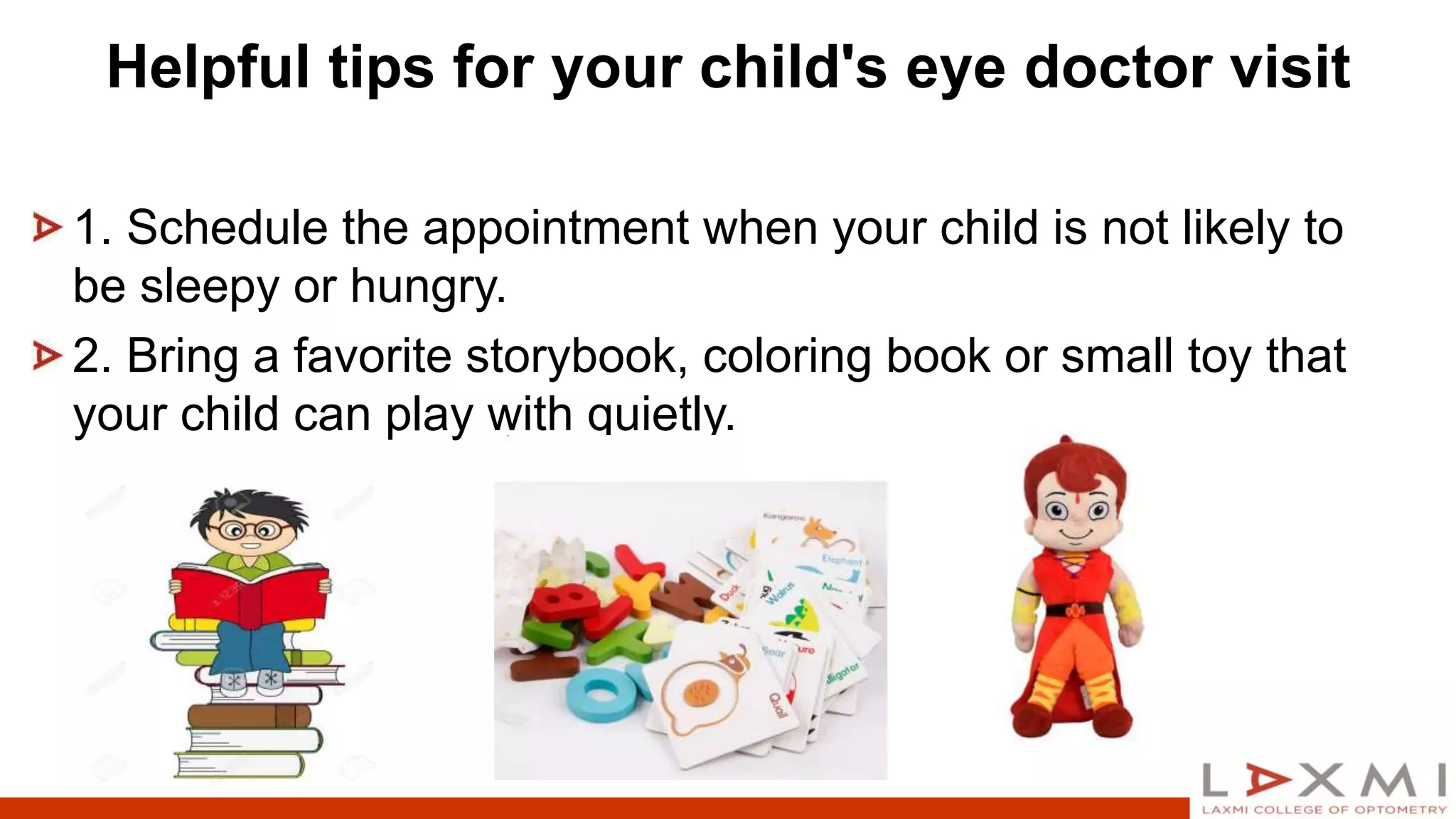
Helpful tips for your child's eye doctor visit
1. Schedule the appointment when your child is not likely to
be sleepy or hungry.
2. Bring a favorite storybook, coloring book or small toy that
your child can play with quietly.
www.laxmicollege.org

Pediatric Eye Care

  • 1.
    PRESENTED BY AKASH PRAMANIK& ROHIT KUMAR JOARDAR LAXMI EYE INSTITUTE
  • 2.
    The Role ofEye Examinations Provides a comprehensive evaluation of vision functioning and the health of the eye Is conducted by an Ophthalmologist and Optometrist who can diagnose and prescribe treatment for vision disorders
  • 3.
    What do yourchild's eyes look like? Your child’s eye appear as white. Your child has had an eye injury. Your child doesn’t appear to look straight (looks with their face turned)
  • 4.
    Cont…. Eye don’t appearstraight Eyelids are red-rimmed, crusted or swollen Eyes are watery or red (inflamed)
  • 5.
    How does yourchild act? Rubs eyes a lot Closes or covers one eye Squints eyes or frowns
  • 6.
    Contd.. Has trouble readingor doing other close-up work, or holds objects close to eyes to see Blinks more than usual or seems cranky when doing close-up work
  • 7.
    What does yourchild say? After doing close-up work, your child says "I feel dizzy,“ "I have a headache" or "Everything looks blurry," "I see double.“ "My eyes are itchy,“
  • 8.
    You May HaveNoticed One or More Signs of a Vision Problem in Your Child If one or more of these signs appear, take your child to an eye doctor right away.
  • 10.
    Helpful tips foryour child's eye doctor visit 1. Schedule the appointment when your child is not likely to be sleepy or hungry. 2. Bring a favorite storybook, coloring book or small toy that your child can play with quietly.
  • 12.