Children's Eye Health A Lenscrafters Presentation LC
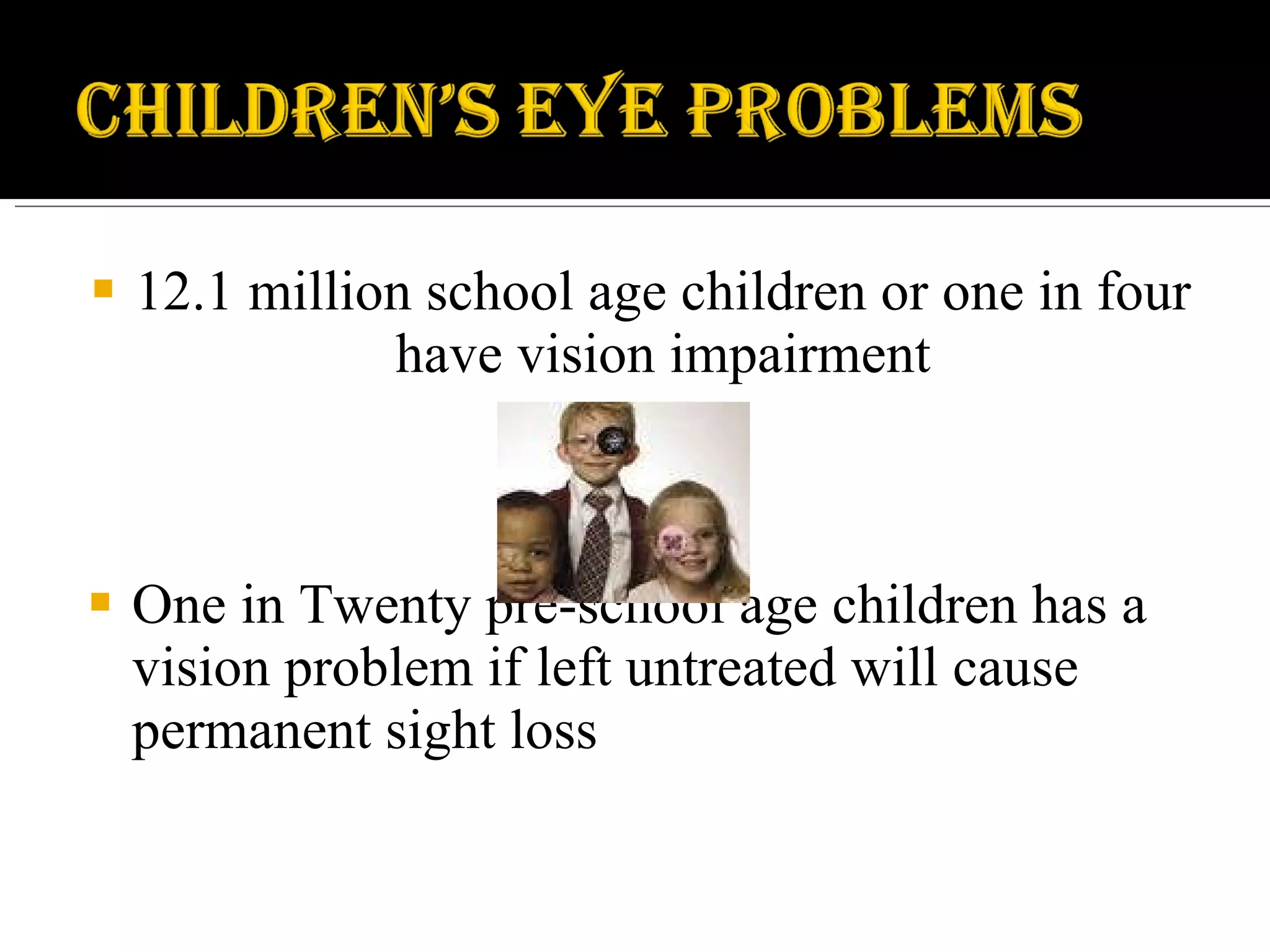
12.1 million school age children or one in four have vision impairment One in Twenty pre-school age children has a vision problem if left untreated will cause permanent sight loss
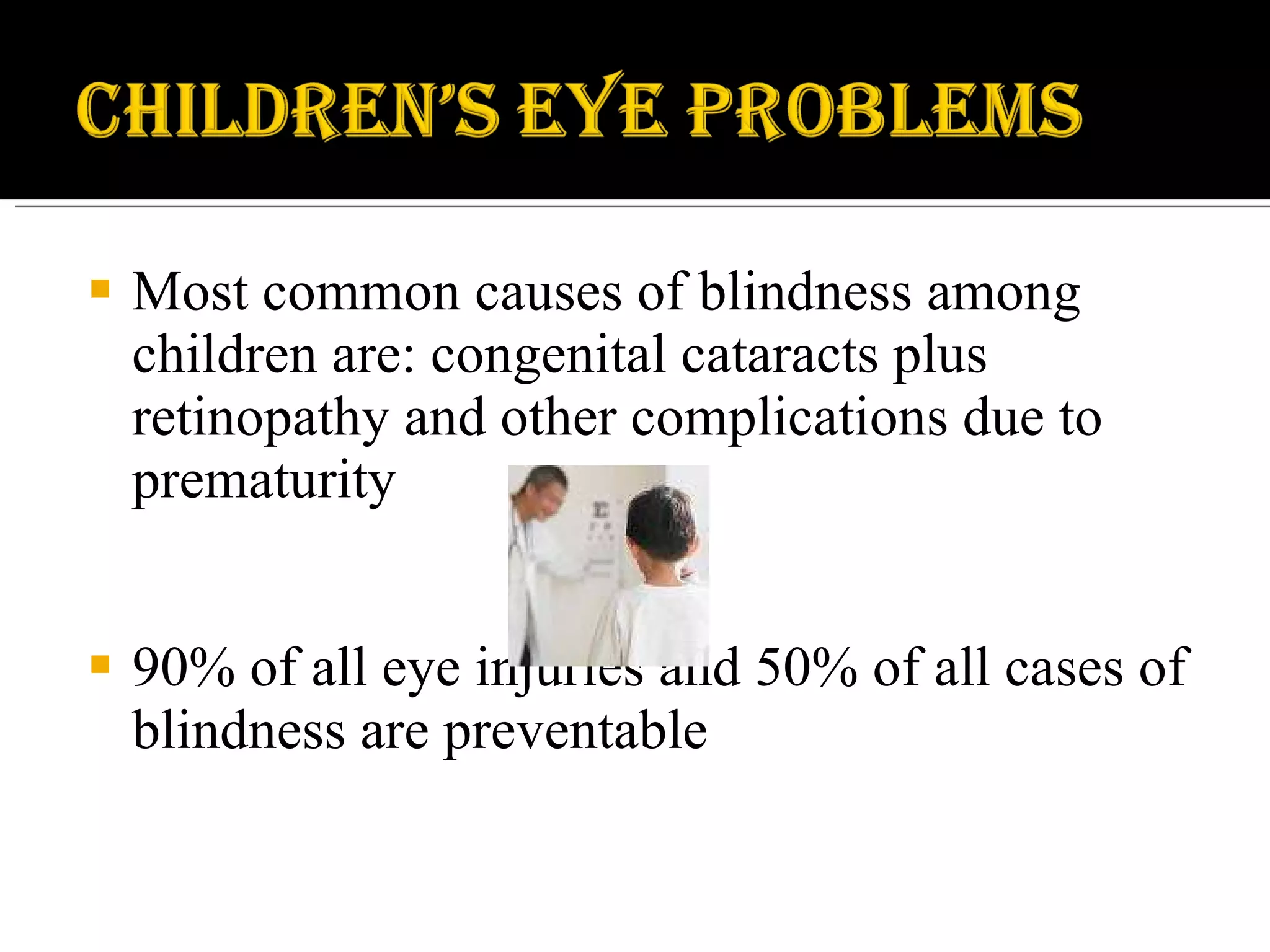
Most common causes of blindness among children are: congenital cataracts plus retinopathy and other complications due to prematurity 90% of all eye injuries and 50% of all cases of blindness are preventable
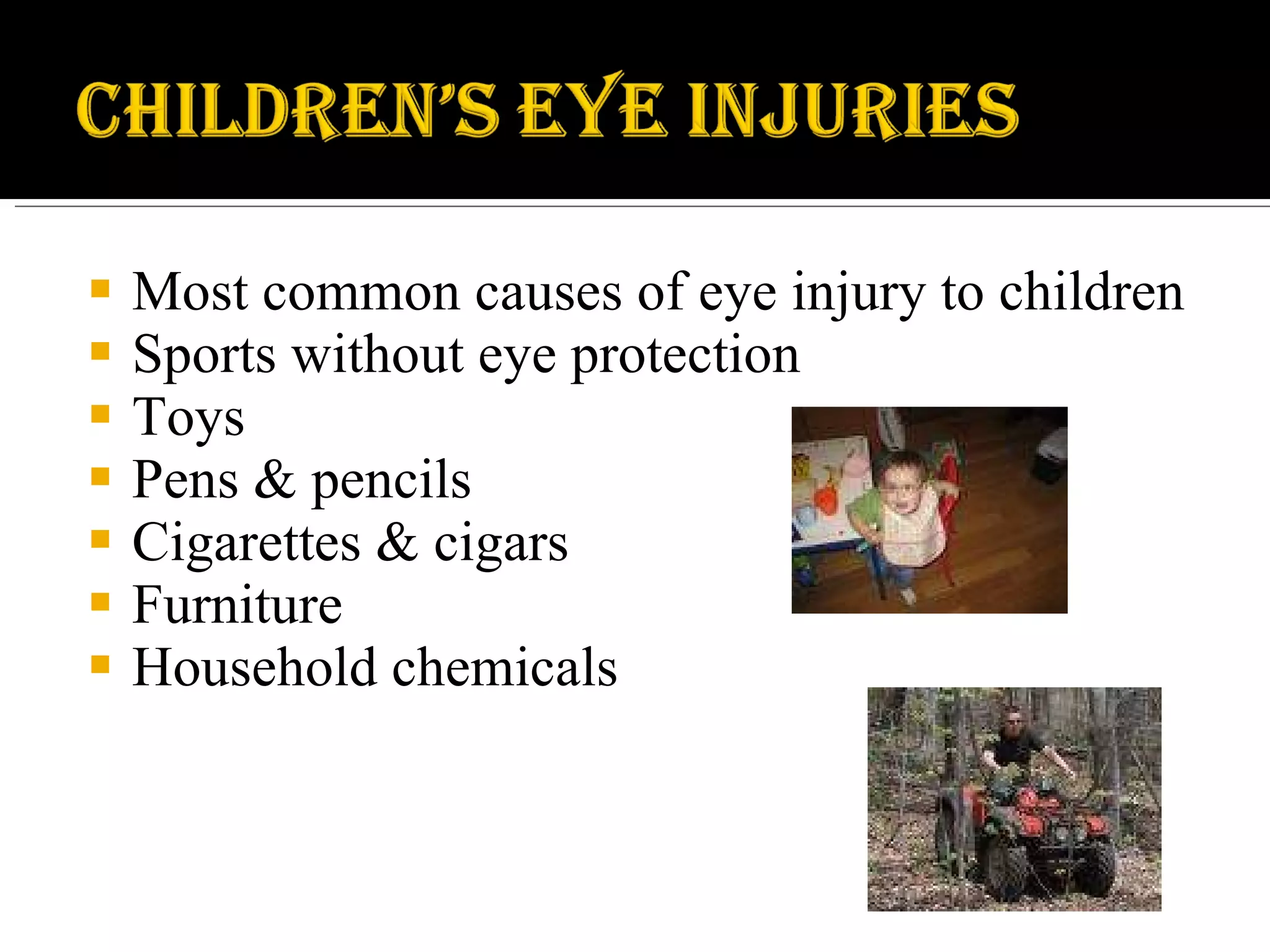
Most common causes of eye injury to children Sports without eye protection Toys Pens & pencils Cigarettes & cigars Furniture Household chemicals
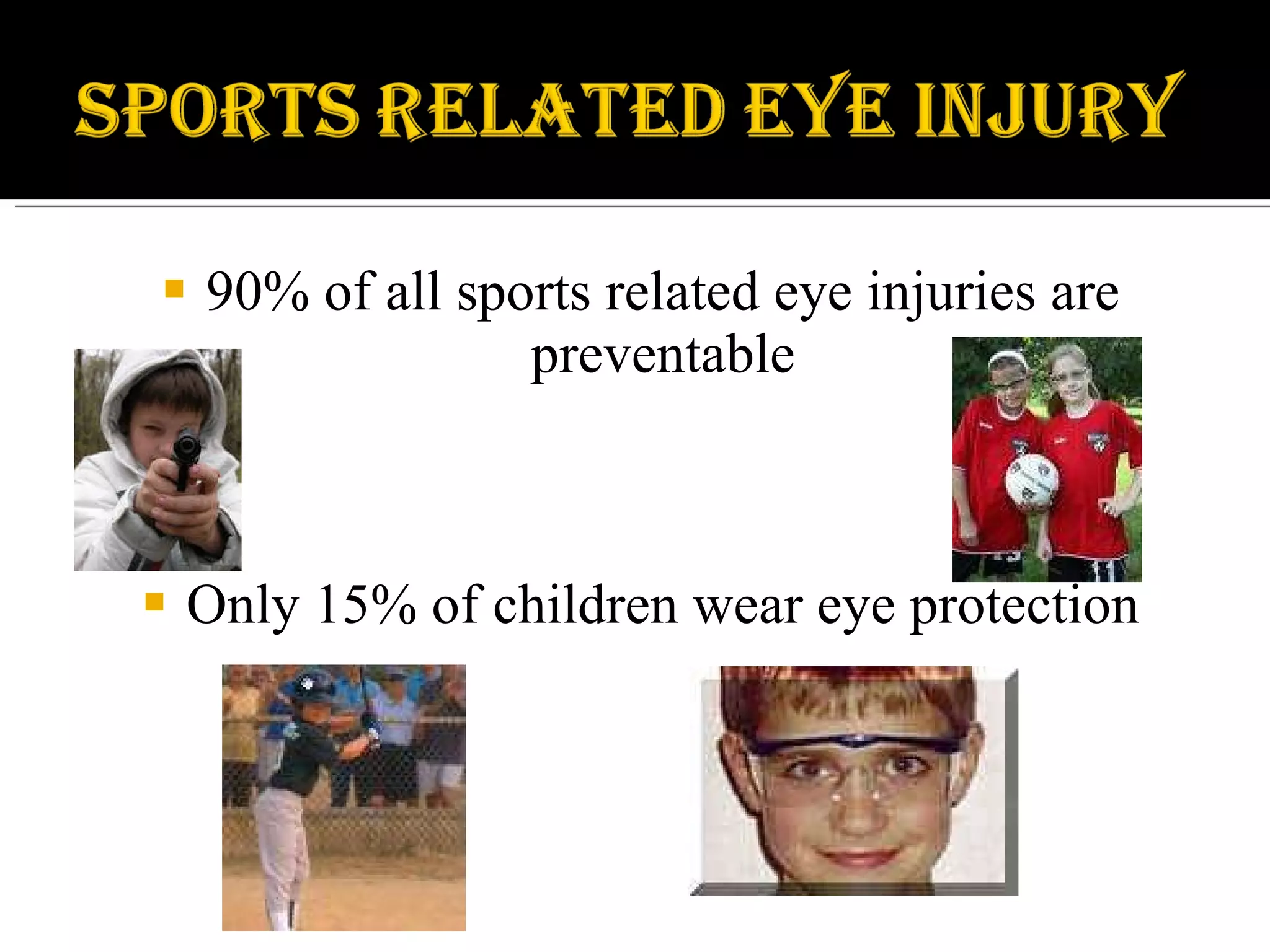
90% of all sports related eye injuries are preventable Only 15% of children wear eye protection
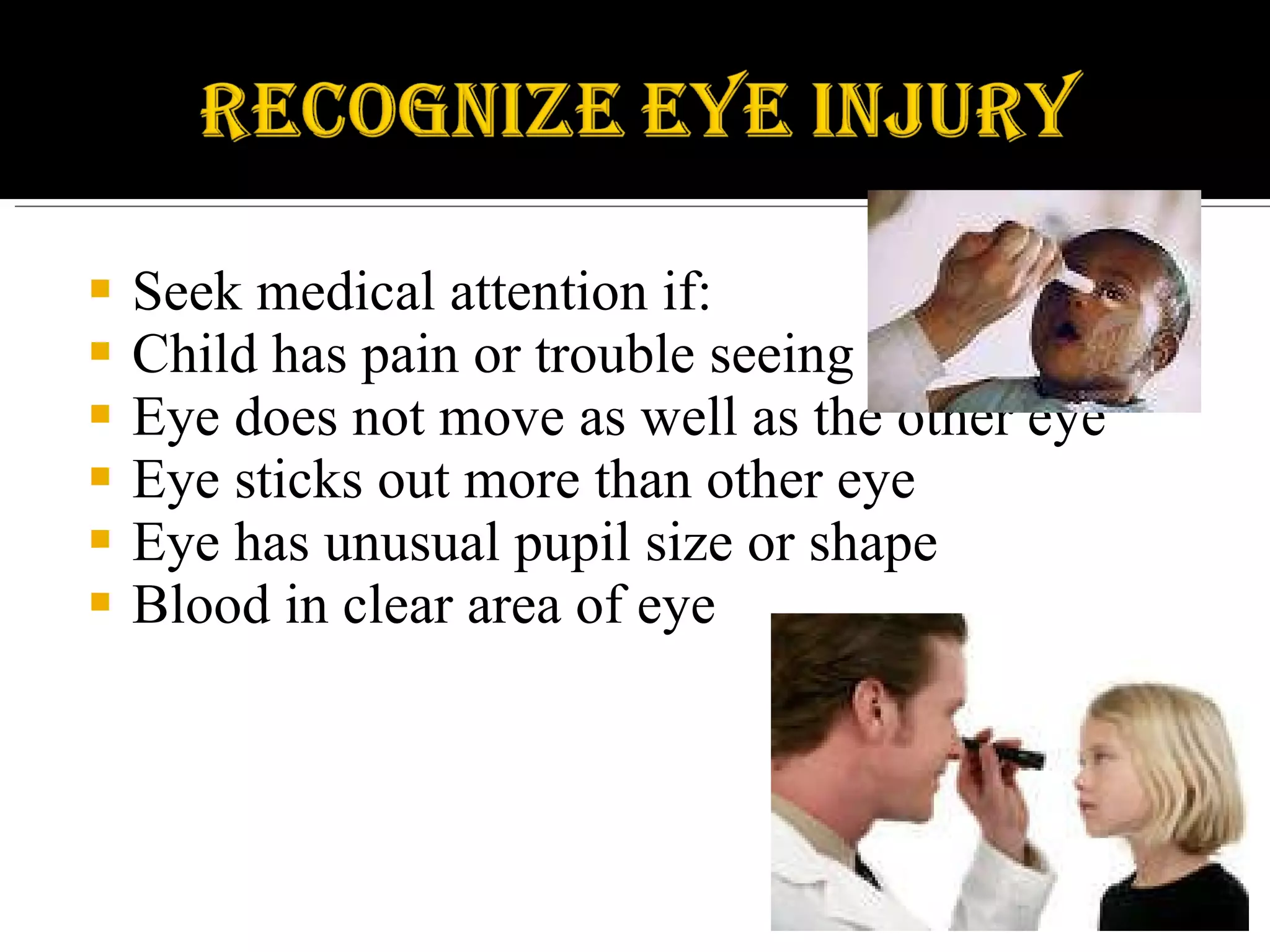
Seek medical attention if: Child has pain or trouble seeing Eye does not move as well as the other eye Eye sticks out more than other eye Eye has unusual pupil size or shape Blood in clear area of eye
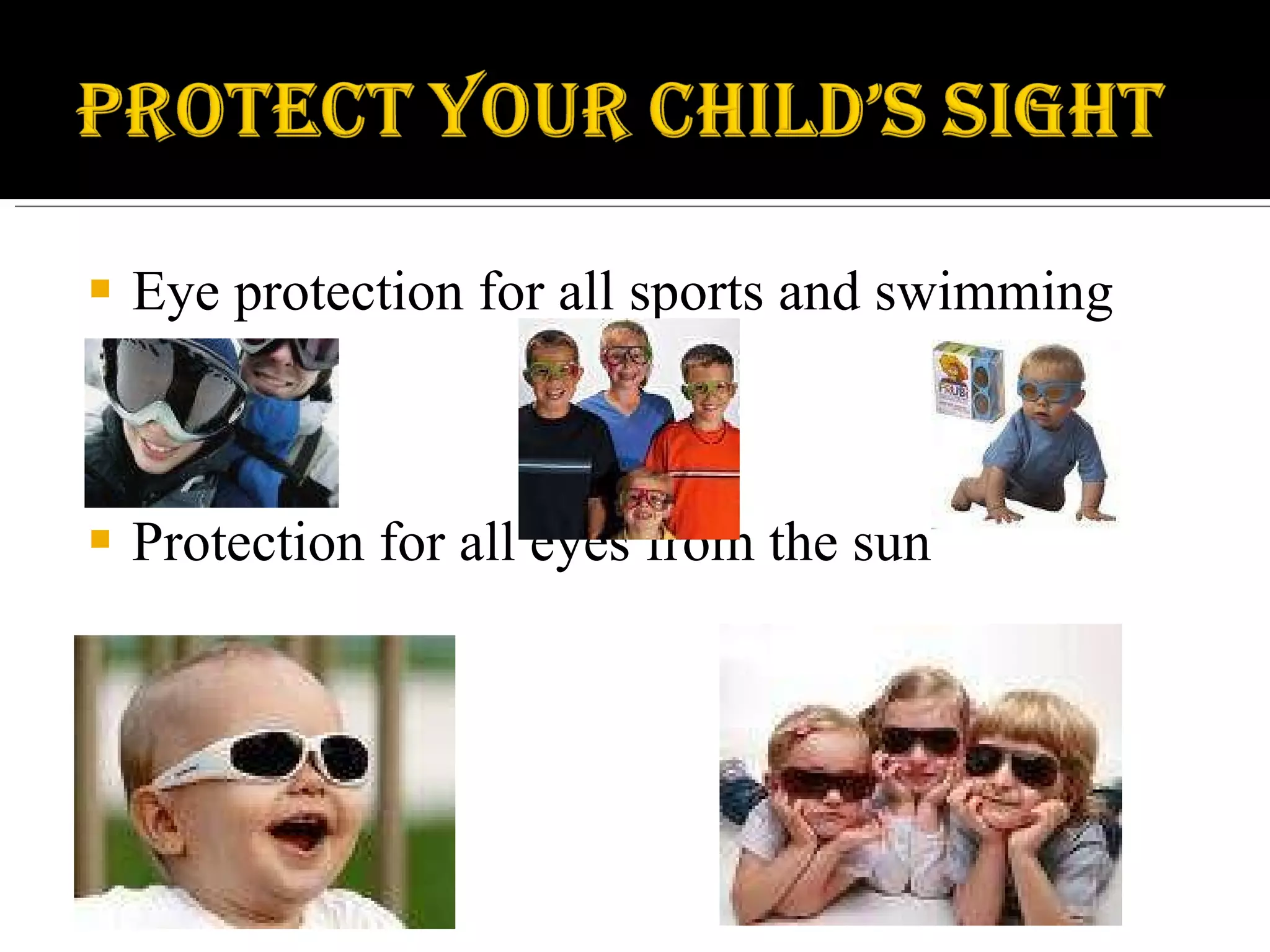
Eye protection for all sports and swimming Protection for all eyes from the sun
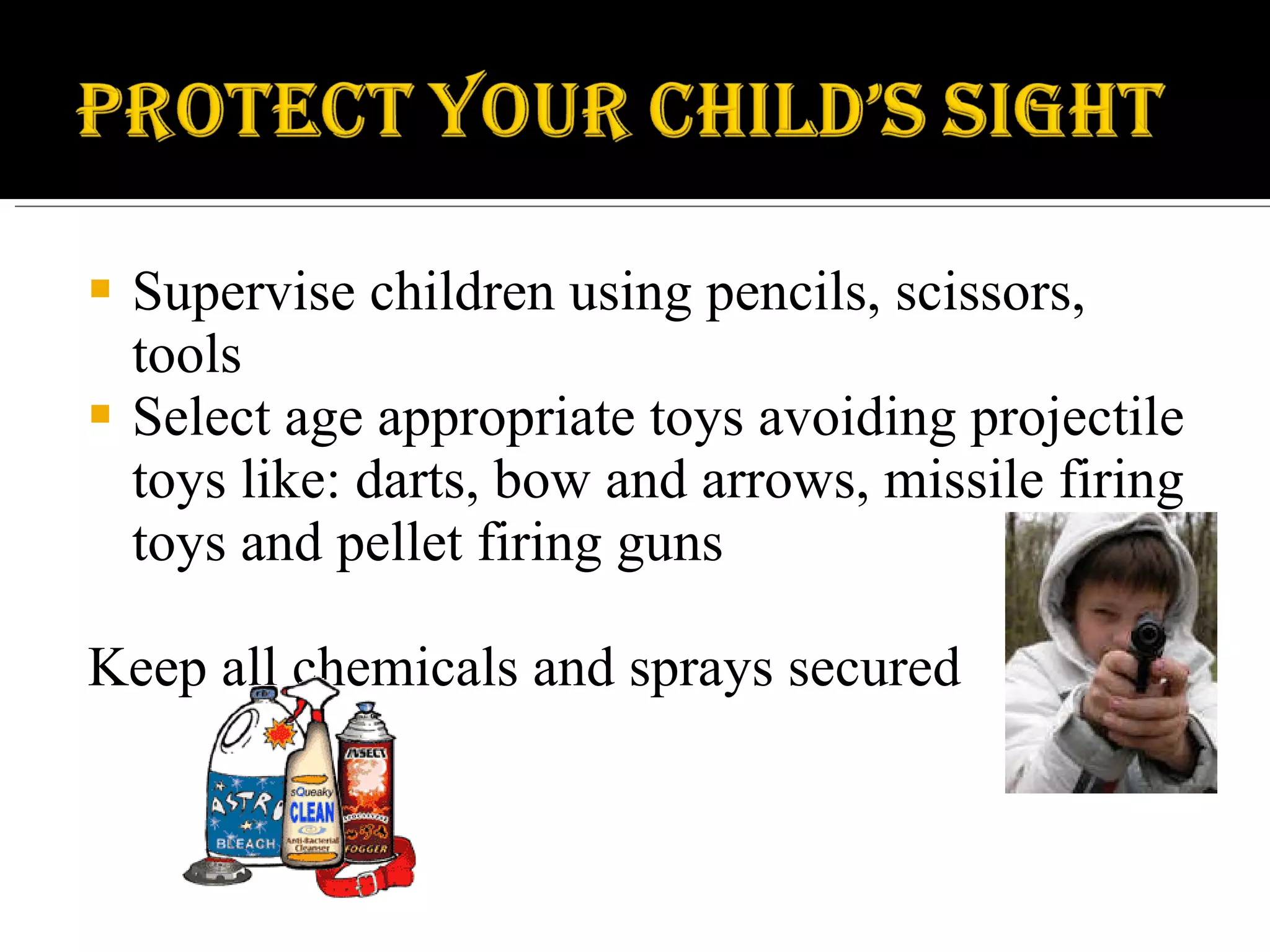
Supervise children using pencils, scissors, tools Select age appropriate toys avoiding projectile toys like: darts, bow and arrows, missile firing toys and pellet firing guns Keep all chemicals and sprays secured
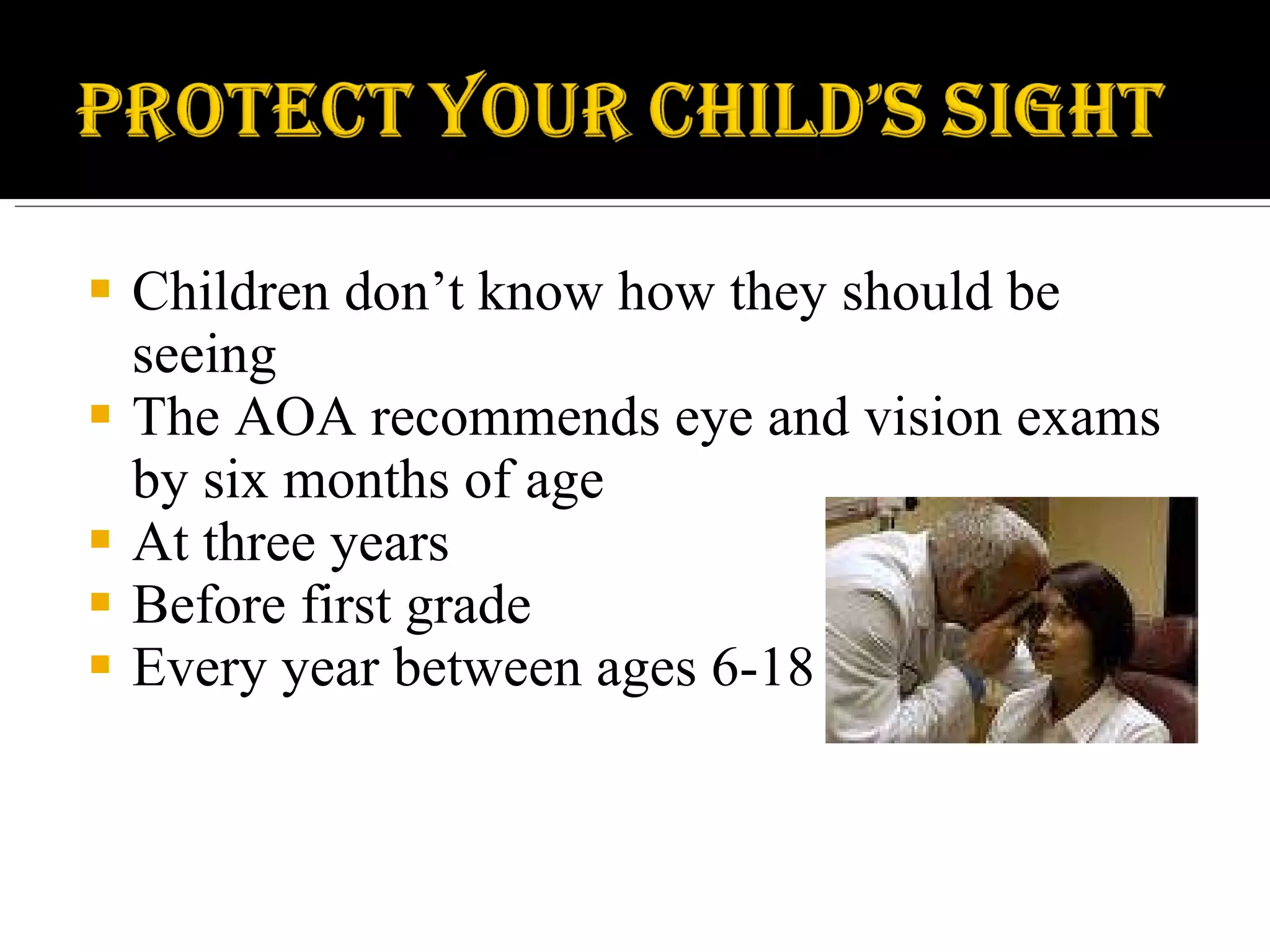
Children don’t know how they should be seeing The AOA recommends eye and vision exams by six months of age  At three years Before first grade Every year between ages 6-18
Up to 10% of preschoolers have vision problems 25% of school age children have vision problems Early eye exams crucial to insure proper vision allowing them to perform better in school and play Timely eye exams will identify eye problems early
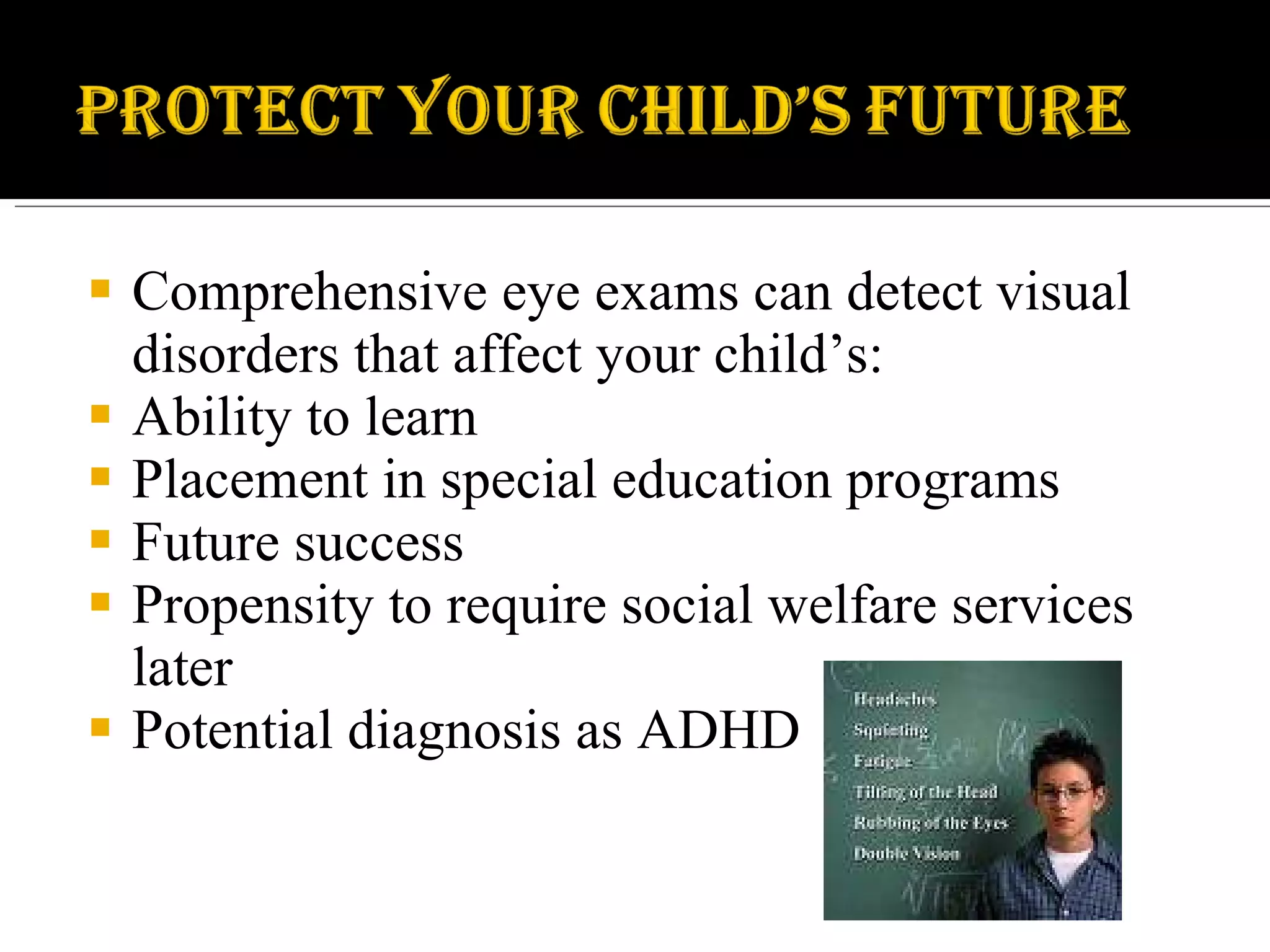
Comprehensive eye exams can detect visual disorders that affect your child’s: Ability to learn Placement in special education programs Future success Propensity to require social welfare services later Potential diagnosis as ADHD
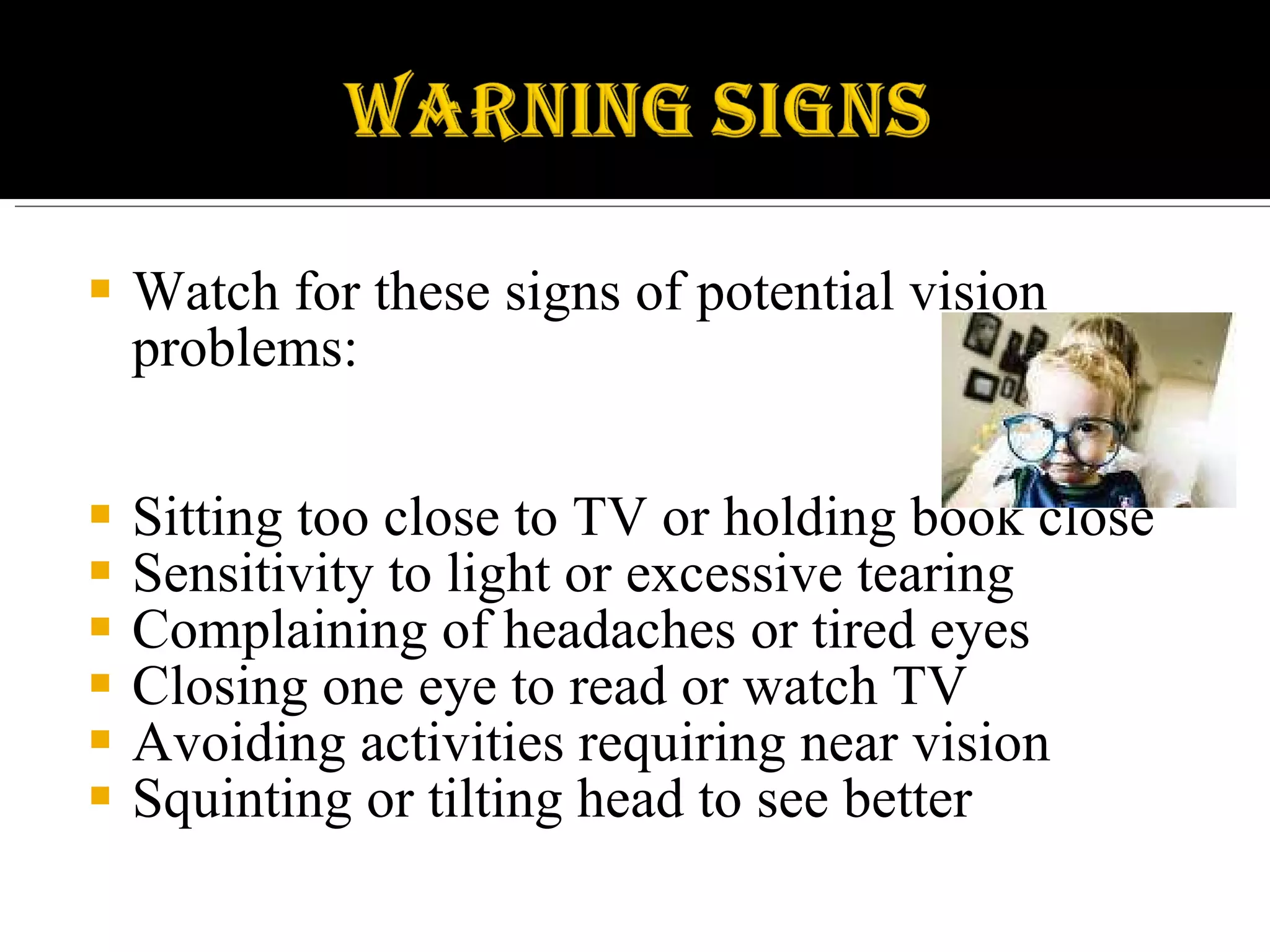
Watch for these signs of potential vision problems: Sitting too close to TV or holding book close Sensitivity to light or excessive tearing Complaining of headaches or tired eyes Closing one eye to read or watch TV Avoiding activities requiring near vision Squinting or tilting head to see better
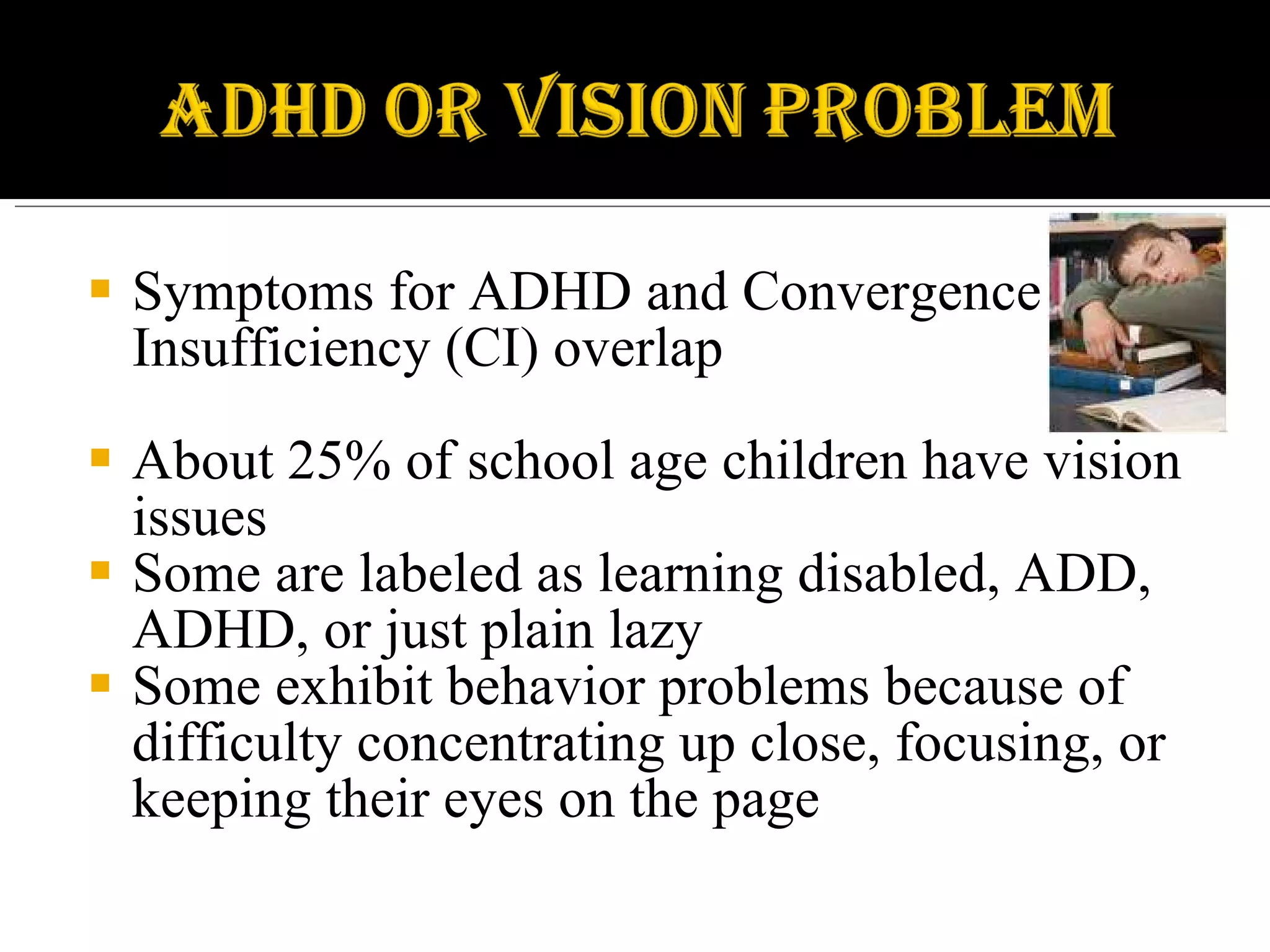
Symptoms for ADHD and Convergence Insufficiency (CI) overlap About 25% of school age children have vision issues Some are labeled as learning disabled, ADD, ADHD, or just plain lazy Some exhibit behavior problems because of difficulty concentrating up close, focusing, or keeping their eyes on the page
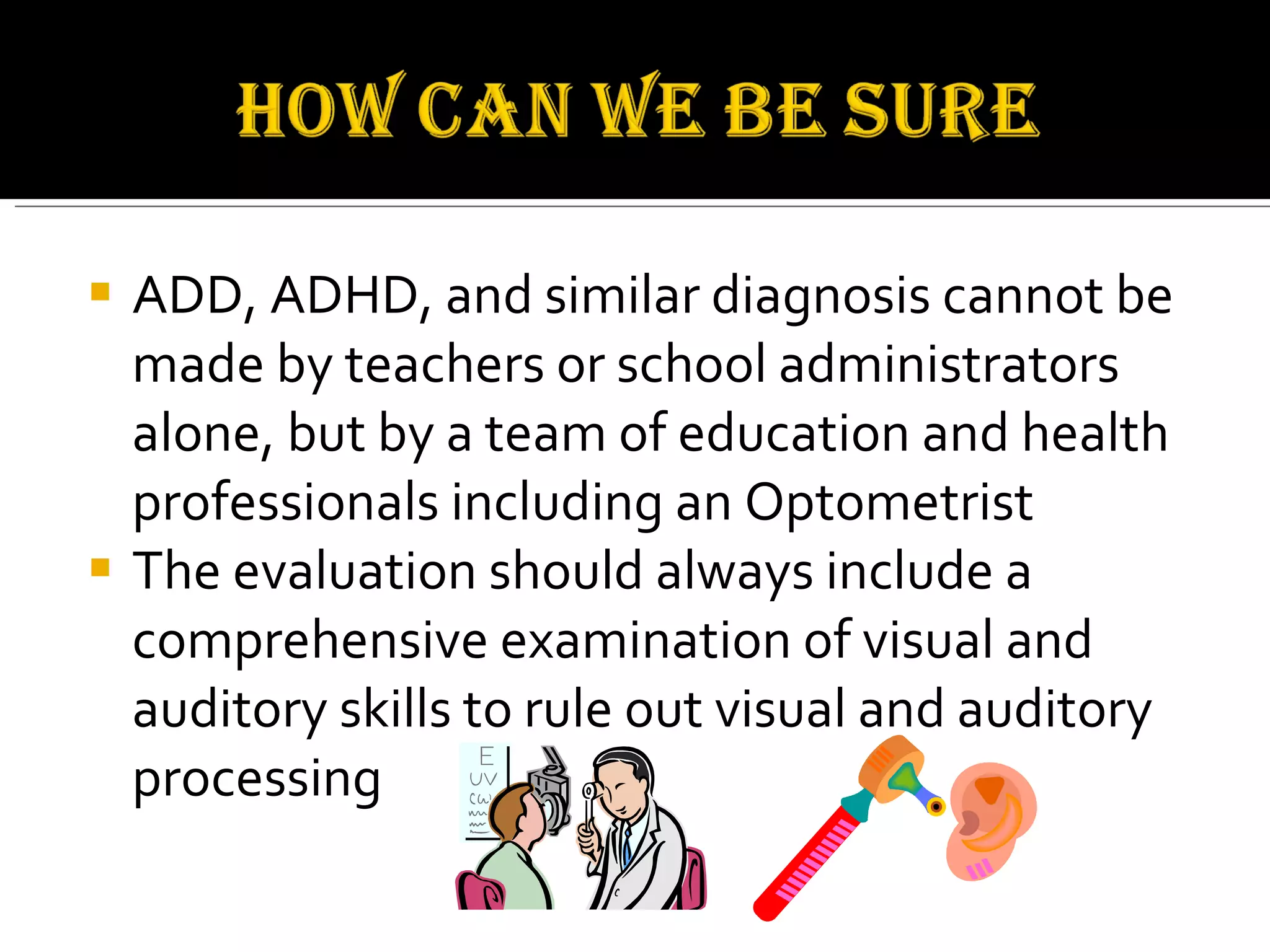
ADD, ADHD, and similar diagnosis cannot be made by teachers or school administrators alone, but by a team of education and health professionals including an Optometrist  The evaluation should always include a comprehensive examination of visual and auditory skills to rule out visual and auditory processing
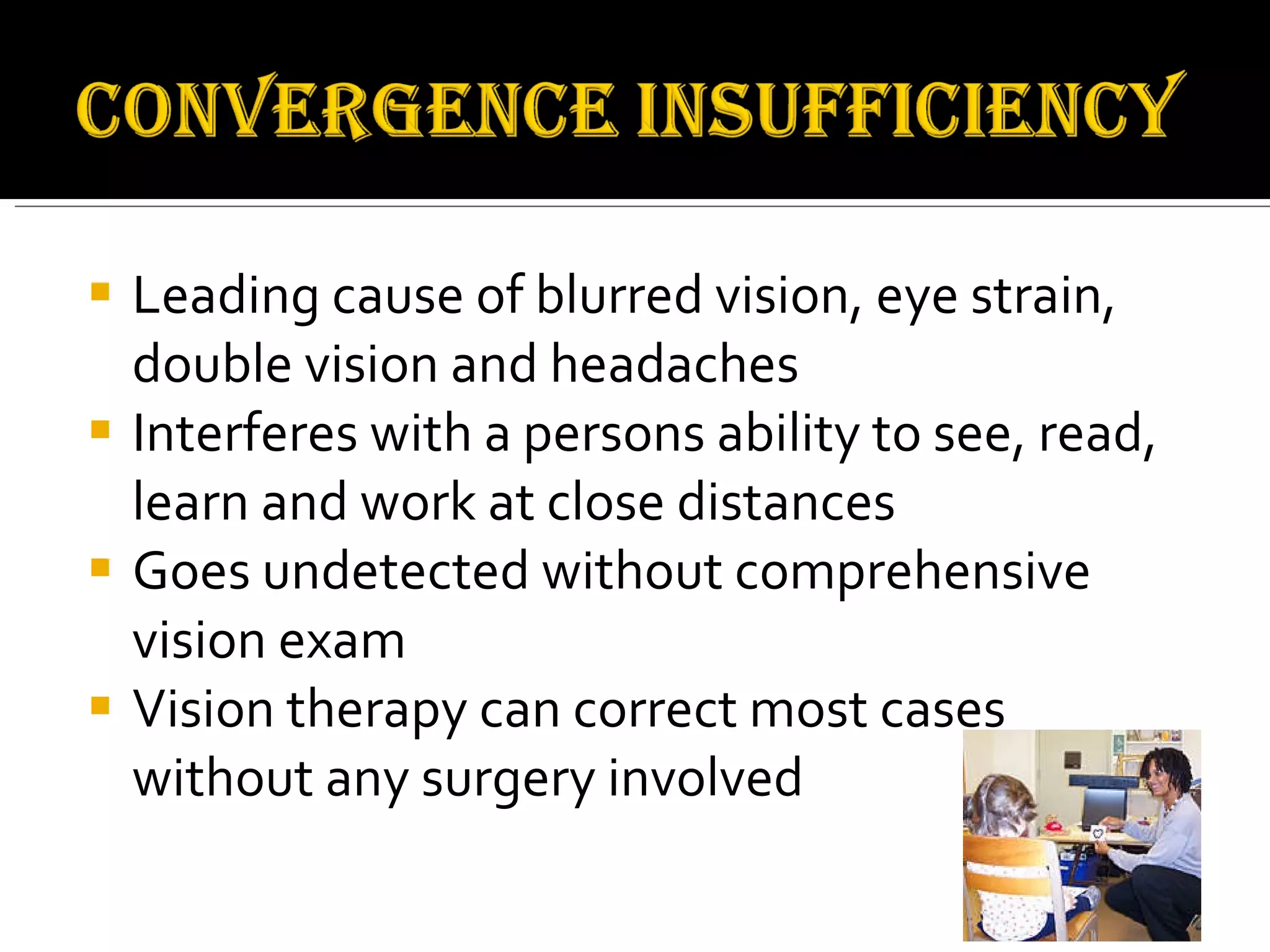
Leading cause of blurred vision, eye strain, double vision and headaches Interferes with a persons ability to see, read, learn and work at close distances Goes undetected without comprehensive vision exam Vision therapy can correct most cases without any surgery involved
More than just eye exercises, it also includes: Supervision by optometric vision care professional Corrective lenses  Therapeutic lenses Prism lenses  (available at Lenscrafters) Optical filters Computer software Electronic targets Visual-motor-sensory training devices
Everything we do at LensCrafters is because We love taking care of eyes We are  the  eye care company We feel the gift of sight is a precious one We feel it should be cherished and well cared for LensCrafters  loves your eyes LC

Lc Pp 1

  • 1.
    Children's Eye HealthA Lenscrafters Presentation LC
  • 2.
    12.1 million schoolage children or one in four have vision impairment One in Twenty pre-school age children has a vision problem if left untreated will cause permanent sight loss
  • 3.
    Most common causesof blindness among children are: congenital cataracts plus retinopathy and other complications due to prematurity 90% of all eye injuries and 50% of all cases of blindness are preventable
  • 4.
    Most common causesof eye injury to children Sports without eye protection Toys Pens & pencils Cigarettes & cigars Furniture Household chemicals
  • 5.
    90% of allsports related eye injuries are preventable Only 15% of children wear eye protection
  • 6.
    Seek medical attentionif: Child has pain or trouble seeing Eye does not move as well as the other eye Eye sticks out more than other eye Eye has unusual pupil size or shape Blood in clear area of eye
  • 7.
    Eye protection forall sports and swimming Protection for all eyes from the sun
  • 8.
    Supervise children usingpencils, scissors, tools Select age appropriate toys avoiding projectile toys like: darts, bow and arrows, missile firing toys and pellet firing guns Keep all chemicals and sprays secured
  • 9.
    Children don’t knowhow they should be seeing The AOA recommends eye and vision exams by six months of age At three years Before first grade Every year between ages 6-18
  • 10.
    Up to 10%of preschoolers have vision problems 25% of school age children have vision problems Early eye exams crucial to insure proper vision allowing them to perform better in school and play Timely eye exams will identify eye problems early
  • 11.
    Comprehensive eye examscan detect visual disorders that affect your child’s: Ability to learn Placement in special education programs Future success Propensity to require social welfare services later Potential diagnosis as ADHD
  • 12.
    Watch for thesesigns of potential vision problems: Sitting too close to TV or holding book close Sensitivity to light or excessive tearing Complaining of headaches or tired eyes Closing one eye to read or watch TV Avoiding activities requiring near vision Squinting or tilting head to see better
  • 13.
    Symptoms for ADHDand Convergence Insufficiency (CI) overlap About 25% of school age children have vision issues Some are labeled as learning disabled, ADD, ADHD, or just plain lazy Some exhibit behavior problems because of difficulty concentrating up close, focusing, or keeping their eyes on the page
  • 14.
    ADD, ADHD, andsimilar diagnosis cannot be made by teachers or school administrators alone, but by a team of education and health professionals including an Optometrist The evaluation should always include a comprehensive examination of visual and auditory skills to rule out visual and auditory processing
  • 15.
    Leading cause ofblurred vision, eye strain, double vision and headaches Interferes with a persons ability to see, read, learn and work at close distances Goes undetected without comprehensive vision exam Vision therapy can correct most cases without any surgery involved
  • 16.
    More than justeye exercises, it also includes: Supervision by optometric vision care professional Corrective lenses Therapeutic lenses Prism lenses (available at Lenscrafters) Optical filters Computer software Electronic targets Visual-motor-sensory training devices
  • 17.
    Everything we doat LensCrafters is because We love taking care of eyes We are the eye care company We feel the gift of sight is a precious one We feel it should be cherished and well cared for LensCrafters loves your eyes LC