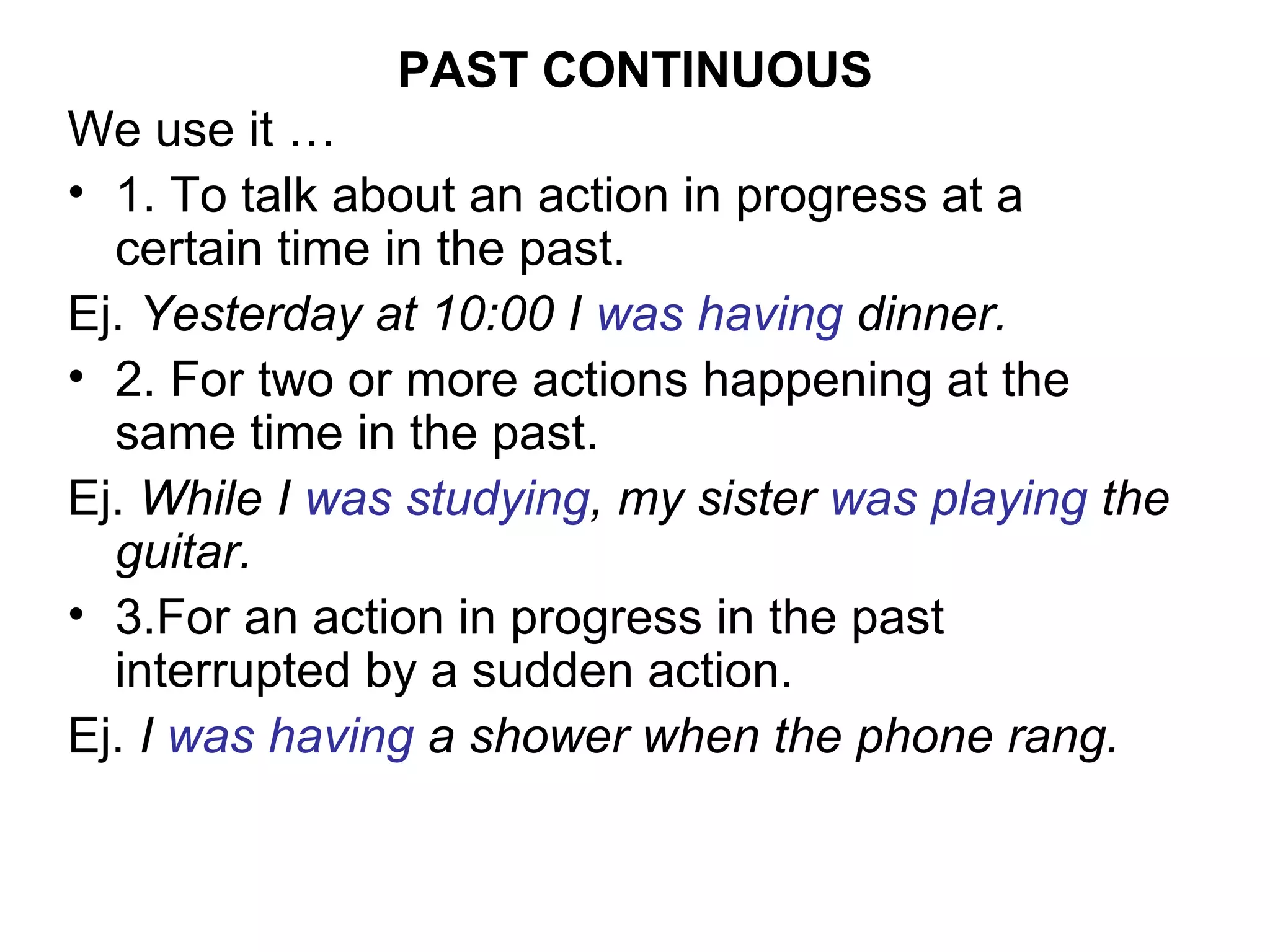
PAST CONTINUOUS
We use it …
• 1. To talk about an action in progress at a
  certain time in the past.
Ej. Yesterday at 10:00 I was having dinner.
• 2. For two or more actions happening at the
  same time in the past.
Ej. While I was studying, my sister was playing the
  guitar.
• 3.For an action in progress in the past
  interrupted by a sudden action.
Ej. I was having a shower when the phone rang.
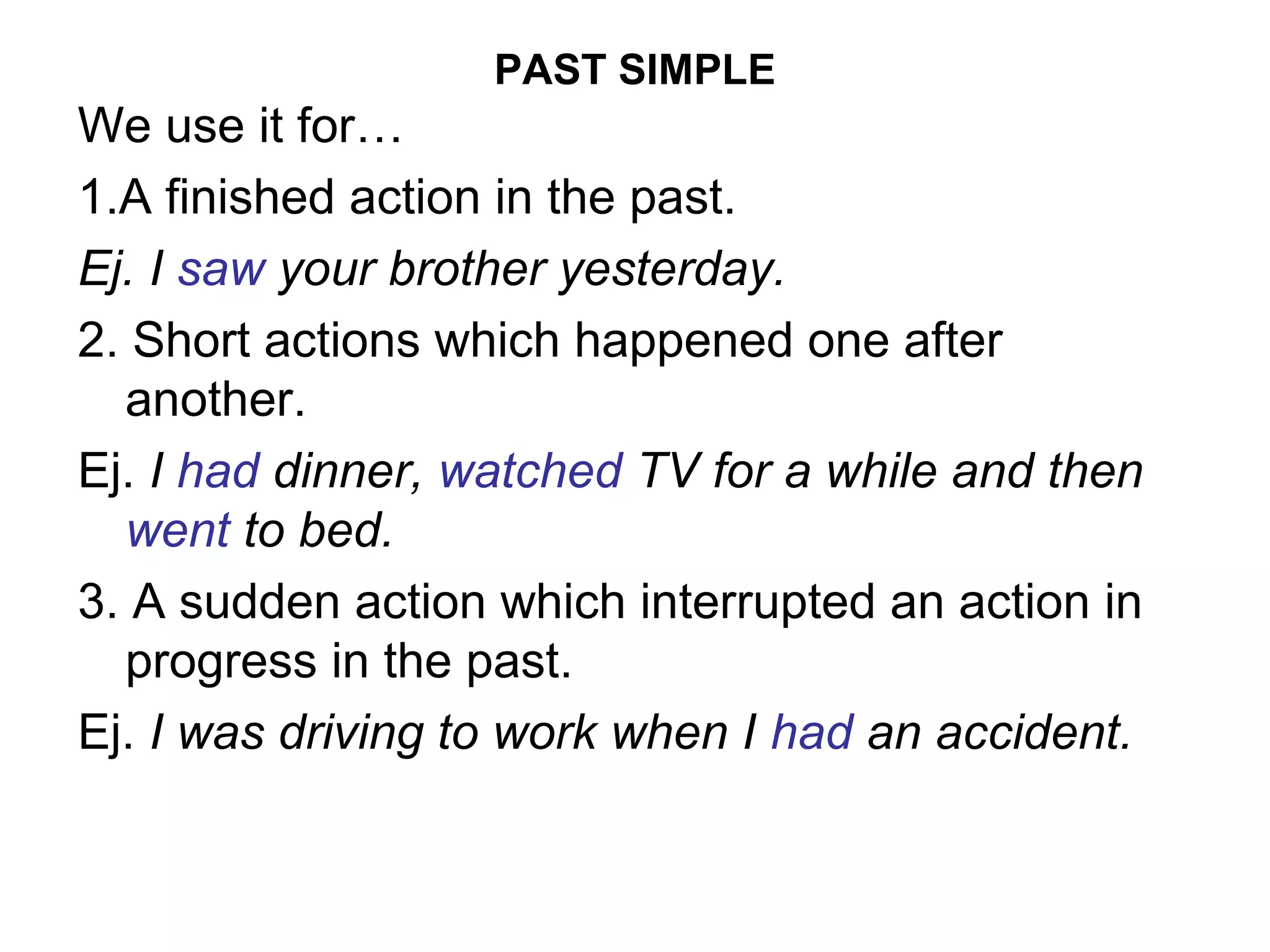
PAST SIMPLE
We use it for…
1.A finished action in the past.
Ej. I saw your brother yesterday.
2. Short actions which happened one after
  another.
Ej. I had dinner, watched TV for a while and then
  went to bed.
3. A sudden action which interrupted an action in
  progress in the past.
Ej. I was driving to work when I had an accident.
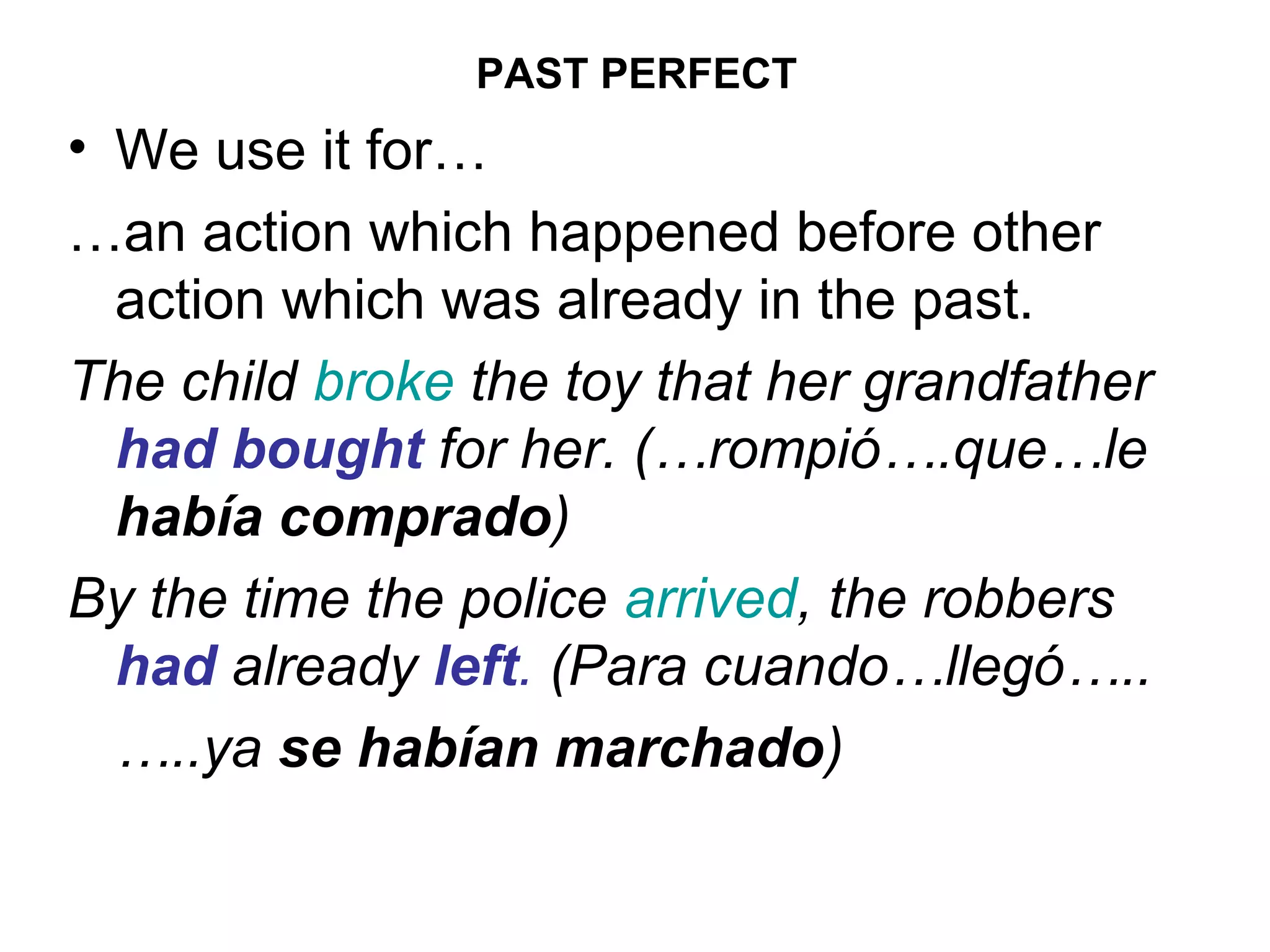
PAST PERFECT
• We use it for…
…an action which happened before other
  action which was already in the past.
The child broke the toy that her grandfather
  had bought for her. (…rompió….que…le
  había comprado)
By the time the police arrived, the robbers
  had already left. (Para cuando…llegó…..
  …..ya se habían marchado)
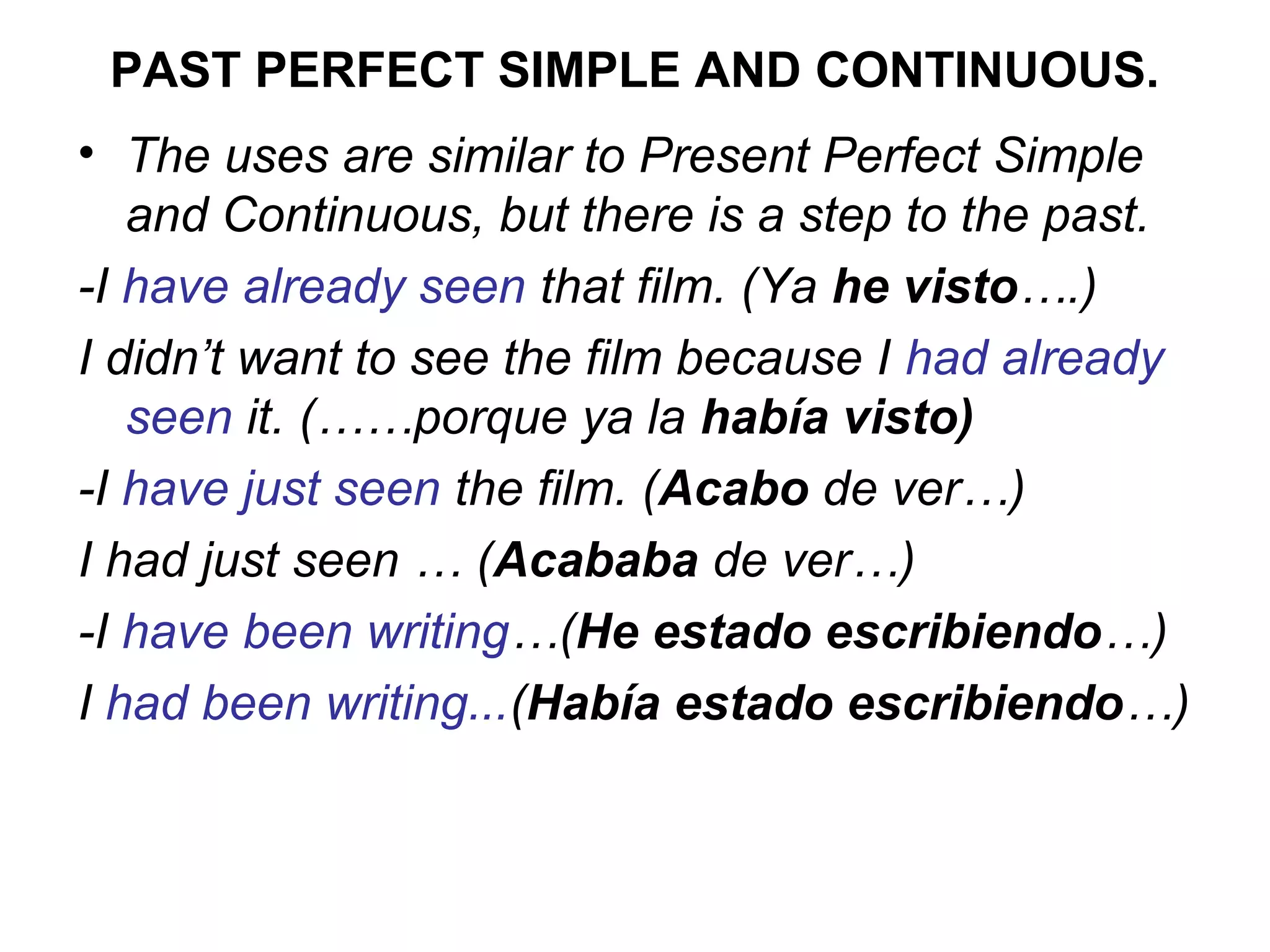
PAST PERFECT SIMPLE AND CONTINUOUS.
• The uses are similar to Present Perfect Simple
   and Continuous, but there is a step to the past.
-I have already seen that film. (Ya he visto….)
I didn’t want to see the film because I had already
   seen it. (……porque ya la había visto)
-I have just seen the film. (Acabo de ver…)
I had just seen … (Acababa de ver…)
-I have been writing…(He estado escribiendo…)
I had been writing...(Había estado escribiendo…)
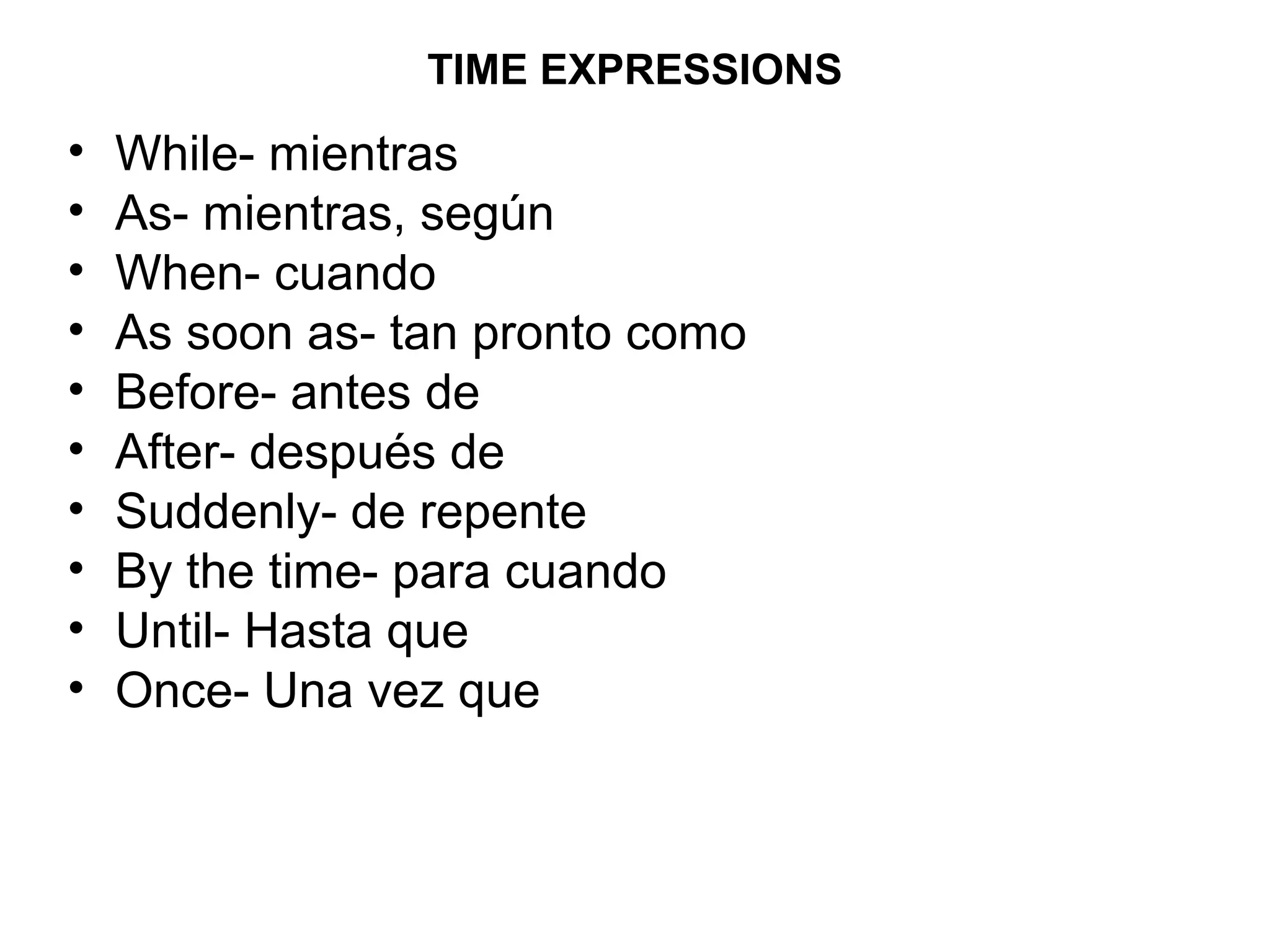
TIME EXPRESSIONS
•   While- mientras
•   As- mientras, según
•   When- cuando
•   As soon as- tan pronto como
•   Before- antes de
•   After- después de
•   Suddenly- de repente
•   By the time- para cuando
•   Until- Hasta que
•   Once- Una vez que
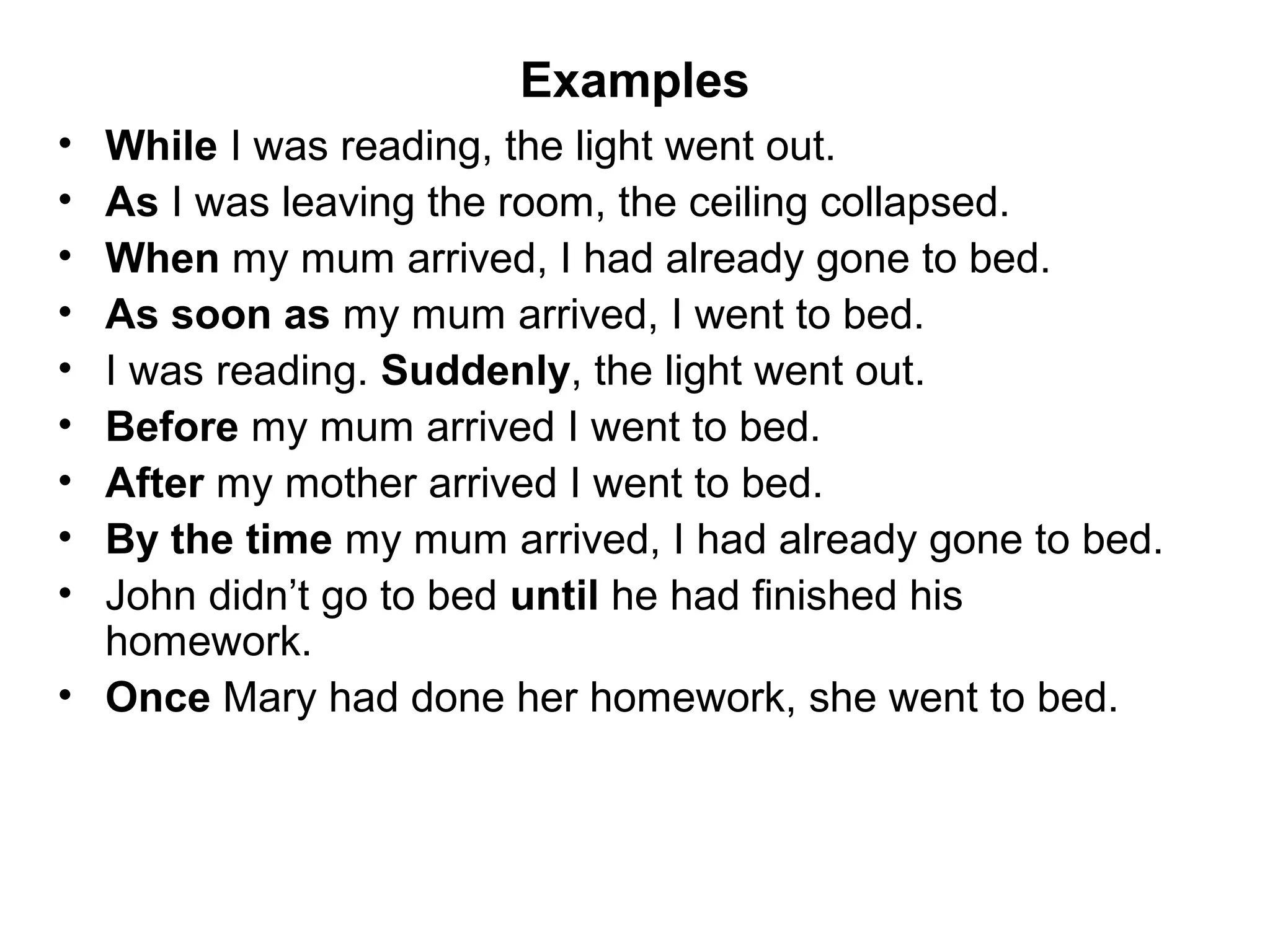
Examples
• While I was reading, the light went out.
• As I was leaving the room, the ceiling collapsed.
• When my mum arrived, I had already gone to bed.
• As soon as my mum arrived, I went to bed.
• I was reading. Suddenly, the light went out.
• Before my mum arrived I went to bed.
• After my mother arrived I went to bed.
• By the time my mum arrived, I had already gone to bed.
• John didn’t go to bed until he had finished his
  homework.
• Once Mary had done her homework, she went to bed.
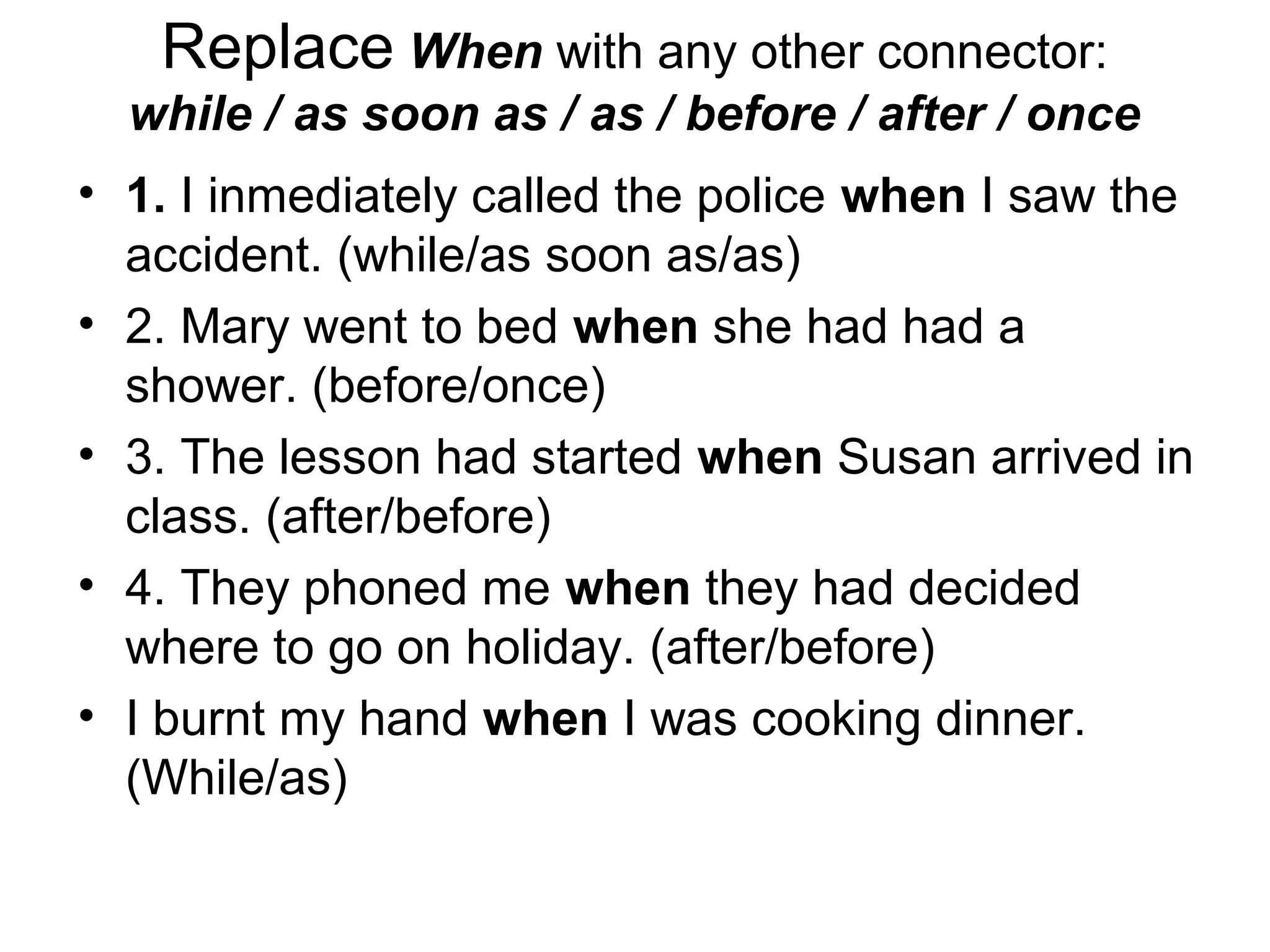
Replace When with any other connector:
  while / as soon as / as / before / after / once
• 1. I inmediately called the police when I saw the
  accident. (while/as soon as/as)
• 2. Mary went to bed when she had had a
  shower. (before/once)
• 3. The lesson had started when Susan arrived in
  class. (after/before)
• 4. They phoned me when they had decided
  where to go on holiday. (after/before)
• I burnt my hand when I was cooking dinner.
  (While/as)

Past continuous, past simple and past perfect

  • 1.
    PAST CONTINUOUS We useit … • 1. To talk about an action in progress at a certain time in the past. Ej. Yesterday at 10:00 I was having dinner. • 2. For two or more actions happening at the same time in the past. Ej. While I was studying, my sister was playing the guitar. • 3.For an action in progress in the past interrupted by a sudden action. Ej. I was having a shower when the phone rang.
  • 2.
    PAST SIMPLE We useit for… 1.A finished action in the past. Ej. I saw your brother yesterday. 2. Short actions which happened one after another. Ej. I had dinner, watched TV for a while and then went to bed. 3. A sudden action which interrupted an action in progress in the past. Ej. I was driving to work when I had an accident.
  • 3.
    PAST PERFECT • Weuse it for… …an action which happened before other action which was already in the past. The child broke the toy that her grandfather had bought for her. (…rompió….que…le había comprado) By the time the police arrived, the robbers had already left. (Para cuando…llegó….. …..ya se habían marchado)
  • 4.
    PAST PERFECT SIMPLEAND CONTINUOUS. • The uses are similar to Present Perfect Simple and Continuous, but there is a step to the past. -I have already seen that film. (Ya he visto….) I didn’t want to see the film because I had already seen it. (……porque ya la había visto) -I have just seen the film. (Acabo de ver…) I had just seen … (Acababa de ver…) -I have been writing…(He estado escribiendo…) I had been writing...(Había estado escribiendo…)
  • 5.
    TIME EXPRESSIONS • While- mientras • As- mientras, según • When- cuando • As soon as- tan pronto como • Before- antes de • After- después de • Suddenly- de repente • By the time- para cuando • Until- Hasta que • Once- Una vez que
  • 6.
    Examples • While Iwas reading, the light went out. • As I was leaving the room, the ceiling collapsed. • When my mum arrived, I had already gone to bed. • As soon as my mum arrived, I went to bed. • I was reading. Suddenly, the light went out. • Before my mum arrived I went to bed. • After my mother arrived I went to bed. • By the time my mum arrived, I had already gone to bed. • John didn’t go to bed until he had finished his homework. • Once Mary had done her homework, she went to bed.
  • 7.
    Replace When withany other connector: while / as soon as / as / before / after / once • 1. I inmediately called the police when I saw the accident. (while/as soon as/as) • 2. Mary went to bed when she had had a shower. (before/once) • 3. The lesson had started when Susan arrived in class. (after/before) • 4. They phoned me when they had decided where to go on holiday. (after/before) • I burnt my hand when I was cooking dinner. (While/as)