
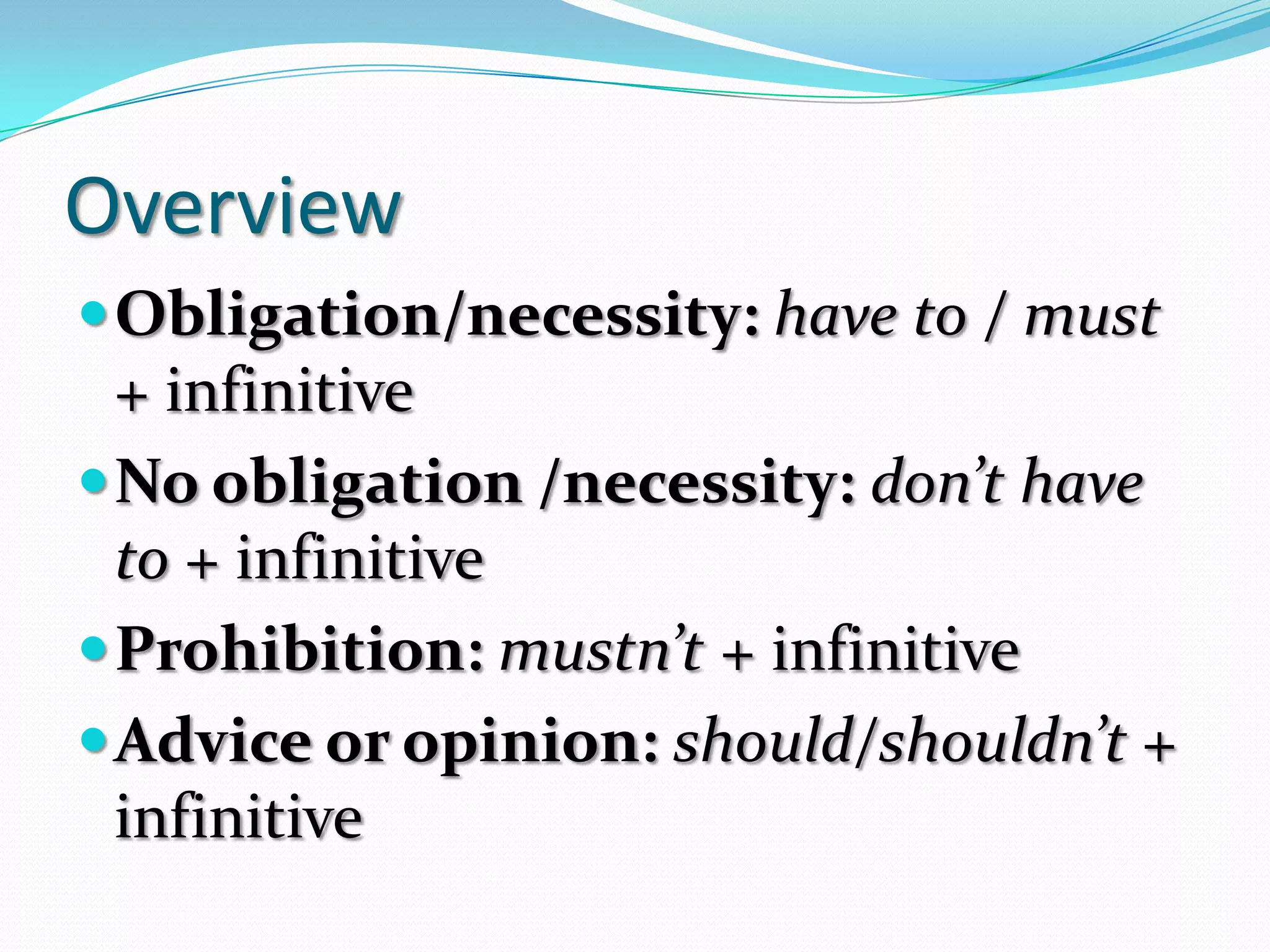
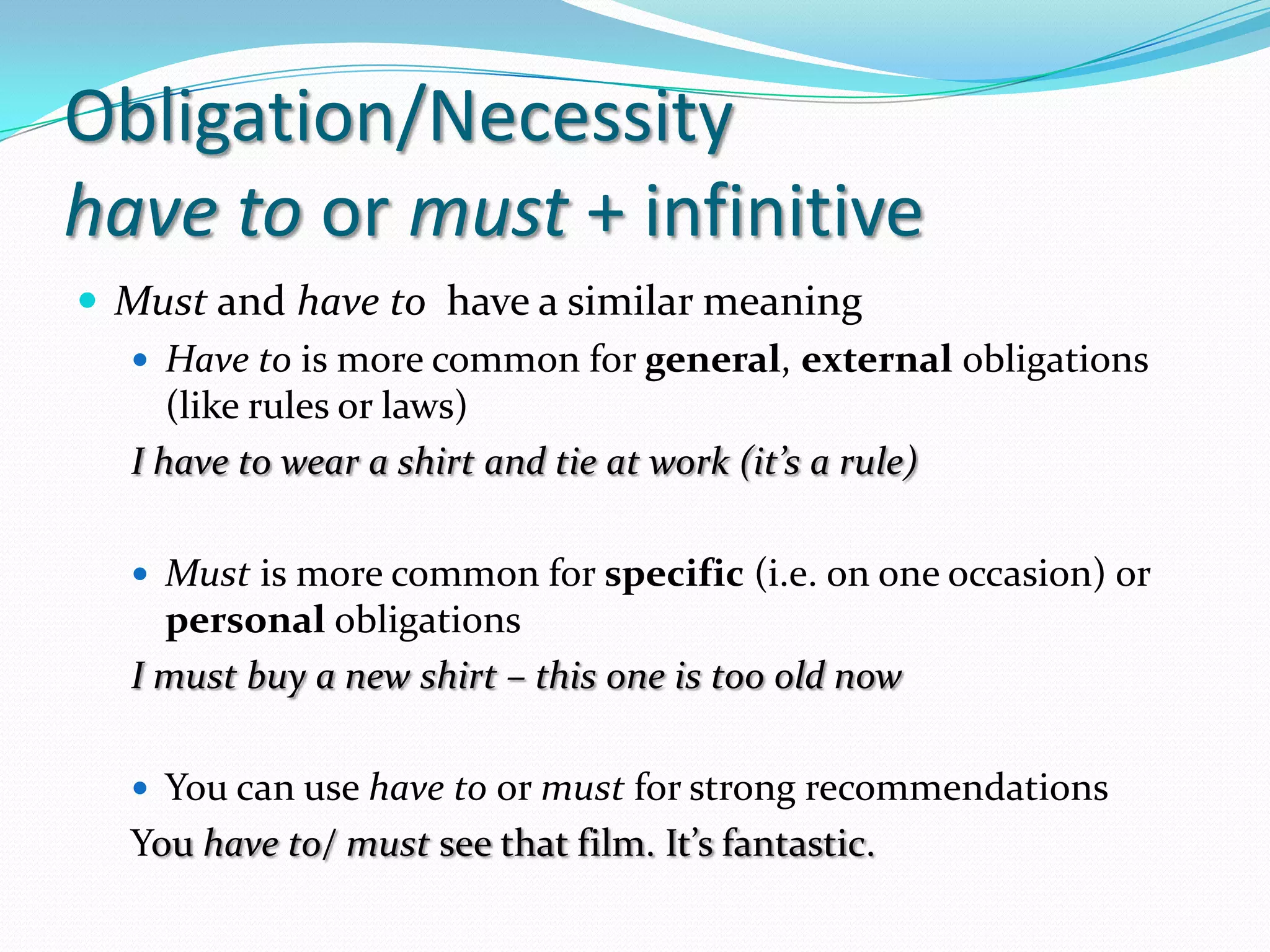
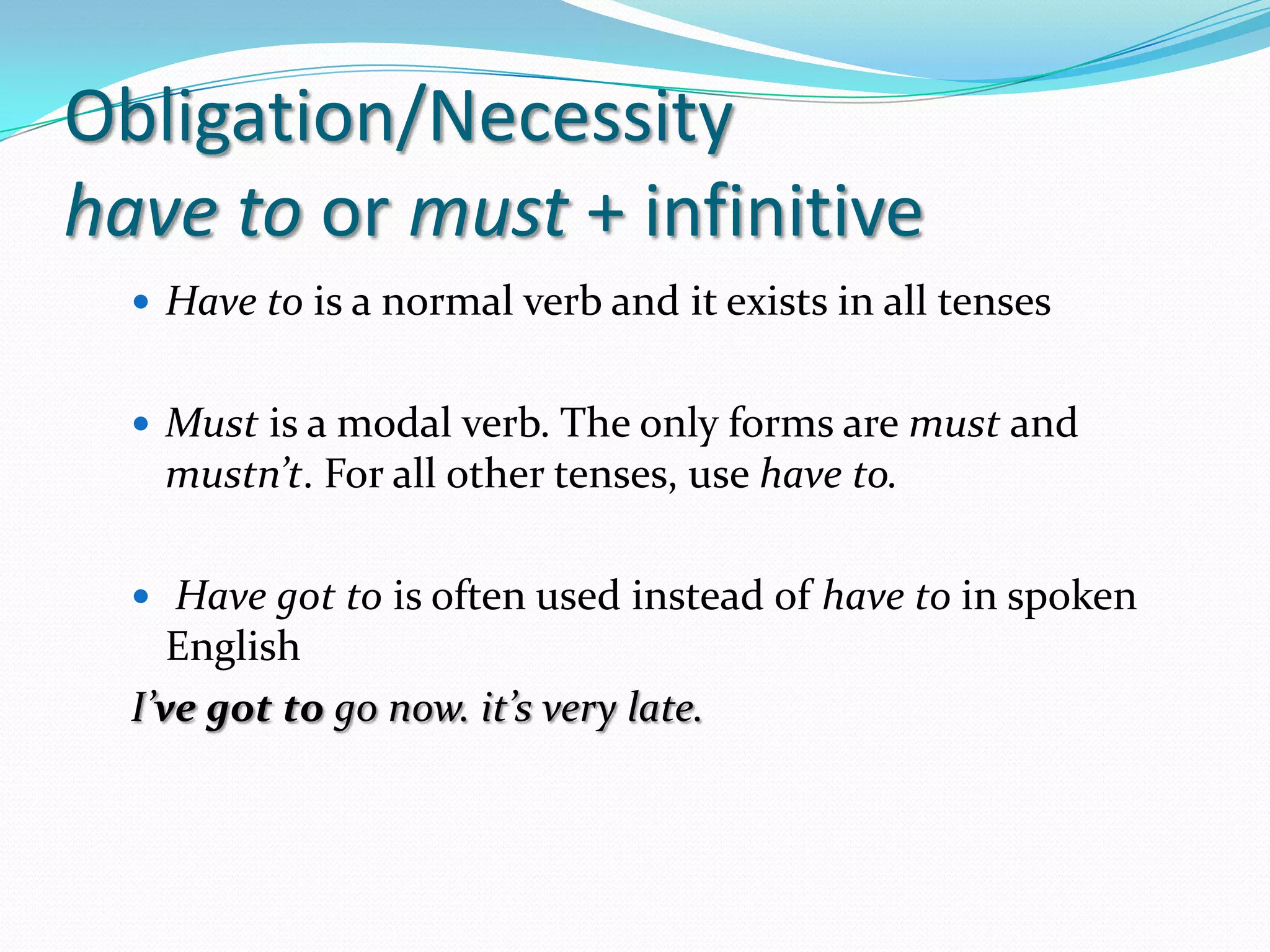
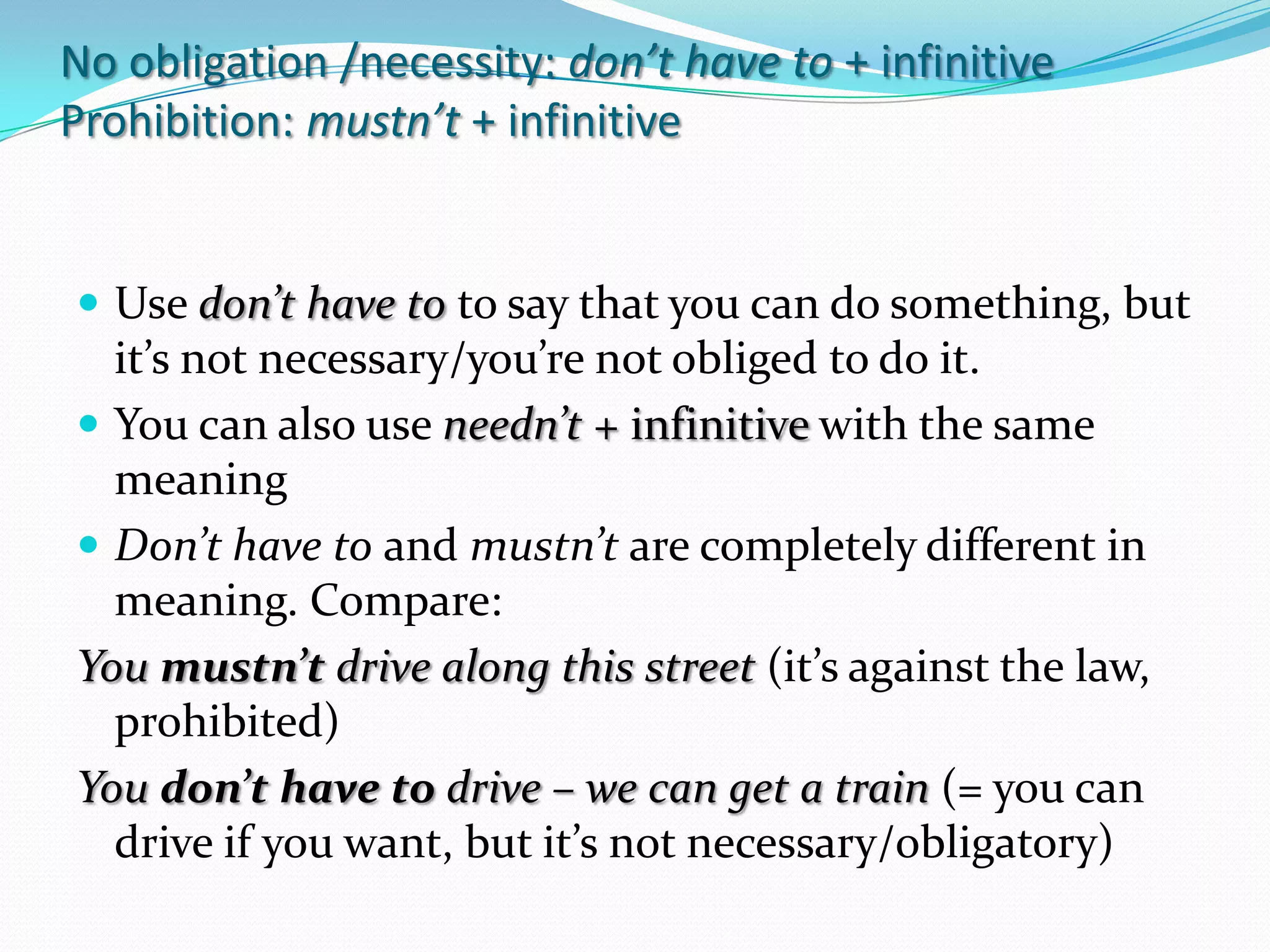

This document discusses different ways to express obligation, necessity, prohibition, and advice in English using modal verbs and expressions. It explains that "must" and "have to" both express obligation or necessity, with "have to" being more common for general rules and "must" for specific instances. "Don't have to" means there is no obligation, while "mustn't" expresses prohibition. "Should" and "shouldn't" are used to give advice or opinion, with "should" being less strong than "must" or "have to". The document provides examples for how to use each expression appropriately.


