PASSIVE VOICE
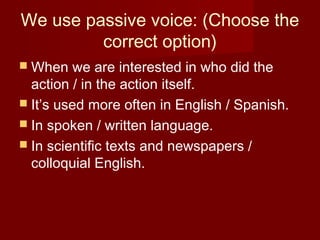
We use passive voice: (Choose the
correct option)
 When

we are interested in who did the
action / in the action itself.
 It’s used more often in English / Spanish.
 In spoken / written language.
 In scientific texts and newspapers /
colloquial English.
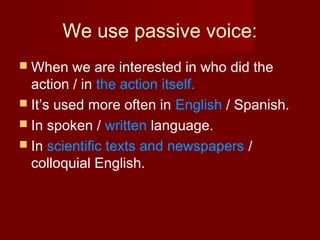
We use passive voice:
 When

we are interested in who did the
action / in the action itself.
 It’s used more often in English / Spanish.
 In spoken / written language.
 In scientific texts and newspapers /
colloquial English.
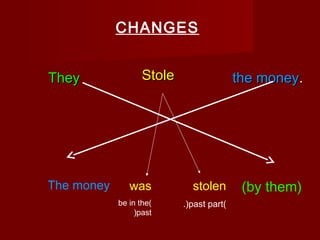
CHANGES
They

The money

Stole

the money.

was

stolen

be in the)
(past

.(past part)

(by them)
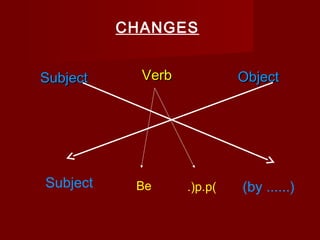
CHANGES
Subject

Subject

Verb

Be

Object

.(p.p)

(by ......)
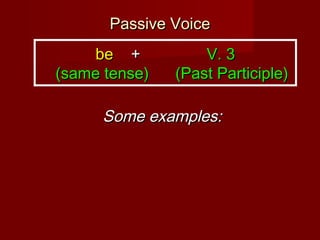
Passive Voice
be +
(same tense)

V. 3
(Past Participle)

Some examples:


He throws them...



He threw them....



He has thrown them...



He had thrown them...



He is throwing them...



He was throwing them...



He will throw them...








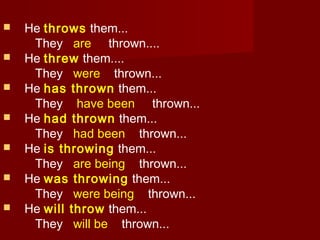
He throws them...
They are thrown....
He threw them....
They were thrown...
He has thrown them...
They have been thrown...
He had thrown them...
They had been thrown...
He is throwing them...
They are being thrown...
He was throwing them...
They were being thrown...
He will throw them...
They will be thrown...
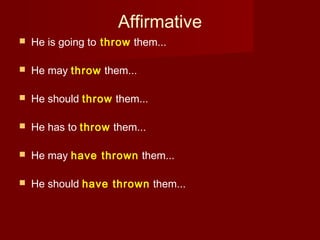
Affirmative


He is going to throw them...



He may throw them...



He should throw them...



He has to throw them...



He may have thrown them...



He should have thrown them...
Affirmative







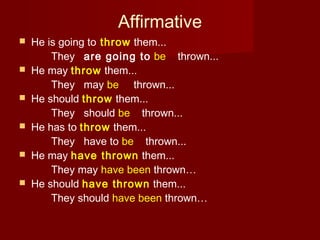
He is going to throw them...
They are going to be thrown...
He may throw them...
They may be thrown...
He should throw them...
They should be thrown...
He has to throw them...
They have to be thrown...
He may have thrown them...
They may have been thrown…
He should have thrown them...
They should have been thrown…
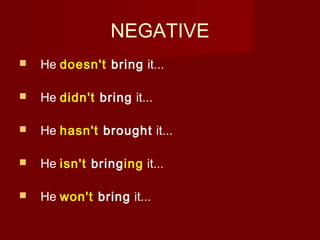
NEGATIVE


He doesn't bring it...



He didn't bring it...



He hasn't brought it...



He isn't bringing it...



He won't bring it...
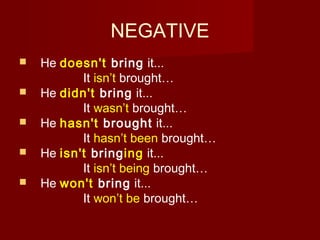
NEGATIVE






He doesn't bring it...
It isn’t brought…
He didn't bring it...
It wasn’t brought…
He hasn't brought it...
It hasn’t been brought…
He isn't bringing it...
It isn’t being brought…
He won't bring it...
It won’t be brought…
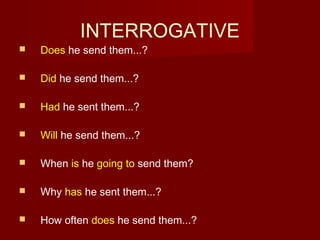
INTERROGATIVE



Does he send them...?



Did he send them...?



Had he sent them...?



Will he send them...?



When is he going to send them?



Why has he sent them...?



How often does he send them...?
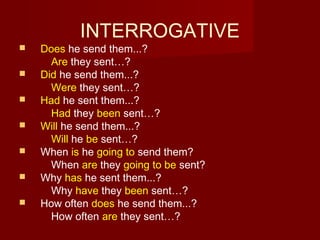
INTERROGATIVE









Does he send them...?
Are they sent…?
Did he send them...?
Were they sent…?
Had he sent them...?
Had they been sent…?
Will he send them...?
Will he be sent…?
When is he going to send them?
When are they going to be sent?
Why has he sent them...?
Why have they been sent…?
How often does he send them...?
How often are they sent…?
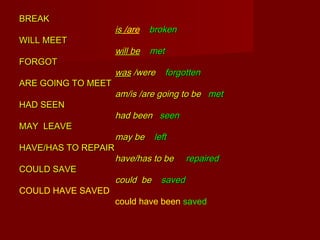
BREAK
WILL MEET
FORGOT
ARE GOING TO MEET
HAD SEEN
MAY LEAVE
HAVE/HAS TO REPAIR
COULD SAVE
COULD HAVE SAVED

is /are

broken

will be

met

was /were

forgotten

am/is /are going to be met
had been seen
may be

left

have/has to be
could be

repaired

saved

could have been saved
AFFIRMATIVE
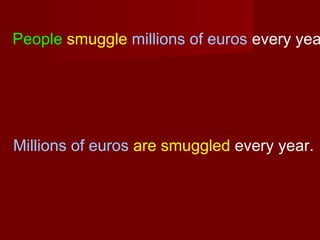
People smuggle millions of euros every yea

Millions of euros are smuggled every year.
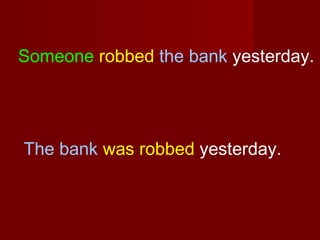
Someone robbed the bank yesterday.

The bank was robbed yesterday.
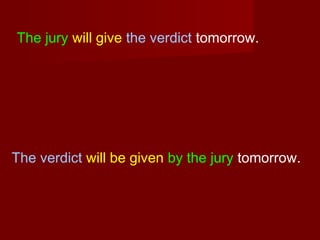
The jury will give the verdict tomorrow.

The verdict will be given by the jury tomorrow.
Some burglars have broken into my house.

My house has been broken into.
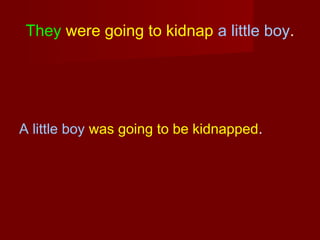
They were going to kidnap a little boy.

A little boy was going to be kidnapped.
NEGATIVE
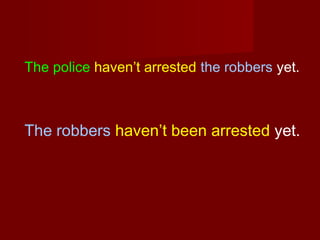
The police haven’t arrested the robbers yet.

The robbers haven’t been arrested yet.
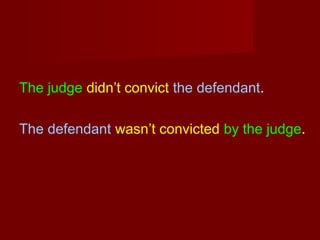
The judge didn’t convict the defendant.
The defendant wasn’t convicted by the judge.
They hadn’t thrown the gun to the river.

The gun hadn’t been thrown to the...
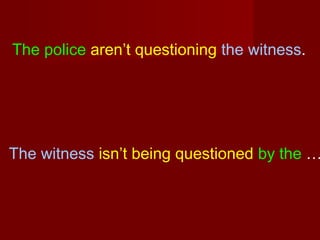
The police aren’t questioning the witness.

The witness isn’t being questioned by the …
INTERROGATIVE
Did anybody hack the company’s
computer?

Was the company’s computer hacked?
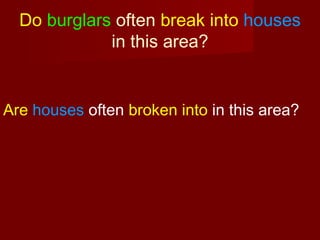
Do burglars often break into houses
in this area?

Are houses often broken into in this area?
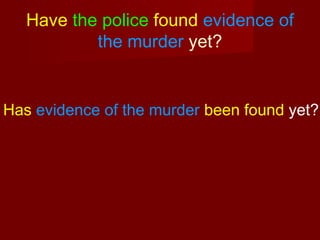
Have the police found evidence of
the murder yet?

Has evidence of the murder been found yet?
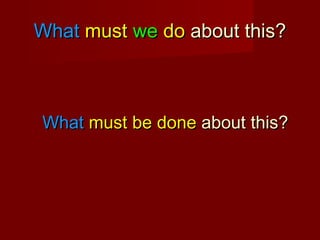
What must we do about this?

What must be done about this?
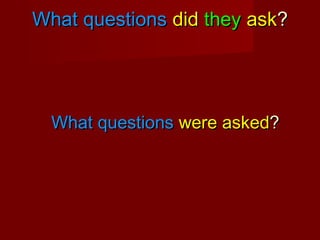
What questions did they ask?

What questions were asked?
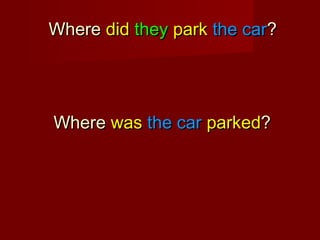
Where did they park the car?

Where was the car parked?
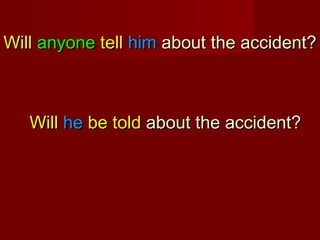
Will anyone tell him about the accident?

Will he be told about the accident?
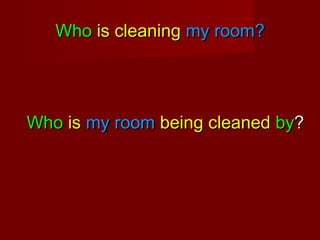
Who is cleaning my room?

Who is my room being cleaned by?
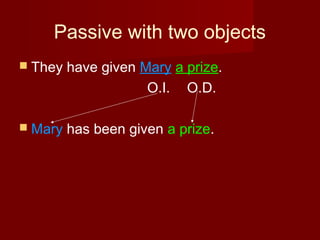
PASSIVE WITH TWO OBJECTS
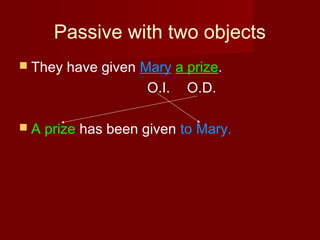
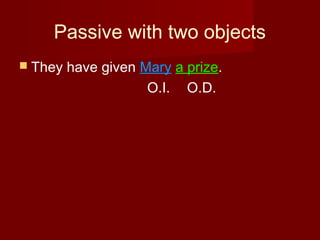
Passive with two objects
 They

have given Mary a prize.
O.I. O.D.
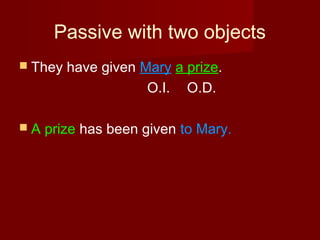
Passive with two objects
 They

A

have given Mary a prize.
O.I. O.D.

prize has been given to Mary.
Passive with two objects
 They

A

have given Mary a prize.
O.I. O.D.

prize has been given to Mary.
Passive with two objects
 They

have given Mary a prize.
O.I. O.D.

 Mary

has been given a prize.
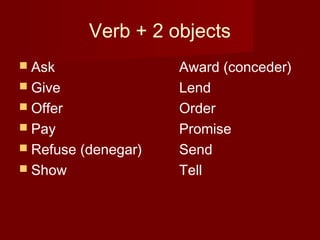
Verb + 2 objects
 Ask
 Give
 Offer
 Pay
 Refuse
 Show

(denegar)

Award (conceder)
Lend
Order
Promise
Send
Tell
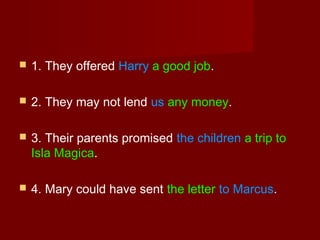


1. They offered Harry a good job.



2. They may not lend us any money.



3. Their parents promised the children a trip to
Isla Magica.



4. Mary could have sent the letter to Marcus.






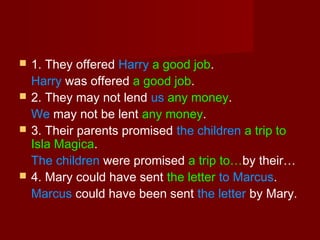
1. They offered Harry a good job.
Harry was offered a good job.
2. They may not lend us any money.
We may not be lent any money.
3. Their parents promised the children a trip to
Isla Magica.
The children were promised a trip to…by their…
4. Mary could have sent the letter to Marcus.
Marcus could have been sent the letter by Mary.

The passive (Examples)

  • 1.
  • 2.
    We use passivevoice: (Choose the correct option)  When we are interested in who did the action / in the action itself.  It’s used more often in English / Spanish.  In spoken / written language.  In scientific texts and newspapers / colloquial English.
  • 3.
    We use passivevoice:  When we are interested in who did the action / in the action itself.  It’s used more often in English / Spanish.  In spoken / written language.  In scientific texts and newspapers / colloquial English.
  • 4.
    CHANGES They The money Stole the money. was stolen bein the) (past .(past part) (by them)
  • 5.
  • 6.
    Passive Voice be + (sametense) V. 3 (Past Participle) Some examples:
  • 7.
     He throws them...  Hethrew them....  He has thrown them...  He had thrown them...  He is throwing them...  He was throwing them...  He will throw them...
  • 8.
           He throws them... Theyare thrown.... He threw them.... They were thrown... He has thrown them... They have been thrown... He had thrown them... They had been thrown... He is throwing them... They are being thrown... He was throwing them... They were being thrown... He will throw them... They will be thrown...
  • 9.
    Affirmative  He is goingto throw them...  He may throw them...  He should throw them...  He has to throw them...  He may have thrown them...  He should have thrown them...
  • 10.
    Affirmative       He is goingto throw them... They are going to be thrown... He may throw them... They may be thrown... He should throw them... They should be thrown... He has to throw them... They have to be thrown... He may have thrown them... They may have been thrown… He should have thrown them... They should have been thrown…
  • 11.
    NEGATIVE  He doesn't bringit...  He didn't bring it...  He hasn't brought it...  He isn't bringing it...  He won't bring it...
  • 12.
    NEGATIVE      He doesn't bringit... It isn’t brought… He didn't bring it... It wasn’t brought… He hasn't brought it... It hasn’t been brought… He isn't bringing it... It isn’t being brought… He won't bring it... It won’t be brought…
  • 13.
    INTERROGATIVE  Does he sendthem...?  Did he send them...?  Had he sent them...?  Will he send them...?  When is he going to send them?  Why has he sent them...?  How often does he send them...?
  • 14.
    INTERROGATIVE        Does he sendthem...? Are they sent…? Did he send them...? Were they sent…? Had he sent them...? Had they been sent…? Will he send them...? Will he be sent…? When is he going to send them? When are they going to be sent? Why has he sent them...? Why have they been sent…? How often does he send them...? How often are they sent…?
  • 15.
    BREAK WILL MEET FORGOT ARE GOINGTO MEET HAD SEEN MAY LEAVE HAVE/HAS TO REPAIR COULD SAVE COULD HAVE SAVED is /are broken will be met was /were forgotten am/is /are going to be met had been seen may be left have/has to be could be repaired saved could have been saved
  • 16.
  • 17.
    People smuggle millionsof euros every yea Millions of euros are smuggled every year.
  • 18.
    Someone robbed thebank yesterday. The bank was robbed yesterday.
  • 19.
    The jury willgive the verdict tomorrow. The verdict will be given by the jury tomorrow.
  • 20.
    Some burglars havebroken into my house. My house has been broken into.
  • 21.
    They were goingto kidnap a little boy. A little boy was going to be kidnapped.
  • 22.
  • 23.
    The police haven’tarrested the robbers yet. The robbers haven’t been arrested yet.
  • 24.
    The judge didn’tconvict the defendant. The defendant wasn’t convicted by the judge.
  • 25.
    They hadn’t thrownthe gun to the river. The gun hadn’t been thrown to the...
  • 26.
    The police aren’tquestioning the witness. The witness isn’t being questioned by the …
  • 27.
  • 28.
    Did anybody hackthe company’s computer? Was the company’s computer hacked?
  • 29.
    Do burglars oftenbreak into houses in this area? Are houses often broken into in this area?
  • 30.
    Have the policefound evidence of the murder yet? Has evidence of the murder been found yet?
  • 31.
    What must wedo about this? What must be done about this?
  • 32.
    What questions didthey ask? What questions were asked?
  • 33.
    Where did theypark the car? Where was the car parked?
  • 34.
    Will anyone tellhim about the accident? Will he be told about the accident?
  • 35.
    Who is cleaningmy room? Who is my room being cleaned by?
  • 36.
  • 37.
    Passive with twoobjects  They have given Mary a prize. O.I. O.D.
  • 38.
    Passive with twoobjects  They A have given Mary a prize. O.I. O.D. prize has been given to Mary.
  • 39.
    Passive with twoobjects  They A have given Mary a prize. O.I. O.D. prize has been given to Mary.
  • 40.
    Passive with twoobjects  They have given Mary a prize. O.I. O.D.  Mary has been given a prize.
  • 41.
    Verb + 2objects  Ask  Give  Offer  Pay  Refuse  Show (denegar) Award (conceder) Lend Order Promise Send Tell
  • 42.
     1. They offeredHarry a good job.  2. They may not lend us any money.  3. Their parents promised the children a trip to Isla Magica.  4. Mary could have sent the letter to Marcus.
  • 43.
        1. They offeredHarry a good job. Harry was offered a good job. 2. They may not lend us any money. We may not be lent any money. 3. Their parents promised the children a trip to Isla Magica. The children were promised a trip to…by their… 4. Mary could have sent the letter to Marcus. Marcus could have been sent the letter by Mary.