RELATIVE CLAUSES 4º eso
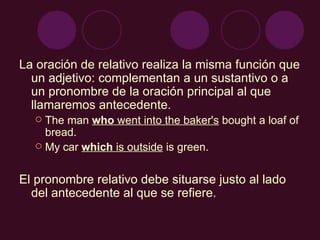
La oración de relativo realiza la misma función que un adjetivo: complementan a un sustantivo o a un pronombre de la oración principal al que llamaremos antecedente. The man  who  went into the baker's  bought a loaf of bread. My car  which  is outside  is green. El pronombre relativo debe situarse justo al lado del antecedente al que se refiere.
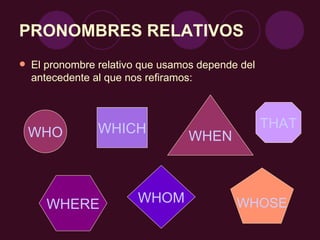
PRONOMBRES RELATIVOS El pronombre relativo que usamos depende del antecedente al que nos refiramos: WHO WHICH THAT WHERE WHEN WHOM WHOSE
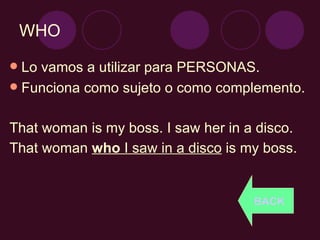
WHO Lo vamos a utilizar para PERSONAS. Funciona como sujeto o como complemento. That woman is my boss. I saw her in a disco. That woman  who  I saw in a disco  is my boss. BACK
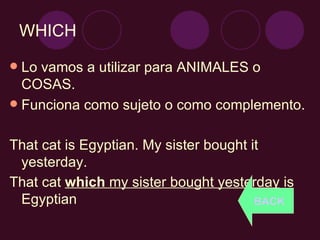
WHICH Lo vamos a utilizar para ANIMALES o COSAS. Funciona como sujeto o como complemento. That cat is Egyptian. My sister bought it yesterday. That cat  which  my sister bought yesterday  is Egyptian BACK
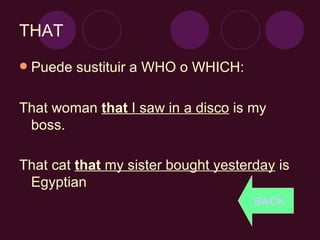
THAT Puede sustituir a WHO o WHICH: That woman  that  I saw in a disco  is my boss. That cat  that  my sister bought yesterday  is Egyptian BACK
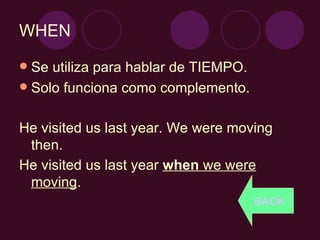
WHEN Se utiliza para hablar de TIEMPO. Solo funciona como complemento. He visited us last year. We were moving then. He visited us last year  when  we were moving . BACK
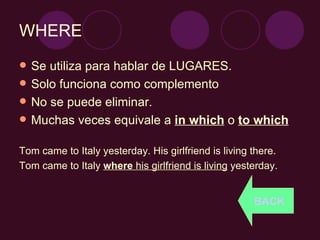
WHERE Se utiliza para hablar de LUGARES. Solo funciona como complemento No se puede eliminar. Muchas veces equivale a  in which  o  to which Tom came to Italy yesterday. His girlfriend is living there. Tom came to Italy  where  his girlfriend is living  yesterday.  BACK
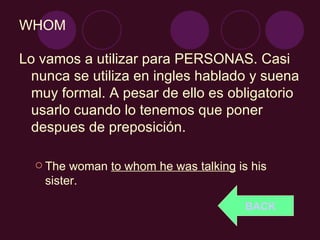
WHOM Lo vamos a utilizar para PERSONAS. Casi nunca se utiliza en ingles hablado y suena muy formal. A pesar de ello es obligatorio usarlo cuando lo tenemos que poner despues de preposición. The woman  to whom he was talking  is his sister. BACK
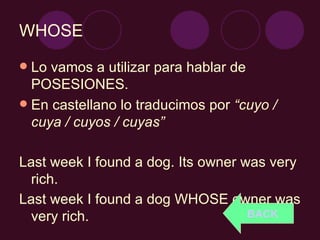
WHOSE Lo vamos a utilizar para hablar de POSESIONES. En castellano lo traducimos por  “cuyo / cuya / cuyos / cuyas” Last week I found a dog. Its owner was very rich. Last week I found a dog WHOSE owner was very rich. BACK
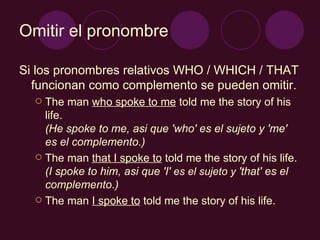
Omitir el pronombre Si los pronombres relativos WHO / WHICH / THAT funcionan como complemento se pueden omitir. The man  who spoke to me  told me the story of his life. (He spoke to me, asi que 'who' es el sujeto y 'me' es el complemento.) The man  that I spoke to  told me the story of his life. (I spoke to him, asi que 'I'  es el sujeto y  'that' es el complemento.) The man  I spoke to  told me the story of his life.
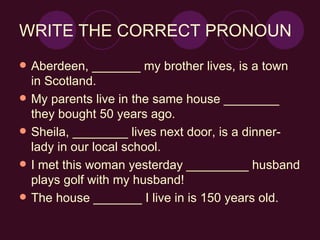
WRITE THE CORRECT PRONOUN Aberdeen, _______ my brother lives, is a town in Scotland.   My parents live in the same house ________ they bought 50 years ago. Sheila, ________ lives next door, is a dinner-lady in our local school. I met this woman yesterday _________ husband plays golf with my husband! The house _______ I live in is 150 years old.
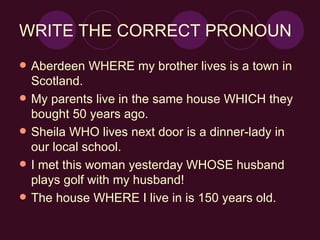
WRITE THE CORRECT PRONOUN Aberdeen WHERE my brother lives is a town in Scotland.   My parents live in the same house WHICH they bought 50 years ago. Sheila WHO lives next door is a dinner-lady in our local school. I met this woman yesterday WHOSE husband plays golf with my husband! The house WHERE I live in is 150 years old.
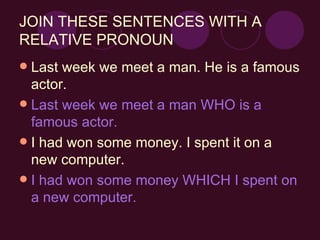
Last week we meet a man. He is a famous actor. Last week we meet a man WHO is a famous actor. I had won some money. I spent it on a new computer. I had won some money WHICH I spent on a new computer. JOIN THESE SENTENCES WITH A RELATIVE PRONOUN
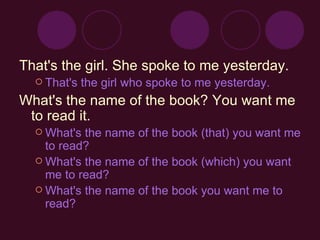
That's the girl. She spoke to me yesterday. That's the girl who spoke to me yesterday.  What's the name of the book?  You want me to read it. What's the name of the book (that) you want me to read?  What's the name of the book (which) you want me to read?  What's the name of the book you want me to read?
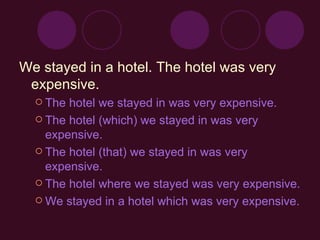
We stayed in a hotel.  The hotel was very expensive. The hotel we stayed in was very expensive.  The hotel (which) we stayed in was very expensive.  The hotel (that) we stayed in was very expensive.  The hotel where we stayed was very expensive.  We stayed in a hotel which was very expensive.
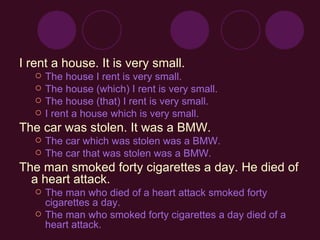
I rent a house. It is very small. The house I rent is very small.  The house (which) I rent is very small.  The house (that) I rent is very small.  I rent a house which is very small.   The car was stolen. It was a BMW. The car which was stolen was a BMW.  The car that was stolen was a BMW . The man smoked forty cigarettes a day. He died of a heart attack. The man who died of a heart attack smoked forty cigarettes a day.  The man who smoked forty cigarettes a day died of a heart attack.
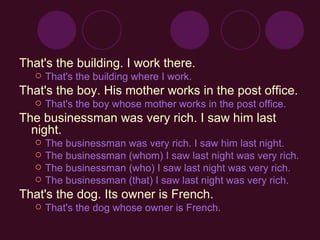
That's the building. I work there. That's the building where I work.   That's the boy. His mother works in the post office. That's the boy whose mother works in the post office.   The businessman was very rich. I saw him last night. The businessman was very rich. I saw him last night.  The businessman (whom) I saw last night was very rich. The businessman (who) I saw last night was very rich.  The businessman (that) I saw last night was very rich.   That's the dog. Its owner is French. That's the dog whose owner is French.

Relatives spanish

  • 1.
  • 2.
    La oración derelativo realiza la misma función que un adjetivo: complementan a un sustantivo o a un pronombre de la oración principal al que llamaremos antecedente. The man who went into the baker's bought a loaf of bread. My car which is outside is green. El pronombre relativo debe situarse justo al lado del antecedente al que se refiere.
  • 3.
    PRONOMBRES RELATIVOS Elpronombre relativo que usamos depende del antecedente al que nos refiramos: WHO WHICH THAT WHERE WHEN WHOM WHOSE
  • 4.
    WHO Lo vamosa utilizar para PERSONAS. Funciona como sujeto o como complemento. That woman is my boss. I saw her in a disco. That woman who I saw in a disco is my boss. BACK
  • 5.
    WHICH Lo vamosa utilizar para ANIMALES o COSAS. Funciona como sujeto o como complemento. That cat is Egyptian. My sister bought it yesterday. That cat which my sister bought yesterday is Egyptian BACK
  • 6.
    THAT Puede sustituira WHO o WHICH: That woman that I saw in a disco is my boss. That cat that my sister bought yesterday is Egyptian BACK
  • 7.
    WHEN Se utilizapara hablar de TIEMPO. Solo funciona como complemento. He visited us last year. We were moving then. He visited us last year when we were moving . BACK
  • 8.
    WHERE Se utilizapara hablar de LUGARES. Solo funciona como complemento No se puede eliminar. Muchas veces equivale a in which o to which Tom came to Italy yesterday. His girlfriend is living there. Tom came to Italy where his girlfriend is living yesterday. BACK
  • 9.
    WHOM Lo vamosa utilizar para PERSONAS. Casi nunca se utiliza en ingles hablado y suena muy formal. A pesar de ello es obligatorio usarlo cuando lo tenemos que poner despues de preposición. The woman to whom he was talking is his sister. BACK
  • 10.
    WHOSE Lo vamosa utilizar para hablar de POSESIONES. En castellano lo traducimos por “cuyo / cuya / cuyos / cuyas” Last week I found a dog. Its owner was very rich. Last week I found a dog WHOSE owner was very rich. BACK
  • 11.
    Omitir el pronombreSi los pronombres relativos WHO / WHICH / THAT funcionan como complemento se pueden omitir. The man who spoke to me told me the story of his life. (He spoke to me, asi que 'who' es el sujeto y 'me' es el complemento.) The man that I spoke to told me the story of his life. (I spoke to him, asi que 'I' es el sujeto y 'that' es el complemento.) The man I spoke to told me the story of his life.
  • 12.
    WRITE THE CORRECTPRONOUN Aberdeen, _______ my brother lives, is a town in Scotland. My parents live in the same house ________ they bought 50 years ago. Sheila, ________ lives next door, is a dinner-lady in our local school. I met this woman yesterday _________ husband plays golf with my husband! The house _______ I live in is 150 years old.
  • 13.
    WRITE THE CORRECTPRONOUN Aberdeen WHERE my brother lives is a town in Scotland. My parents live in the same house WHICH they bought 50 years ago. Sheila WHO lives next door is a dinner-lady in our local school. I met this woman yesterday WHOSE husband plays golf with my husband! The house WHERE I live in is 150 years old.
  • 14.
    Last week wemeet a man. He is a famous actor. Last week we meet a man WHO is a famous actor. I had won some money. I spent it on a new computer. I had won some money WHICH I spent on a new computer. JOIN THESE SENTENCES WITH A RELATIVE PRONOUN
  • 15.
    That's the girl.She spoke to me yesterday. That's the girl who spoke to me yesterday. What's the name of the book? You want me to read it. What's the name of the book (that) you want me to read? What's the name of the book (which) you want me to read? What's the name of the book you want me to read?
  • 16.
    We stayed ina hotel. The hotel was very expensive. The hotel we stayed in was very expensive. The hotel (which) we stayed in was very expensive. The hotel (that) we stayed in was very expensive. The hotel where we stayed was very expensive. We stayed in a hotel which was very expensive.
  • 17.
    I rent ahouse. It is very small. The house I rent is very small. The house (which) I rent is very small. The house (that) I rent is very small. I rent a house which is very small. The car was stolen. It was a BMW. The car which was stolen was a BMW. The car that was stolen was a BMW . The man smoked forty cigarettes a day. He died of a heart attack. The man who died of a heart attack smoked forty cigarettes a day. The man who smoked forty cigarettes a day died of a heart attack.
  • 18.
    That's the building.I work there. That's the building where I work. That's the boy. His mother works in the post office. That's the boy whose mother works in the post office. The businessman was very rich. I saw him last night. The businessman was very rich. I saw him last night. The businessman (whom) I saw last night was very rich. The businessman (who) I saw last night was very rich. The businessman (that) I saw last night was very rich. That's the dog. Its owner is French. That's the dog whose owner is French.