PowerPoint is a presentation program that allows you to create dynamic
slide presentations. These presentations can include animation, narration,
images, videos, and much more.
The PowerPoint interface
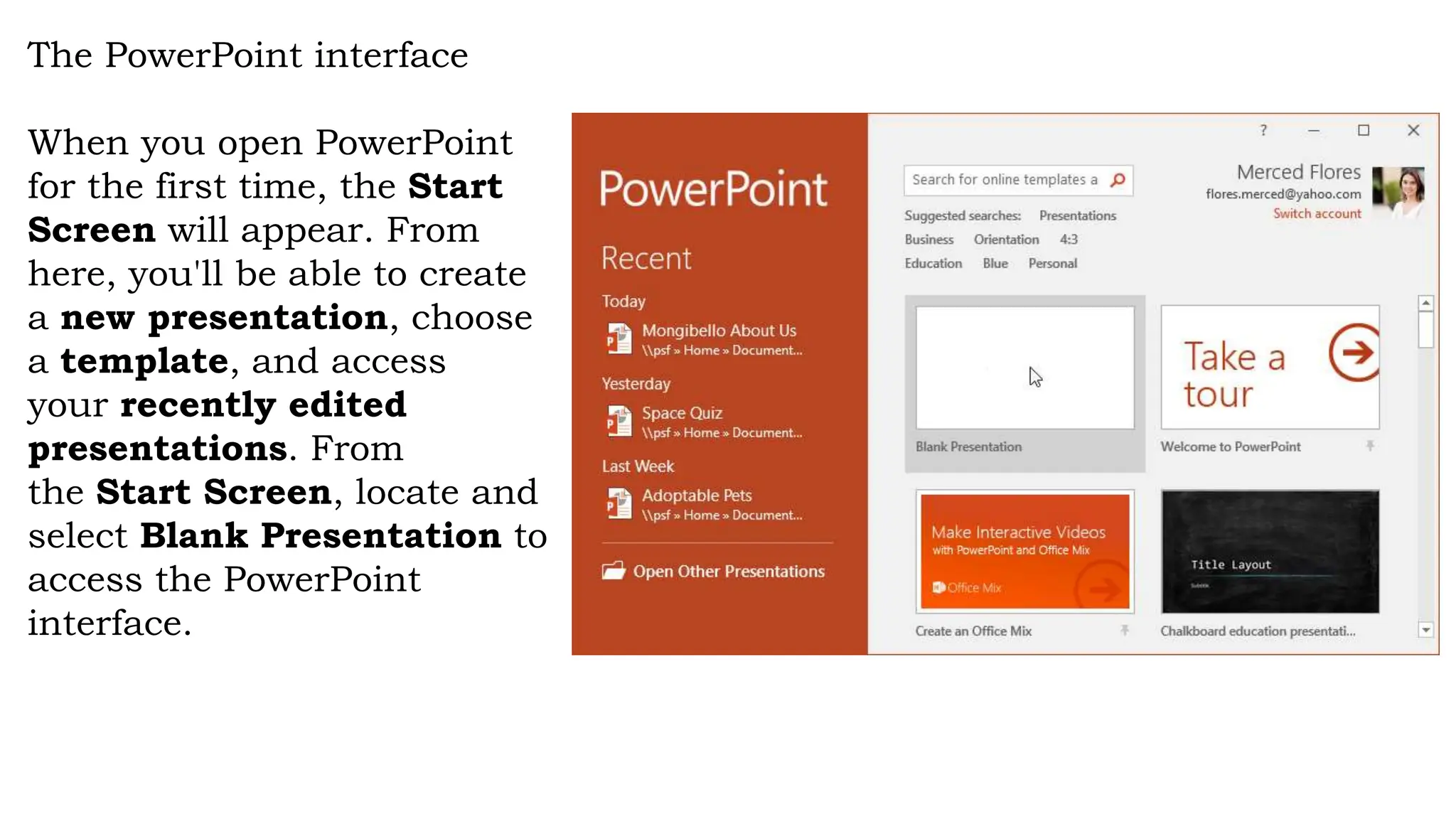
When you open PowerPoint
for the first time, the Start
Screen will appear. From
here, you'll be able to create
a new presentation, choose
a template, and access
your recently edited
presentations. From
the Start Screen, locate and
select Blank Presentation to
access the PowerPoint
interface.
Working with the PowerPoint environment
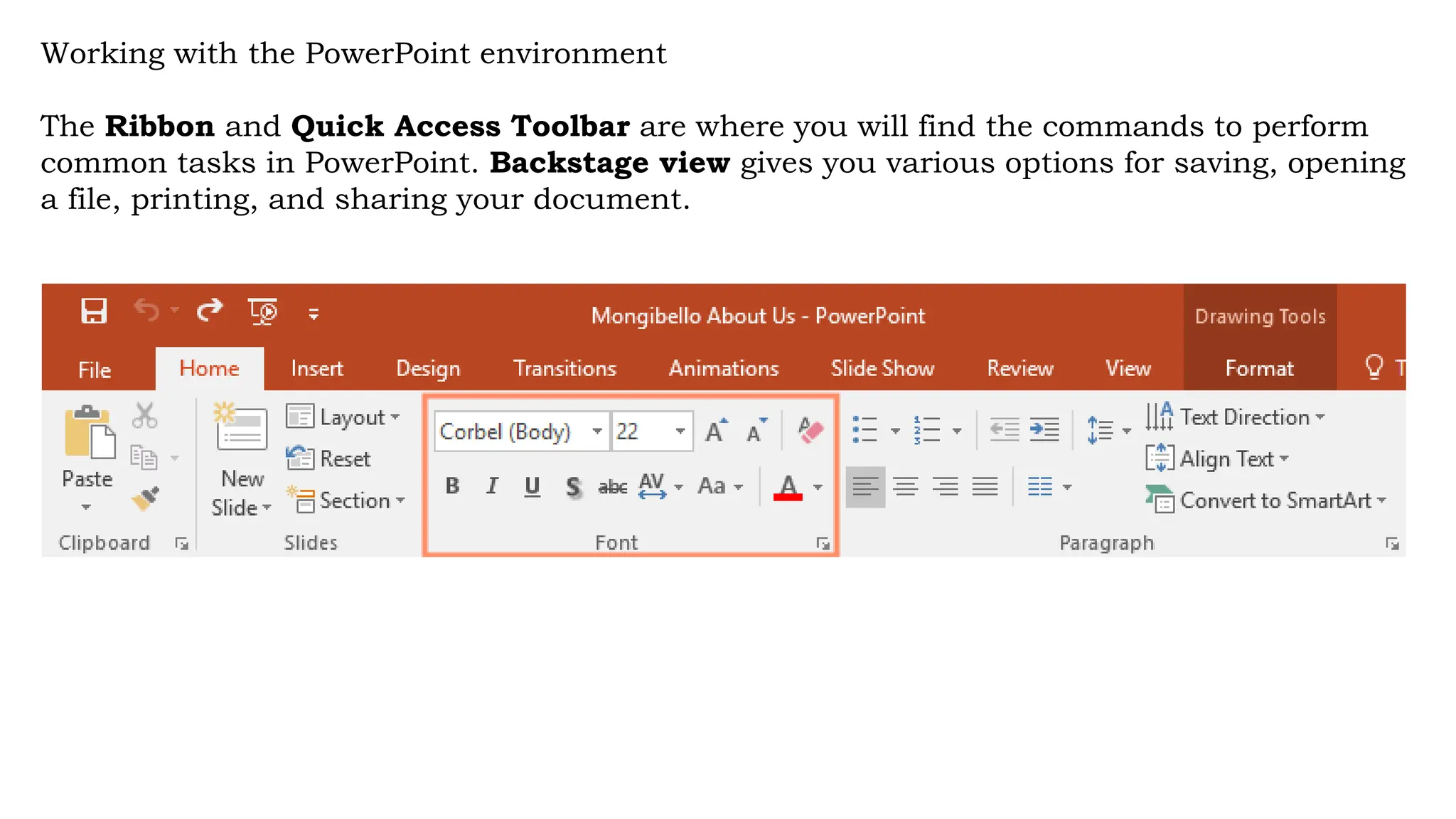
The Ribbon and Quick Access Toolbar are where you will find the commands to perform
common tasks in PowerPoint. Backstage view gives you various options for saving, opening
a file, printing, and sharing your document.
The Quick Access Toolbar
Located just above the Ribbon, the Quick Access Toolbar lets you access common commands no
matter which tab is selected. By default, it includes the Save, Undo, Redo, and Start From
Beginning commands. You can add other commands depending on your preference.
The Ruler, guides, and gridlines
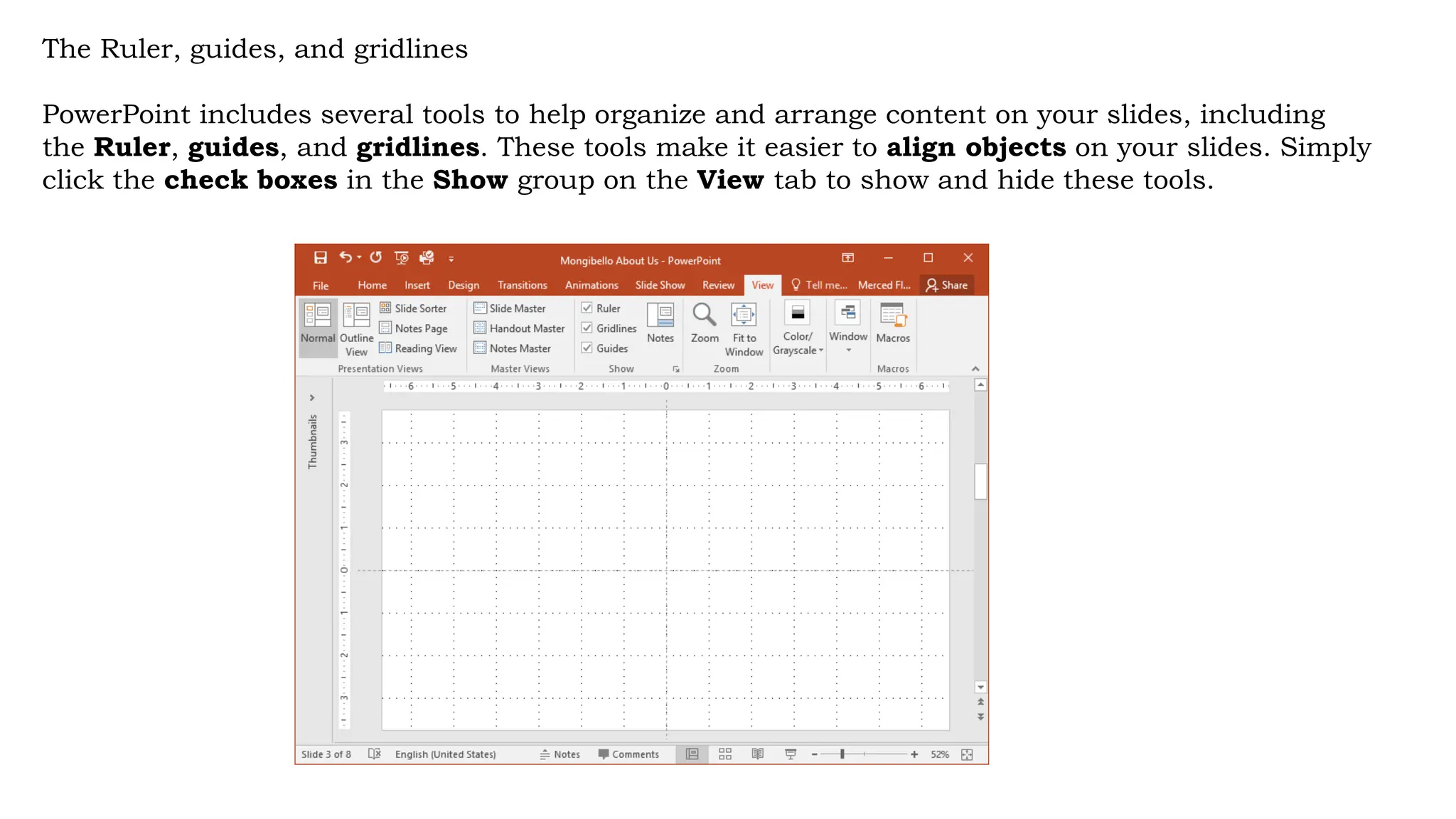
PowerPoint includes several tools to help organize and arrange content on your slides, including
the Ruler, guides, and gridlines. These tools make it easier to align objects on your slides. Simply
click the check boxes in the Show group on the View tab to show and hide these tools.
Zoom and other view options
PowerPoint has a variety of viewing options that change how your presentation is displayed. You can
choose to view your presentation in Normal view, Slide Sorter view, Reading view, or Slide Show view.
You can also zoom in and out to make your presentation easier to read.
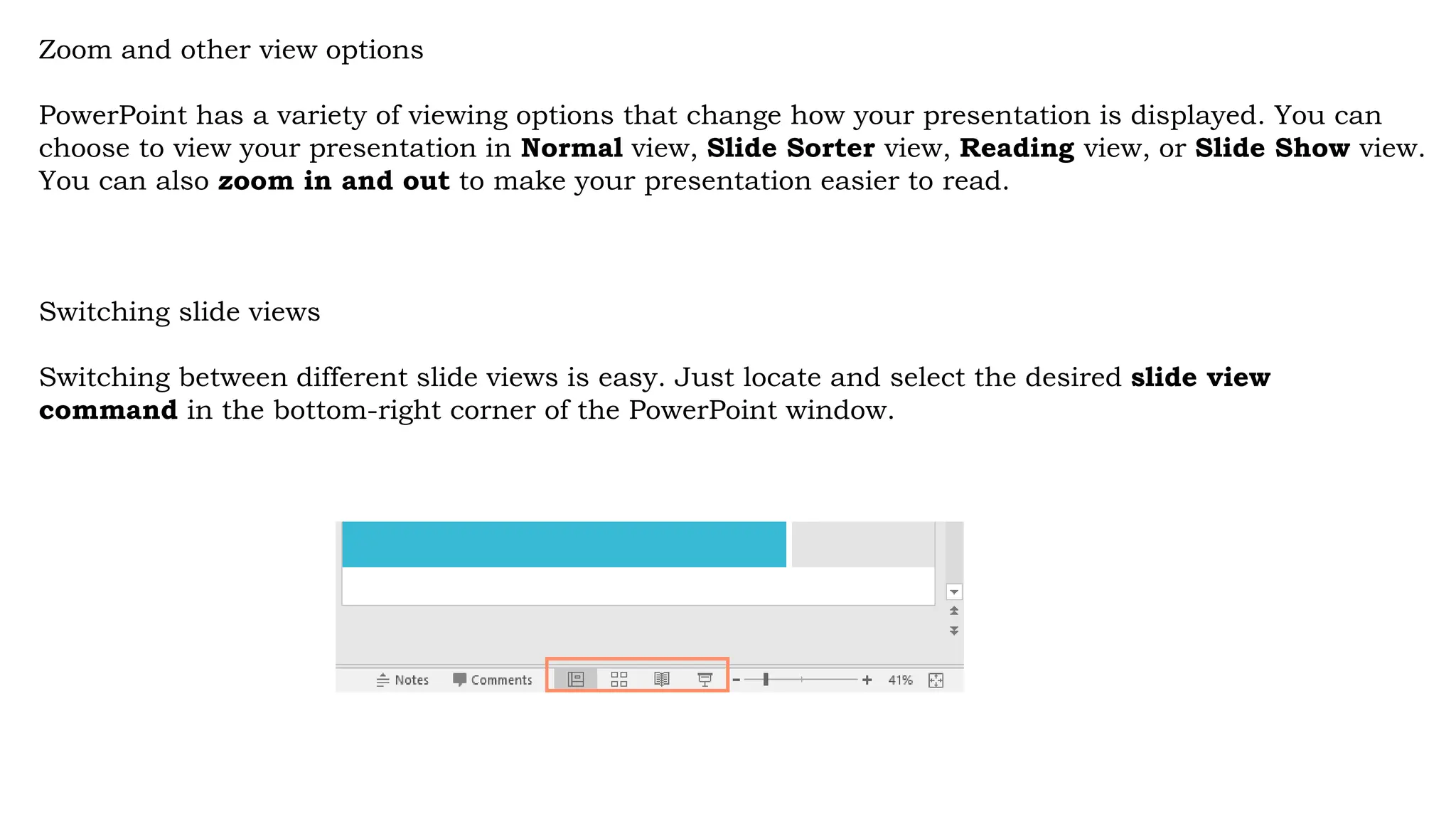
Switching slide views
Switching between different slide views is easy. Just locate and select the desired slide view
command in the bottom-right corner of the PowerPoint window.
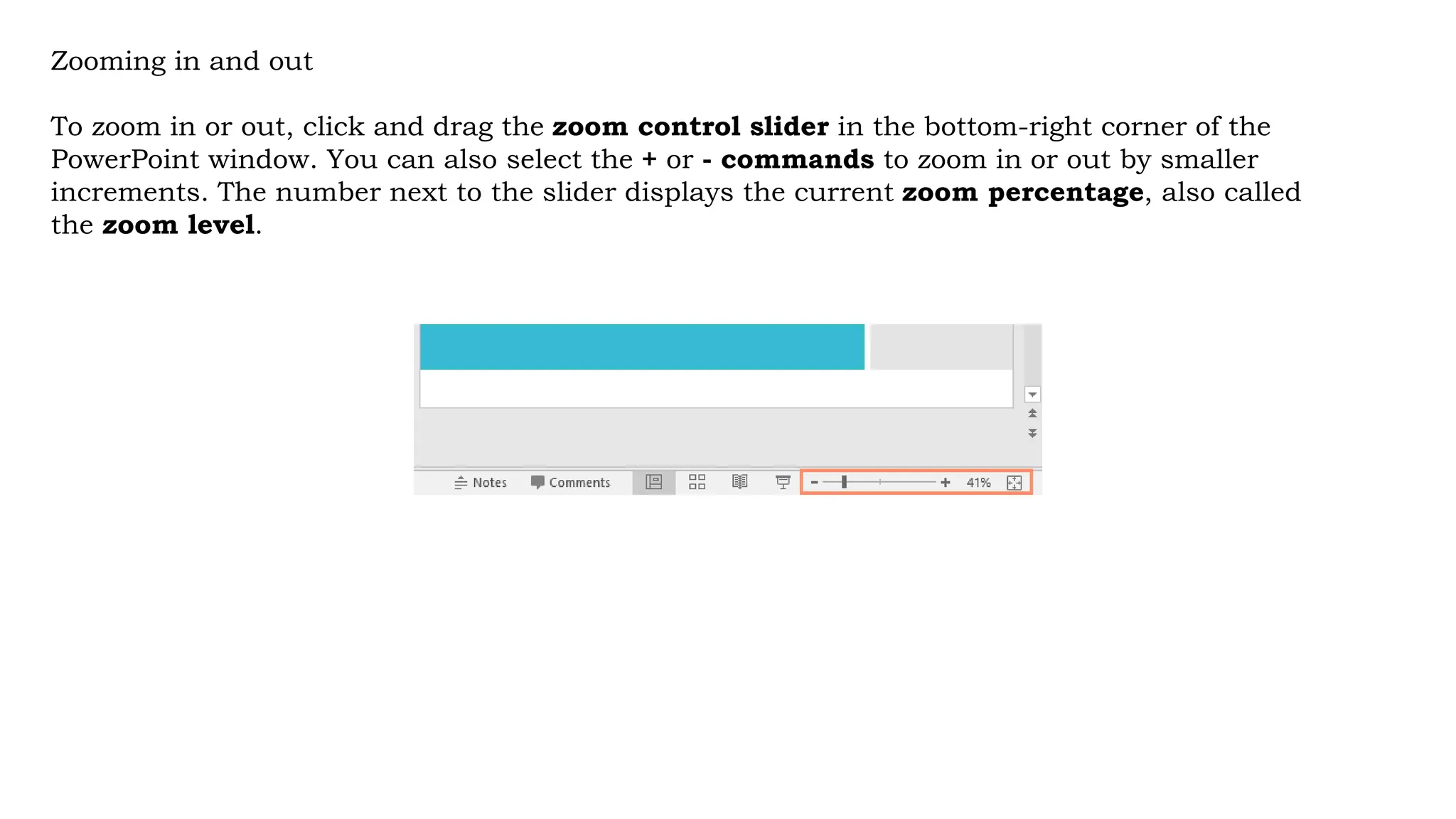
Zooming in and out
To zoom in or out, click and drag the zoom control slider in the bottom-right corner of the
PowerPoint window. You can also select the + or - commands to zoom in or out by smaller
increments. The number next to the slider displays the current zoom percentage, also called
the zoom level.
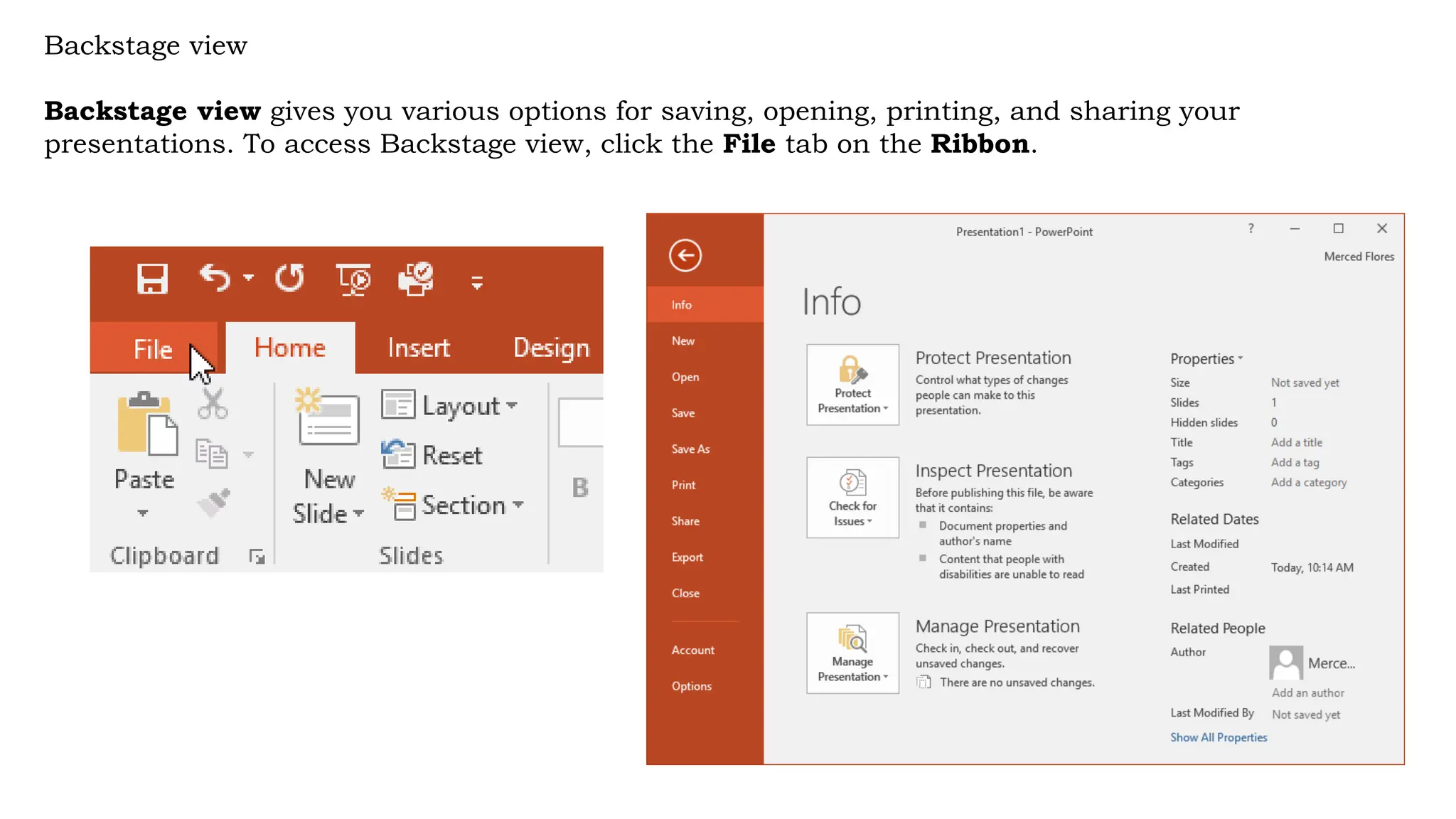
Backstage view
Backstage view gives you various options for saving, opening, printing, and sharing your
presentations. To access Backstage view, click the File tab on the Ribbon.
Parts of MSpowerpoint.pptx

Parts of MSpowerpoint.pptx

  • 1.
    PowerPoint is apresentation program that allows you to create dynamic slide presentations. These presentations can include animation, narration, images, videos, and much more.
  • 2.
    The PowerPoint interface Whenyou open PowerPoint for the first time, the Start Screen will appear. From here, you'll be able to create a new presentation, choose a template, and access your recently edited presentations. From the Start Screen, locate and select Blank Presentation to access the PowerPoint interface.
  • 3.
    Working with thePowerPoint environment The Ribbon and Quick Access Toolbar are where you will find the commands to perform common tasks in PowerPoint. Backstage view gives you various options for saving, opening a file, printing, and sharing your document.
  • 4.
    The Quick AccessToolbar Located just above the Ribbon, the Quick Access Toolbar lets you access common commands no matter which tab is selected. By default, it includes the Save, Undo, Redo, and Start From Beginning commands. You can add other commands depending on your preference.
  • 5.
    The Ruler, guides,and gridlines PowerPoint includes several tools to help organize and arrange content on your slides, including the Ruler, guides, and gridlines. These tools make it easier to align objects on your slides. Simply click the check boxes in the Show group on the View tab to show and hide these tools.
  • 6.
    Zoom and otherview options PowerPoint has a variety of viewing options that change how your presentation is displayed. You can choose to view your presentation in Normal view, Slide Sorter view, Reading view, or Slide Show view. You can also zoom in and out to make your presentation easier to read. Switching slide views Switching between different slide views is easy. Just locate and select the desired slide view command in the bottom-right corner of the PowerPoint window.
  • 7.
    Zooming in andout To zoom in or out, click and drag the zoom control slider in the bottom-right corner of the PowerPoint window. You can also select the + or - commands to zoom in or out by smaller increments. The number next to the slider displays the current zoom percentage, also called the zoom level.
  • 8.
    Backstage view Backstage viewgives you various options for saving, opening, printing, and sharing your presentations. To access Backstage view, click the File tab on the Ribbon.