RECENT LANDMARK TRIALS ON HEART
FAILURE WITH REDUCED EJECTION
FRACTION
Chairperson: Dr. Rangaraj Ramalingum
Dr. Rajeev
Presenter: Dr. Arun B S
• ACC/AHA defination:
Heart Failure (HF) is a complex clinical
syndrome that results from any structural or
functional impairment of ventricular filling or
ejection of blood.
• Types: 1) HFrEF 2) HFpEF
• HFmrEF (EF=40-50%), (ESC)
TOPICS
PARADIGM-HF trial
CASTLE- AF trial
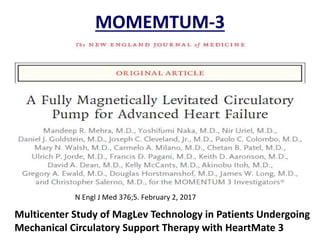
MOMEMTUM-3 trial
PARADIGM-HF
Prospective comparison of ARNI with ACEI to
Determine Impact on Global Mortality and
morbidity in Heart Failure trial (PARADIGM-HF)
INTRODUCTION
• ACE inhibitors have been the cornerstone in
the treatment of HFrFF, since 25 years.
• Enalapril was shown to reduce the risk of
death in two trials. ( CONSENSUS and SOLVD)
• Long-term treatment with enalapril decreased
the relative risk of death by 16%.
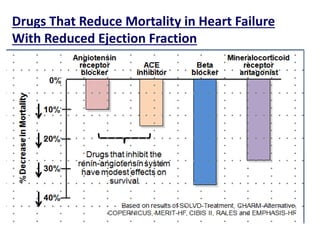
• Use of beta-blockers and mineralocorticoid-
receptor antagonists, when added to ACE
inhibitors, resulted in incremental decreases
in the risk of death of 30 to 35% and 22 to
30%, respectively
1. MERIT-HF Study Group. Effect of metoprolol CR/XL in chronic heart failure: Metoprolol
CR/XL Randomised Intervention Trial in Congestive Heart Failure (MERIT-HF). Lancet
1999;353:2001-7.
2. CIBIS-II Investigators and Committees. The Cardiac Insufficiency Bisoprolol Study II (CIBIS-
II): a randomised trial. Lancet 1999;353:9-13.
3. ` Pitt B, Zannad F, Remme WJ, et al. The effect of spironolactone on morbidity and mortality in
patients with severe heart failure. N Engl J Med 1999;341:709-17.
Drugs That Reduce Mortality in Heart Failure
With Reduced Ejection Fraction
Neprilysin inhibitor: Sacubitril
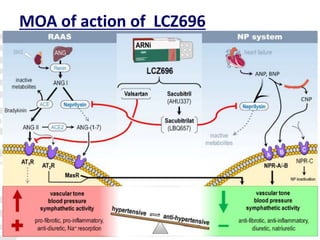
• Neprilysin, a neutral endopeptidase, degrades
several endogenous vasoactive peptides,
including natriuretic peptides, bradykinin, and
adrenomedullin.
• Sacubitril is a neprilysin inhibitor
• Sacubitril+ Valsartan= LCZ696 (Angiotensin
Receptor, Neprilysin Inhibitor)
MOA of action of LCZ696
• In clinical trials, the combination of ACE-I and
neprilysin inhibitor was associated with
serious angioedema.1,2
• ARNI was designed to minimize the risk of
serious angioedema.3,4
1. Kostis JB, et al. Omapatrilat and enalapril in patients with hypertension: the Omapatrilat Cardiovascular
Treatment vs. Enalapril (OCTAVE) trial.Am J Hypertens 2004;17:103-11.
2. Packer M, et al. Comparison of omapatrilat and enalapril in patients with chronic heart failure: the
Omapatrilat Versus Enalapril Randomized Trial of Utility in Reducing Events (OVERTURE). Circulation
2002;106:920-6.
3.Gu J, Noe A, Chandra P, et al. Pharmacokinetics and pharmacodynamics of LCZ696, a novel dual-acting
angiotensin receptor-neprilysin inhibitor (ARNi). J Clin Pharmacol 2010;50:401-14.
4.Hegde LG, Yu C, Renner T, et al. Concomitant angiotensin AT1 receptor antagonism and neprilysin inhibition
produces omapatrilat-like antihypertensive effects without promoting tracheal plasma extravasation in the
rat. J Cardiovasc Pharmacol 2011;57:495-504
AIMS
• Whether the long-term effects of LCZ696 on
morbidity and mortality were superior to
those of ACE inhibition with enalapril in
patients with chronic heart failure with
reduced ejection fraction.
Inclusion criteria
1. Age ≥18 years,
2. NYHA II, III, or IV symptoms, EF ≤40% →35%
3. Patients with plasma BNP≥150 pg/ml or NT-proBNP≥600
pg/ml
or
• If they had been hospitalized for heart failure within the
previous 12 months, a BNP ≥ 100 pg/ml or NT-proBNP
≥400 pg/ml.
4. Any use of ACE inhibitor or ARB, but able to tolerate stable
dose equivalent to at least enalapril 10 mg daily for at least
4 weeks
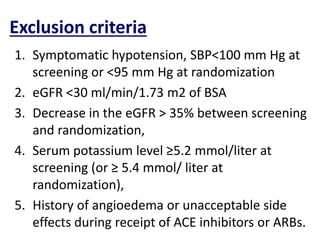
Exclusion criteria
1. Symptomatic hypotension, SBP<100 mm Hg at
screening or <95 mm Hg at randomization
2. eGFR <30 ml/min/1.73 m2 of BSA
3. Decrease in the eGFR > 35% between screening
and randomization,
4. Serum potassium level ≥5.2 mmol/liter at
screening (or ≥ 5.4 mmol/ liter at
randomization),
5. History of angioedema or unacceptable side
effects during receipt of ACE inhibitors or ARBs.
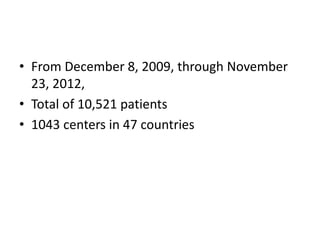
• From December 8, 2009, through November
23, 2012,
• Total of 10,521 patients
• 1043 centers in 47 countries
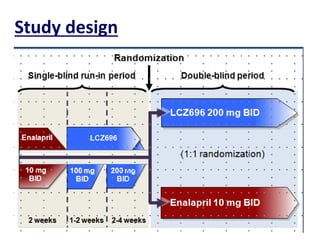
Study design
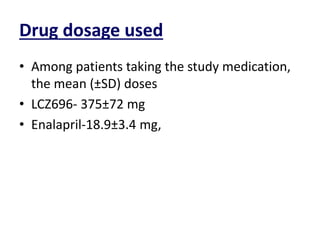
Drug dosage used
• Among patients taking the study medication,
the mean (±SD) doses
• LCZ696- 375±72 mg
• Enalapril-18.9±3.4 mg,
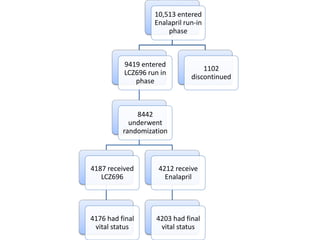
10,513 entered
Enalapril run-in
phase
9419 entered
LCZ696 run in
phase
8442
underwent
randomization
4187 received
LCZ696
4176 had final
vital status
4212 receive
Enalapril
4203 had final
vital status
1102
discontinued
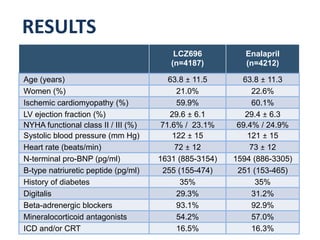
LCZ696
(n=4187)
Enalapril
(n=4212)
Age (years) 63.8 ± 11.5 63.8 ± 11.3
Women (%) 21.0% 22.6%
Ischemic cardiomyopathy (%) 59.9% 60.1%
LV ejection fraction (%) 29.6 ± 6.1 29.4 ± 6.3
NYHA functional class II / III (%) 71.6% / 23.1% 69.4% / 24.9%
Systolic blood pressure (mm Hg) 122 ± 15 121 ± 15
Heart rate (beats/min) 72 ± 12 73 ± 12
N-terminal pro-BNP (pg/ml) 1631 (885-3154) 1594 (886-3305)
B-type natriuretic peptide (pg/ml) 255 (155-474) 251 (153-465)
History of diabetes 35% 35%
Digitalis 29.3% 31.2%
Beta-adrenergic blockers 93.1% 92.9%
Mineralocorticoid antagonists 54.2% 57.0%
ICD and/or CRT 16.5% 16.3%
RESULTS
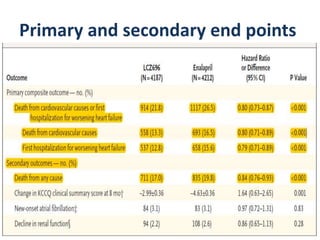
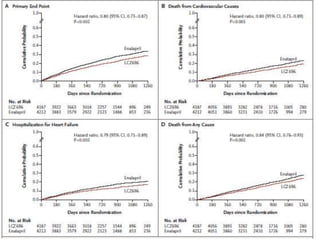
Primary and secondary end points
• Number need to be treated to prevent one
primary event and one death from
cardiovascular causes
• LCZ696: 21
• Enalapril: 32
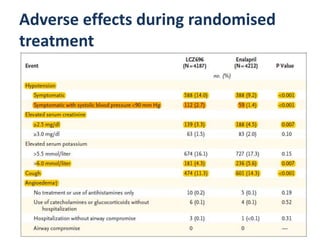
Adverse effects during randomised
treatment
DISCUSSION
• In this study involving patients with HFrEF, the
inhibition of both the angiotensin II receptor and
neprilysin with LCZ696 was more effective in
reducing the risk of death from cardiovascular
causes or hospitalization for heart failure than was
ACE inhibition with enalapril.
• LCZ696 was also superior to enalapril in reducing
the risk of death from any cause and reducing
symptoms and physical limitations of heart failure.
• The magnitude of these advantages of LCZ696 over
ACE in evident in all pre-specified population.
• This study was designed to provide evidence to
support the replacement of ACE inhibitors or
ARBs with LCZ696 in the management of CHF.
• The trial was devised to show an advantage with
respect to cardiovascular mortality alone, which
was the primary determinant
• Trial was stopped early because of a benefit.
Maggioni AP, et al. Are hospitalized or ambulatory patients with heart failure treated in accordance with
European Society of Cardiology guidelines? Evidence from 12,440 patients of the ESC Heart Failure Long-
Term Registry. Eur J Heart Fail 2013;15: 1173-84.
The favourable results of this trial contrast with
the disappointing findings in an earlier large scale
which showed no significant difference in clinical
outcomes between enalapril and omapatrilat (a
drug that inhibits ACE, neprilysin, and
aminopeptidase P).1
1.Packer M, et alComparison of omapatrilat and enalapril in patients with CHF: the
Omapatrilat Versus Enalapril Ran domized Trial of Utility in Reducing Events
(OVERTURE). Circulation 2002;106:920
CONCLUSION
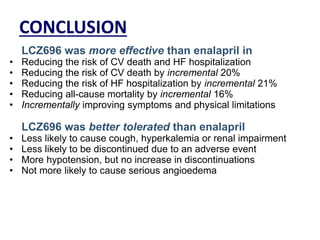
LCZ696 was more effective than enalapril in
• Reducing the risk of CV death and HF hospitalization
• Reducing the risk of CV death by incremental 20%
• Reducing the risk of HF hospitalization by incremental 21%
• Reducing all-cause mortality by incremental 16%
• Incrementally improving symptoms and physical limitations
LCZ696 was better tolerated than enalapril
• Less likely to cause cough, hyperkalemia or renal impairment
• Less likely to be discontinued due to an adverse event
• More hypotension, but no increase in discontinuations
• Not more likely to cause serious angioedema
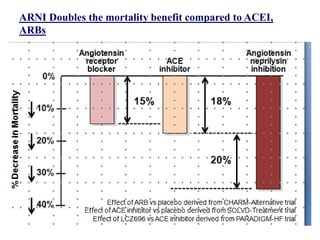
ARNI Doubles the mortality benefit compared to ACEI,
ARBs
CASTLE-AF
Catheter Ablation versus Standard conventional
Treatment in patients with LEft ventricular
dysfunction and Atrial Fibrillation
INTRODUCTION
• Atrial fibrillation and heart failure are common coexisting
conditions with AF increasing the riskof stroke,
hospitalization for heart failure, and death.1,2
• Treatment of AF can substantially alter long-term outcomes
in patients with HF.
• Rhythm control with antiarrhythmic drugs is not superior to
rate control in patients with coexisting HF and AF.3
• Most effective treatment for AF in HF in debatable.
1. Santhanakrishnan R, et al Atrial fibrillation begets heart failure and vice versa: temporal associations and differences in preserved
versus reduced ejection fraction. Circulation 2016;133: 484-92.
2. Anter E et alAtrialfibrillation and heart failure: treatment considerations for a dual epidemic. Circulation2009; 119: 2516-25.
3. Roy D, Talajic M, Nattel SN, et al. Rhythm control versus rate control for atrial fibrillation and heart failure. N Engl J Med 2008;
358: 2667-77
AIM
• To assess whether catheter ablation lowers
morbidity and mortality as compared with
medical therapy(rate or rhythm control) in
patients with coexisting AF and medically
managed heart failure
STUDY DESIGN
Primary Endpoint
• All-cause mortality
• Worsening heart failure admissions
Secondary endpoint:
• Death from any cause,
• Unplanned hospitalization related to HF,
• Death from CVD, CVA,
• Unplanned hospitalization for cardiovascular
disease, and anyhospitalization.
Inclusion criteria
• Symptomatic paroxysmal or persistent AF
• Failure or intolerance to ≥ 1 or unwillingness
to take anti-arrhythmic
• LVEF ≤ 35%
• NYHA class ≥ II
• ICD/CRT-D with Home Monitoring capabilities
already implanted due to primary or
secondary prevention
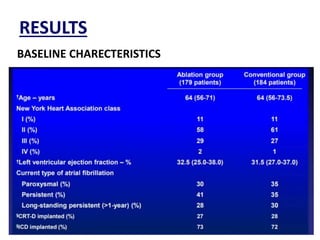
RESULTS
BASELINE CHARECTERISTICS
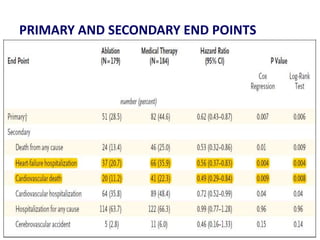
PRIMARY AND SECONDARY END POINTS
• On the basis of the data extracted from the
memory of the implanted devices,
63.1% of the patients in the ablation group and
21.7% inthe medical-therapy group (P<0.001)
were in sinus rhythm at the 60-month follow-
up visit and did not had recurrence of atrial
fibrillation since the previous follow-up visit
• The median absolute increase in LVEF from
baseline to the 60-month follow-up visit was
8.0% (interquartile range, 2.2 to 19.1) in the
ablation group and was 0.2% (-3.0 to 16.1) in
the medical-therapy group (P = 0.005).
DISCUSSION
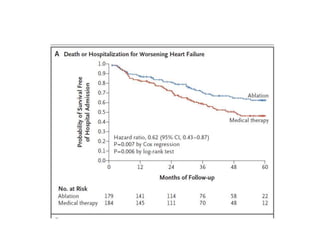
• In the CASTLE-AF trial, it was found that the use
of catheter ablation for AF in patients with HF
was associated with a significantly lower rate of a
composite of death and hospitalization for heart
failure than medical therapy.
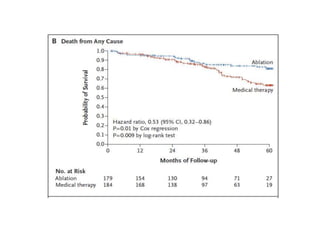
• There was a benefit in all cause mortality, which
was driven by significantly lower rate of
cardiovascular death in the ablation group.
• Catheter ablation reduced the burden of AF,
increased the distance walked in 6 minutes, and
improved the LVEF.
Several trials have reported improvements in soft end
points with catheter ablation: improvement in quality
of life, 6 min walk distance, LVEF
• PABA-CHF (Pulmonary Vein Antrum Isolation versus AV
Node Ablation with Bi-Ventricular Pacing for Treatment
of Atrial Fibrillation in Patients with Congestive Heart
Failure) trial
• CAMTAF(Catheter Ablation versus Medical Treatment
of AF in Heart Failure) trial
• AATAC (Ablation versus Amiodarone for Treatment of
Atrial Fibrillation in Patients with CHF and an Implanted
ICD)
CONCLUSION
• Catheter ablation was associated with lower
rates of death from any cause and lower rates of
hospital admission for heart failure along with
reducing the burden of atrial fibrillation and
improving the LVEF.
Limitations:
1. Lack of blinding
2. All pt. had ICD or CRT-D, which may have
affected overall mortality in two groups
MOMEMTUM-3
Multicenter Study of MagLev Technology in Patients Undergoing
Mechanical Circulatory Support Therapy with HeartMate 3
N Engl J Med 376;5. February 2, 2017
NEJM March 11, 2018
INTRODUCTION
• Scarcity of effective therapeutic options for advanced
heart failure has led to the development of durable
mechanical circulatory support devices.
• Left ventricular assist devices, more accurately known
as left ventricular assist systems, increase the rate of
survival and improve quality of life among patients
with advanced heart failure.
• These clinical benefits are balanced by an increased,
risk of infection, bleeding, neurologic events, and
pump malfunction, mainly due to pump thrombosis.
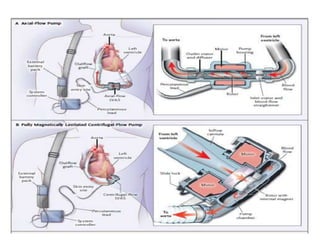
• A new fully magnetically levitated centrifugal continuous-flow
circulatory pump, HeartMate 3, has been engineered to
reduce shear stress on blood elements and avert pump
thrombosis.9,10
• Wide blood-flow passages to reduce shear stress
• Frictionless with absence of mechanical bearings
• Intrinsic Pulse designed to reduce stasis and avert thrombosis
10. Heatley G, Sood P, Goldstein D, et al.Clinical trial design and rationale of
the Multicenter Study of MagLev Technology in Patients Undergoing
Mechanical Circulatory Support Therapy With HeartMate 3
(MOMENTUM 3) investigational device exemption clinical study protocol. J
Heart Lung Transplant 2016; 35: 528-36.
AIM
• 6 month study: To compare clinical outcomes
between centrifugal-flow pump :Heart Mate 3
with axial-flow pump: Heart Mate II in patients
with advanced heart failure that is refractory to
standard medical therapy.
• Long-term (2-year) study: To ascertain whether
these early observed benefits of the centrifugal-
flow pump would persist into the longer term, to
support patients who may wait for an extended
period for heart transplantation or who may be
ineligible for heart transplantation
METHODS
INCLUSION CRITERIA
Patients with advanced heart failure and
severe limitations (NYHA IIIB or IV), refractory
to GDMT and deemed as necessary candidates
for left ventricular assist device implantation
EXCLUSION CRITERIA
Planned biventricular support, irreversible
end-organ dysfunction, or active infection
• The trial was conducted at 69 centers in US.
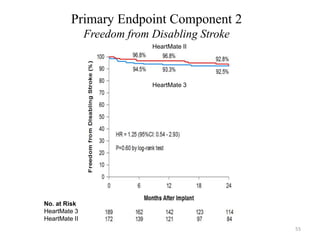
Primary end point:
• Survival at 2 years free of disabling stroke or
reoperation to replace or remove a
malfunctioning device
RESULTS
• BASELINE CHATECTERISTICS were similar
between the 2 groups
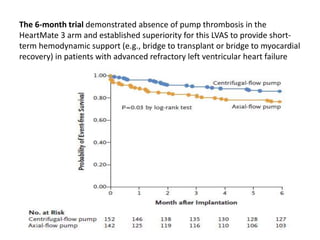
The 6-month trial demonstrated absence of pump thrombosis in the
HeartMate 3 arm and established superiority for this LVAS to provide short-
term hemodynamic support (e.g., bridge to transplant or bridge to myocardial
recovery) in patients with advanced refractory left ventricular heart failure
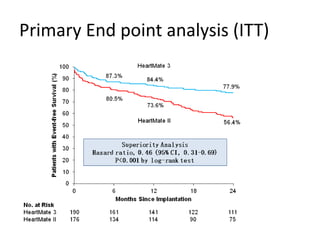
Primary End point analysis (ITT)
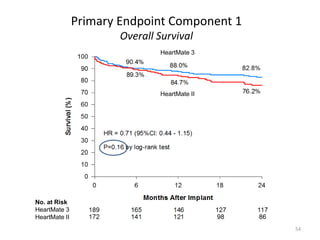
Primary Endpoint Component 1
Overall Survival
54
No. at Risk
HeartMate 3
HeartMate II
HeartMate 3
HeartMate II
Primary Endpoint Component 2
Freedom from Disabling Stroke
No. at Risk
HeartMate 3
HeartMate II
HeartMate II
HeartMate 3
55
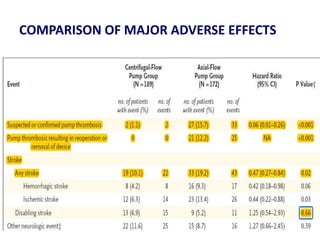
COMPARISON OF MAJOR ADVERSE EFFECTS
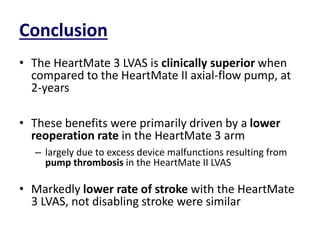
Conclusion
• The HeartMate 3 LVAS is clinically superior when
compared to the HeartMate II axial-flow pump, at
2-years
• These benefits were primarily driven by a lower
reoperation rate in the HeartMate 3 arm
– largely due to excess device malfunctions resulting from
pump thrombosis in the HeartMate II LVAS
• Markedly lower rate of stroke with the HeartMate
3 LVAS, not disabling stroke were similar
• The two-year MOMENTUM 3 demonstrates
durability of the HeartMate 3 LVAS to
optimally support patients who wait for
extended periods for heart transplantation or
are ineligible for heart transplantation
(destination therapy)
IMAGE 2
Circ Cardiovasc Interv. 2018
• A 75-year-old man with presented with upper back pain
• ECG- STEMI- AWMI.
• TTE –LVEF=50%, anterior wall hypokinesis
• CAG revealed 90% lesion in proximal LAD, which was
treated with a PTCA+ S(2.5×18 mm DES).
• Postprocedure- pt developed dyspnea
• It was attributed to ticagrelor, which was replaced with
clopidogrel, and discharged.
• But he continued to have dyspnoea and after 9 days, the
patient returned to hospital,
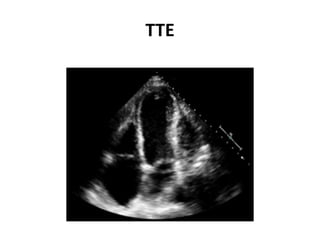
• Repeat TTE was performed
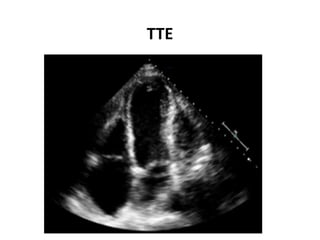
TTE
Echo showed pericardial fluid collection, measuring
3.2 cm and causing indentation of the left
ventricle.
• Pericardiocentesis -500ml of bloody fluid.
• His shortness of breath improved, and he was
discharged home.
• Several days later, pt developed rash on his
extremities and was attributed to a clopidogrel
drug reaction.
• He was, therefore, switched back to ticagrelor
• The rash did not resolve, and 2 weeks later, he was
readmitted with progressive dypnoea.
• His BP was 117/85, his pulse was 83 bpm, with Spo2-
98% on 2 L nasal cannula.
• Scattered petechiae and palpable purpura with central
necrosis were evident on the dorsum of his hands and
feet.
• He had decreased breath sounds at the left lung base.
• His ECG showed no fresh changes.
• Laboratory data revealed a mild leukocytosis, Hb- 10
g/dL.
TTE
• Echo- Reaccumulation of pericardial fluid
posteriorly.
-apical hypokinesia, which is a different
distribution compared to that at the
time of STEMI.
• CXR- left sided pleural effusion
• Pathological examination of biopsied skin
showed leukocytoclastic vasculitis, no drug
reaction.
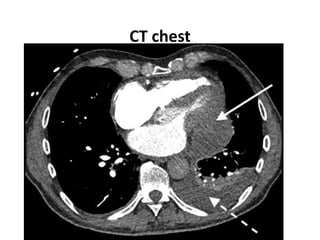
• CT chest with contrast to characterize
pericardial fluid.
CT chest
CT chest findings
• Loculated pericardial effusion with mass effect
• High attenuation adjacent to LAD, extending
into pericardial fluid
• Left sided pleural effusion, in continuous with
pericardial effusion
• Left lung base atelectasis
• Extensive ground glass opacities
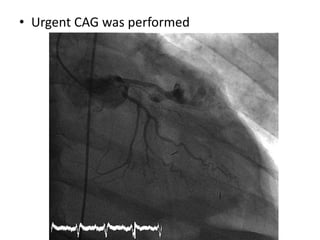
• Urgent CAG was performed
• CAG- Extravasation of contrast from LAD –
perforation at the site of previous stent
placement.
• Pt was taken up for surgical correction of LAD
perforation.
• On exploration- Posterior pericardial abscess
-densely adherent fibrotic pericardium,
-Blood from LAD, freely extravasting to
pericardial space.
• While in OT, Blood culture report come-
consistent with Staph. aureus
• Treatment given: Abscess was drained,
LIMA to distal LAD graft was placed.
• Antibiotics were started.
• Despite recovering well from cardiovascular
perspective, pt continued to be in sepsis and
expired several days postoperatively.
Possible Explanations
• CORONARY STENT INFECTION.
• Infected stent caused abscess formation within
LAD, →rupture and a hemorrhagic pericardial
effusion → seeding of bacteria from infected
stent → Pericardial abscess
• Probably, thick and adherent pericardium
compressed the perforated vessel, thereby
avoiding overt hemopericardium and tamponade.
Stent infection- M/c cause –Staph aureus
• CORONARY PSEUDOANEURYSM:
Balloon overexpansion, dissection or rarely
stent infection → pseudoaneurysm→ rupture
→hemorragic effusion→ introducing infection
at the time of Pericardiocentesis→ Pericardial
abscess and sepsis
• POST-MI PERICARDITIS
Pericarditis and effusion → contamintion during
pericardiocentesis → Abscess→ eroded LAD
causing perforation.
(unlikely because of posterior location of pecaridial
abscess and hemorrhagic nature of initial effusion)
Take Home Message
• Diagnosing pericardial abscess and effusion
following PTCA should raise suspicion for stent
infection and possible coronary artery
perforation.
Circ Cardiovasc Interv. 2018;11:e005917.
DOI:10.1161/CIRCINTERVENTIONS.117.005917.
Recent trials in heart failure
Recent trials in heart failure
  • 1.
    RECENT LANDMARK TRIALSON HEART FAILURE WITH REDUCED EJECTION FRACTION Chairperson: Dr. Rangaraj Ramalingum Dr. Rajeev Presenter: Dr. Arun B S
  • 2.
    • ACC/AHA defination: HeartFailure (HF) is a complex clinical syndrome that results from any structural or functional impairment of ventricular filling or ejection of blood. • Types: 1) HFrEF 2) HFpEF • HFmrEF (EF=40-50%), (ESC)
  • 3.
  • 4.
    PARADIGM-HF Prospective comparison ofARNI with ACEI to Determine Impact on Global Mortality and morbidity in Heart Failure trial (PARADIGM-HF)
  • 5.
    INTRODUCTION • ACE inhibitorshave been the cornerstone in the treatment of HFrFF, since 25 years. • Enalapril was shown to reduce the risk of death in two trials. ( CONSENSUS and SOLVD) • Long-term treatment with enalapril decreased the relative risk of death by 16%.
  • 6.
    • Use ofbeta-blockers and mineralocorticoid- receptor antagonists, when added to ACE inhibitors, resulted in incremental decreases in the risk of death of 30 to 35% and 22 to 30%, respectively 1. MERIT-HF Study Group. Effect of metoprolol CR/XL in chronic heart failure: Metoprolol CR/XL Randomised Intervention Trial in Congestive Heart Failure (MERIT-HF). Lancet 1999;353:2001-7. 2. CIBIS-II Investigators and Committees. The Cardiac Insufficiency Bisoprolol Study II (CIBIS- II): a randomised trial. Lancet 1999;353:9-13. 3. ` Pitt B, Zannad F, Remme WJ, et al. The effect of spironolactone on morbidity and mortality in patients with severe heart failure. N Engl J Med 1999;341:709-17.
  • 7.
    Drugs That ReduceMortality in Heart Failure With Reduced Ejection Fraction
  • 8.
    Neprilysin inhibitor: Sacubitril •Neprilysin, a neutral endopeptidase, degrades several endogenous vasoactive peptides, including natriuretic peptides, bradykinin, and adrenomedullin. • Sacubitril is a neprilysin inhibitor • Sacubitril+ Valsartan= LCZ696 (Angiotensin Receptor, Neprilysin Inhibitor)
  • 9.
    MOA of actionof LCZ696
  • 10.
    • In clinicaltrials, the combination of ACE-I and neprilysin inhibitor was associated with serious angioedema.1,2 • ARNI was designed to minimize the risk of serious angioedema.3,4 1. Kostis JB, et al. Omapatrilat and enalapril in patients with hypertension: the Omapatrilat Cardiovascular Treatment vs. Enalapril (OCTAVE) trial.Am J Hypertens 2004;17:103-11. 2. Packer M, et al. Comparison of omapatrilat and enalapril in patients with chronic heart failure: the Omapatrilat Versus Enalapril Randomized Trial of Utility in Reducing Events (OVERTURE). Circulation 2002;106:920-6. 3.Gu J, Noe A, Chandra P, et al. Pharmacokinetics and pharmacodynamics of LCZ696, a novel dual-acting angiotensin receptor-neprilysin inhibitor (ARNi). J Clin Pharmacol 2010;50:401-14. 4.Hegde LG, Yu C, Renner T, et al. Concomitant angiotensin AT1 receptor antagonism and neprilysin inhibition produces omapatrilat-like antihypertensive effects without promoting tracheal plasma extravasation in the rat. J Cardiovasc Pharmacol 2011;57:495-504
  • 11.
    AIMS • Whether thelong-term effects of LCZ696 on morbidity and mortality were superior to those of ACE inhibition with enalapril in patients with chronic heart failure with reduced ejection fraction.
  • 12.
    Inclusion criteria 1. Age≥18 years, 2. NYHA II, III, or IV symptoms, EF ≤40% →35% 3. Patients with plasma BNP≥150 pg/ml or NT-proBNP≥600 pg/ml or • If they had been hospitalized for heart failure within the previous 12 months, a BNP ≥ 100 pg/ml or NT-proBNP ≥400 pg/ml. 4. Any use of ACE inhibitor or ARB, but able to tolerate stable dose equivalent to at least enalapril 10 mg daily for at least 4 weeks
  • 13.
    Exclusion criteria 1. Symptomatichypotension, SBP<100 mm Hg at screening or <95 mm Hg at randomization 2. eGFR <30 ml/min/1.73 m2 of BSA 3. Decrease in the eGFR > 35% between screening and randomization, 4. Serum potassium level ≥5.2 mmol/liter at screening (or ≥ 5.4 mmol/ liter at randomization), 5. History of angioedema or unacceptable side effects during receipt of ACE inhibitors or ARBs.
  • 14.
    • From December8, 2009, through November 23, 2012, • Total of 10,521 patients • 1043 centers in 47 countries
  • 15.
  • 16.
    Drug dosage used •Among patients taking the study medication, the mean (±SD) doses • LCZ696- 375±72 mg • Enalapril-18.9±3.4 mg,
  • 17.
    10,513 entered Enalapril run-in phase 9419entered LCZ696 run in phase 8442 underwent randomization 4187 received LCZ696 4176 had final vital status 4212 receive Enalapril 4203 had final vital status 1102 discontinued
  • 18.
    LCZ696 (n=4187) Enalapril (n=4212) Age (years) 63.8± 11.5 63.8 ± 11.3 Women (%) 21.0% 22.6% Ischemic cardiomyopathy (%) 59.9% 60.1% LV ejection fraction (%) 29.6 ± 6.1 29.4 ± 6.3 NYHA functional class II / III (%) 71.6% / 23.1% 69.4% / 24.9% Systolic blood pressure (mm Hg) 122 ± 15 121 ± 15 Heart rate (beats/min) 72 ± 12 73 ± 12 N-terminal pro-BNP (pg/ml) 1631 (885-3154) 1594 (886-3305) B-type natriuretic peptide (pg/ml) 255 (155-474) 251 (153-465) History of diabetes 35% 35% Digitalis 29.3% 31.2% Beta-adrenergic blockers 93.1% 92.9% Mineralocorticoid antagonists 54.2% 57.0% ICD and/or CRT 16.5% 16.3% RESULTS
  • 19.
  • 21.
    • Number needto be treated to prevent one primary event and one death from cardiovascular causes • LCZ696: 21 • Enalapril: 32
  • 22.
    Adverse effects duringrandomised treatment
  • 23.
    DISCUSSION • In thisstudy involving patients with HFrEF, the inhibition of both the angiotensin II receptor and neprilysin with LCZ696 was more effective in reducing the risk of death from cardiovascular causes or hospitalization for heart failure than was ACE inhibition with enalapril. • LCZ696 was also superior to enalapril in reducing the risk of death from any cause and reducing symptoms and physical limitations of heart failure. • The magnitude of these advantages of LCZ696 over ACE in evident in all pre-specified population.
  • 24.
    • This studywas designed to provide evidence to support the replacement of ACE inhibitors or ARBs with LCZ696 in the management of CHF. • The trial was devised to show an advantage with respect to cardiovascular mortality alone, which was the primary determinant • Trial was stopped early because of a benefit. Maggioni AP, et al. Are hospitalized or ambulatory patients with heart failure treated in accordance with European Society of Cardiology guidelines? Evidence from 12,440 patients of the ESC Heart Failure Long- Term Registry. Eur J Heart Fail 2013;15: 1173-84.
  • 25.
    The favourable resultsof this trial contrast with the disappointing findings in an earlier large scale which showed no significant difference in clinical outcomes between enalapril and omapatrilat (a drug that inhibits ACE, neprilysin, and aminopeptidase P).1 1.Packer M, et alComparison of omapatrilat and enalapril in patients with CHF: the Omapatrilat Versus Enalapril Ran domized Trial of Utility in Reducing Events (OVERTURE). Circulation 2002;106:920
  • 26.
    CONCLUSION LCZ696 was moreeffective than enalapril in • Reducing the risk of CV death and HF hospitalization • Reducing the risk of CV death by incremental 20% • Reducing the risk of HF hospitalization by incremental 21% • Reducing all-cause mortality by incremental 16% • Incrementally improving symptoms and physical limitations LCZ696 was better tolerated than enalapril • Less likely to cause cough, hyperkalemia or renal impairment • Less likely to be discontinued due to an adverse event • More hypotension, but no increase in discontinuations • Not more likely to cause serious angioedema
  • 27.
    ARNI Doubles themortality benefit compared to ACEI, ARBs
  • 28.
    CASTLE-AF Catheter Ablation versusStandard conventional Treatment in patients with LEft ventricular dysfunction and Atrial Fibrillation
  • 29.
    INTRODUCTION • Atrial fibrillationand heart failure are common coexisting conditions with AF increasing the riskof stroke, hospitalization for heart failure, and death.1,2 • Treatment of AF can substantially alter long-term outcomes in patients with HF. • Rhythm control with antiarrhythmic drugs is not superior to rate control in patients with coexisting HF and AF.3 • Most effective treatment for AF in HF in debatable. 1. Santhanakrishnan R, et al Atrial fibrillation begets heart failure and vice versa: temporal associations and differences in preserved versus reduced ejection fraction. Circulation 2016;133: 484-92. 2. Anter E et alAtrialfibrillation and heart failure: treatment considerations for a dual epidemic. Circulation2009; 119: 2516-25. 3. Roy D, Talajic M, Nattel SN, et al. Rhythm control versus rate control for atrial fibrillation and heart failure. N Engl J Med 2008; 358: 2667-77
  • 30.
    AIM • To assesswhether catheter ablation lowers morbidity and mortality as compared with medical therapy(rate or rhythm control) in patients with coexisting AF and medically managed heart failure
  • 31.
    STUDY DESIGN Primary Endpoint •All-cause mortality • Worsening heart failure admissions Secondary endpoint: • Death from any cause, • Unplanned hospitalization related to HF, • Death from CVD, CVA, • Unplanned hospitalization for cardiovascular disease, and anyhospitalization.
  • 32.
    Inclusion criteria • Symptomaticparoxysmal or persistent AF • Failure or intolerance to ≥ 1 or unwillingness to take anti-arrhythmic • LVEF ≤ 35% • NYHA class ≥ II • ICD/CRT-D with Home Monitoring capabilities already implanted due to primary or secondary prevention
  • 33.
  • 34.
  • 37.
    • On thebasis of the data extracted from the memory of the implanted devices, 63.1% of the patients in the ablation group and 21.7% inthe medical-therapy group (P<0.001) were in sinus rhythm at the 60-month follow- up visit and did not had recurrence of atrial fibrillation since the previous follow-up visit
  • 38.
    • The medianabsolute increase in LVEF from baseline to the 60-month follow-up visit was 8.0% (interquartile range, 2.2 to 19.1) in the ablation group and was 0.2% (-3.0 to 16.1) in the medical-therapy group (P = 0.005).
  • 39.
    DISCUSSION • In theCASTLE-AF trial, it was found that the use of catheter ablation for AF in patients with HF was associated with a significantly lower rate of a composite of death and hospitalization for heart failure than medical therapy. • There was a benefit in all cause mortality, which was driven by significantly lower rate of cardiovascular death in the ablation group. • Catheter ablation reduced the burden of AF, increased the distance walked in 6 minutes, and improved the LVEF.
  • 40.
    Several trials havereported improvements in soft end points with catheter ablation: improvement in quality of life, 6 min walk distance, LVEF • PABA-CHF (Pulmonary Vein Antrum Isolation versus AV Node Ablation with Bi-Ventricular Pacing for Treatment of Atrial Fibrillation in Patients with Congestive Heart Failure) trial • CAMTAF(Catheter Ablation versus Medical Treatment of AF in Heart Failure) trial • AATAC (Ablation versus Amiodarone for Treatment of Atrial Fibrillation in Patients with CHF and an Implanted ICD)
  • 41.
    CONCLUSION • Catheter ablationwas associated with lower rates of death from any cause and lower rates of hospital admission for heart failure along with reducing the burden of atrial fibrillation and improving the LVEF.
  • 42.
    Limitations: 1. Lack ofblinding 2. All pt. had ICD or CRT-D, which may have affected overall mortality in two groups
  • 43.
    MOMEMTUM-3 Multicenter Study ofMagLev Technology in Patients Undergoing Mechanical Circulatory Support Therapy with HeartMate 3 N Engl J Med 376;5. February 2, 2017
  • 44.
  • 45.
    INTRODUCTION • Scarcity ofeffective therapeutic options for advanced heart failure has led to the development of durable mechanical circulatory support devices. • Left ventricular assist devices, more accurately known as left ventricular assist systems, increase the rate of survival and improve quality of life among patients with advanced heart failure. • These clinical benefits are balanced by an increased, risk of infection, bleeding, neurologic events, and pump malfunction, mainly due to pump thrombosis.
  • 46.
    • A newfully magnetically levitated centrifugal continuous-flow circulatory pump, HeartMate 3, has been engineered to reduce shear stress on blood elements and avert pump thrombosis.9,10 • Wide blood-flow passages to reduce shear stress • Frictionless with absence of mechanical bearings • Intrinsic Pulse designed to reduce stasis and avert thrombosis 10. Heatley G, Sood P, Goldstein D, et al.Clinical trial design and rationale of the Multicenter Study of MagLev Technology in Patients Undergoing Mechanical Circulatory Support Therapy With HeartMate 3 (MOMENTUM 3) investigational device exemption clinical study protocol. J Heart Lung Transplant 2016; 35: 528-36.
  • 48.
    AIM • 6 monthstudy: To compare clinical outcomes between centrifugal-flow pump :Heart Mate 3 with axial-flow pump: Heart Mate II in patients with advanced heart failure that is refractory to standard medical therapy. • Long-term (2-year) study: To ascertain whether these early observed benefits of the centrifugal- flow pump would persist into the longer term, to support patients who may wait for an extended period for heart transplantation or who may be ineligible for heart transplantation
  • 49.
    METHODS INCLUSION CRITERIA Patients withadvanced heart failure and severe limitations (NYHA IIIB or IV), refractory to GDMT and deemed as necessary candidates for left ventricular assist device implantation EXCLUSION CRITERIA Planned biventricular support, irreversible end-organ dysfunction, or active infection
  • 50.
    • The trialwas conducted at 69 centers in US. Primary end point: • Survival at 2 years free of disabling stroke or reoperation to replace or remove a malfunctioning device
  • 51.
    RESULTS • BASELINE CHATECTERISTICSwere similar between the 2 groups
  • 52.
    The 6-month trialdemonstrated absence of pump thrombosis in the HeartMate 3 arm and established superiority for this LVAS to provide short- term hemodynamic support (e.g., bridge to transplant or bridge to myocardial recovery) in patients with advanced refractory left ventricular heart failure
  • 53.
    Primary End pointanalysis (ITT)
  • 54.
    Primary Endpoint Component1 Overall Survival 54 No. at Risk HeartMate 3 HeartMate II HeartMate 3 HeartMate II
  • 55.
    Primary Endpoint Component2 Freedom from Disabling Stroke No. at Risk HeartMate 3 HeartMate II HeartMate II HeartMate 3 55
  • 56.
    COMPARISON OF MAJORADVERSE EFFECTS
  • 57.
    Conclusion • The HeartMate3 LVAS is clinically superior when compared to the HeartMate II axial-flow pump, at 2-years • These benefits were primarily driven by a lower reoperation rate in the HeartMate 3 arm – largely due to excess device malfunctions resulting from pump thrombosis in the HeartMate II LVAS • Markedly lower rate of stroke with the HeartMate 3 LVAS, not disabling stroke were similar
  • 58.
    • The two-yearMOMENTUM 3 demonstrates durability of the HeartMate 3 LVAS to optimally support patients who wait for extended periods for heart transplantation or are ineligible for heart transplantation (destination therapy)
  • 59.
  • 60.
    • A 75-year-oldman with presented with upper back pain • ECG- STEMI- AWMI. • TTE –LVEF=50%, anterior wall hypokinesis • CAG revealed 90% lesion in proximal LAD, which was treated with a PTCA+ S(2.5×18 mm DES). • Postprocedure- pt developed dyspnea • It was attributed to ticagrelor, which was replaced with clopidogrel, and discharged. • But he continued to have dyspnoea and after 9 days, the patient returned to hospital, • Repeat TTE was performed
  • 61.
  • 62.
    Echo showed pericardialfluid collection, measuring 3.2 cm and causing indentation of the left ventricle. • Pericardiocentesis -500ml of bloody fluid. • His shortness of breath improved, and he was discharged home. • Several days later, pt developed rash on his extremities and was attributed to a clopidogrel drug reaction. • He was, therefore, switched back to ticagrelor
  • 63.
    • The rashdid not resolve, and 2 weeks later, he was readmitted with progressive dypnoea. • His BP was 117/85, his pulse was 83 bpm, with Spo2- 98% on 2 L nasal cannula. • Scattered petechiae and palpable purpura with central necrosis were evident on the dorsum of his hands and feet. • He had decreased breath sounds at the left lung base. • His ECG showed no fresh changes. • Laboratory data revealed a mild leukocytosis, Hb- 10 g/dL.
  • 64.
  • 65.
    • Echo- Reaccumulationof pericardial fluid posteriorly. -apical hypokinesia, which is a different distribution compared to that at the time of STEMI. • CXR- left sided pleural effusion
  • 66.
    • Pathological examinationof biopsied skin showed leukocytoclastic vasculitis, no drug reaction. • CT chest with contrast to characterize pericardial fluid.
  • 67.
  • 68.
    CT chest findings •Loculated pericardial effusion with mass effect • High attenuation adjacent to LAD, extending into pericardial fluid • Left sided pleural effusion, in continuous with pericardial effusion • Left lung base atelectasis • Extensive ground glass opacities
  • 69.
    • Urgent CAGwas performed
  • 70.
    • CAG- Extravasationof contrast from LAD – perforation at the site of previous stent placement. • Pt was taken up for surgical correction of LAD perforation. • On exploration- Posterior pericardial abscess -densely adherent fibrotic pericardium, -Blood from LAD, freely extravasting to pericardial space.
  • 71.
    • While inOT, Blood culture report come- consistent with Staph. aureus • Treatment given: Abscess was drained, LIMA to distal LAD graft was placed. • Antibiotics were started. • Despite recovering well from cardiovascular perspective, pt continued to be in sepsis and expired several days postoperatively.
  • 72.
    Possible Explanations • CORONARYSTENT INFECTION. • Infected stent caused abscess formation within LAD, →rupture and a hemorrhagic pericardial effusion → seeding of bacteria from infected stent → Pericardial abscess • Probably, thick and adherent pericardium compressed the perforated vessel, thereby avoiding overt hemopericardium and tamponade. Stent infection- M/c cause –Staph aureus
  • 73.
    • CORONARY PSEUDOANEURYSM: Balloonoverexpansion, dissection or rarely stent infection → pseudoaneurysm→ rupture →hemorragic effusion→ introducing infection at the time of Pericardiocentesis→ Pericardial abscess and sepsis
  • 74.
    • POST-MI PERICARDITIS Pericarditisand effusion → contamintion during pericardiocentesis → Abscess→ eroded LAD causing perforation. (unlikely because of posterior location of pecaridial abscess and hemorrhagic nature of initial effusion)
  • 75.
    Take Home Message •Diagnosing pericardial abscess and effusion following PTCA should raise suspicion for stent infection and possible coronary artery perforation.
  • 76.
    Circ Cardiovasc Interv.2018;11:e005917. DOI:10.1161/CIRCINTERVENTIONS.117.005917.