Eplerenone, a Selective
Aldosterone Blocker, in Patients
with Left Ventricular Dysfunction
after Myocardial Infarction
(EPHEUSIS Trial)
By
Dr Salman Ahmed
Introduction
 Aim to evaluate the effect of epleronone
in pts with acute MI complicated by LVD.
 It is a selective potassium channel
inhibitor thought to improve ventricular
remodelling,redues coronary vascular
inflamation and attenuate the platelete
aggregasion
 RALES trial and REMINDER were also
trial to evaluate the efficacy of potassium
channel inhibitors
Study design
 Drug Given: Eplirenone 50 mg od
 Included
 Within 3 -14 days post MI
 LVD EF<40 % by either echo. LV angio
 Presnce of evidence of LVD
Rales on auscultation
Cxr findings
3rd heart sound
Diabetic pts included donot have the symptoms
Excluded
 Potassium conc: > 5.0 meq/dl
 Creatinine > 2.5 mg/dl
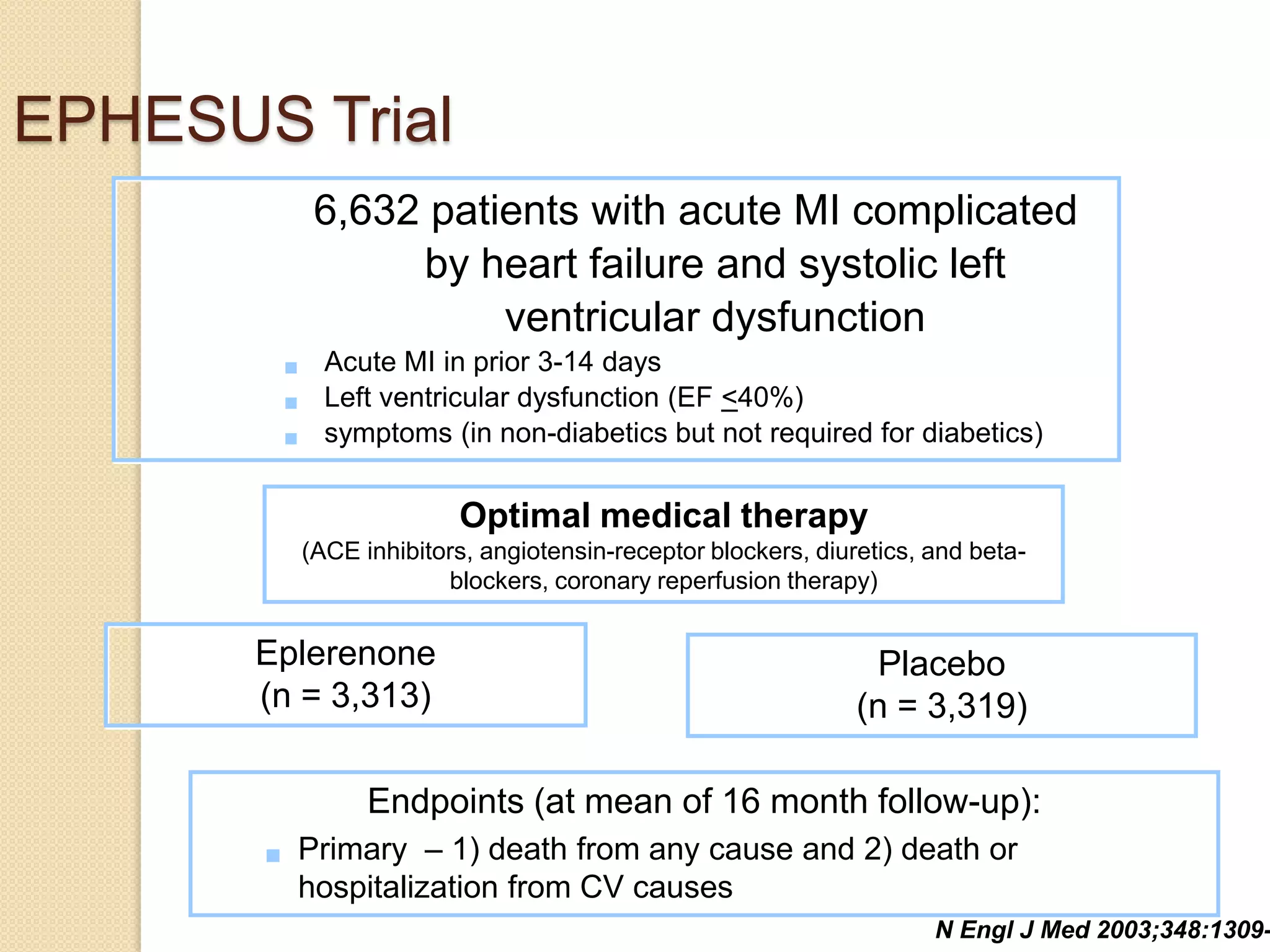
Eplerenone
(n = 3,313)
Placebo
(n = 3,319)
Endpoints (at mean of 16 month follow-up):
 Primary – 1) death from any cause and 2) death or
hospitalization from CV causes
EPHESUS Trial
N Engl J Med 2003;348:1309-
Optimal medical therapy
(ACE inhibitors, angiotensin-receptor blockers, diuretics, and beta-
blockers, coronary reperfusion therapy)
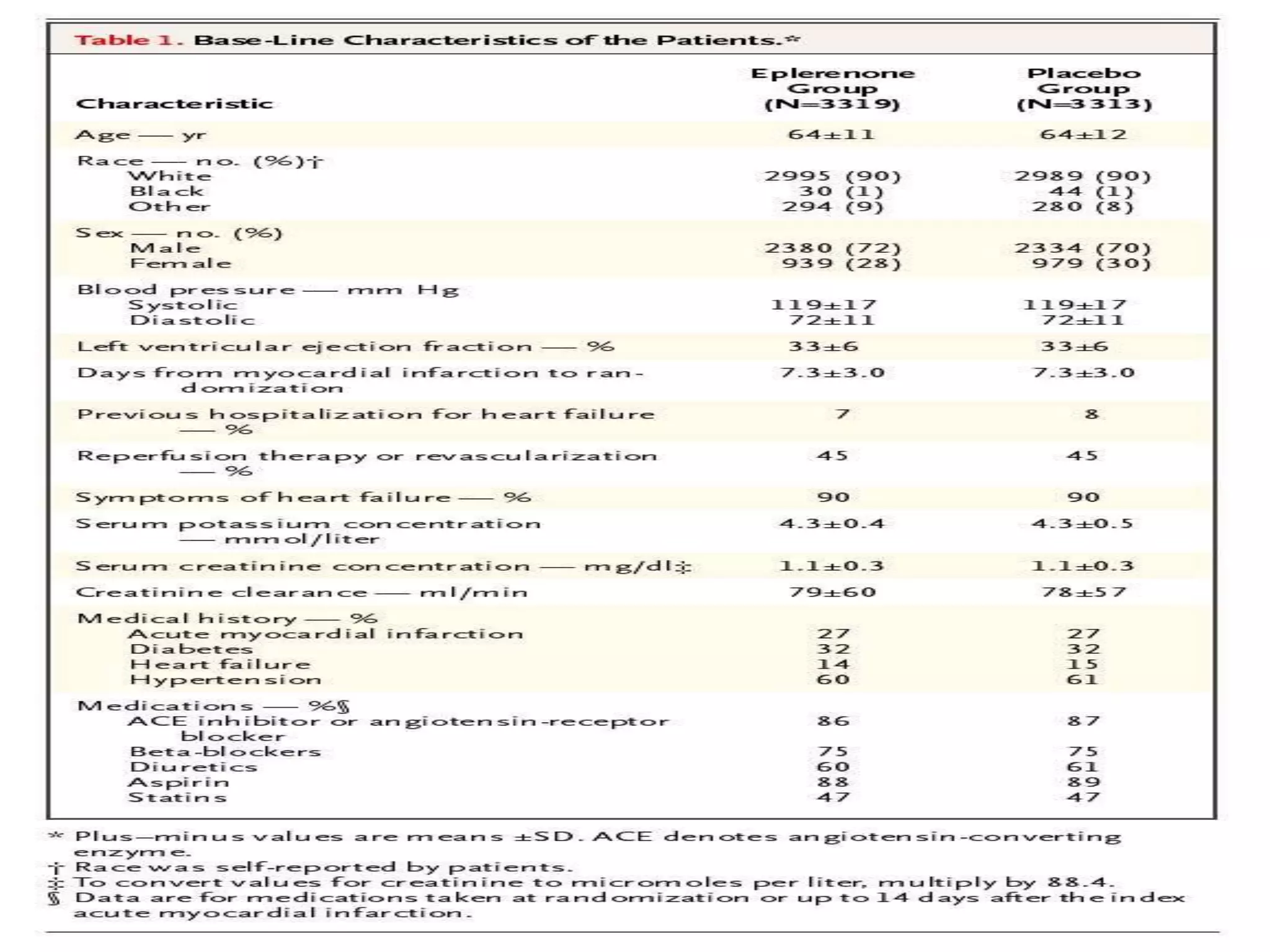
6,632 patients with acute MI complicated
by heart failure and systolic left
ventricular dysfunction
 Acute MI in prior 3-14 days
 Left ventricular dysfunction (EF <40%)
 symptoms (in non-diabetics but not required for diabetics)
Results
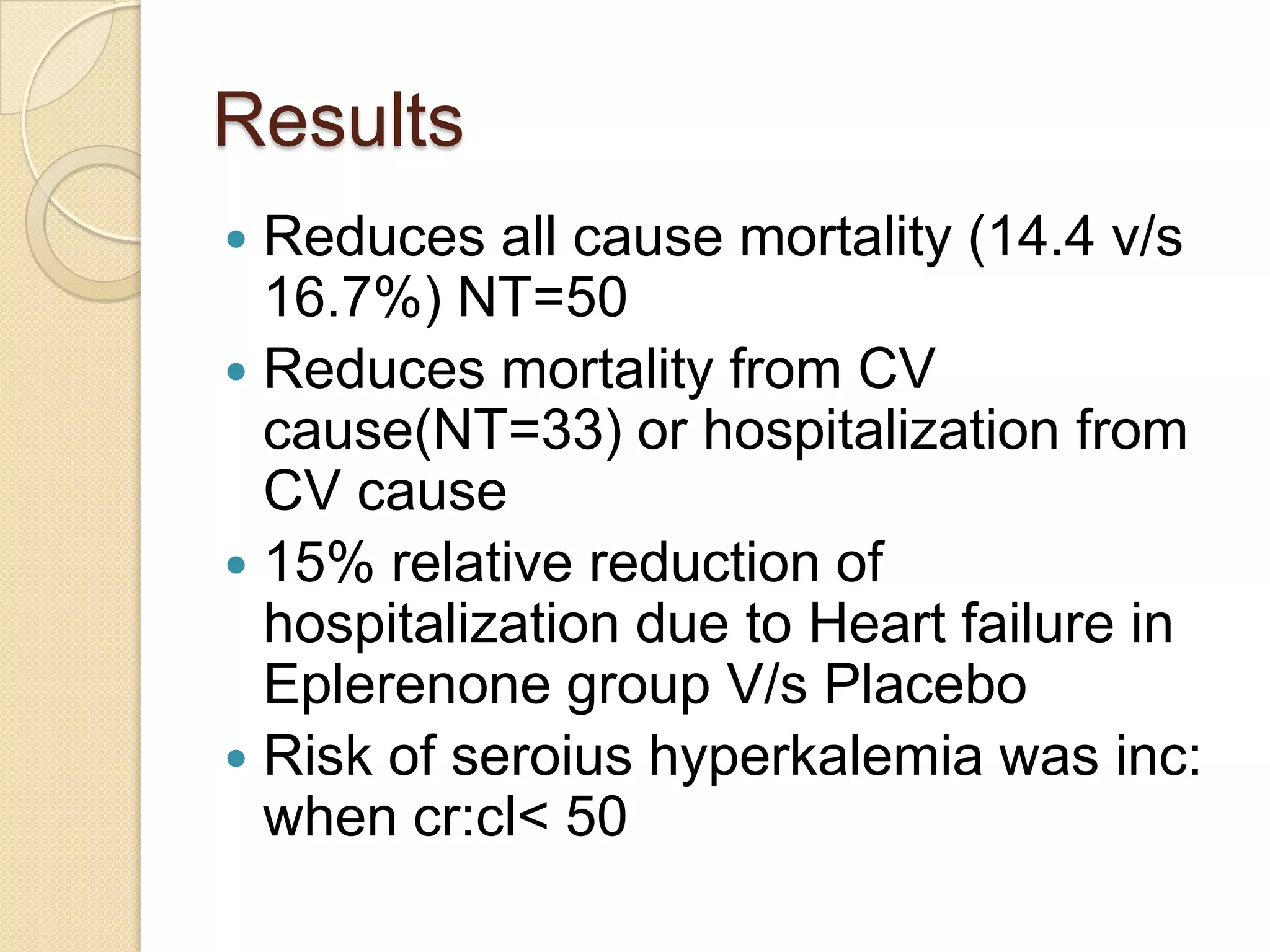
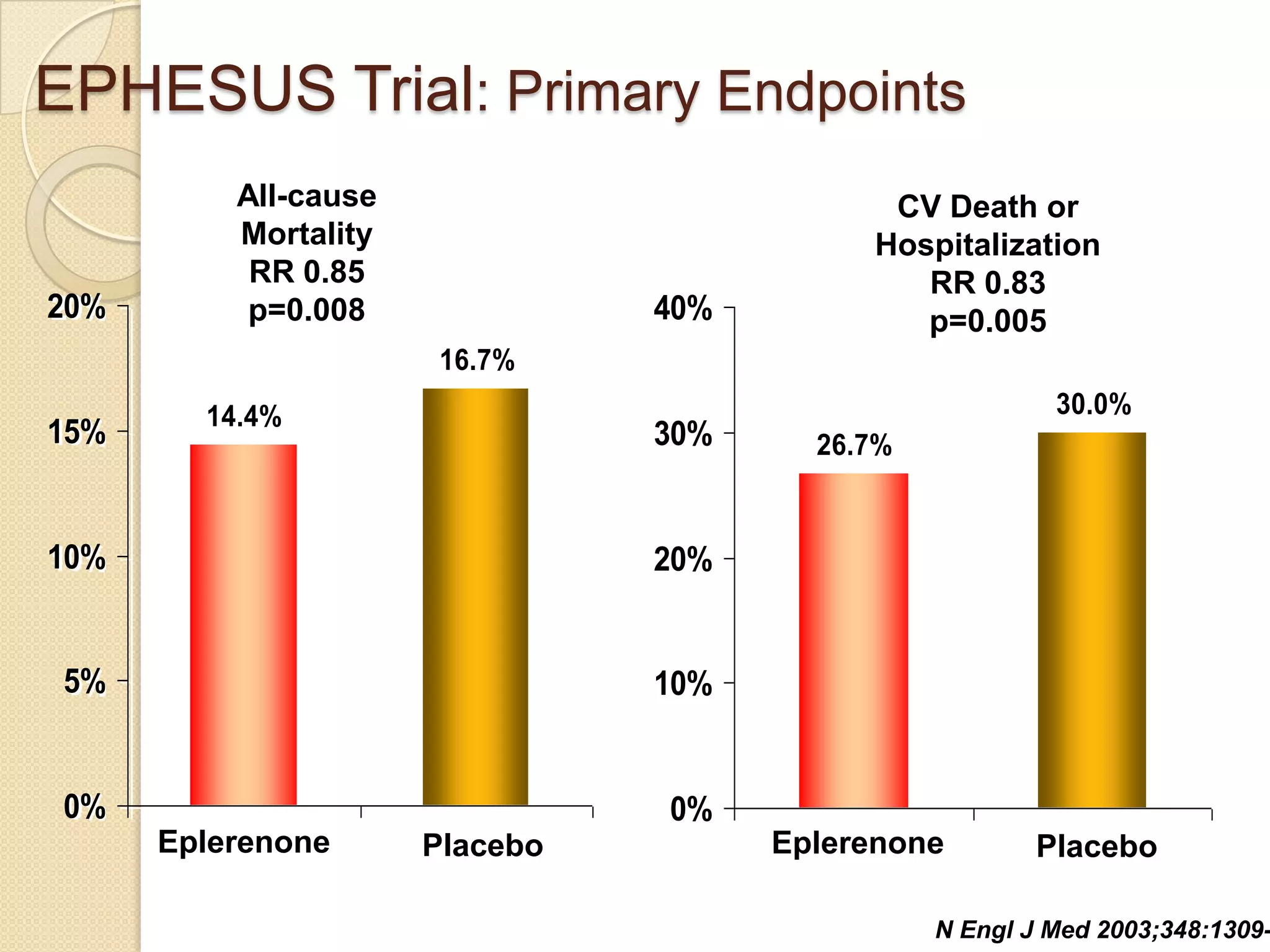
 Reduces all cause mortality (14.4 v/s
16.7%) NT=50
 Reduces mortality from CV
cause(NT=33) or hospitalization from
CV cause
 15% relative reduction of
hospitalization due to Heart failure in
Eplerenone group V/s Placebo
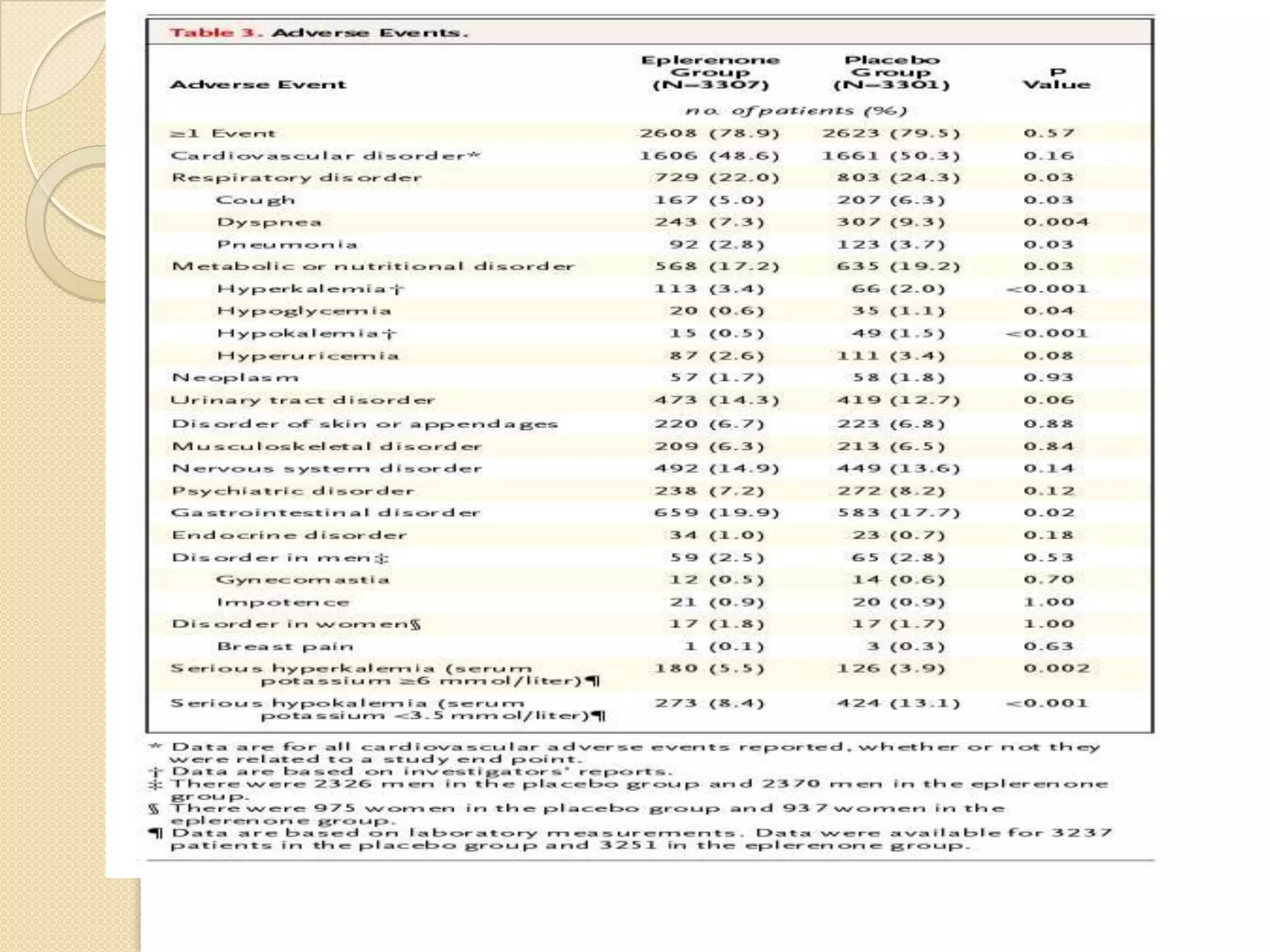
 Risk of seroius hyperkalemia was inc:
when cr:cl< 50
EPHESUS Trial: Primary Endpoints
14.4%
16.7%
0%
5%
10%
15%
20%
All-cause
Mortality
RR 0.85
p=0.008
26.7%
30.0%
0%
10%
20%
30%
40%
CV Death or
Hospitalization
RR 0.83
p=0.005
Eplerenone Placebo
N Engl J Med 2003;348:1309-
Eplerenone Placebo
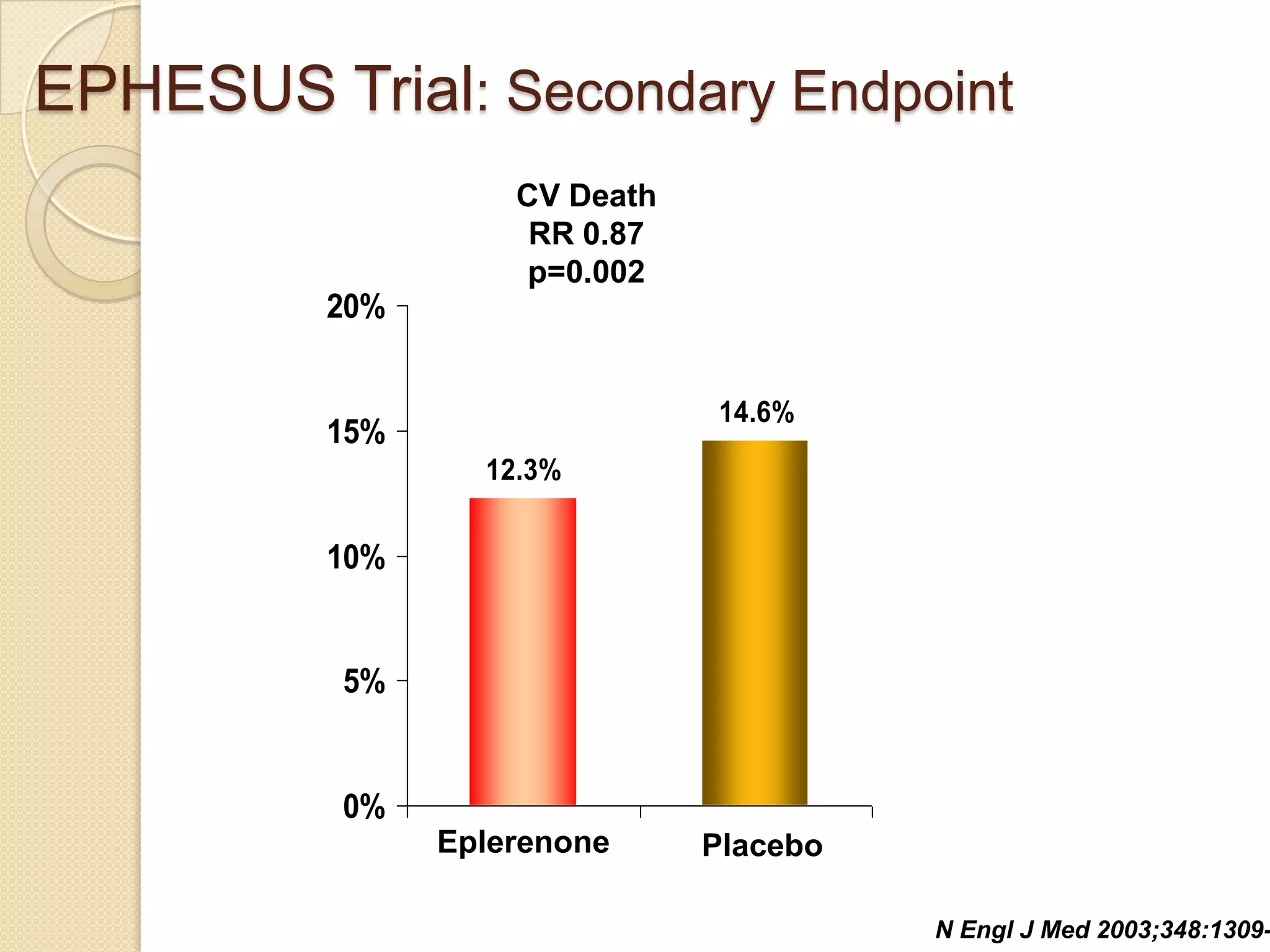
EPHESUS Trial: Secondary Endpoint
12.3%
14.6%
0%
5%
10%
15%
20%
CV Death
RR 0.87
p=0.002
N Engl J Med 2003;348:1309-
Eplerenone Placebo
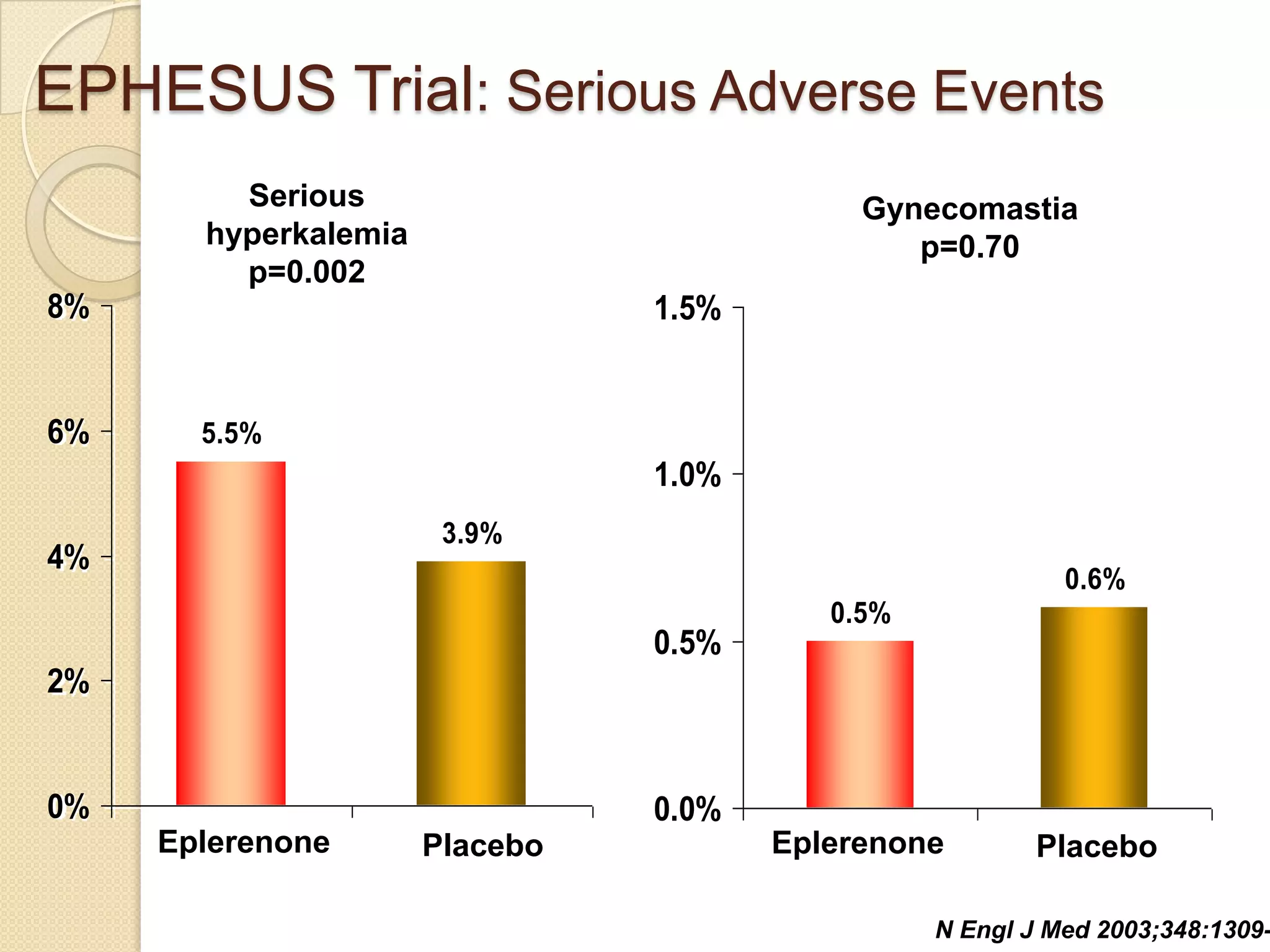
EPHESUS Trial: Serious Adverse Events
5.5%
3.9%
0%
2%
4%
6%
8%
Serious
hyperkalemia
p=0.002
0.5%
0.6%
0.0%
0.5%
1.0%
1.5%
Gynecomastia
p=0.70
Eplerenone Placebo
N Engl J Med 2003;348:1309-
Eplerenone Placebo
Conclusion
 Addition of Eplirinone to Maximal therapy
reduces all cause mortality and mortality
from CVD and rehospitalization from
CVD in Pts with MI complicated by LVD.
 Eplirinone reduces CVD mortality by
15%
 Majority of them were due dec: in
sudden death
 Risk of serious hypokalemia was twicwe
greater in placebo than risk of
hyperkalemia ineplirenone group

Eplerenone, a selective aldosterone blocker, in

  • 1.
    Eplerenone, a Selective AldosteroneBlocker, in Patients with Left Ventricular Dysfunction after Myocardial Infarction (EPHEUSIS Trial) By Dr Salman Ahmed
  • 2.
    Introduction  Aim toevaluate the effect of epleronone in pts with acute MI complicated by LVD.  It is a selective potassium channel inhibitor thought to improve ventricular remodelling,redues coronary vascular inflamation and attenuate the platelete aggregasion  RALES trial and REMINDER were also trial to evaluate the efficacy of potassium channel inhibitors
  • 3.
    Study design  DrugGiven: Eplirenone 50 mg od  Included  Within 3 -14 days post MI  LVD EF<40 % by either echo. LV angio  Presnce of evidence of LVD Rales on auscultation Cxr findings 3rd heart sound Diabetic pts included donot have the symptoms Excluded  Potassium conc: > 5.0 meq/dl  Creatinine > 2.5 mg/dl
  • 4.
    Eplerenone (n = 3,313) Placebo (n= 3,319) Endpoints (at mean of 16 month follow-up):  Primary – 1) death from any cause and 2) death or hospitalization from CV causes EPHESUS Trial N Engl J Med 2003;348:1309- Optimal medical therapy (ACE inhibitors, angiotensin-receptor blockers, diuretics, and beta- blockers, coronary reperfusion therapy) 6,632 patients with acute MI complicated by heart failure and systolic left ventricular dysfunction  Acute MI in prior 3-14 days  Left ventricular dysfunction (EF <40%)  symptoms (in non-diabetics but not required for diabetics)
  • 6.
    Results  Reduces allcause mortality (14.4 v/s 16.7%) NT=50  Reduces mortality from CV cause(NT=33) or hospitalization from CV cause  15% relative reduction of hospitalization due to Heart failure in Eplerenone group V/s Placebo  Risk of seroius hyperkalemia was inc: when cr:cl< 50
  • 7.
    EPHESUS Trial: PrimaryEndpoints 14.4% 16.7% 0% 5% 10% 15% 20% All-cause Mortality RR 0.85 p=0.008 26.7% 30.0% 0% 10% 20% 30% 40% CV Death or Hospitalization RR 0.83 p=0.005 Eplerenone Placebo N Engl J Med 2003;348:1309- Eplerenone Placebo
  • 8.
    EPHESUS Trial: SecondaryEndpoint 12.3% 14.6% 0% 5% 10% 15% 20% CV Death RR 0.87 p=0.002 N Engl J Med 2003;348:1309- Eplerenone Placebo
  • 10.
    EPHESUS Trial: SeriousAdverse Events 5.5% 3.9% 0% 2% 4% 6% 8% Serious hyperkalemia p=0.002 0.5% 0.6% 0.0% 0.5% 1.0% 1.5% Gynecomastia p=0.70 Eplerenone Placebo N Engl J Med 2003;348:1309- Eplerenone Placebo
  • 11.
    Conclusion  Addition ofEplirinone to Maximal therapy reduces all cause mortality and mortality from CVD and rehospitalization from CVD in Pts with MI complicated by LVD.  Eplirinone reduces CVD mortality by 15%  Majority of them were due dec: in sudden death  Risk of serious hypokalemia was twicwe greater in placebo than risk of hyperkalemia ineplirenone group