LCZ696: Changing the Current Treatment of
Systolic Heart Failure
Dr. Edgardo Kaplinsky
Cardiology Unit,Medicine Department,
Hospital Municipal de Badalona
Spain
BIT's 8th Annual International Congress of Cardiology-2016
BARCELONA MAY 28-30, 2016
Heart Failure: large patient population
worldwide
5.1
15.0
4.2
1.0
More than 25.000.000 millions of
patients in the world
Diagnosed HF-rEF patients NYHA II-IV,
in millons1-5
World Health Statistics, World Health Organization 1995
1.0
1 Eur Heart J 2008; 29:2388-2442.
2. Circulation. 2013;127:e6–e245.
3. IJC Heart & Vasculature 6 (2015) 25–31
4. 2002) Coronary heart disease statistics: heart failure supplement. London: British Heart Foundation
5. Circ J. 2008;72(3):489-91
5.1 (2013) 8.5 (2030)
2013 update: a report from the American Heart Association
Mortality rates for HF remain
approximately 50% within
5 years of diagnosis
Circulation.2013; 128: e240-e327
HF: a state of neurohumoral “imbalance”
decreased
adaptive
mechanisms
increased
maladaptive
mechanisms
Natriuretic peptides,
adrenomedullin
bradikinin,
substance P
Kaye and Krum Nature Reviews Drug Discovery 2007; 6: 127–139
Mechanisms of progression in heart failure
Levin et al. N Engl J Med 1998;339;321–8; Gardner et al. Hypertension 2007;49:419–26;
Pandey. J Am Soc Hypertens 2008;2:210–6; Von Lueder et al. Pharmacol Ther 2014 [Epub ahead of print];
Potter. FEBS J 2011;278:1808–17; Lumsden et al. Curr Pharm Des 2010;16:4080–8; Mangiafico et al. Eur
Heart J 2013;34:886–93
Endocrine response to HF: Natriuretic peptides
Stimulated by the increase of cardiac wall stress: (volume and/or pressure overload)
Binding to receptor: causes conversion of GTP to cGMP (raises intracellular cGMP)
Metabolized by Neprilysin
 Origin: atrial cells
 Measurable (plasma)
 Origin: atrial /ventricular cells
 Measurable (plasma)
 Origin endothelial cells
 Non-measurable (plasma)
Local action -clearance of NP
Bone growth regulation
ANP – BNP
Metabolism of NPs and other vasoactive peptides by NEP1–9
1. Erdos, Skidgel. FASEB J 1989;3:145–51; 2. Levin et al. N Engl J Med 1998;339;321–8; 3. Stephenson et al. Biochem J 1987;243:183–7; 4. Lang et al. Clin Sci 1992;82:619–23; 5. Kenny et al. Biochem J
1993;291:83–8; 6. Skidgel et al. Peptides 1984;5:769–76; 7. Abassi et al. Metabolism 1992;41:683–5; 8. Murphy et al. Br J Pharmacol 1994;113:137–42; 9. Jiang et al. Hypertens Res 2004;27:109–17; 10.
Langenickel & Dole. Drug Discovery Today: Ther Strateg 2012;9:e131–9; 11. Richards et al. J Hypertens 1993;11:407–16; 12. Ferro et al. Circulation 1998;97:2323–30
NPs
Endothelin
Substance P
Bradykinin
Ang II
Adrenomedullin
Inactive
metabolites
NEP inhibition clinical
implications:
 NEP substrates may have
biological opposing actions10
 The total effect of the inhibition
depends on the net effect of the
individual metabolized
substrates 10
 The benefits of increasing the NPs
system may be lost by increasing
Ang II11
 A simultaneous suppression of
the RAAS is necessary 2,11,12
Calcitonin gene-related
peptide
Neprilysin has many substrates that are
metabolized with different levels of affinity
NEP
 NEP: Zinc-dependent metalloproteinase
which is found on a large variety of normal
tissues (abundant in kidneys)
1MME membrane metallo-endopeptidase [ Homo sapiens (human) ]
http://www.ncbi.nlm.nih.gov/gene/4311
7
Candoxatril
Neprilysin therapeutic targeting:
inhibition alone
First neprilysin inhibitor available orally : dose-dependent
increase in ANP and natriuresis
Concomitant Increase of angiotensin II concentrations
No reduction of BP in patients with hypertension and systemic
vascular or pulmonary resistance in patients with HF
Vardeny et al. J Am Coll Cardiol HF 2014;2:663–70
Neprilysin
Inhibition alone
Angiotensin II Endogenous peptides
No benefit
8
Neprilysin therapeutic targeting:
dual inhibition ACE-neprilysin
Trials:
IMPRESS
OVERTURE
OCTAVE
Omapatrilat First dual acting drug: neprilysin and ACE inhibition. More potent
than candoxatril (lowering BP and improving hemodynamics in HF)
No substantial clinical benefit versus enalapril
Excess risk of serious
angioedema
(increased concentration
of bradykinin )
Failure to inhibit
neprilysin for 24 Hs
Simultaneous
enzyme (proteases)
inhibition
Modest (10%) reduction
in risk of CV events
9
Next step: neprilysin inhibition + angiotensin
receptor blockade
Angiotensin II
10
LCZ696: first ARNI (angiotensin receptor
neprilysin inhibitor)
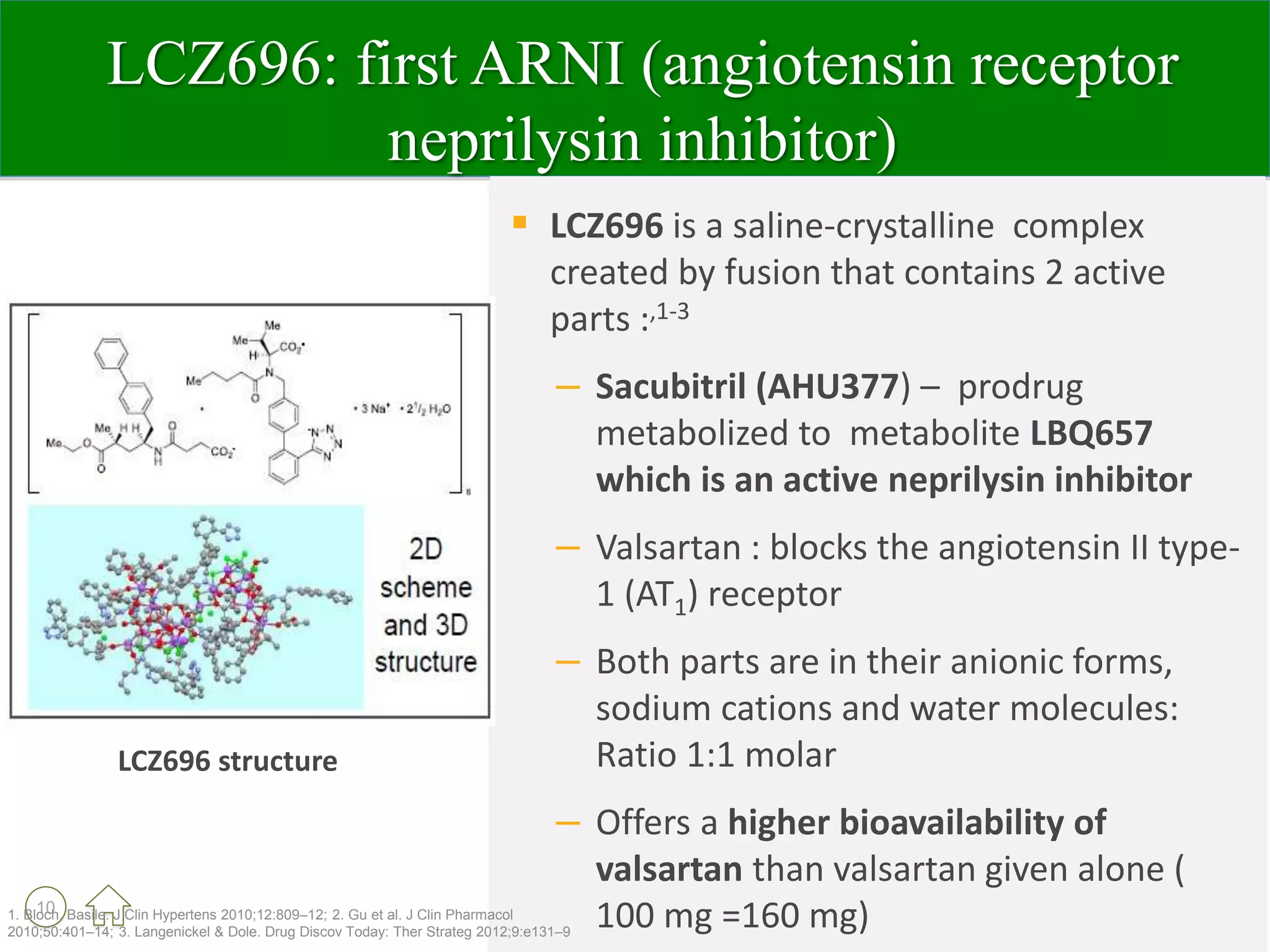
 LCZ696 is a saline-crystalline complex
created by fusion that contains 2 active
parts :,1-3
– Sacubitril (AHU377) – prodrug
metabolized to metabolite LBQ657
which is an active neprilysin inhibitor
– Valsartan : blocks the angiotensin II type-
1 (AT1) receptor
– Both parts are in their anionic forms,
sodium cations and water molecules:
Ratio 1:1 molar
– Offers a higher bioavailability of
valsartan than valsartan given alone (
100 mg =160 mg)1. Bloch, Basile. J Clin Hypertens 2010;12:809–12; 2. Gu et al. J Clin Pharmacol
2010;50:401–14; 3. Langenickel & Dole. Drug Discov Today: Ther Strateg 2012;9:e131–9
LCZ696 structure
11
LCZ696: simultaneously NEP inhibition (via
LBQ657) and AT1 receptor blockade (via valsartan)
1. Bloch, Basile. J Clin Hypertens 2010;12:809–12; 2. Gu et al. J Clin Pharmacol
2010;50:401–14; 3. Langenickel & Dole. Drug Discov Today: Ther Strateg 2012;9:e131–9
Vasodilatation
 Blood pressure
 Sympathetic tone
 Aldosterone levels
 Fibrosis
 Hypertrophy
 Natriuresis/diuresis
Inactive fragments
ANP, BNP, CNP, others
vasoactive peptides*
AT1 receptor
Vasoconstriction
 Blood pressure
 Sympathetic tone
 Aldosterone
 Fibrosis
 Hypertrophy
Angiotensinogen
(liver secretion )
Ang I
Ang II
RAAS
LCZ696
SACUBITRIL
(AHU377; prodrug)
Inhibiting
Stimulating
LBQ657
(iNEP inhibitor)
OH
O
HN
O
HO
O
VALSARTAN
N
NHN
N
N
O
OH
O
*Sustratos de neprilisina listados en orden de relativa afinidad por NEP: ANP, CNP, Ang II, Ang I, adrenomedullna, sustancia P, bradiquinina, endotelina-1, BNP
Levin et al. N Engl J Med 1998;339:321–8; Nathisuwan & Talbert. Pharmacotherapy 2002;22:27–42;
Schrier & Abraham N Engl J Med 1999;341:577–85; Langenickel & Dole. Drug Discov Today: Ther Strateg 2012;9:e131–9;
Feng et al. Tetrahedron Letters 2012;53:275–6
12
• International, multi-center, double-blind, placebo-controlled RCT
• Primary: composite of CV death and/or hospitalization for HF
– LCZ696 200 mg BID
Randomization 1:1
– Enalapril 10 mg BID
PARADIGM-HF
1. to replace ACEi and ARBs (cornerstone of HF treatment)..comparison “head to head”
2. to show an incremental effect on CV death since sample size of the trial was
determined by effect on cardiovascular mortality (not the primary endpoint)
Specifically designed:
13
PARADIGM-HF: pre-specified endpoints
All-cause mortality
Change from baseline in the clinical summary score of the Kansas
City Cardiomyopathy Questionnaire at 8 months
Time to new onset of atrial fibrillation
Time to first occurrence of a protocol-defined decline in renal function
o Secondary:
o primary:
Cardiovascular death
Heart failure hospitalization
14
Inclusion:
• age ≥ 18 y. NYHA class II-IV. HF. LVEF ≤40 % (≤35% amend)
•BNP ≥150 /NT-proBNP ≥600 (pg/mL) or BNP ≥100 / NT-proBNP ≥400 (pg/mL) hosp within 12 mo.
•Guideline-recommended use of beta-blockers and MRA antagonists
•Background ACEi or ARB equivalent to enalapril 10 mg (4 weeks)
•SBP ≥ 100 mm Hg (run-in) / ≥ 95 mmHg (randomization)
•eGFR ≥ 30 ml/min/1.73 m2 / no decrease >25%. (amend to 35%) and K < 5.2 mmol/l
PARADIGM-HF: Prospective comparison of ARNI with ACEi
to Determine Impact on Global Mortality and morbidity in HF
36 hs washing
period
36 hs washing
period
15
PARADIGM-HF: patient disposition
10,521 patients screened at
1043 centers in 47 countries
Did not fulfill criteria
for randomization
(n=2079)
Randomized erroneously
or at sites closed due to
GCP violations (n=43)
8399 patients randomized for ITT analysis
LCZ696 200 mg
BID
(n=4187)
At last visit
375 mg daily
11 lost to follow-up
Enalapril 10 mg
BID
(n=4212)
At last visit
18.9 mg daily
9 lost to follow-up
median 27 months
of follow-up
16
LCZ696
(n=4187)
Enalapril
(n=4212)
Age (years) 63.8 ± 11.5 63.8 ± 11.3
Women (%) 21.0% 22.6%
Ischemic cardiomyopathy (%) 59.9% 60.1%
LV ejection fraction (%) 29.6 ± 6.1 29.4 ± 6.3
NYHA functional class II / III (%) 71.6% / 23.1% 69.4% / 24.9%
Systolic blood pressure (mm Hg) 122 ± 15 121 ± 15
Heart rate (beats/min) 72 ± 12 73 ± 12
N-terminal pro-BNP (pg/ml) 1631 (885-3154) 1594 (886-3305)
B-type natriuretic peptide (pg/ml) 255 (155-474) 251 (153-465)
History of diabetes 35% 35%
Digitalis 29.3% 31.2%
Beta-adrenergic blockers 93.1% 92.9%
Mineralocorticoid antagonists 54.2% 57.0%
ICD and/or CRT 16.5% 16.3%
PARADIGM-HF: baseline characteristics
17
PARADIGM-HF: early termination
18
McMurray NEJM 2014
PARADIGM-HF: CV death or HF hospitalization
(Primary Endpoint)
HR = 0.80 (0.73-0.87)
P = 0.0000004
Number needed to treat = 21
(21.8%)
(26.5%)
19
McMurray NEJM 2014
PARADIGM-HF: CV death or HF hospitalization
(Primary Endpoint)
HR = 0.80 (0.71-0.89)
P = 0.00008
Number need to treat = 32
(LCZ696 13.3% vs. Enalapril 16,5 %) (LCZ696 12,8% vs. Enalapril 15,6 %)
20
McMurray NEJM 2014
PARADIGM-HF: death for any cause
(secondary endpoint)
HR = 0.84 (0.76-0.93)
P=0.0009
Patients at Risk
LCZ696
Enalapril
4187
4212
4056
4051
3891
3860
3282
3231
2478
2410
1716
1726
1005
994
280
279
21
PARADIGM-HF: secondary endpoints
LCZ696
(n=4187)
Enalapril
(n=4212)
Treatment
effect
P
Value
KCCQ clinical
summary score
at 8 months
– 2.99
± 0.36
– 4.63
± 0.36
Hazard ratio
1.64
(0.63,2-65)
0.001
New onset
atrial fibrillation
84/2670
(3.2%)
83/2638
(3.2%)
Hazard ratio
0.97
(0.72,1.31)
0.84
Protocol-defined
decline in renal
function
94/4187
(2.3%)
108/4212
(2.6%)
Hazard ratio
0.86
(0.65, 1.13)
0.28
22
PARADIGM-HF: safety endpoints
LCZ696
(n=4187)
Enalapril
(n=4212)
P
Value
Prospectively identified adverse events
Symptomatic hypotension 588 388 < 0.001
Serum potassium > 6.0 mmol/l 181 236 0.007
Serum creatinine ≥ 2.5 mg/dl 139 188 0.007
Cough 474 601 < 0.001
Discontinuation for adverse event 449 516 0.02
Discontinuation for hypotension 36 29 NS
Discontinuation for hyperkalemia 11 15 NS
Discontinuation for renal impairment 29 59 0.001
Angioedema (adjudicated)
Medications, no hospitalization 16 9 NS
Hospitalized; no airway compromise 3 1 NS
Airway compromise 0 0 ----
23
In heart failure with reduced ejection fraction, when
compared with recommended doses of enalapril:
LCZ696 was more effective than enalapril in . . .
• Reducing the risk of CV death and HF hospitalization
• Reducing the risk of CV death by incremental 20%
• Reducing the risk of HF hospitalization by incremental 21%
• Reducing all-cause mortality by incremental 16%
• Incrementally improving symptoms and physical limitations
LCZ696 was better tolerated than enalapril . . .
• Less likely to cause cough, hyperkalemia or renal impairment
• Less likely to be discontinued due to an adverse event
• More hypotension, but no increase in discontinuations
• Not more likely to cause serious angioedema
PARADIGM-HF: Summary of Findings
24
Post Hoc analysis
European Journal of Heart Failure 2015, 17 (Suppl. 1), 5–441 P 1794
25
LVEF: powerful independent predictor of CV outcomes
and mortality in PARADIGM-HF
PARADIGM-HF
(mean LVEF 29,5 ± 6,2 %)
< 17,5% (n:339) ≥27,5% to < 32,5%. (n:2486)
≥17,5% to < 22,5% (n: 930) ≥32,5%. (n: 3143)
≥22,5% to < 27,5% (n:1500))
)
Each 5-point reduction in LVEF was associated with:
9% increased risk of CV death HF hospitalization (HR, 1.09; 95% CI, 1.05–1.13;P<0.001)
9% increased risk for CV death (HR, 1.09; 95% CI, 1.04–1.14).
9% increased risk in HF hospitalization (HR, 1.09;95% CI 1.04–1.14)
7% increased risk in all-cause mortality (HR 1.07; 95% CI 1.03–1.12)
Solomon S. Circ Heart Fail. 2016;9:e002744. DOI: 10.1161/CIRCHEARTFAILURE.115.002744
26
LCZ696: effective across the LVEF spectrum non
modificated by any endpoint
Younger / male / NYHA III/IV Less history of hypertension, MI, or AF
Lower systolic BP > creatinine
More presence of ICD or CRT, More treated with diuretics, digoxin, and a MRA
Lower EF patients
Solomon S. Circ Heart Fail. 2016;9:e002744. DOI: 10.1161/CIRCHEARTFAILURE.115.002744
• Increases with age…..from 13,4 to 14.8 across the age categories
• Less pronounced in PARADIGM-HF than in prior trials (CHARM, SHIFT, DIG)
• Most marked for death from any cause and non-CV death (greatest difference)
than for strictly CV death.
Rate of death and heart failure hospitalization (per 100 patients-year) “gradient”
These findings suggest that “effective disease-modifying
drugs” may have attenuated the age-related gradient in CV
events (Vs. historical studies)
Effect of age in PARADIGM -HF
• Hypotension, renal impairment and hyperkalemia increased in both groups with age
• Differences between treatments were consistent across age categories
• More hypotension but less renal impairment and hyperkalemia with LCZ696
Safety outcomes
Jhund PS.Eur Heart L 36(38):2576-84.
PARADIGM- HF
aged 18-96 (median: 63,4)
6128 (72,9%) <74
1563 (18.6%) 75-79
587 (7.0%) 80-84
121 (1.44%) ≥85
Older
Patients
Western Europe / North America
Female & white in NYHA III-IV
Higher systolic BP & LVEF
Higher creatinine & NPs values
LCZ696: across the spectrum of age
P-value for interaction 0.94
P-value for interaction 0.81
P-value for interaction 0.92
P-value for interaction 0.99
Overall HR
0.80 (0.73, 0.87), P , 0.001
LCZ696 was more beneficial than enalapril across the broad spectrum of age studied in
PARADIGM-HF with a favourable benefit-risk profile in all age groups
7.7
JhundPS.EurHeartL36(38):2576-84.
6.4 6.4
5.1
7.5
5.5
9.2
7.7
9.0
7.2
7.5
6.5
9.0
7.3
12.0
10.5
P=0.84
P=0.79
P=0.74
P=0.84 P=0.80
P=0.87
P=0.87
P=0.81
PARADIGM-HF: mode of death
Desai AS, Eur Heart J 2015 ;36(30):1990-7
17.0%
Of total
19.8%
Of total
13.3%
Of total
16,5%
Of total
n:1546 n:1251 (80,9%) n:561 (44,8%) n:331 (26,5%)
Non-CV death
n:295 (19,1%)
Other -CV death
n:359 (28,6%)
NS
between both
arms
Died vs. alive
(end of trial)
Older, male, Poorer NYHA class
Lower body mass index
Higher HR, creatinine & NPs levels
Other comorbidities (DM, AF, etc)
Died from
HF vs. SD
Lower EF
Higher NPs levels
More AF
6.0%
Of total
7.4%
Of total
3.5%
Of total
4.4%
Of total
37.2% vs. 35.2%
Of death
22.0 % vs. 20.7%
Of death
PARADIGM-HF: causes of CV death
SD vs. Pump failure %: 39,4 vs 20,7 (LCZ696) – 40,0 vs. 22% (Enalapril)
LCZ696: more effective preventing clinical progression of
HF in survivors than enalapril
Intensification of outpatient
therapy
604
(14.3)
520
(12.4)
0.84 (0.74–0.94) /
0.003
Worsening NYHA (≥1 class) 12 mo. 271 (7.4) 225 (6.1) 0.023
ED visit for HF 150 (3.6) 102 (2.4) 0.66 (0.52–0.85) /
0.001
Patients hospitalized for HF 658
(15.6)
537
(12.8)
0.79 (0.71–0.89) /
<0.001
Patients receiving IV positive
inotropic drugs
229 (5.4) 161 (3.9) 0.69 (0.57–0.85)/
<0.001
Patients requiring CRT, VAD or
Cardiac Tx
119 (2.8) 94 (2.3) 0.78 (0.60–1.02) /
0.07
•Reduction in HF hospitalization (evident within the first 30 days after randomization).
•30% lower rate of all (including repeat) visits to ED than the enalapril group (P=0.017).
Enalapril
N:4212
LCZ696
N:4187
Hazard/Rate Ratio (95% CI)
P Value
Packer M. Circulation 2015;131(1):54-61
LCZ696: early effect on biomarkers
Packer M. Circulation 2015;131(1):54-61
Levels of urinary cyclic GMP and plasma
BNP were higher during treatment with
LCZ696 than with enalapril
Patients receiving LCZ696 had consistently
lower levels of NTproBNP (reflecting
reduced cardiac wall stress) and troponin
(reflecting reduced cardiac injury)
33
LCZ696: consistent across all spectrum of SBP
Run-in period: After randomization
Enalapril: 146 of 10513 (1.4%) - 29 of 4212 (0.7%)
LCZ696 : 164 of 9419 (1.74%) - 36 of 4187 (0.9%)
Discontinued
for hypotension
PARADIGM-HF: mean SBP 122 ±15 mmHg
EuropeanJournalofHeartFailure2015,17(Suppl.1),5–441P1794
P interaction p=0.58.
34
LCZ696: lower incidence of renal dysfunction
despite a greater fall in BP
LCZ696 reduced the risk
of CVD/HFH similarly in
patients
with and without
baseline CKD
Damman K, et al. http://eurheartj.oxfordjournals.org
Overall GFR decreased all the study
(48 months).7.7 mL/min/1.73m2 .
PARADIGM-HF
•Baseline GFR: 67.7 mL/min/1.73m2
•36% of patients <60 mL/min/1.73m2 …
Chronic kidney disease (CKD) GFR changed (mL/min/1.73m2):
−0.14 (enalapril)
−0.11 (LCZ696) per month (P=0.01).
Enalapril no CKD
Enalapril CKD
LCZ696 no CKD
LCZ696CKD
HR
0.790 (0.691, 0.902) vs 0.799 (0.711, 0.897),
respectively, P interaction =0.90
35
Post Hoc analysis
European Journal of Heart Failure 2015, 17 (Suppl. 1), 5–441 P 1794
8274 patients
DM or HbA1c
no DM 5367 (65%)
DM 2907 (35%)
2160 (40%)-26% of total
no DM HbA1c <6
2103 (39%)-25% of total
HbA1c 6-<6,4 “pre-DM
1106 (21%)-13% of total
HbA1c >6,5“undiagnosed DM”
4013 (49%) DM
History + HbA1c
Older, often white
Longer HF duration
More obesity
Higher NYHA, BNP
Lower GFR
More edema (diuretics)
Lowest prevalence: LA
……so dysglycemia could be
a harmful marker in HF
1. DM is a risk marker for HF development. Prognosis is worse, once HF develops
2. HF seems to be a state of insulin resistance,(underlying mechanisms not clear)
3. Prevalence and consequences of pre–diabetic dysglycemia in HF are not well studied
SørenL.Kristensenetal.CircHeartFail.2016;9:e002560
no DM: HbA1c <6 pre-DM: HbA1c 6-<6,4
undiagnosed DM HbA1c >6,5 DM
LCZ696: beneficial compared with enalapril, irrespective
of glycemic status
CV death or HF hospitalization p interaction=0.13 CV death p interaction=0.09
HF hospitalization p interaction=0.78 All cause mortality p interaction= 0.06
Kaplan–Meier curves
•Reducing sudden cardiac deaths and deaths from worsening HF
•Preventing clinical progression of surviving patients with HF
•Reducing CV death and HF hospitalizations across
•spectrum of LVEF
•spectrum of age
•spectrum of SBP
•glycemic status
•Attenuating renal dysfunction
PARADIGM-HF: post hoc analysis findings
In heart failure with reduced ejection fraction, when
compared with recommended doses of enalapril:
LCZ696 was more effective than enalapril in . . .
38
European Journal of Heart Failure 2015, 17 (Suppl. 1), 5–441 P 1794
Sacubitril-Valsartan: place in therapy
NYHA II-IV …LVEF ≤ 40 % (≤ 35%)
BNP ≥ 150 or NT-proBNP ≥600 pg/ ml)
BNP ≥ 100 or NT-proBNP ≥400 pg/ml)
+ HFH (previous 12 mo.)
Sacubitril-Valsartan: place in therapy
PARADIGM –HF
(McMurray JJ. N Engl J Med 2014;371:993)
Neprilysin inhibitor and angiotensin II receptor blocker combination to reduce the risk of CV
death and hospitalization for HF in patients with chronic heart failure (NYHA Class II-IV) and
reduced ejection fraction
FDA: JULY-7-2015
The Committee for Medicinal Products for Human Use (CHMP) considers by majority that
the risk-benefit balance of Entresto indicated in adult patients for treatment of symptomatic
chronic HF with reduced ejection fraction is favourable
EMEA: Nov-24-2015
www.fda.gov/NewsEvents/Newsroom/PressAnnouncement /ucm453845.html. Published July 7, 2015. Accessed July 7,2015
www.ema.europa.eu/docs/en_GB/document_library/EPAR__Public_assessment_report/human/004062/WC500197538.pdf
Sacubitril-Valsartan: place in therapy
MAY-11-2016
https://content.onlinejacc.org/article.aspx?articleid=2524644
Sacubitril-Valsartan: place in therapy
MAY-20-2016
http://dx.doi.org/10.1093/eurheartj/ehw128
Starting dose Target dose
Sacubitril-Valsartan: place in therapy
http://dx.doi.org/10.1093/eurheartj/ehw128
43
European Journal of Heart Failure 2015, 17 (Suppl. 1), 5–441 P 1794
Sacubitril-Valsartan: future
44
44
LZC696: global studies phase III/IV
TITRATION: Safety and tolerability of initiating LCZ696 in heart failure patients
(NCT01922089)
TRANSITION: Comparison of pre- and post-discharge initiation of LCZ696 therapy in
HFreF patients after an acute decompensation event (NCT02661217)
PEDIATRICS: Single dose study to evaluate safety, tolerability and pharmacokinetics
of LCZ696 followed by a 52-week study of LCZ696 compared with enalapril in
pediatric patients with heart failure (NCT02678312).
PARADIGM-OPEN LABEL: Safety and Tolerability During Open-label Treatment With
LCZ696 in Patients With CHF and Reduced Ejection Fraction (NCT02226120)
PRESERVED: LCZ696 Compared to Valsartan in Patients With Chronic Heart Failure
and Preserved Left-ventricular Ejection Fraction (NCT00887588)
PARAGON-HF: Efficacy and Safety of LCZ696 Compared to Valsartan, on Morbidity
and Mortality in Heart Failure Patients With Preserved Ejection Fraction
(NCT01920711)
45
45
LZC696: global studies phase III/IV
PET-Study: To evaluate the effects of Entresto compared to valsartan on cognitive
function as assessed by comprehensive neurocognitive battery and brain amyloid
plaque deposition as assessed by PET imaging in patients with chronic heart failure
with preserved ejection fraction.(Risk-management-plan_summary/human/004062/WC500194315.pdf
PARASAIL: Tolerability of LCZ696 (Sacubitril / Valsartan) in heart failure with reduced
ejection fraction treated in real life setting (NCT02690974)
JAPAN HF: Efficacy and Safety of LCZ696 in japanese patients with chronic heart
failure and reduced ejection fraction (NCT02468232)
PIONEER-HF: Sacubitril/valsartan versus enalapril on effect on NT-PROBNP in
patients stabilized from an acute heart failure episode (NCT02554890)
PARABLE: Asymptomatic patients with elevated natriuretic peptide and elevated
left atrial volume index (NCT026827)
PRIME: Pharmacological reduction of functional ischemic mitral regurgitation
(NCT02687932)
PARADIGM-HF: what does it signify for
one single patient ??
47
European Journal of Heart Failure 2015, 17 (Suppl. 1), 5–441 P 1794
Sacubitril-Valsartan: present & future
….take me to the magic of the
moment on a glory night (glory night)
where the children of tomorrow
dream away (dream away)
in the wind of change .
Wind Of Change, Scorpions..1990

Sacubitril valsartan EK

  • 1.
    LCZ696: Changing theCurrent Treatment of Systolic Heart Failure Dr. Edgardo Kaplinsky Cardiology Unit,Medicine Department, Hospital Municipal de Badalona Spain BIT's 8th Annual International Congress of Cardiology-2016 BARCELONA MAY 28-30, 2016
  • 2.
    Heart Failure: largepatient population worldwide 5.1 15.0 4.2 1.0 More than 25.000.000 millions of patients in the world Diagnosed HF-rEF patients NYHA II-IV, in millons1-5 World Health Statistics, World Health Organization 1995 1.0 1 Eur Heart J 2008; 29:2388-2442. 2. Circulation. 2013;127:e6–e245. 3. IJC Heart & Vasculature 6 (2015) 25–31 4. 2002) Coronary heart disease statistics: heart failure supplement. London: British Heart Foundation 5. Circ J. 2008;72(3):489-91 5.1 (2013) 8.5 (2030) 2013 update: a report from the American Heart Association Mortality rates for HF remain approximately 50% within 5 years of diagnosis Circulation.2013; 128: e240-e327
  • 3.
    HF: a stateof neurohumoral “imbalance” decreased adaptive mechanisms increased maladaptive mechanisms Natriuretic peptides, adrenomedullin bradikinin, substance P
  • 4.
    Kaye and KrumNature Reviews Drug Discovery 2007; 6: 127–139 Mechanisms of progression in heart failure
  • 5.
    Levin et al.N Engl J Med 1998;339;321–8; Gardner et al. Hypertension 2007;49:419–26; Pandey. J Am Soc Hypertens 2008;2:210–6; Von Lueder et al. Pharmacol Ther 2014 [Epub ahead of print]; Potter. FEBS J 2011;278:1808–17; Lumsden et al. Curr Pharm Des 2010;16:4080–8; Mangiafico et al. Eur Heart J 2013;34:886–93 Endocrine response to HF: Natriuretic peptides Stimulated by the increase of cardiac wall stress: (volume and/or pressure overload) Binding to receptor: causes conversion of GTP to cGMP (raises intracellular cGMP) Metabolized by Neprilysin  Origin: atrial cells  Measurable (plasma)  Origin: atrial /ventricular cells  Measurable (plasma)  Origin endothelial cells  Non-measurable (plasma) Local action -clearance of NP Bone growth regulation ANP – BNP
  • 6.
    Metabolism of NPsand other vasoactive peptides by NEP1–9 1. Erdos, Skidgel. FASEB J 1989;3:145–51; 2. Levin et al. N Engl J Med 1998;339;321–8; 3. Stephenson et al. Biochem J 1987;243:183–7; 4. Lang et al. Clin Sci 1992;82:619–23; 5. Kenny et al. Biochem J 1993;291:83–8; 6. Skidgel et al. Peptides 1984;5:769–76; 7. Abassi et al. Metabolism 1992;41:683–5; 8. Murphy et al. Br J Pharmacol 1994;113:137–42; 9. Jiang et al. Hypertens Res 2004;27:109–17; 10. Langenickel & Dole. Drug Discovery Today: Ther Strateg 2012;9:e131–9; 11. Richards et al. J Hypertens 1993;11:407–16; 12. Ferro et al. Circulation 1998;97:2323–30 NPs Endothelin Substance P Bradykinin Ang II Adrenomedullin Inactive metabolites NEP inhibition clinical implications:  NEP substrates may have biological opposing actions10  The total effect of the inhibition depends on the net effect of the individual metabolized substrates 10  The benefits of increasing the NPs system may be lost by increasing Ang II11  A simultaneous suppression of the RAAS is necessary 2,11,12 Calcitonin gene-related peptide Neprilysin has many substrates that are metabolized with different levels of affinity NEP  NEP: Zinc-dependent metalloproteinase which is found on a large variety of normal tissues (abundant in kidneys) 1MME membrane metallo-endopeptidase [ Homo sapiens (human) ] http://www.ncbi.nlm.nih.gov/gene/4311
  • 7.
    7 Candoxatril Neprilysin therapeutic targeting: inhibitionalone First neprilysin inhibitor available orally : dose-dependent increase in ANP and natriuresis Concomitant Increase of angiotensin II concentrations No reduction of BP in patients with hypertension and systemic vascular or pulmonary resistance in patients with HF Vardeny et al. J Am Coll Cardiol HF 2014;2:663–70 Neprilysin Inhibition alone Angiotensin II Endogenous peptides No benefit
  • 8.
    8 Neprilysin therapeutic targeting: dualinhibition ACE-neprilysin Trials: IMPRESS OVERTURE OCTAVE Omapatrilat First dual acting drug: neprilysin and ACE inhibition. More potent than candoxatril (lowering BP and improving hemodynamics in HF) No substantial clinical benefit versus enalapril Excess risk of serious angioedema (increased concentration of bradykinin ) Failure to inhibit neprilysin for 24 Hs Simultaneous enzyme (proteases) inhibition Modest (10%) reduction in risk of CV events
  • 9.
    9 Next step: neprilysininhibition + angiotensin receptor blockade Angiotensin II
  • 10.
    10 LCZ696: first ARNI(angiotensin receptor neprilysin inhibitor)  LCZ696 is a saline-crystalline complex created by fusion that contains 2 active parts :,1-3 – Sacubitril (AHU377) – prodrug metabolized to metabolite LBQ657 which is an active neprilysin inhibitor – Valsartan : blocks the angiotensin II type- 1 (AT1) receptor – Both parts are in their anionic forms, sodium cations and water molecules: Ratio 1:1 molar – Offers a higher bioavailability of valsartan than valsartan given alone ( 100 mg =160 mg)1. Bloch, Basile. J Clin Hypertens 2010;12:809–12; 2. Gu et al. J Clin Pharmacol 2010;50:401–14; 3. Langenickel & Dole. Drug Discov Today: Ther Strateg 2012;9:e131–9 LCZ696 structure
  • 11.
    11 LCZ696: simultaneously NEPinhibition (via LBQ657) and AT1 receptor blockade (via valsartan) 1. Bloch, Basile. J Clin Hypertens 2010;12:809–12; 2. Gu et al. J Clin Pharmacol 2010;50:401–14; 3. Langenickel & Dole. Drug Discov Today: Ther Strateg 2012;9:e131–9 Vasodilatation  Blood pressure  Sympathetic tone  Aldosterone levels  Fibrosis  Hypertrophy  Natriuresis/diuresis Inactive fragments ANP, BNP, CNP, others vasoactive peptides* AT1 receptor Vasoconstriction  Blood pressure  Sympathetic tone  Aldosterone  Fibrosis  Hypertrophy Angiotensinogen (liver secretion ) Ang I Ang II RAAS LCZ696 SACUBITRIL (AHU377; prodrug) Inhibiting Stimulating LBQ657 (iNEP inhibitor) OH O HN O HO O VALSARTAN N NHN N N O OH O *Sustratos de neprilisina listados en orden de relativa afinidad por NEP: ANP, CNP, Ang II, Ang I, adrenomedullna, sustancia P, bradiquinina, endotelina-1, BNP Levin et al. N Engl J Med 1998;339:321–8; Nathisuwan & Talbert. Pharmacotherapy 2002;22:27–42; Schrier & Abraham N Engl J Med 1999;341:577–85; Langenickel & Dole. Drug Discov Today: Ther Strateg 2012;9:e131–9; Feng et al. Tetrahedron Letters 2012;53:275–6
  • 12.
    12 • International, multi-center,double-blind, placebo-controlled RCT • Primary: composite of CV death and/or hospitalization for HF – LCZ696 200 mg BID Randomization 1:1 – Enalapril 10 mg BID PARADIGM-HF 1. to replace ACEi and ARBs (cornerstone of HF treatment)..comparison “head to head” 2. to show an incremental effect on CV death since sample size of the trial was determined by effect on cardiovascular mortality (not the primary endpoint) Specifically designed:
  • 13.
    13 PARADIGM-HF: pre-specified endpoints All-causemortality Change from baseline in the clinical summary score of the Kansas City Cardiomyopathy Questionnaire at 8 months Time to new onset of atrial fibrillation Time to first occurrence of a protocol-defined decline in renal function o Secondary: o primary: Cardiovascular death Heart failure hospitalization
  • 14.
    14 Inclusion: • age ≥18 y. NYHA class II-IV. HF. LVEF ≤40 % (≤35% amend) •BNP ≥150 /NT-proBNP ≥600 (pg/mL) or BNP ≥100 / NT-proBNP ≥400 (pg/mL) hosp within 12 mo. •Guideline-recommended use of beta-blockers and MRA antagonists •Background ACEi or ARB equivalent to enalapril 10 mg (4 weeks) •SBP ≥ 100 mm Hg (run-in) / ≥ 95 mmHg (randomization) •eGFR ≥ 30 ml/min/1.73 m2 / no decrease >25%. (amend to 35%) and K < 5.2 mmol/l PARADIGM-HF: Prospective comparison of ARNI with ACEi to Determine Impact on Global Mortality and morbidity in HF 36 hs washing period 36 hs washing period
  • 15.
    15 PARADIGM-HF: patient disposition 10,521patients screened at 1043 centers in 47 countries Did not fulfill criteria for randomization (n=2079) Randomized erroneously or at sites closed due to GCP violations (n=43) 8399 patients randomized for ITT analysis LCZ696 200 mg BID (n=4187) At last visit 375 mg daily 11 lost to follow-up Enalapril 10 mg BID (n=4212) At last visit 18.9 mg daily 9 lost to follow-up median 27 months of follow-up
  • 16.
    16 LCZ696 (n=4187) Enalapril (n=4212) Age (years) 63.8± 11.5 63.8 ± 11.3 Women (%) 21.0% 22.6% Ischemic cardiomyopathy (%) 59.9% 60.1% LV ejection fraction (%) 29.6 ± 6.1 29.4 ± 6.3 NYHA functional class II / III (%) 71.6% / 23.1% 69.4% / 24.9% Systolic blood pressure (mm Hg) 122 ± 15 121 ± 15 Heart rate (beats/min) 72 ± 12 73 ± 12 N-terminal pro-BNP (pg/ml) 1631 (885-3154) 1594 (886-3305) B-type natriuretic peptide (pg/ml) 255 (155-474) 251 (153-465) History of diabetes 35% 35% Digitalis 29.3% 31.2% Beta-adrenergic blockers 93.1% 92.9% Mineralocorticoid antagonists 54.2% 57.0% ICD and/or CRT 16.5% 16.3% PARADIGM-HF: baseline characteristics
  • 17.
  • 18.
    18 McMurray NEJM 2014 PARADIGM-HF:CV death or HF hospitalization (Primary Endpoint) HR = 0.80 (0.73-0.87) P = 0.0000004 Number needed to treat = 21 (21.8%) (26.5%)
  • 19.
    19 McMurray NEJM 2014 PARADIGM-HF:CV death or HF hospitalization (Primary Endpoint) HR = 0.80 (0.71-0.89) P = 0.00008 Number need to treat = 32 (LCZ696 13.3% vs. Enalapril 16,5 %) (LCZ696 12,8% vs. Enalapril 15,6 %)
  • 20.
    20 McMurray NEJM 2014 PARADIGM-HF:death for any cause (secondary endpoint) HR = 0.84 (0.76-0.93) P=0.0009 Patients at Risk LCZ696 Enalapril 4187 4212 4056 4051 3891 3860 3282 3231 2478 2410 1716 1726 1005 994 280 279
  • 21.
    21 PARADIGM-HF: secondary endpoints LCZ696 (n=4187) Enalapril (n=4212) Treatment effect P Value KCCQclinical summary score at 8 months – 2.99 ± 0.36 – 4.63 ± 0.36 Hazard ratio 1.64 (0.63,2-65) 0.001 New onset atrial fibrillation 84/2670 (3.2%) 83/2638 (3.2%) Hazard ratio 0.97 (0.72,1.31) 0.84 Protocol-defined decline in renal function 94/4187 (2.3%) 108/4212 (2.6%) Hazard ratio 0.86 (0.65, 1.13) 0.28
  • 22.
    22 PARADIGM-HF: safety endpoints LCZ696 (n=4187) Enalapril (n=4212) P Value Prospectivelyidentified adverse events Symptomatic hypotension 588 388 < 0.001 Serum potassium > 6.0 mmol/l 181 236 0.007 Serum creatinine ≥ 2.5 mg/dl 139 188 0.007 Cough 474 601 < 0.001 Discontinuation for adverse event 449 516 0.02 Discontinuation for hypotension 36 29 NS Discontinuation for hyperkalemia 11 15 NS Discontinuation for renal impairment 29 59 0.001 Angioedema (adjudicated) Medications, no hospitalization 16 9 NS Hospitalized; no airway compromise 3 1 NS Airway compromise 0 0 ----
  • 23.
    23 In heart failurewith reduced ejection fraction, when compared with recommended doses of enalapril: LCZ696 was more effective than enalapril in . . . • Reducing the risk of CV death and HF hospitalization • Reducing the risk of CV death by incremental 20% • Reducing the risk of HF hospitalization by incremental 21% • Reducing all-cause mortality by incremental 16% • Incrementally improving symptoms and physical limitations LCZ696 was better tolerated than enalapril . . . • Less likely to cause cough, hyperkalemia or renal impairment • Less likely to be discontinued due to an adverse event • More hypotension, but no increase in discontinuations • Not more likely to cause serious angioedema PARADIGM-HF: Summary of Findings
  • 24.
    24 Post Hoc analysis EuropeanJournal of Heart Failure 2015, 17 (Suppl. 1), 5–441 P 1794
  • 25.
    25 LVEF: powerful independentpredictor of CV outcomes and mortality in PARADIGM-HF PARADIGM-HF (mean LVEF 29,5 ± 6,2 %) < 17,5% (n:339) ≥27,5% to < 32,5%. (n:2486) ≥17,5% to < 22,5% (n: 930) ≥32,5%. (n: 3143) ≥22,5% to < 27,5% (n:1500)) ) Each 5-point reduction in LVEF was associated with: 9% increased risk of CV death HF hospitalization (HR, 1.09; 95% CI, 1.05–1.13;P<0.001) 9% increased risk for CV death (HR, 1.09; 95% CI, 1.04–1.14). 9% increased risk in HF hospitalization (HR, 1.09;95% CI 1.04–1.14) 7% increased risk in all-cause mortality (HR 1.07; 95% CI 1.03–1.12) Solomon S. Circ Heart Fail. 2016;9:e002744. DOI: 10.1161/CIRCHEARTFAILURE.115.002744
  • 26.
    26 LCZ696: effective acrossthe LVEF spectrum non modificated by any endpoint Younger / male / NYHA III/IV Less history of hypertension, MI, or AF Lower systolic BP > creatinine More presence of ICD or CRT, More treated with diuretics, digoxin, and a MRA Lower EF patients Solomon S. Circ Heart Fail. 2016;9:e002744. DOI: 10.1161/CIRCHEARTFAILURE.115.002744
  • 27.
    • Increases withage…..from 13,4 to 14.8 across the age categories • Less pronounced in PARADIGM-HF than in prior trials (CHARM, SHIFT, DIG) • Most marked for death from any cause and non-CV death (greatest difference) than for strictly CV death. Rate of death and heart failure hospitalization (per 100 patients-year) “gradient” These findings suggest that “effective disease-modifying drugs” may have attenuated the age-related gradient in CV events (Vs. historical studies) Effect of age in PARADIGM -HF • Hypotension, renal impairment and hyperkalemia increased in both groups with age • Differences between treatments were consistent across age categories • More hypotension but less renal impairment and hyperkalemia with LCZ696 Safety outcomes Jhund PS.Eur Heart L 36(38):2576-84. PARADIGM- HF aged 18-96 (median: 63,4) 6128 (72,9%) <74 1563 (18.6%) 75-79 587 (7.0%) 80-84 121 (1.44%) ≥85 Older Patients Western Europe / North America Female & white in NYHA III-IV Higher systolic BP & LVEF Higher creatinine & NPs values
  • 28.
    LCZ696: across thespectrum of age P-value for interaction 0.94 P-value for interaction 0.81 P-value for interaction 0.92 P-value for interaction 0.99 Overall HR 0.80 (0.73, 0.87), P , 0.001 LCZ696 was more beneficial than enalapril across the broad spectrum of age studied in PARADIGM-HF with a favourable benefit-risk profile in all age groups 7.7 JhundPS.EurHeartL36(38):2576-84. 6.4 6.4 5.1 7.5 5.5 9.2 7.7 9.0 7.2 7.5 6.5 9.0 7.3 12.0 10.5 P=0.84 P=0.79 P=0.74 P=0.84 P=0.80 P=0.87 P=0.87 P=0.81
  • 29.
    PARADIGM-HF: mode ofdeath Desai AS, Eur Heart J 2015 ;36(30):1990-7 17.0% Of total 19.8% Of total 13.3% Of total 16,5% Of total n:1546 n:1251 (80,9%) n:561 (44,8%) n:331 (26,5%) Non-CV death n:295 (19,1%) Other -CV death n:359 (28,6%) NS between both arms Died vs. alive (end of trial) Older, male, Poorer NYHA class Lower body mass index Higher HR, creatinine & NPs levels Other comorbidities (DM, AF, etc) Died from HF vs. SD Lower EF Higher NPs levels More AF 6.0% Of total 7.4% Of total 3.5% Of total 4.4% Of total 37.2% vs. 35.2% Of death 22.0 % vs. 20.7% Of death
  • 30.
    PARADIGM-HF: causes ofCV death SD vs. Pump failure %: 39,4 vs 20,7 (LCZ696) – 40,0 vs. 22% (Enalapril)
  • 31.
    LCZ696: more effectivepreventing clinical progression of HF in survivors than enalapril Intensification of outpatient therapy 604 (14.3) 520 (12.4) 0.84 (0.74–0.94) / 0.003 Worsening NYHA (≥1 class) 12 mo. 271 (7.4) 225 (6.1) 0.023 ED visit for HF 150 (3.6) 102 (2.4) 0.66 (0.52–0.85) / 0.001 Patients hospitalized for HF 658 (15.6) 537 (12.8) 0.79 (0.71–0.89) / <0.001 Patients receiving IV positive inotropic drugs 229 (5.4) 161 (3.9) 0.69 (0.57–0.85)/ <0.001 Patients requiring CRT, VAD or Cardiac Tx 119 (2.8) 94 (2.3) 0.78 (0.60–1.02) / 0.07 •Reduction in HF hospitalization (evident within the first 30 days after randomization). •30% lower rate of all (including repeat) visits to ED than the enalapril group (P=0.017). Enalapril N:4212 LCZ696 N:4187 Hazard/Rate Ratio (95% CI) P Value Packer M. Circulation 2015;131(1):54-61
  • 32.
    LCZ696: early effecton biomarkers Packer M. Circulation 2015;131(1):54-61 Levels of urinary cyclic GMP and plasma BNP were higher during treatment with LCZ696 than with enalapril Patients receiving LCZ696 had consistently lower levels of NTproBNP (reflecting reduced cardiac wall stress) and troponin (reflecting reduced cardiac injury)
  • 33.
    33 LCZ696: consistent acrossall spectrum of SBP Run-in period: After randomization Enalapril: 146 of 10513 (1.4%) - 29 of 4212 (0.7%) LCZ696 : 164 of 9419 (1.74%) - 36 of 4187 (0.9%) Discontinued for hypotension PARADIGM-HF: mean SBP 122 ±15 mmHg EuropeanJournalofHeartFailure2015,17(Suppl.1),5–441P1794 P interaction p=0.58.
  • 34.
    34 LCZ696: lower incidenceof renal dysfunction despite a greater fall in BP LCZ696 reduced the risk of CVD/HFH similarly in patients with and without baseline CKD Damman K, et al. http://eurheartj.oxfordjournals.org Overall GFR decreased all the study (48 months).7.7 mL/min/1.73m2 . PARADIGM-HF •Baseline GFR: 67.7 mL/min/1.73m2 •36% of patients <60 mL/min/1.73m2 … Chronic kidney disease (CKD) GFR changed (mL/min/1.73m2): −0.14 (enalapril) −0.11 (LCZ696) per month (P=0.01). Enalapril no CKD Enalapril CKD LCZ696 no CKD LCZ696CKD HR 0.790 (0.691, 0.902) vs 0.799 (0.711, 0.897), respectively, P interaction =0.90
  • 35.
    35 Post Hoc analysis EuropeanJournal of Heart Failure 2015, 17 (Suppl. 1), 5–441 P 1794 8274 patients DM or HbA1c no DM 5367 (65%) DM 2907 (35%) 2160 (40%)-26% of total no DM HbA1c <6 2103 (39%)-25% of total HbA1c 6-<6,4 “pre-DM 1106 (21%)-13% of total HbA1c >6,5“undiagnosed DM” 4013 (49%) DM History + HbA1c Older, often white Longer HF duration More obesity Higher NYHA, BNP Lower GFR More edema (diuretics) Lowest prevalence: LA ……so dysglycemia could be a harmful marker in HF 1. DM is a risk marker for HF development. Prognosis is worse, once HF develops 2. HF seems to be a state of insulin resistance,(underlying mechanisms not clear) 3. Prevalence and consequences of pre–diabetic dysglycemia in HF are not well studied
  • 36.
    SørenL.Kristensenetal.CircHeartFail.2016;9:e002560 no DM: HbA1c<6 pre-DM: HbA1c 6-<6,4 undiagnosed DM HbA1c >6,5 DM LCZ696: beneficial compared with enalapril, irrespective of glycemic status CV death or HF hospitalization p interaction=0.13 CV death p interaction=0.09 HF hospitalization p interaction=0.78 All cause mortality p interaction= 0.06 Kaplan–Meier curves
  • 37.
    •Reducing sudden cardiacdeaths and deaths from worsening HF •Preventing clinical progression of surviving patients with HF •Reducing CV death and HF hospitalizations across •spectrum of LVEF •spectrum of age •spectrum of SBP •glycemic status •Attenuating renal dysfunction PARADIGM-HF: post hoc analysis findings In heart failure with reduced ejection fraction, when compared with recommended doses of enalapril: LCZ696 was more effective than enalapril in . . .
  • 38.
    38 European Journal ofHeart Failure 2015, 17 (Suppl. 1), 5–441 P 1794 Sacubitril-Valsartan: place in therapy
  • 39.
    NYHA II-IV …LVEF≤ 40 % (≤ 35%) BNP ≥ 150 or NT-proBNP ≥600 pg/ ml) BNP ≥ 100 or NT-proBNP ≥400 pg/ml) + HFH (previous 12 mo.) Sacubitril-Valsartan: place in therapy PARADIGM –HF (McMurray JJ. N Engl J Med 2014;371:993) Neprilysin inhibitor and angiotensin II receptor blocker combination to reduce the risk of CV death and hospitalization for HF in patients with chronic heart failure (NYHA Class II-IV) and reduced ejection fraction FDA: JULY-7-2015 The Committee for Medicinal Products for Human Use (CHMP) considers by majority that the risk-benefit balance of Entresto indicated in adult patients for treatment of symptomatic chronic HF with reduced ejection fraction is favourable EMEA: Nov-24-2015 www.fda.gov/NewsEvents/Newsroom/PressAnnouncement /ucm453845.html. Published July 7, 2015. Accessed July 7,2015 www.ema.europa.eu/docs/en_GB/document_library/EPAR__Public_assessment_report/human/004062/WC500197538.pdf
  • 40.
    Sacubitril-Valsartan: place intherapy MAY-11-2016 https://content.onlinejacc.org/article.aspx?articleid=2524644
  • 41.
    Sacubitril-Valsartan: place intherapy MAY-20-2016 http://dx.doi.org/10.1093/eurheartj/ehw128 Starting dose Target dose
  • 42.
    Sacubitril-Valsartan: place intherapy http://dx.doi.org/10.1093/eurheartj/ehw128
  • 43.
    43 European Journal ofHeart Failure 2015, 17 (Suppl. 1), 5–441 P 1794 Sacubitril-Valsartan: future
  • 44.
    44 44 LZC696: global studiesphase III/IV TITRATION: Safety and tolerability of initiating LCZ696 in heart failure patients (NCT01922089) TRANSITION: Comparison of pre- and post-discharge initiation of LCZ696 therapy in HFreF patients after an acute decompensation event (NCT02661217) PEDIATRICS: Single dose study to evaluate safety, tolerability and pharmacokinetics of LCZ696 followed by a 52-week study of LCZ696 compared with enalapril in pediatric patients with heart failure (NCT02678312). PARADIGM-OPEN LABEL: Safety and Tolerability During Open-label Treatment With LCZ696 in Patients With CHF and Reduced Ejection Fraction (NCT02226120) PRESERVED: LCZ696 Compared to Valsartan in Patients With Chronic Heart Failure and Preserved Left-ventricular Ejection Fraction (NCT00887588) PARAGON-HF: Efficacy and Safety of LCZ696 Compared to Valsartan, on Morbidity and Mortality in Heart Failure Patients With Preserved Ejection Fraction (NCT01920711)
  • 45.
    45 45 LZC696: global studiesphase III/IV PET-Study: To evaluate the effects of Entresto compared to valsartan on cognitive function as assessed by comprehensive neurocognitive battery and brain amyloid plaque deposition as assessed by PET imaging in patients with chronic heart failure with preserved ejection fraction.(Risk-management-plan_summary/human/004062/WC500194315.pdf PARASAIL: Tolerability of LCZ696 (Sacubitril / Valsartan) in heart failure with reduced ejection fraction treated in real life setting (NCT02690974) JAPAN HF: Efficacy and Safety of LCZ696 in japanese patients with chronic heart failure and reduced ejection fraction (NCT02468232) PIONEER-HF: Sacubitril/valsartan versus enalapril on effect on NT-PROBNP in patients stabilized from an acute heart failure episode (NCT02554890) PARABLE: Asymptomatic patients with elevated natriuretic peptide and elevated left atrial volume index (NCT026827) PRIME: Pharmacological reduction of functional ischemic mitral regurgitation (NCT02687932)
  • 46.
    PARADIGM-HF: what doesit signify for one single patient ??
  • 47.
    47 European Journal ofHeart Failure 2015, 17 (Suppl. 1), 5–441 P 1794 Sacubitril-Valsartan: present & future ….take me to the magic of the moment on a glory night (glory night) where the children of tomorrow dream away (dream away) in the wind of change . Wind Of Change, Scorpions..1990

Editor's Notes

  • #3 Articulo: Epidemiología de la insuficiencia cardiaca en España en los últimos 20 años( revista española de cardiología REC) 1991 hasta la estimación del 1 de enero de 2012, la población española mayor de 65 años pasó de 5.370.252 a 8.029.674 habitantes, un incremento del 50%. Del mismo modo se vio incrementada la esperanza de vida de nuestros mayores en 1-2 años. Por ello, cabe postular que los avances en el tratamiento de la cardiopatía isquémica y el mejor control de la presión arterial han conseguido reducir la mortalidad de los pacientes, a expensas de que los supervivientes queden con disfunción ventricular izquierda e IC. IC ha sido causa del 3-5% de los ingresos hospitalarios en nuestro medio, y es la primera causa de hospitalización de mayores de 65 años. Incidencia en españa, solo hay un estudio del 2000 realizado en cadiz donde se vio,  el criteiro de tener o no IC se basó en los criterios clínicos de Framingham. La incidencia encontrada fue de 2,96/1.000 personas-año en 2000 y 3,90/1.000 personas-año en 2007. Prevalencia en España (estudio PRICE):  se describe una prevalencia de IC del 6,8%, similar en varones y mujeres. Por edades, la prevalencia fue del 1,3% entre los 45 y los 54 años, del 5,5% entre los 55 y los 64, del 8% entre los 65 y los 75 y del 16,1% entre los mayores de 7515. El envejecimiento de la población puede aumentar un 25% la prevalencia de IC en 2030 La insuficiencia cardiaca en un problema sanitario de primer orden en nuestro país, aunque no disponemos de cifras que permitan dimensionar su impacto con exactitud por falta de estudios con diseño apropiado. Frente a una prevalencia de insuficiencia cardiaca del 2% en otros países europeos y en Estados Unidos, los estudios en España arrojan cifras del 5%, probablemente a causa de sus limitaciones metodológicas. La insuficiencia cardiaca consume enormes recursos sanitarios: es la primera causa de hospitalización de mayores de 65 años y representa el 3% de todos los ingresos hospitalarios y el 2,5% del coste de la asistencia sanitaria. Hay dos patrones de insuficiencia cardiaca, uno con función sistólica preservada, más asociado a la hipertensión, y otro con función deprimida, más relacionado con la cardiopatía isquémica. En 2010, la insuficiencia cardiaca constituyó el 3% del total de defunciones de varones y el 10% de las de mujeres. La tasa de mortalidad por insuficiencia cardiaca ha ido reduciéndose en los últimos años. Los cambios temporales en la codificación diagnóstica podrían explicar parte del aumento en los ingresos hospitalarios y del descenso en la mortalidad por insuficiencia cardiaca, aunque hay indicios de que la adherencia a las guías de práctica clínica puede haber reducido su mortalidad.
  • #4  Apartir de aki es cuando se empiesza a explicar. Hasta ahora todo a sido centrado en la parte de la dereccha
  • #6 Los PN descubiertos en los años 30, son liberados por el corazon y en sangre actuan como hormonas. ANP( sintetizado en auricula), CNP( endotelio) y BNP (pared ventricular) En el contexto de la expansión de volumen o la sobrecarga de presión, el estrés de la pared resultante inicia la síntesis de pre-proBNP en el miocardio ventricula El BNP es el de vida media mas larga por eso se usa como marcador, aunque A yC tb tienen efectos potentes. El BNP se sintetiza ppalmente en el ventriculo. Corina y furina degrada proBNP en NT-proBNP y BNP
  • #29 Articulo: Epidemiología de la insuficiencia cardiaca en España en los últimos 20 años( revista española de cardiología REC) 1991 hasta la estimación del 1 de enero de 2012, la población española mayor de 65 años pasó de 5.370.252 a 8.029.674 habitantes, un incremento del 50%. Del mismo modo se vio incrementada la esperanza de vida de nuestros mayores en 1-2 años. Por ello, cabe postular que los avances en el tratamiento de la cardiopatía isquémica y el mejor control de la presión arterial han conseguido reducir la mortalidad de los pacientes, a expensas de que los supervivientes queden con disfunción ventricular izquierda e IC. IC ha sido causa del 3-5% de los ingresos hospitalarios en nuestro medio, y es la primera causa de hospitalización de mayores de 65 años. Incidencia en españa, solo hay un estudio del 2000 realizado en cadiz donde se vio,  el criteiro de tener o no IC se basó en los criterios clínicos de Framingham. La incidencia encontrada fue de 2,96/1.000 personas-año en 2000 y 3,90/1.000 personas-año en 2007. Prevalencia en España (estudio PRICE):  se describe una prevalencia de IC del 6,8%, similar en varones y mujeres. Por edades, la prevalencia fue del 1,3% entre los 45 y los 54 años, del 5,5% entre los 55 y los 64, del 8% entre los 65 y los 75 y del 16,1% entre los mayores de 7515. El envejecimiento de la población puede aumentar un 25% la prevalencia de IC en 2030 La insuficiencia cardiaca en un problema sanitario de primer orden en nuestro país, aunque no disponemos de cifras que permitan dimensionar su impacto con exactitud por falta de estudios con diseño apropiado. Frente a una prevalencia de insuficiencia cardiaca del 2% en otros países europeos y en Estados Unidos, los estudios en España arrojan cifras del 5%, probablemente a causa de sus limitaciones metodológicas. La insuficiencia cardiaca consume enormes recursos sanitarios: es la primera causa de hospitalización de mayores de 65 años y representa el 3% de todos los ingresos hospitalarios y el 2,5% del coste de la asistencia sanitaria. Hay dos patrones de insuficiencia cardiaca, uno con función sistólica preservada, más asociado a la hipertensión, y otro con función deprimida, más relacionado con la cardiopatía isquémica. En 2010, la insuficiencia cardiaca constituyó el 3% del total de defunciones de varones y el 10% de las de mujeres. La tasa de mortalidad por insuficiencia cardiaca ha ido reduciéndose en los últimos años. Los cambios temporales en la codificación diagnóstica podrían explicar parte del aumento en los ingresos hospitalarios y del descenso en la mortalidad por insuficiencia cardiaca, aunque hay indicios de que la adherencia a las guías de práctica clínica puede haber reducido su mortalidad.
  • #47 Articulo: Epidemiología de la insuficiencia cardiaca en España en los últimos 20 años( revista española de cardiología REC) 1991 hasta la estimación del 1 de enero de 2012, la población española mayor de 65 años pasó de 5.370.252 a 8.029.674 habitantes, un incremento del 50%. Del mismo modo se vio incrementada la esperanza de vida de nuestros mayores en 1-2 años. Por ello, cabe postular que los avances en el tratamiento de la cardiopatía isquémica y el mejor control de la presión arterial han conseguido reducir la mortalidad de los pacientes, a expensas de que los supervivientes queden con disfunción ventricular izquierda e IC. IC ha sido causa del 3-5% de los ingresos hospitalarios en nuestro medio, y es la primera causa de hospitalización de mayores de 65 años. Incidencia en españa, solo hay un estudio del 2000 realizado en cadiz donde se vio,  el criteiro de tener o no IC se basó en los criterios clínicos de Framingham. La incidencia encontrada fue de 2,96/1.000 personas-año en 2000 y 3,90/1.000 personas-año en 2007. Prevalencia en España (estudio PRICE):  se describe una prevalencia de IC del 6,8%, similar en varones y mujeres. Por edades, la prevalencia fue del 1,3% entre los 45 y los 54 años, del 5,5% entre los 55 y los 64, del 8% entre los 65 y los 75 y del 16,1% entre los mayores de 7515. El envejecimiento de la población puede aumentar un 25% la prevalencia de IC en 2030 La insuficiencia cardiaca en un problema sanitario de primer orden en nuestro país, aunque no disponemos de cifras que permitan dimensionar su impacto con exactitud por falta de estudios con diseño apropiado. Frente a una prevalencia de insuficiencia cardiaca del 2% en otros países europeos y en Estados Unidos, los estudios en España arrojan cifras del 5%, probablemente a causa de sus limitaciones metodológicas. La insuficiencia cardiaca consume enormes recursos sanitarios: es la primera causa de hospitalización de mayores de 65 años y representa el 3% de todos los ingresos hospitalarios y el 2,5% del coste de la asistencia sanitaria. Hay dos patrones de insuficiencia cardiaca, uno con función sistólica preservada, más asociado a la hipertensión, y otro con función deprimida, más relacionado con la cardiopatía isquémica. En 2010, la insuficiencia cardiaca constituyó el 3% del total de defunciones de varones y el 10% de las de mujeres. La tasa de mortalidad por insuficiencia cardiaca ha ido reduciéndose en los últimos años. Los cambios temporales en la codificación diagnóstica podrían explicar parte del aumento en los ingresos hospitalarios y del descenso en la mortalidad por insuficiencia cardiaca, aunque hay indicios de que la adherencia a las guías de práctica clínica puede haber reducido su mortalidad.