LEARNING OBJECTIVES
At the end of the class the student will be able
to-
Define panel discussion
Learn the purpose of panel discussion
Discuss the objectives of panel discussion
Explain the types of Panel discussion
Describe the procedure of panel discussion
Enlist the characteristics of panel discussion
Explain advantages and disadvantages of
panel discussion
All techniques of higher learning require the
discussion among the participants. The
discussion provides the equal opportunities in
the instructional situation to every participant.
The interactional technique is the most
appropriate in democratic way of life.
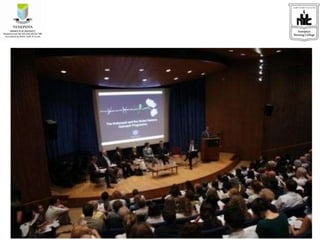
• A Panel discussion is a method of
teaching in which four to eight
persons or students discuss the
assigned topic/ problem/ issues
creatively among themselves in
front of an audience
DEFINITION
• Panel discussion is a discussion in
which a few persons carry out a
conversation in front of an
audience.
• The technique was first used by
HARRY. A. OBER STREET in 1929
• To produce the features for the benefit of a large
group.
• It is a socialised group conversation in which
different points of view are presented.
• Panel discussion stimulus thought and discussion and
clarifies thinking.
• The quick exchange of facts, opinion and plan trends
to develop more critical attitude and better
judgement.
• It can be helpful to stimulate discussion encouraging
thinking and developing group opinion.
• To provide information and new facts.
• To analyze the current problem from
different angle.
• To identify the values.
• To organize for mental recreation.
TYPES
1.PUBLIC PANEL DISCUSSION.
2.EDUCATIONAL PANEL
DISCUSSION
PUBLIC PANEL DISCUSSION
• Public Panel Discussion is
organized for the common man's
problems.
• The public panel discussion is
organized through television
programmes.
• The objectives achieved by public
panel discussion are:
1. To provide factual information
regarding current problems.
2. To determine social values.
3. To recreate the common man.
EDUCATIONAL PANEL
DISCUSSION
• It is used in educational institutions to
provide factual and conceptual
knowledge and clarification of theories
and principles.
The objectives achieve through
educational panel discussions are
as follows:
• 1. To provide factual and
conceptual knowledge.
• 2. To raise awareness of theories and
principles.
• 3. To provide solutions for certain
problems.
A panel discussion consist of 4 types of persons.
It means 4 roles are played in organizing panel
discussion.
Instructor
Moderator
Panellists
Audience
PROCEDURE OF PANEL
DISCUSSION
 In the panel discussion most important role is
of instructor. It is the responsibility of
instructor how, where and when panel
discussion will be organized.
 The schedule of panel discussion is prepared
by him , some times he has to plan rehearsal
also.
INSTRUCTOR
In the discussion moderator has to keep the
discussion on theme and encourages the
interaction among the members.
 He has to summarize and highlight the
discussion more often. The moderator must
have the mastery on the theme or problem of
the discussion.
MODERATOR
 There are 4 to 10 panellists in the discussion.
The members of the panellist sit in a semi circle
before the audience.
The moderator sits in the middle of the
panellist.
The panellist must have the mastery on the
theme of the discussion.
PANELLIST
After the panel discussion ,audience are
allowed to participate and seek clarification.
They can present their points of view and their
experiences regarding the theme or problem,
the panellist attempt to answer the questions of
the audience.
In some situations moderator also tries to
answer the question.
AUDIENCE
ONE chairperson and 4 to 8 speakers sit in
front of the large audience.
• Chairperson opens the meeting ,welcome the
group and then invites the panel speakers to
present their view.
• In panel discussion there is no specific order of
speaking and no set of speeches .
• The chairperson can interact in the form of
questions and simple statement related to topic
to any of the speaker without any order form.
PANEL DISCUSSION
TECHNIQUE
• chairperson opens the discussion for
audience .
• At the end ,after exploration of many
aspects of subject by speaker inviting them
to participate in discussion.
• It is used to college and university level
to organize teaching at reflective level.
• It develops the ability of problem
solving.
• It provides the opportunity to
understand nature problem theme and
giving their point of view logically.
• It develops right type of attitude and
ability to tolerate anti ideas of others.
CHARACTERISTICS OF PANEL
DISCUSSION
•It develops the ability of creative thinking and
to criticize the theme.
•It develops the manners of putting questions
and answering questions.
• This technique encourages social learning.
• The higher cognitive and affective objectives are
achieved .
• It is used to develop the ability of problem
solving and logical thinking.
• It develops the interests and right attitude
towards problem.
ADVANTAGES OF PANEL
DISCUSSION
• It develops the capacity to respect others
idea and feelings and ability of tolerance.
• It provides the opportunity of assimilation of
theme and content.
• There are chances to deviate from theme at
time of discussion, hence the purpose of the
panel discussion technique is not achieved.
• Some members dominate the discussion and
do not provide the opportunities to participate
others in discussion.
• There is possibility to split the group into 2 sub
groups ie. For and against the theme. It does
not maintain the conductive situation of
learning.
DISADVANTAGES OF PANEL
DISCUSSION
• If the panellists belong to different groups, it
may not create appropriate learning situation.
The following suggestions should be taken into
consideration to organize effective panel
discussion..
• There should be rehearsal before the actual
panel discussion.
• The moderator should be matured person and
have the full understanding of theme or
problems. He should have to control over the
situation.
SUGGESTIONS FOR ORGANIZING PANEL
DISCUSSION
• The seating arrangement for the panellists and
audience should be such that every one should
be equal distance. They can observe each other.
• The Moderator should encourage the
constructive discussion among panellists and
audience.
The discussion provides the equal
opportunities in the instructional situation
to every participant. The success of the
panel discussion depend upon the active
participation of the members. All
techniques of higher learning require the
discussion among participants.
CONCLUSION
K.P.NEERAJA, A text book of nursing
education.New Delhi, jaypee bros. Publications
2005,pg;282-283.
• B.T.Basvanthappa,nursingeducation,new
Delhi.Jaypee bros. Publications 2004,pg;403-
405.
• NEELAM KUMARI, A text book of
communication and education technology
jalandhar. S.VIKAS and co,pg;255-256.
BIBLIOGRAPHY

Panel discussion pb bsc anand

  • 2.
    LEARNING OBJECTIVES At theend of the class the student will be able to- Define panel discussion Learn the purpose of panel discussion Discuss the objectives of panel discussion Explain the types of Panel discussion Describe the procedure of panel discussion Enlist the characteristics of panel discussion Explain advantages and disadvantages of panel discussion
  • 3.
    All techniques ofhigher learning require the discussion among the participants. The discussion provides the equal opportunities in the instructional situation to every participant. The interactional technique is the most appropriate in democratic way of life.
  • 4.
    • A Paneldiscussion is a method of teaching in which four to eight persons or students discuss the assigned topic/ problem/ issues creatively among themselves in front of an audience DEFINITION
  • 6.
    • Panel discussionis a discussion in which a few persons carry out a conversation in front of an audience. • The technique was first used by HARRY. A. OBER STREET in 1929
  • 7.
    • To producethe features for the benefit of a large group. • It is a socialised group conversation in which different points of view are presented. • Panel discussion stimulus thought and discussion and clarifies thinking. • The quick exchange of facts, opinion and plan trends to develop more critical attitude and better judgement. • It can be helpful to stimulate discussion encouraging thinking and developing group opinion.
  • 8.
    • To provideinformation and new facts. • To analyze the current problem from different angle. • To identify the values. • To organize for mental recreation.
  • 9.
  • 10.
    PUBLIC PANEL DISCUSSION •Public Panel Discussion is organized for the common man's problems. • The public panel discussion is organized through television programmes.
  • 11.
    • The objectivesachieved by public panel discussion are: 1. To provide factual information regarding current problems. 2. To determine social values. 3. To recreate the common man.
  • 12.
    EDUCATIONAL PANEL DISCUSSION • Itis used in educational institutions to provide factual and conceptual knowledge and clarification of theories and principles.
  • 13.
    The objectives achievethrough educational panel discussions are as follows: • 1. To provide factual and conceptual knowledge. • 2. To raise awareness of theories and principles. • 3. To provide solutions for certain problems.
  • 14.
    A panel discussionconsist of 4 types of persons. It means 4 roles are played in organizing panel discussion. Instructor Moderator Panellists Audience PROCEDURE OF PANEL DISCUSSION
  • 15.
     In thepanel discussion most important role is of instructor. It is the responsibility of instructor how, where and when panel discussion will be organized.  The schedule of panel discussion is prepared by him , some times he has to plan rehearsal also. INSTRUCTOR
  • 16.
    In the discussionmoderator has to keep the discussion on theme and encourages the interaction among the members.  He has to summarize and highlight the discussion more often. The moderator must have the mastery on the theme or problem of the discussion. MODERATOR
  • 17.
     There are4 to 10 panellists in the discussion. The members of the panellist sit in a semi circle before the audience. The moderator sits in the middle of the panellist. The panellist must have the mastery on the theme of the discussion. PANELLIST
  • 18.
    After the paneldiscussion ,audience are allowed to participate and seek clarification. They can present their points of view and their experiences regarding the theme or problem, the panellist attempt to answer the questions of the audience. In some situations moderator also tries to answer the question. AUDIENCE
  • 19.
    ONE chairperson and4 to 8 speakers sit in front of the large audience. • Chairperson opens the meeting ,welcome the group and then invites the panel speakers to present their view. • In panel discussion there is no specific order of speaking and no set of speeches . • The chairperson can interact in the form of questions and simple statement related to topic to any of the speaker without any order form. PANEL DISCUSSION TECHNIQUE
  • 20.
    • chairperson opensthe discussion for audience . • At the end ,after exploration of many aspects of subject by speaker inviting them to participate in discussion.
  • 21.
    • It isused to college and university level to organize teaching at reflective level. • It develops the ability of problem solving. • It provides the opportunity to understand nature problem theme and giving their point of view logically. • It develops right type of attitude and ability to tolerate anti ideas of others. CHARACTERISTICS OF PANEL DISCUSSION
  • 22.
    •It develops theability of creative thinking and to criticize the theme. •It develops the manners of putting questions and answering questions.
  • 23.
    • This techniqueencourages social learning. • The higher cognitive and affective objectives are achieved . • It is used to develop the ability of problem solving and logical thinking. • It develops the interests and right attitude towards problem. ADVANTAGES OF PANEL DISCUSSION
  • 24.
    • It developsthe capacity to respect others idea and feelings and ability of tolerance. • It provides the opportunity of assimilation of theme and content.
  • 25.
    • There arechances to deviate from theme at time of discussion, hence the purpose of the panel discussion technique is not achieved. • Some members dominate the discussion and do not provide the opportunities to participate others in discussion. • There is possibility to split the group into 2 sub groups ie. For and against the theme. It does not maintain the conductive situation of learning. DISADVANTAGES OF PANEL DISCUSSION
  • 26.
    • If thepanellists belong to different groups, it may not create appropriate learning situation.
  • 27.
    The following suggestionsshould be taken into consideration to organize effective panel discussion.. • There should be rehearsal before the actual panel discussion. • The moderator should be matured person and have the full understanding of theme or problems. He should have to control over the situation. SUGGESTIONS FOR ORGANIZING PANEL DISCUSSION
  • 28.
    • The seatingarrangement for the panellists and audience should be such that every one should be equal distance. They can observe each other. • The Moderator should encourage the constructive discussion among panellists and audience.
  • 29.
    The discussion providesthe equal opportunities in the instructional situation to every participant. The success of the panel discussion depend upon the active participation of the members. All techniques of higher learning require the discussion among participants. CONCLUSION
  • 30.
    K.P.NEERAJA, A textbook of nursing education.New Delhi, jaypee bros. Publications 2005,pg;282-283. • B.T.Basvanthappa,nursingeducation,new Delhi.Jaypee bros. Publications 2004,pg;403- 405. • NEELAM KUMARI, A text book of communication and education technology jalandhar. S.VIKAS and co,pg;255-256. BIBLIOGRAPHY