Anatomy
MUSCULAR SYSTEM
NHF COLLEGE OF NURSING,MYSURU
Prepared by:
Prof.Ananda.S
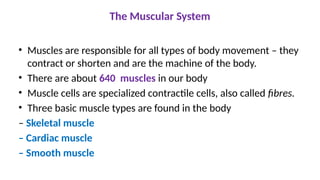
The Muscular System
• Muscles are responsible for all types of body movement – they
contract or shorten and are the machine of the body.
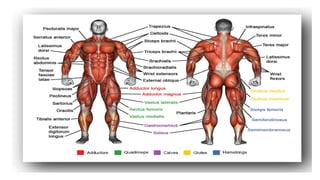
• There are about 640 muscles in our body
• Muscle cells are specialized contractile cells, also called fibres.
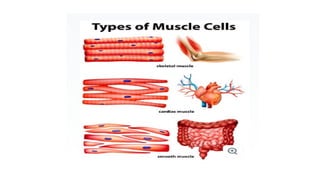
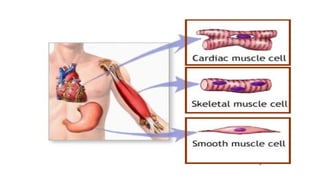
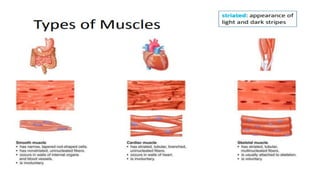
• Three basic muscle types are found in the body
– Skeletal muscle
– Cardiac muscle
– Smooth muscle
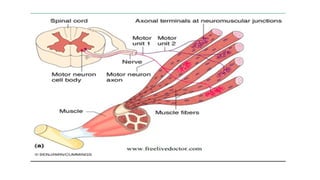
Skeletal Muscle Characteristics
• Most are attached by tendons to bones
• Cells are multinucleate
• Striated – have visible banding- Light and dark Stripes
• Voluntary – subject to conscious control
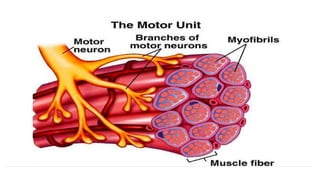
• Cells are surrounded and bundled by connective tissue
Structure of Skeletal Muscle
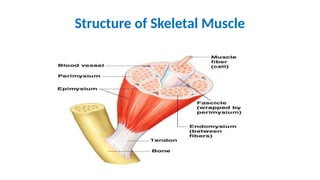
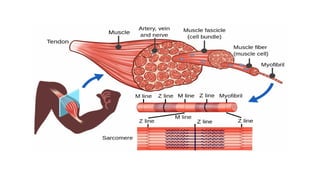
• The entire muscle is covered in a connective tissue sheath
called the epimysium.
• Within the muscle, the cells are collected into separate bundles
called fascicles, and each fascicle is covered in its own
connective tissue sheath called the perimysium.
• Within the fascicles, the individual muscle cells are each
wrapped in a fine connective tissue layer called the
endomysium.
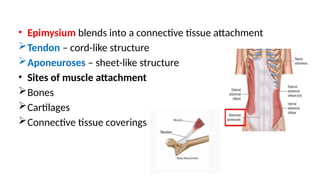
• Epimysium blends into a connective tissue attachment
Tendon – cord-like structure
Aponeuroses – sheet-like structure
• Sites of muscle attachment
Bones
Cartilages
Connective tissue coverings
Microscopic Anatomy of
Skeletal Muscle
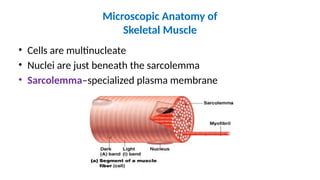
• Cells are multinucleate
• Nuclei are just beneath the sarcolemma
• Sarcolemma–specialized plasma membrane
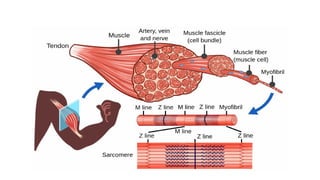
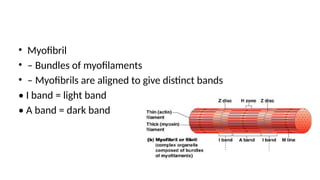
• Myofibril
• – Bundles of myofilaments
• – Myofibrils are aligned to give distinct bands
• I band = light band
• A band = dark band
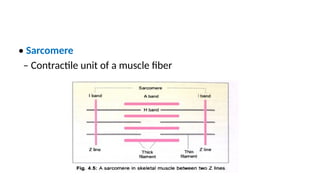
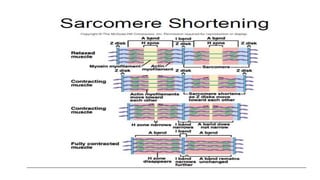
• Sarcomere
– Contractile unit of a muscle fiber
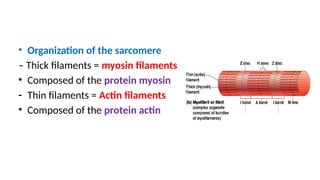
• Organization of the sarcomere
– Thick filaments = myosin filaments
• Composed of the protein myosin
- Thin filaments = Actin filaments
• Composed of the protein actin
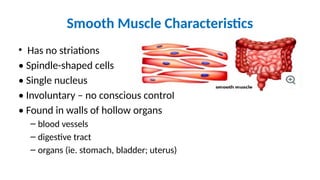
Smooth Muscle Characteristics
• Has no striations
• Spindle-shaped cells
• Single nucleus
• Involuntary – no conscious control
• Found in walls of hollow organs
– blood vessels
– digestive tract
– organs (ie. stomach, bladder; uterus)
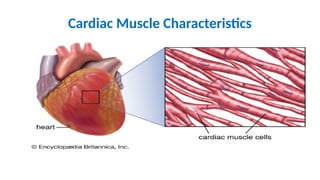
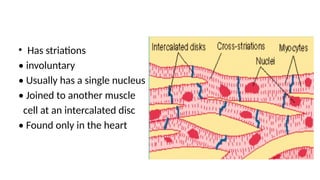
Cardiac Muscle Characteristics
• Has striations
• involuntary
• Usually has a single nucleus
• Joined to another muscle
cell at an intercalated disc
• Found only in the heart
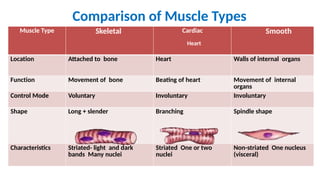
Comparison of Muscle Types
Muscle Type Skeletal Cardiac
Heart
Smooth
Location Attached to bone Heart Walls of internal organs
Function Movement of bone Beating of heart Movement of internal
organs
Control Mode Voluntary Involuntary Involuntary
Shape Long + slender Branching Spindle shape
Characteristics Striated- light and dark
bands Many nuclei
Striated One or two
nuclei
Non-striated One nucleus
(visceral)
Functions of Muscles
Muscle plays four important roles in the body:
• Produces movement
• Maintains posture
• Stabilizes joints
• Generates heat
Lect -I - MUSCULAR SYSTEM- Structure and Types.pptx

  • 1.
    Anatomy MUSCULAR SYSTEM NHF COLLEGEOF NURSING,MYSURU Prepared by: Prof.Ananda.S
  • 3.
    The Muscular System •Muscles are responsible for all types of body movement – they contract or shorten and are the machine of the body. • There are about 640 muscles in our body • Muscle cells are specialized contractile cells, also called fibres. • Three basic muscle types are found in the body – Skeletal muscle – Cardiac muscle – Smooth muscle
  • 7.
    Skeletal Muscle Characteristics •Most are attached by tendons to bones • Cells are multinucleate • Striated – have visible banding- Light and dark Stripes • Voluntary – subject to conscious control • Cells are surrounded and bundled by connective tissue
  • 8.
  • 10.
    Structure of SkeletalMuscle • The entire muscle is covered in a connective tissue sheath called the epimysium. • Within the muscle, the cells are collected into separate bundles called fascicles, and each fascicle is covered in its own connective tissue sheath called the perimysium. • Within the fascicles, the individual muscle cells are each wrapped in a fine connective tissue layer called the endomysium.
  • 11.
    • Epimysium blendsinto a connective tissue attachment Tendon – cord-like structure Aponeuroses – sheet-like structure • Sites of muscle attachment Bones Cartilages Connective tissue coverings
  • 12.
    Microscopic Anatomy of SkeletalMuscle • Cells are multinucleate • Nuclei are just beneath the sarcolemma • Sarcolemma–specialized plasma membrane
  • 13.
    • Myofibril • –Bundles of myofilaments • – Myofibrils are aligned to give distinct bands • I band = light band • A band = dark band
  • 15.
    • Sarcomere – Contractileunit of a muscle fiber
  • 16.
    • Organization ofthe sarcomere – Thick filaments = myosin filaments • Composed of the protein myosin - Thin filaments = Actin filaments • Composed of the protein actin
  • 20.
    Smooth Muscle Characteristics •Has no striations • Spindle-shaped cells • Single nucleus • Involuntary – no conscious control • Found in walls of hollow organs – blood vessels – digestive tract – organs (ie. stomach, bladder; uterus)
  • 21.
  • 22.
    • Has striations •involuntary • Usually has a single nucleus • Joined to another muscle cell at an intercalated disc • Found only in the heart
  • 23.
    Comparison of MuscleTypes Muscle Type Skeletal Cardiac Heart Smooth Location Attached to bone Heart Walls of internal organs Function Movement of bone Beating of heart Movement of internal organs Control Mode Voluntary Involuntary Involuntary Shape Long + slender Branching Spindle shape Characteristics Striated- light and dark bands Many nuclei Striated One or two nuclei Non-striated One nucleus (visceral)
  • 24.
    Functions of Muscles Muscleplays four important roles in the body: • Produces movement • Maintains posture • Stabilizes joints • Generates heat