Judge the Relevance and
Worth of Ideas, Soundness
of Author’s Reasoning, and
the Effectiveness of the
Presentation
Quarter 4 Module 5
Agenda
Review
Discussion
Activity
Review
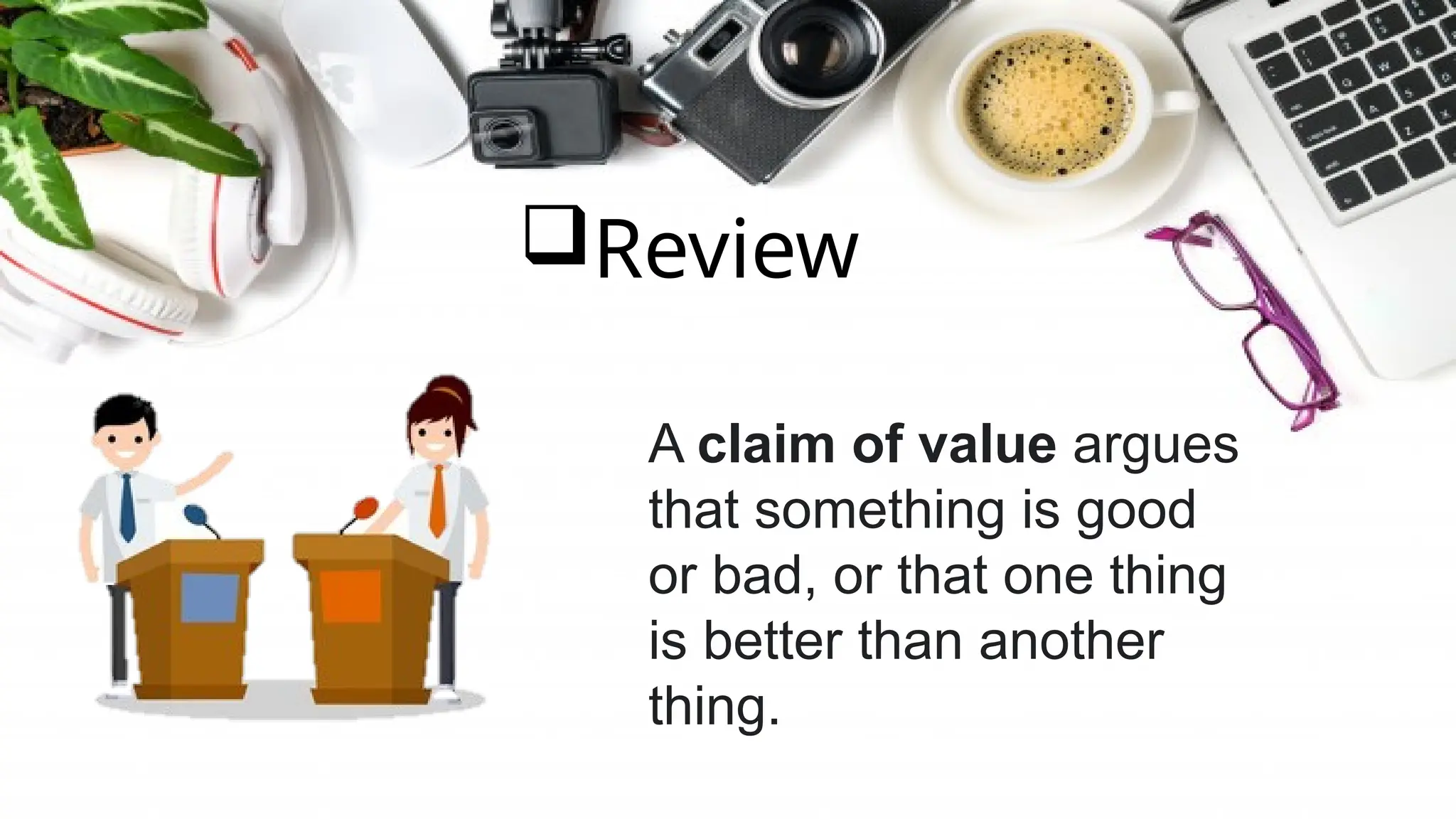
A claim of value argues
that something is good
or bad, or that one thing
is better than another
thing.
Review
OBJECTIVES
1. Judge the
relevance
and worth of
ideas
presented
2. Make
predictions
and
inferences on
the presented
social issues
3. Emphasize
the value of
kindness
among each
other.
Judge the Relevance and
Worth of Ideas, Soundness
of Author’s Reasoning, and
the Effectiveness of the
Presentation
In this lesson, you will understand how to
Panel Discussion
Panel Discussion
is an opportunity for a group to hear
knowledge about a specific issue, or
topic, present information, and discuss
personal views. It may help the audience
further clarify and evaluate their
positions regarding specific issues or
topics being discussed and increase their
understanding of the position of others.
ThePURPOSEof aPANEL DISCUSSIONis to
spark conversation between a group of
experts or industry and thought leaders, so
that the audience can learn from their
discourse and interaction. The panelists
share facts or personal experiences, express
opinions, and answer audience questions.
GUIDELINES FOR CONDUCTING A
PANEL DISCUSSION
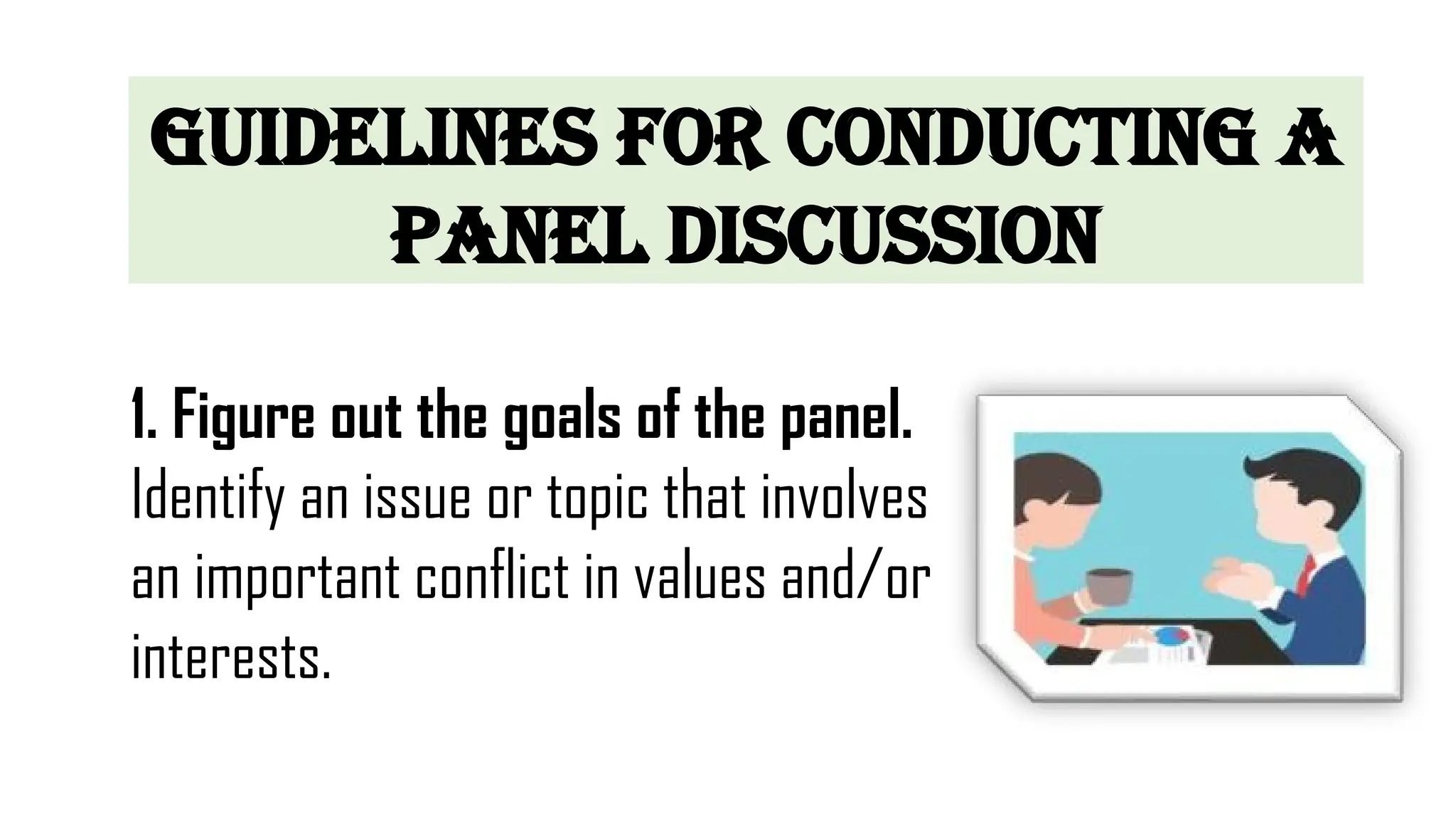
1. Figure out the goals of the panel.
Identify an issue or topic that involves
an important conflict in values and/or
interests.
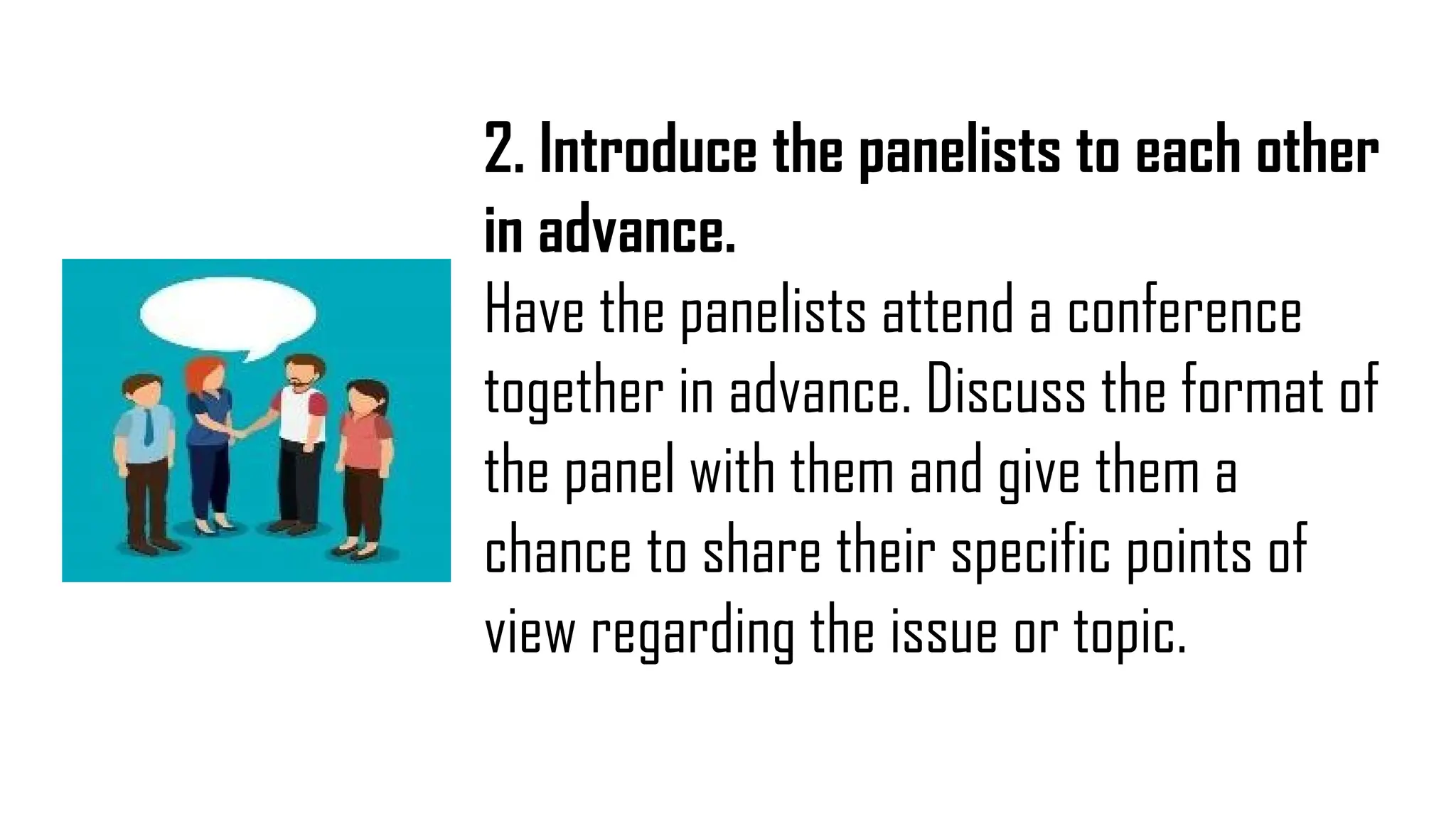
2. Introduce the panelists to each other
in advance.
Have the panelists attend a conference
together in advance. Discuss the format of
the panel with them and give them a
chance to share their specific points of
view regarding the issue or topic.
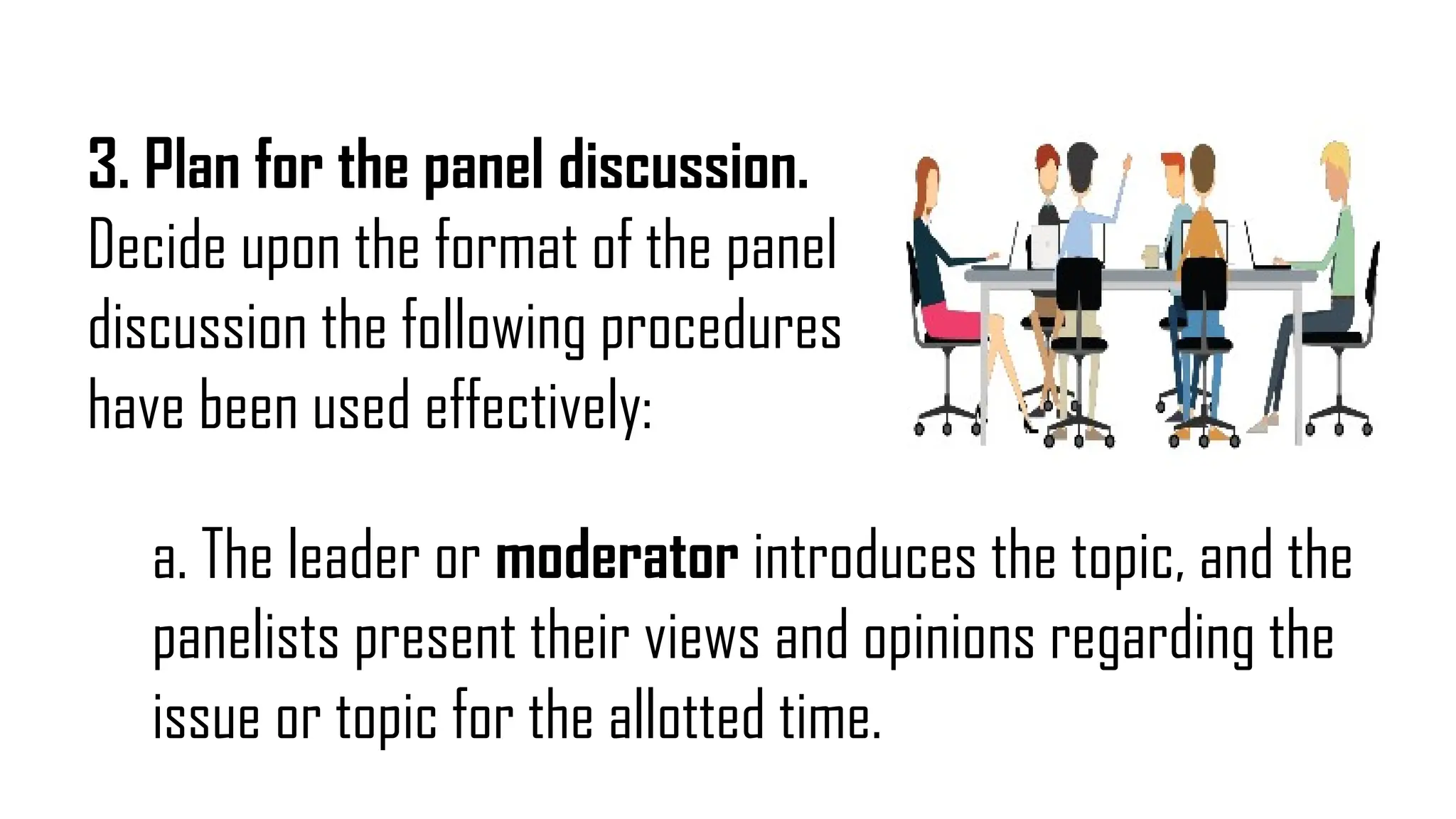
3. Plan for the panel discussion.
Decide upon the format of the panel
discussion the following procedures
have been used effectively:
a. The leader or moderator introduces the topic, and the
panelists present their views and opinions regarding the
issue or topic for the allotted time.
b. The panelists discuss the issue or topic with each other by asking
a question or reacting to the views and opinions of other panel
members.
c. The leader or the moderator closes the discussion and provides
a summary of the panel presentation and discussion.
d. The leader or moderator calls for a forum period in which the
members of the class may participate by addressing questions to
various panel members or by voicing their views and opinions. The
forum period should be conducted by the panel leader or
moderator.
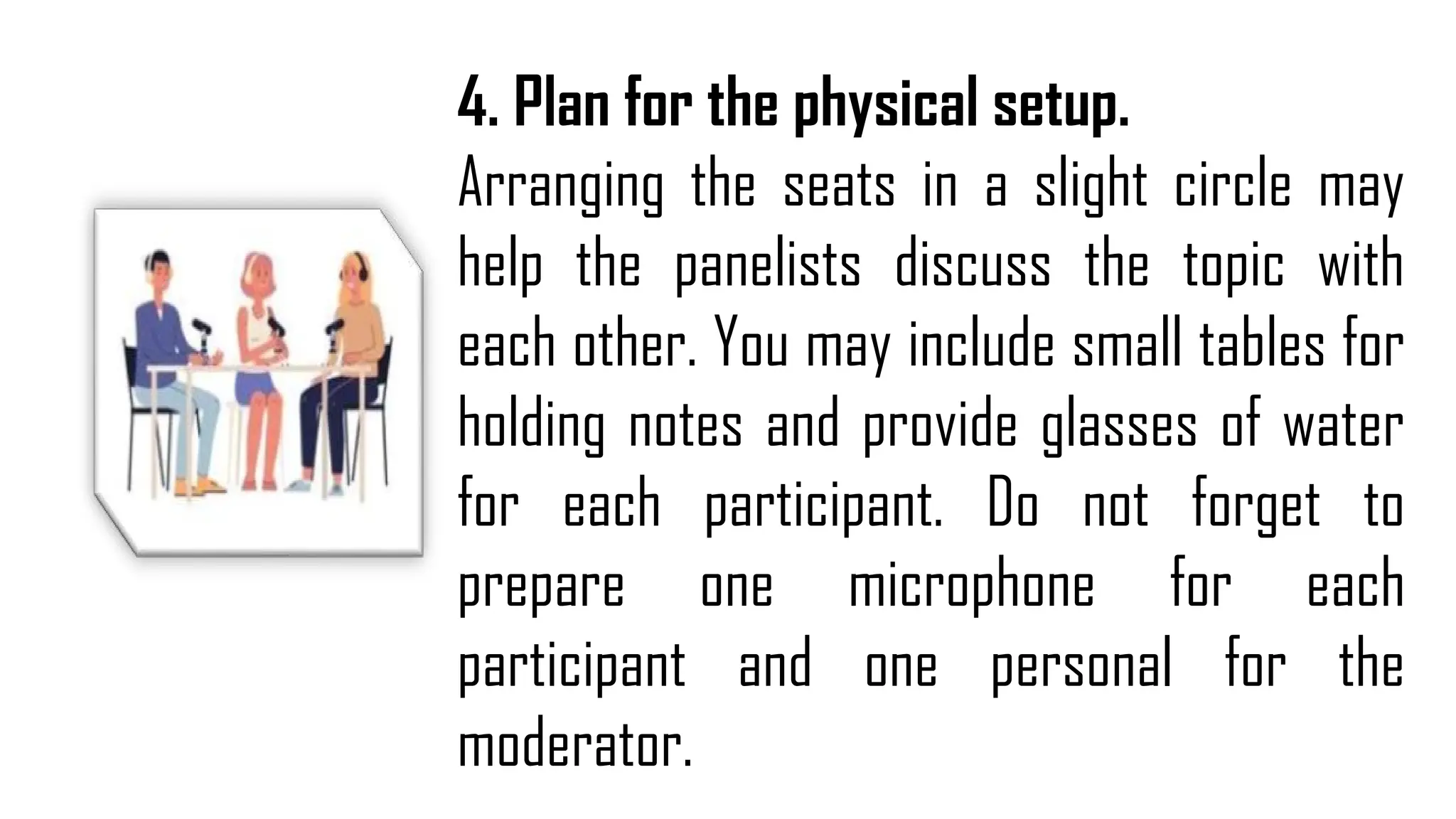
4. Plan for the physical setup.
Arranging the seats in a slight circle may
help the panelists discuss the topic with
each other. You may include small tables for
holding notes and provide glasses of water
for each participant. Do not forget to
prepare one microphone for each
participant and one personal for the
moderator.
5. Decide how long the panel should
last.
The recommended length of the time for
a larger event or the conference is 45-
60 minutes, if it covers particularly the
main or the important and popular topic,
a 90-minute panel will be appropriate.
6. Try to avoid visual presentations.
Avoid using PowerPoint presentations and slides, unless
necessary for the topic. Use only a few numbers of
slides and use diagrams appropriate for the topics.
7. Write questions for the panelists.
Create several open-ended questions
that can lead to the main part of the
discussion and their expertise. Also,
anticipate the participation of the
audience through a question-and answer
forum.
Moderating a
Panel Discussion
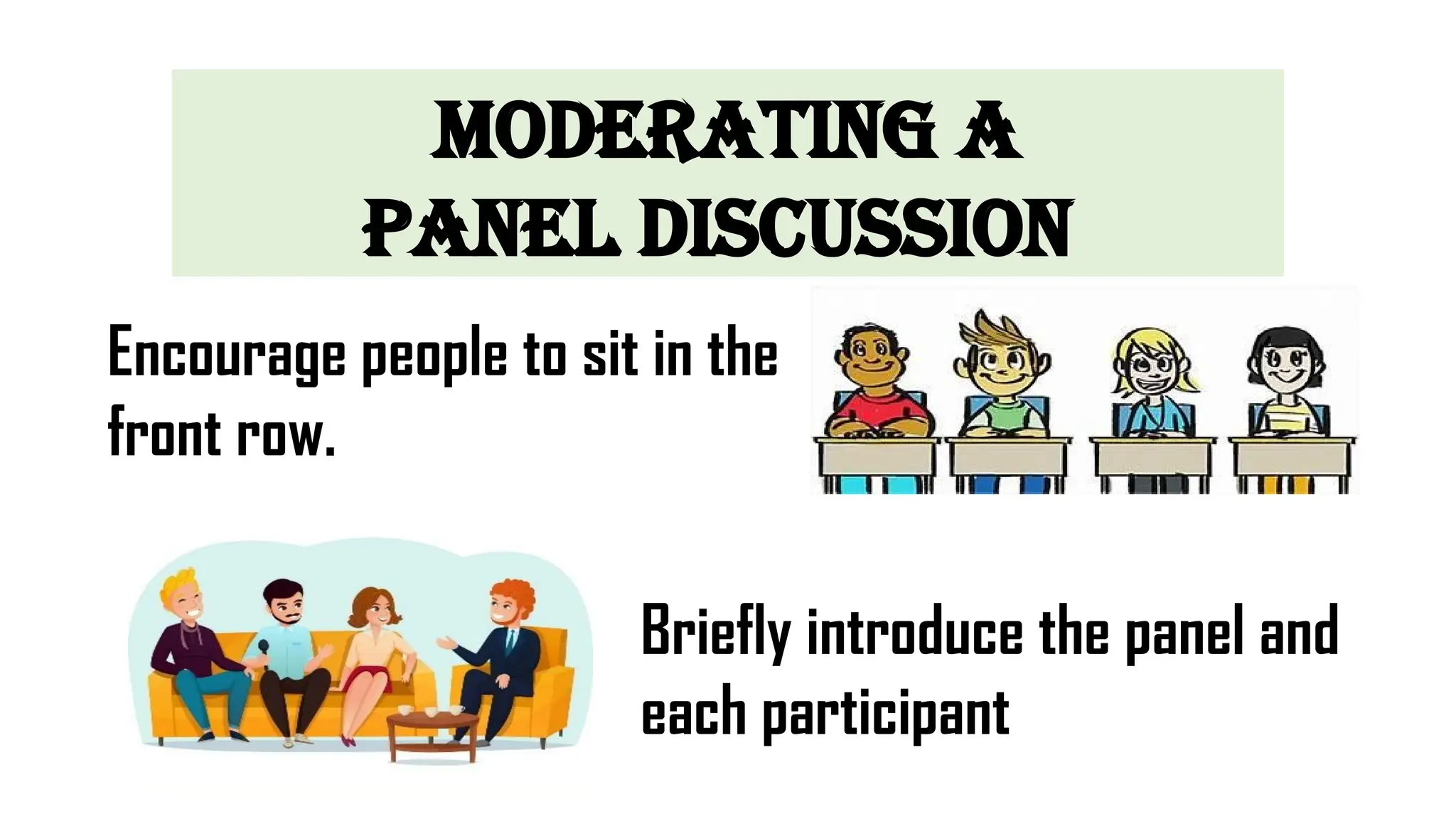
Encourage people to sit in the
front row.
Briefly introduce the panel and
each participant
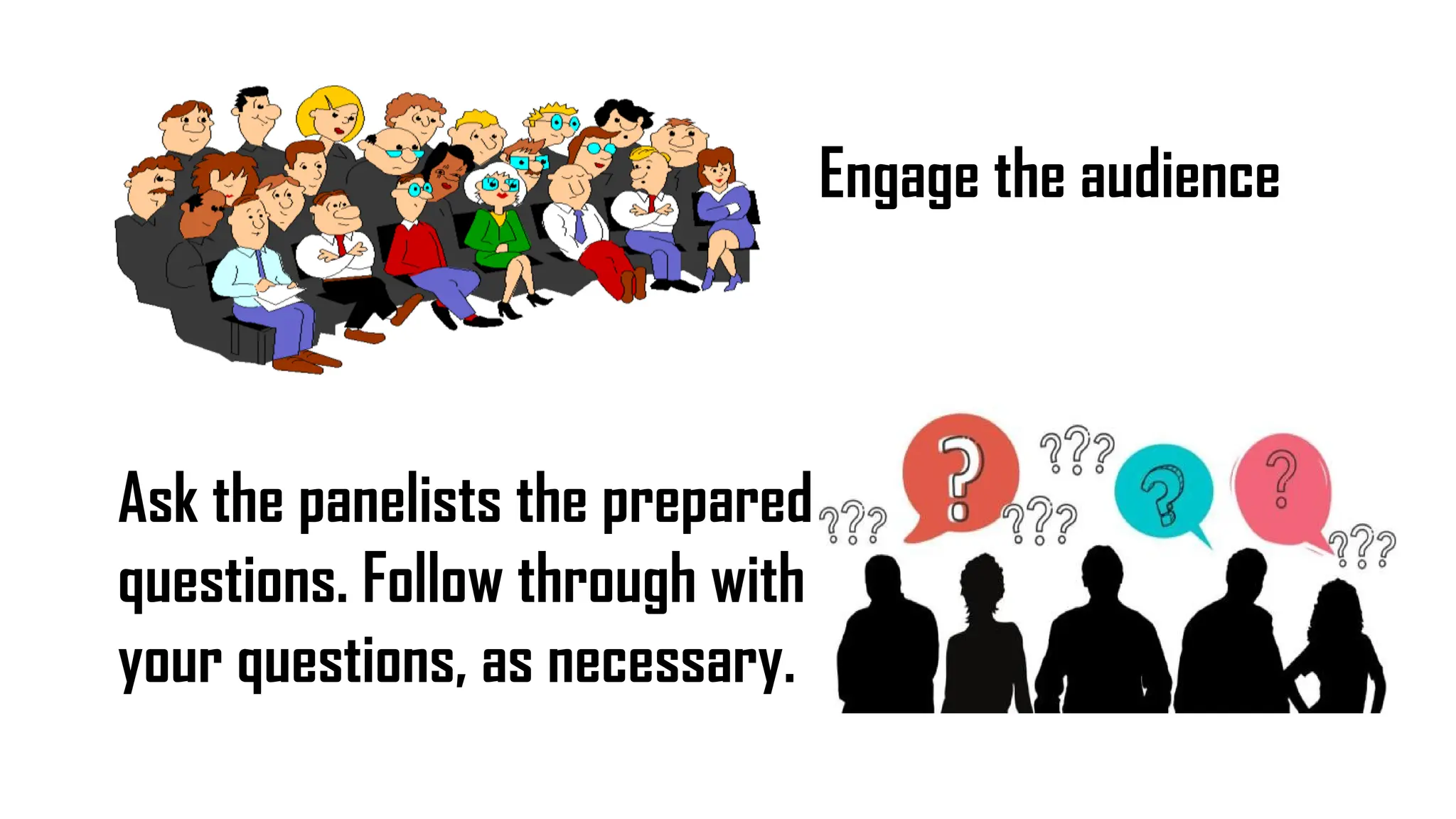
Engage the audience
Ask the panelists the prepared
questions. Follow through with
your questions, as necessary.
Get a timekeeper.
Thank everyone involved.
THE END
Responsibilities
of the Instructor
1. Identify the participants and identify the issues or topics
upon which to base a panel discussion.
2. Ensure that all panelists and moderators are familiar
with the procedures for a panel discussion in advance that
they will be able to fulfill the responsibilities of their roles.
3. Assist panelists and participants in
preparation for the discussion by directing
them to various source materials,
authorities in the field.
4. Help participants to understand the need
for fair procedures in discussing an issue or
topic.
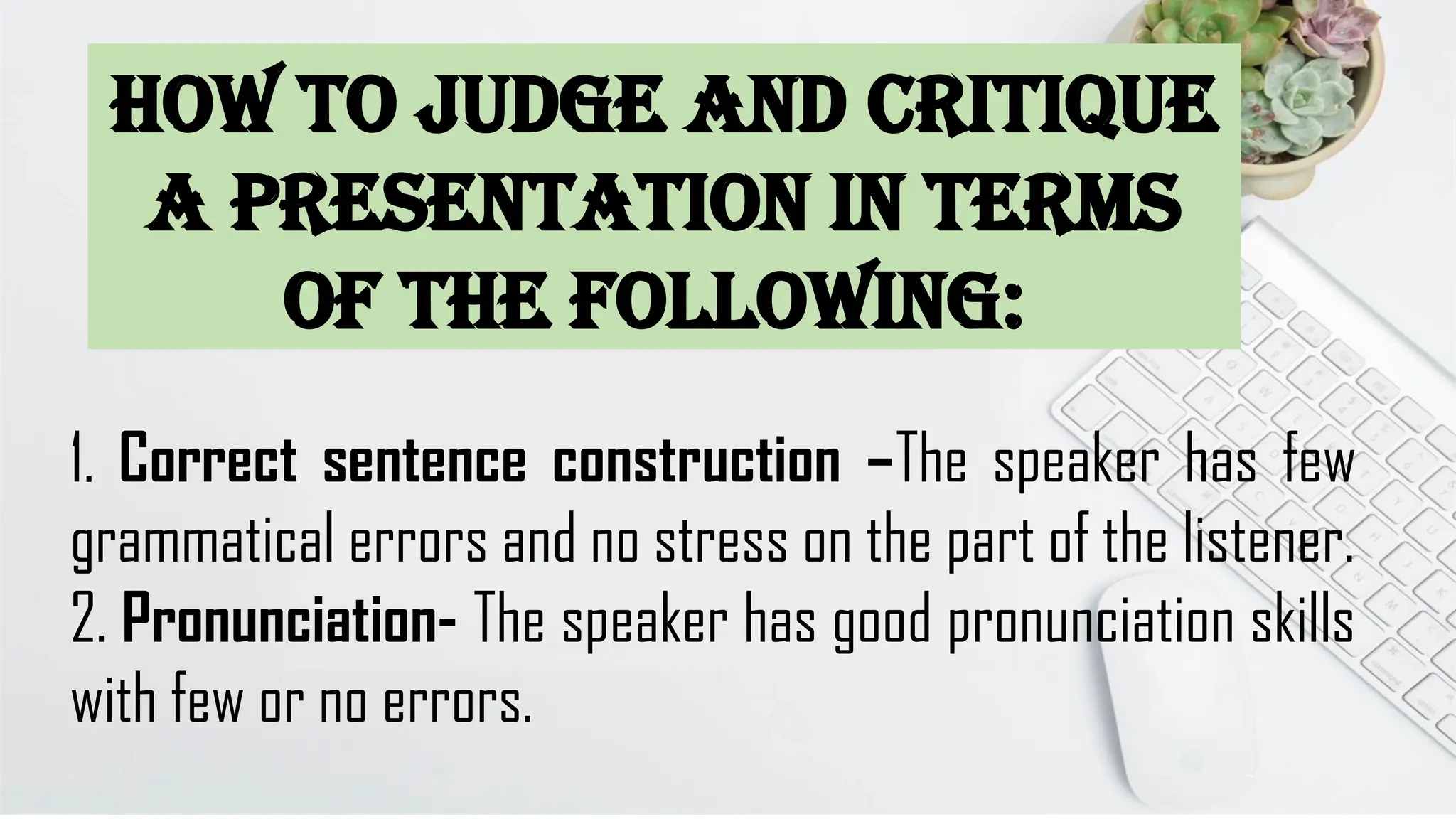
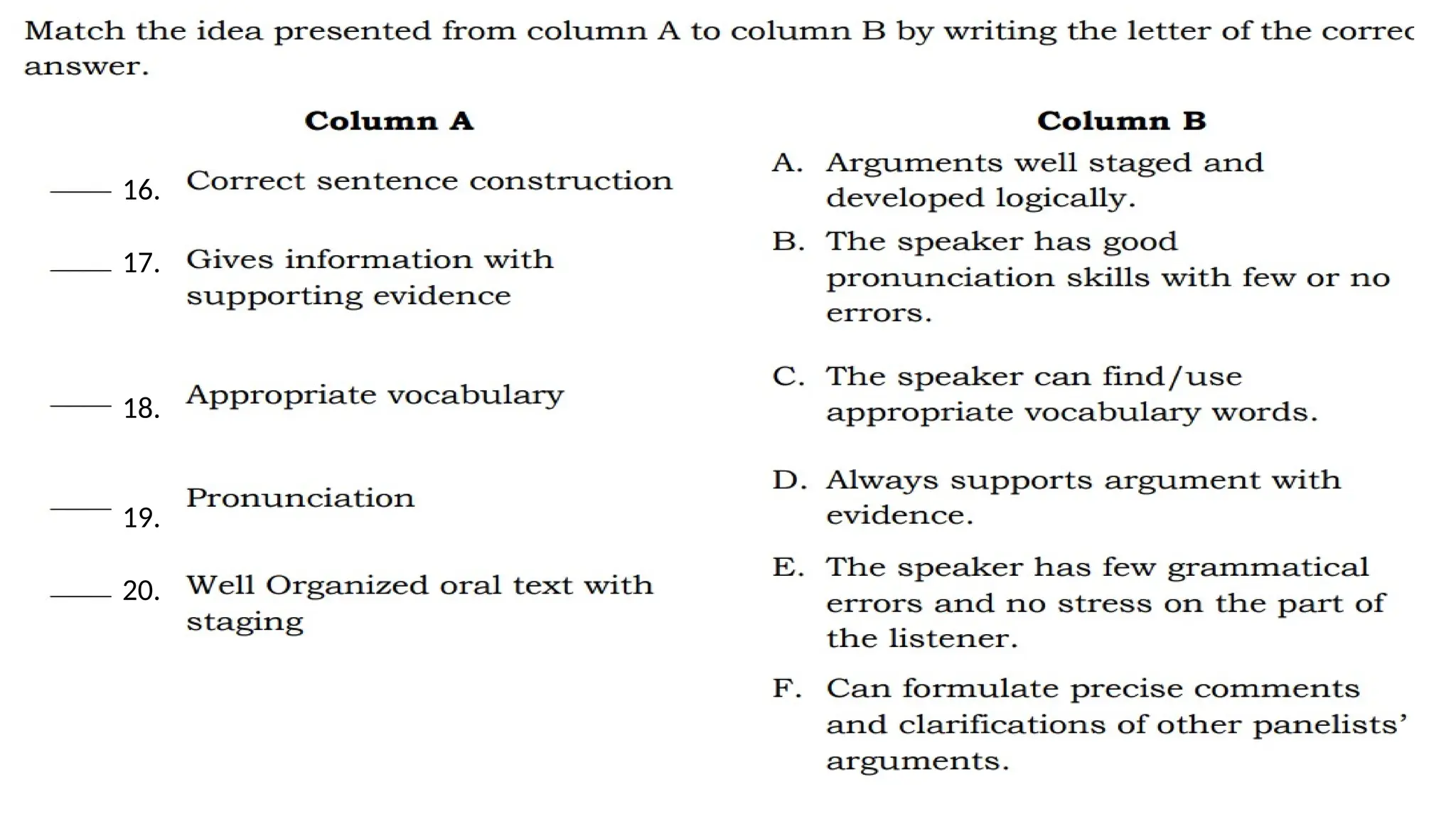
1. Correct sentence construction –The speaker has few
grammatical errors and no stress on the part of the listener.
2. Pronunciation- The speaker has good pronunciation skills
with few or no errors.
How to judge and critique
a presentation in terms
of the following:
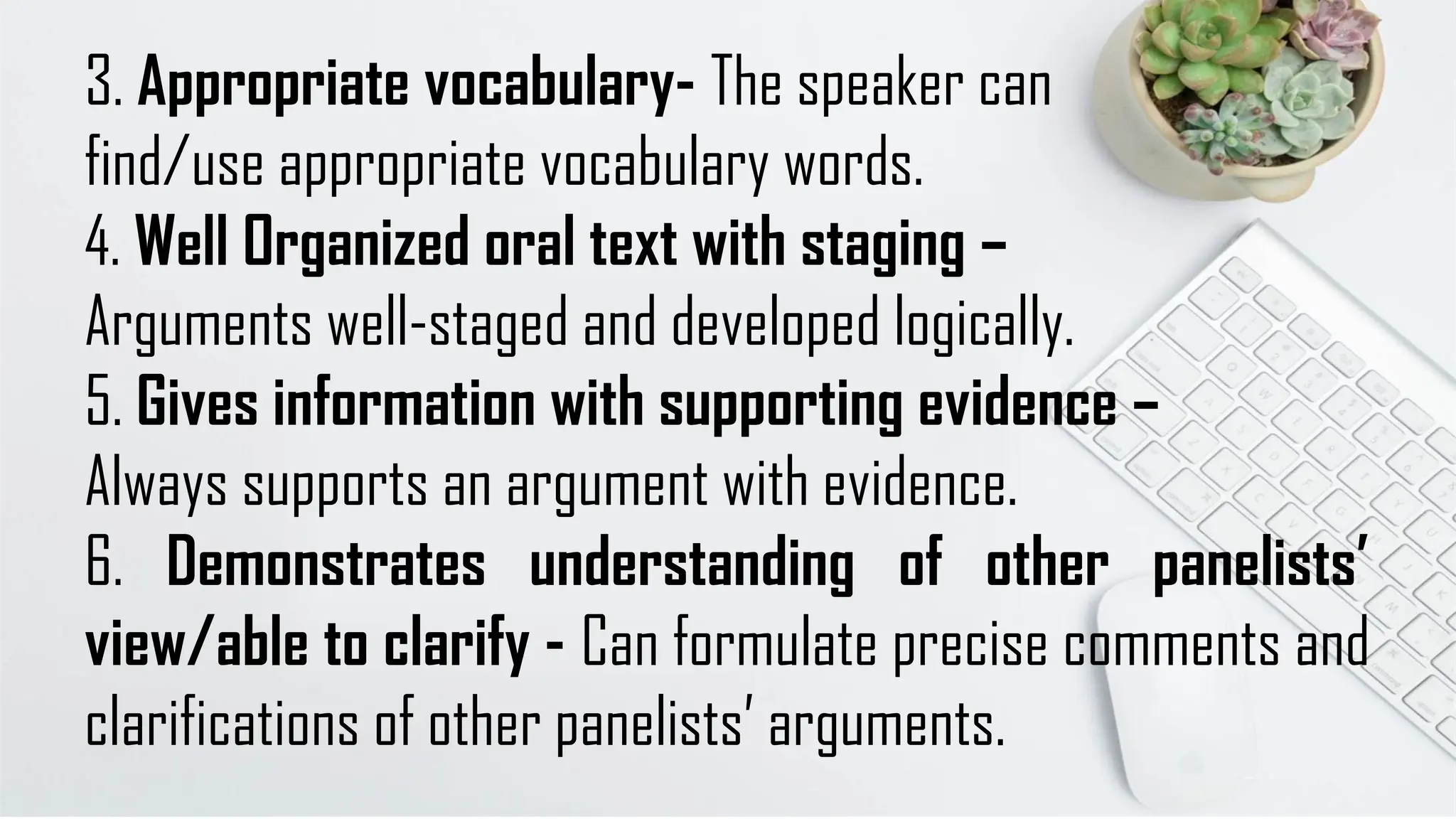
3. Appropriate vocabulary- The speaker can
find/use appropriate vocabulary words.
4. Well Organized oral text with staging –
Arguments well-staged and developed logically.
5. Gives information with supporting evidence –
Always supports an argument with evidence.
6. Demonstrates understanding of other panelists’
view/able to clarify - Can formulate precise comments and
clarifications of other panelists’ arguments.
QUIZ #4
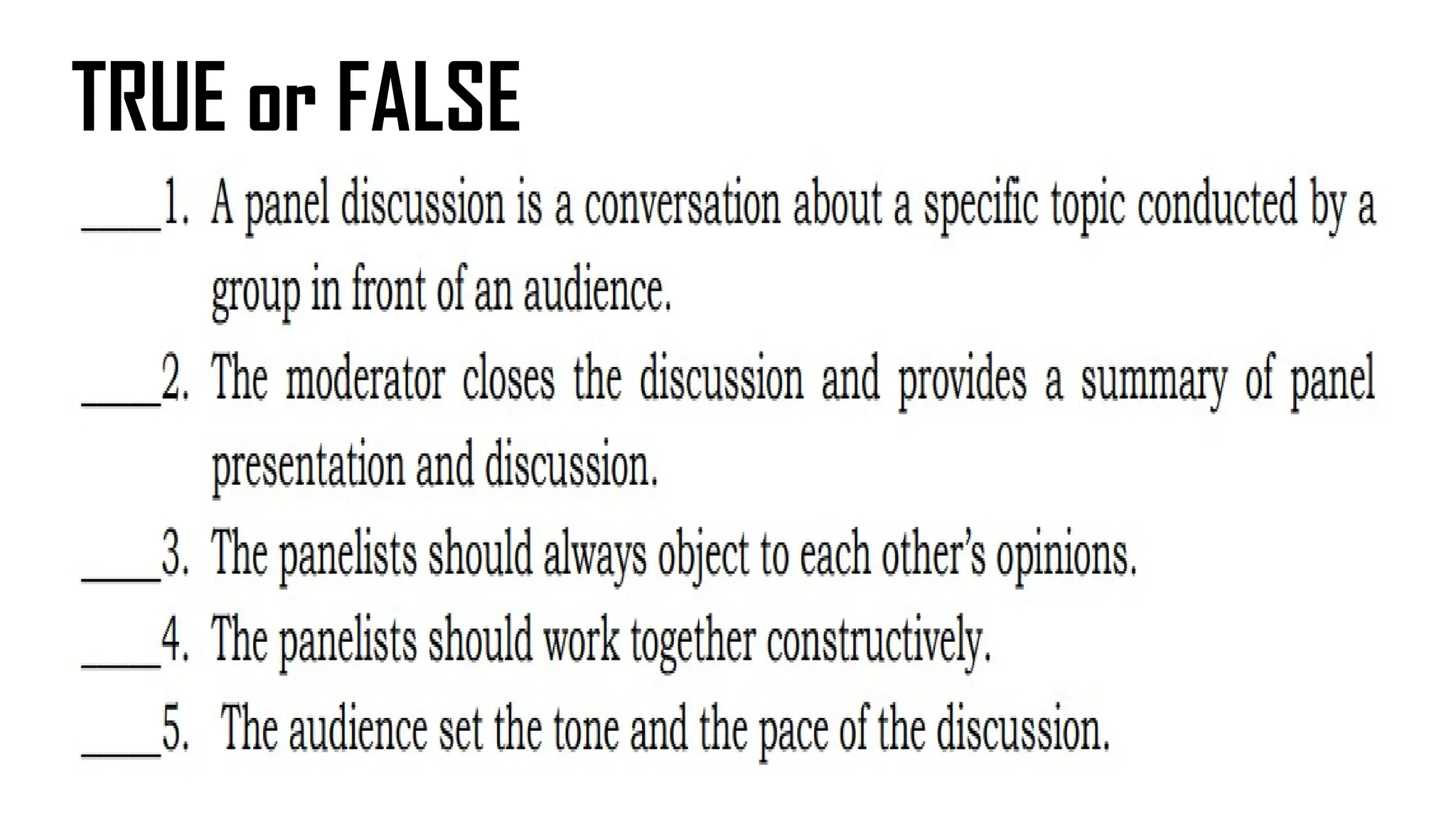
TRUE or FALSE
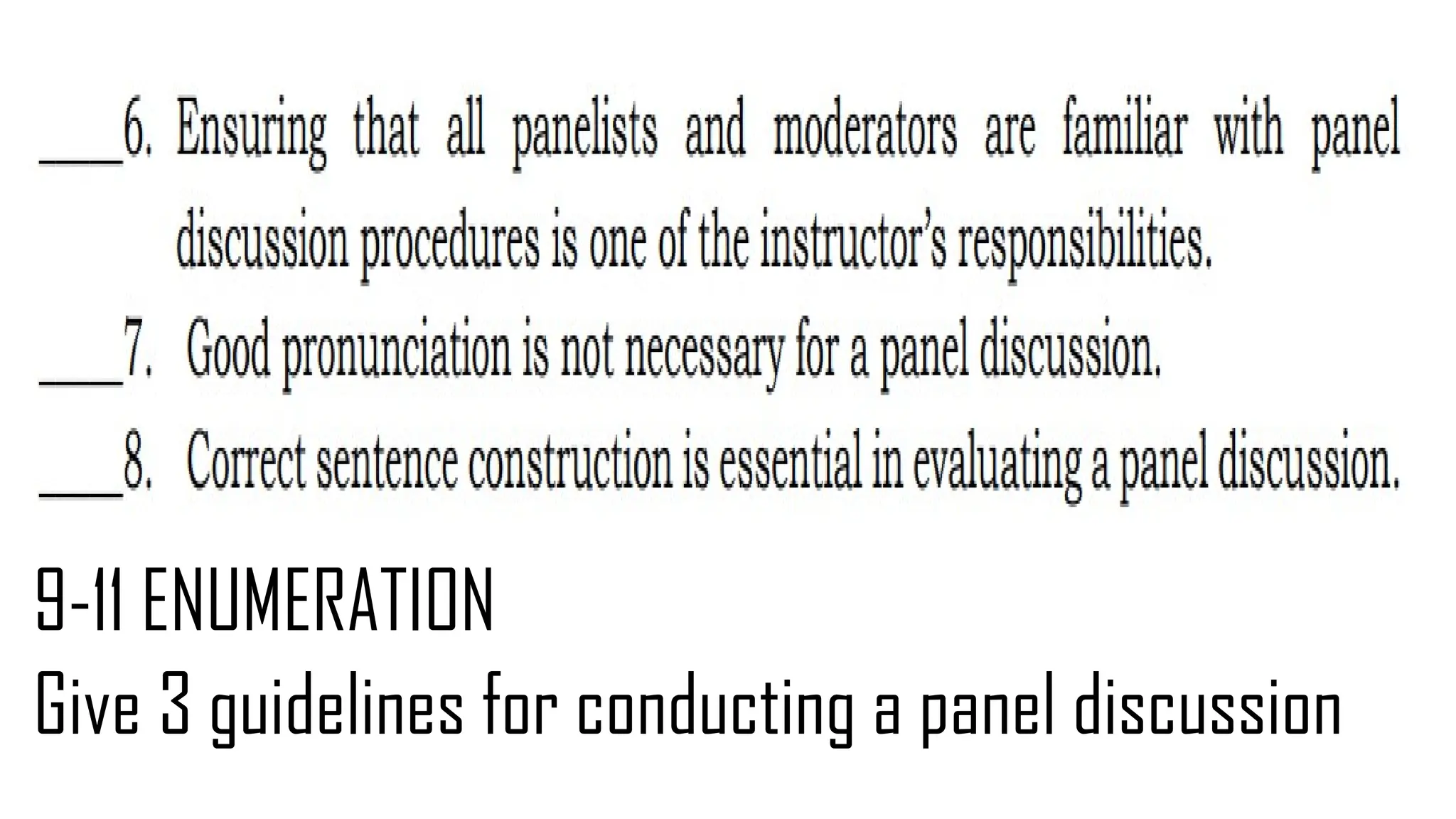
9-11 ENUMERATION
Give 3 guidelines for conducting a panel discussion
12.
13.
14.
15.
16.
17.
18.
19.
20.
Q4 M4.Panel Discussion.pptx English 3 2024

Q4 M4.Panel Discussion.pptx English 3 2024

  • 1.
    Judge the Relevanceand Worth of Ideas, Soundness of Author’s Reasoning, and the Effectiveness of the Presentation Quarter 4 Module 5
  • 2.
  • 3.
    Review A claim ofvalue argues that something is good or bad, or that one thing is better than another thing.
  • 4.
  • 5.
    OBJECTIVES 1. Judge the relevance andworth of ideas presented 2. Make predictions and inferences on the presented social issues 3. Emphasize the value of kindness among each other.
  • 6.
    Judge the Relevanceand Worth of Ideas, Soundness of Author’s Reasoning, and the Effectiveness of the Presentation In this lesson, you will understand how to
  • 7.
  • 8.
    Panel Discussion is anopportunity for a group to hear knowledge about a specific issue, or topic, present information, and discuss personal views. It may help the audience further clarify and evaluate their positions regarding specific issues or topics being discussed and increase their understanding of the position of others.
  • 9.
    ThePURPOSEof aPANEL DISCUSSIONisto spark conversation between a group of experts or industry and thought leaders, so that the audience can learn from their discourse and interaction. The panelists share facts or personal experiences, express opinions, and answer audience questions.
  • 10.
    GUIDELINES FOR CONDUCTINGA PANEL DISCUSSION 1. Figure out the goals of the panel. Identify an issue or topic that involves an important conflict in values and/or interests.
  • 11.
    2. Introduce thepanelists to each other in advance. Have the panelists attend a conference together in advance. Discuss the format of the panel with them and give them a chance to share their specific points of view regarding the issue or topic.
  • 12.
    3. Plan forthe panel discussion. Decide upon the format of the panel discussion the following procedures have been used effectively: a. The leader or moderator introduces the topic, and the panelists present their views and opinions regarding the issue or topic for the allotted time.
  • 13.
    b. The panelistsdiscuss the issue or topic with each other by asking a question or reacting to the views and opinions of other panel members. c. The leader or the moderator closes the discussion and provides a summary of the panel presentation and discussion. d. The leader or moderator calls for a forum period in which the members of the class may participate by addressing questions to various panel members or by voicing their views and opinions. The forum period should be conducted by the panel leader or moderator.
  • 14.
    4. Plan forthe physical setup. Arranging the seats in a slight circle may help the panelists discuss the topic with each other. You may include small tables for holding notes and provide glasses of water for each participant. Do not forget to prepare one microphone for each participant and one personal for the moderator.
  • 15.
    5. Decide howlong the panel should last. The recommended length of the time for a larger event or the conference is 45- 60 minutes, if it covers particularly the main or the important and popular topic, a 90-minute panel will be appropriate.
  • 16.
    6. Try toavoid visual presentations. Avoid using PowerPoint presentations and slides, unless necessary for the topic. Use only a few numbers of slides and use diagrams appropriate for the topics.
  • 17.
    7. Write questionsfor the panelists. Create several open-ended questions that can lead to the main part of the discussion and their expertise. Also, anticipate the participation of the audience through a question-and answer forum.
  • 18.
    Moderating a Panel Discussion Encouragepeople to sit in the front row. Briefly introduce the panel and each participant
  • 19.
    Engage the audience Askthe panelists the prepared questions. Follow through with your questions, as necessary.
  • 20.
    Get a timekeeper. Thankeveryone involved. THE END
  • 21.
    Responsibilities of the Instructor 1.Identify the participants and identify the issues or topics upon which to base a panel discussion. 2. Ensure that all panelists and moderators are familiar with the procedures for a panel discussion in advance that they will be able to fulfill the responsibilities of their roles.
  • 22.
    3. Assist panelistsand participants in preparation for the discussion by directing them to various source materials, authorities in the field. 4. Help participants to understand the need for fair procedures in discussing an issue or topic.
  • 23.
    1. Correct sentenceconstruction –The speaker has few grammatical errors and no stress on the part of the listener. 2. Pronunciation- The speaker has good pronunciation skills with few or no errors. How to judge and critique a presentation in terms of the following:
  • 24.
    3. Appropriate vocabulary-The speaker can find/use appropriate vocabulary words. 4. Well Organized oral text with staging – Arguments well-staged and developed logically. 5. Gives information with supporting evidence – Always supports an argument with evidence. 6. Demonstrates understanding of other panelists’ view/able to clarify - Can formulate precise comments and clarifications of other panelists’ arguments.
  • 25.
  • 26.
  • 27.
    9-11 ENUMERATION Give 3guidelines for conducting a panel discussion
  • 28.
  • 29.
  • 30.