










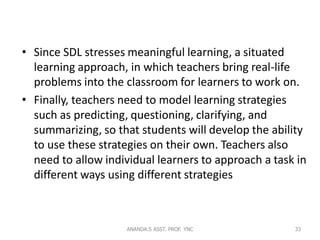
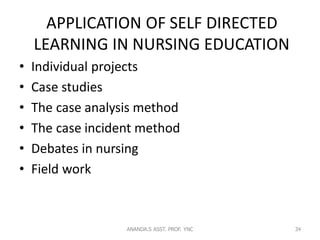


Self-directed learning involves learners taking initiative and responsibility for planning, implementing, and evaluating their own learning. It is a process where the learner diagnoses their own learning needs, formulates goals, identifies resources, selects and implements strategies, and evaluates outcomes. Some key benefits of self-directed learning include increased self-esteem, improved knowledge and learning skills, enhanced thinking ability, self-awareness, and decision making skills. For self-directed learning to be effective, learners must develop skills like goal setting, processing information, decision making, self-awareness, and content competence. Teachers can encourage self-directed learning by establishing frameworks that give students choices and focusing on meaningful, real-world problems.


