Cystic Fibrosis (CF)
Dr P Mayurathan
Cystic Fibrosis (CF)
• Inherited autosomal recessive disorder
• It’s a disease of exocrine gland function involves multiple organ
systems mainly
– Recurrent chronic respiratory infections
– Pancreatic enzyme insufficiency
• Pulmonary involvement occurs in 90% of patients and end-stage lung
disease is the principal cause of death.
• Gene mutation on the long arm of chromosome 7 in the region of
7q31.2
• Commonest abnormality is specific deletion at position 508 in the
animoacid sequence (∆F508)
• Results in a defect in the Cystic Fibrosis Transmembrane
conductance regulator (CFTR) gene
• CFTR is a Chloride channel and it is regulated by cAMP
• Mutations in the CFTR gene result in abnormalities of Chloride
transport across epithelial cells on mucosal surfaces
Pathophysiology of Cystic Fibrosis
• Defective CFTR results in
– decreased excretion of Chloride
– increased reabsorption of Sodium and water across epithelial
cells
• As a result less excretion of salt and water and increased viscosity of
secretions such as secretions in the
– Respiratory tract
– Pancreas
– GI tract
• This mucus is difficult to clear and stickier to bacteria and promotes
infection and inflammation
Pathophysiology of Cystic Fibrosis
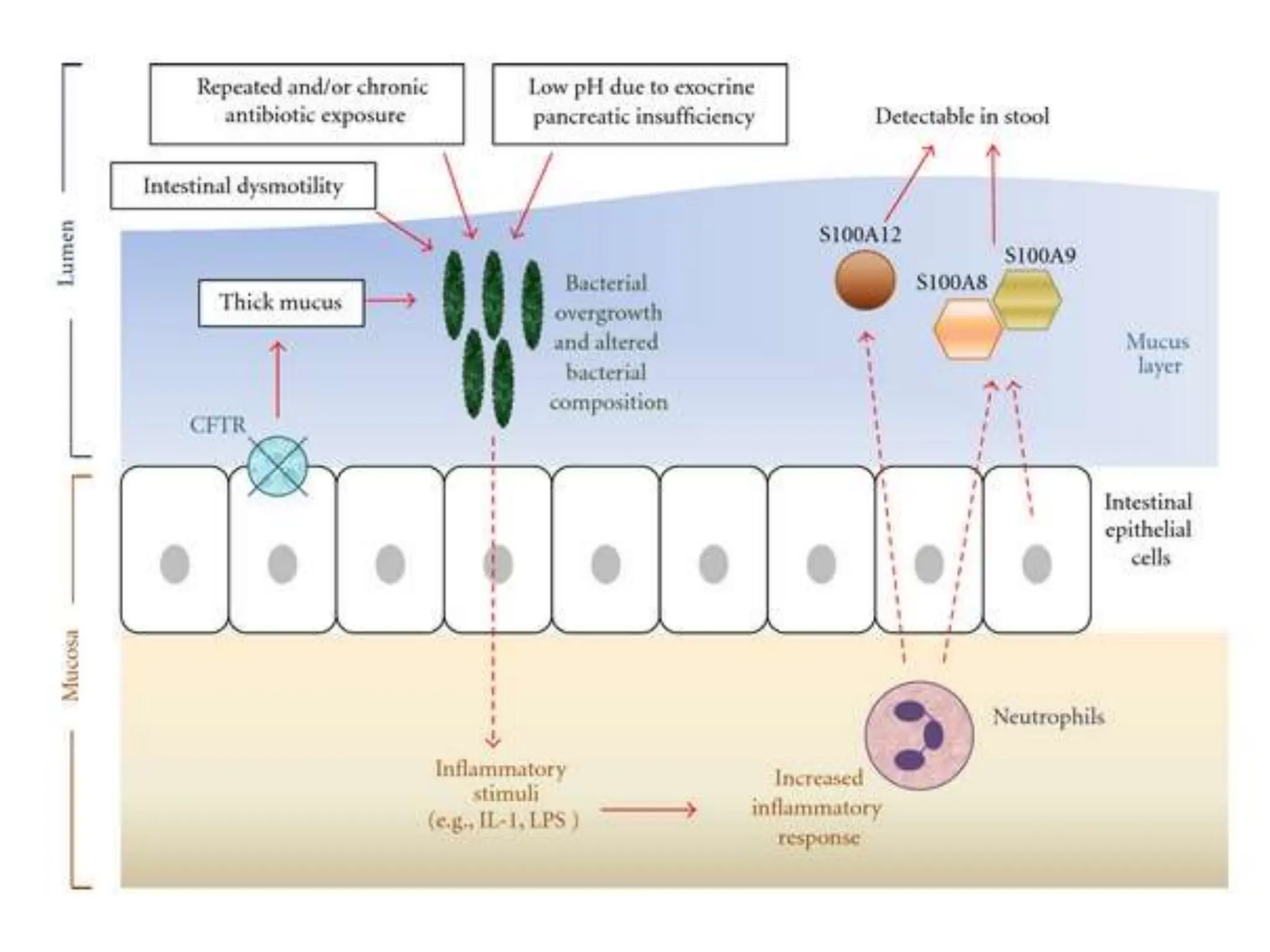
• Defective CFTR in intestine leads to;
– reduced chloride secretion and water into the gut
– increased viscosity of the intestinal content
• This may result in meconium ileus and intestinal obstruction
Pathophysiology of Cystic Fibrosis
• It also affects the mucociliary clearance and infertility due to;
– Congenital absence of vas deferens, undescended testicles,
hydroceles or reduced motility of sperms in males
– Amenorrhea or problem with ovarian movement in females
Pathophysiology of Cystic Fibrosis
• The pancreatic insufficiency is due to
– Reduced pancreatic bicarbonate secretion leading to sub optimal
pH for pancreatic enzyme action
– In addition, it prevents the pancreatic enzymes to reach the gut
and auto-digestion of the pancreas leads to pancreatitis
• This may result in malabsorption, steatorrhoea and weight loss
Pathophysiology of Cystic Fibrosis
• Defective CFTR in sweat glands causes;
– Increased excretion of Chloride and Sodium
• Leads high sodium concentration in sweat
Pathophysiology of Cystic Fibrosis
Clinical Features of Cystic Fibrosis
• Frequent respiratory tract infections
• COPD
• Bronchiectasis
• Sinusitis
• Spontaneous pneumothorax
– All leads to respirtory failure and cor-pulmonale
• Steatorrhoea
• Malnutrition
• Meconium ileus/intestinal obstruction
• Cirrhosis
• GI malignancies
• Infertility
Diagnosis of Cystic Fibrosis
• Diagnosis include either positive genetic testing or positive sweat
Sodium (>60 mEq/L) and 1 of the following:
– Typical chronic obstructive pulmonary disease
– Documented exocrine pancreatic insufficiency
– Positive family history (usually affected sibling)
Treatment of Cystic Fibrosis
• No cure or prevention
• Average lifespan is around 35 years
• Death is commonly due to pulmonary related problems
• General
– Stop smoking
– Vaccines – Pneumococcal and influenza
– Nutritional supplement with pancreatic enzymes and vitamins
• Oxygen
• Antibiotics
• Chest physiotherapy and postural drainage
• Non-invasive ventilation (NIV)
• Genetic therapy
Treatment of Cystic Fibrosis
Cystic Fibrosis and its  Pathophysiology

Cystic Fibrosis and its Pathophysiology

  • 1.
  • 2.
    Cystic Fibrosis (CF) •Inherited autosomal recessive disorder • It’s a disease of exocrine gland function involves multiple organ systems mainly – Recurrent chronic respiratory infections – Pancreatic enzyme insufficiency • Pulmonary involvement occurs in 90% of patients and end-stage lung disease is the principal cause of death.
  • 3.
    • Gene mutationon the long arm of chromosome 7 in the region of 7q31.2 • Commonest abnormality is specific deletion at position 508 in the animoacid sequence (∆F508) • Results in a defect in the Cystic Fibrosis Transmembrane conductance regulator (CFTR) gene • CFTR is a Chloride channel and it is regulated by cAMP • Mutations in the CFTR gene result in abnormalities of Chloride transport across epithelial cells on mucosal surfaces Pathophysiology of Cystic Fibrosis
  • 4.
    • Defective CFTRresults in – decreased excretion of Chloride – increased reabsorption of Sodium and water across epithelial cells • As a result less excretion of salt and water and increased viscosity of secretions such as secretions in the – Respiratory tract – Pancreas – GI tract • This mucus is difficult to clear and stickier to bacteria and promotes infection and inflammation Pathophysiology of Cystic Fibrosis
  • 5.
  • 6.
    • Defective CFTRin intestine leads to; – reduced chloride secretion and water into the gut – increased viscosity of the intestinal content • This may result in meconium ileus and intestinal obstruction Pathophysiology of Cystic Fibrosis
  • 7.
    • It alsoaffects the mucociliary clearance and infertility due to; – Congenital absence of vas deferens, undescended testicles, hydroceles or reduced motility of sperms in males – Amenorrhea or problem with ovarian movement in females Pathophysiology of Cystic Fibrosis
  • 8.
    • The pancreaticinsufficiency is due to – Reduced pancreatic bicarbonate secretion leading to sub optimal pH for pancreatic enzyme action – In addition, it prevents the pancreatic enzymes to reach the gut and auto-digestion of the pancreas leads to pancreatitis • This may result in malabsorption, steatorrhoea and weight loss Pathophysiology of Cystic Fibrosis
  • 10.
    • Defective CFTRin sweat glands causes; – Increased excretion of Chloride and Sodium • Leads high sodium concentration in sweat Pathophysiology of Cystic Fibrosis
  • 11.
    Clinical Features ofCystic Fibrosis • Frequent respiratory tract infections • COPD • Bronchiectasis • Sinusitis • Spontaneous pneumothorax – All leads to respirtory failure and cor-pulmonale • Steatorrhoea • Malnutrition • Meconium ileus/intestinal obstruction • Cirrhosis • GI malignancies • Infertility
  • 13.
    Diagnosis of CysticFibrosis • Diagnosis include either positive genetic testing or positive sweat Sodium (>60 mEq/L) and 1 of the following: – Typical chronic obstructive pulmonary disease – Documented exocrine pancreatic insufficiency – Positive family history (usually affected sibling)
  • 14.
    Treatment of CysticFibrosis • No cure or prevention • Average lifespan is around 35 years • Death is commonly due to pulmonary related problems
  • 15.
    • General – Stopsmoking – Vaccines – Pneumococcal and influenza – Nutritional supplement with pancreatic enzymes and vitamins • Oxygen • Antibiotics • Chest physiotherapy and postural drainage • Non-invasive ventilation (NIV) • Genetic therapy Treatment of Cystic Fibrosis