Download as PDF, PPTX
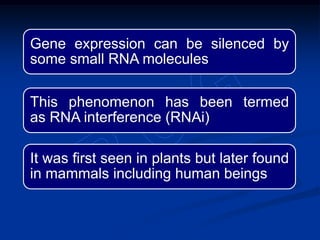
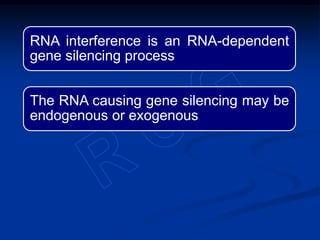
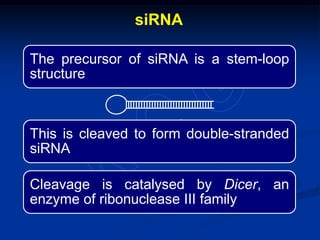
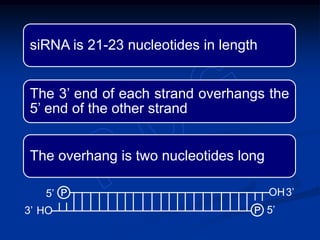
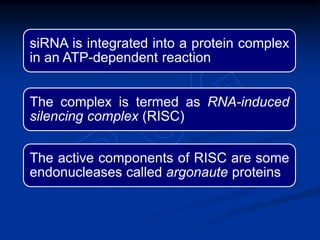
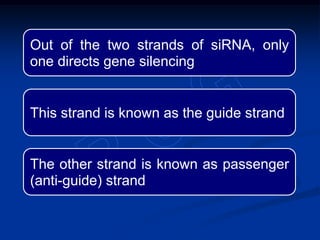
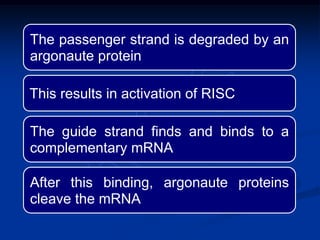

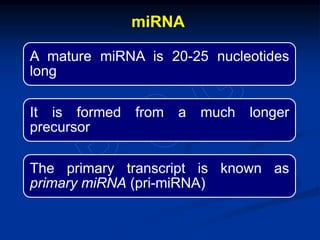
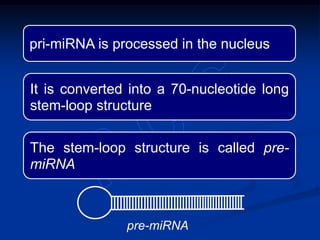
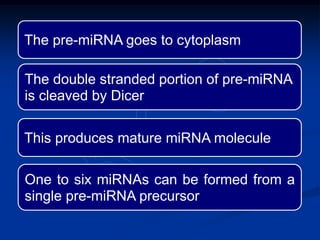
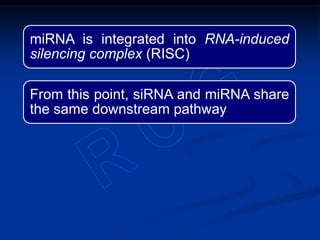
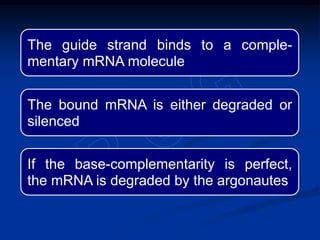
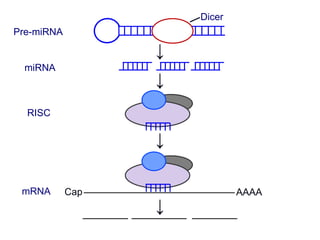
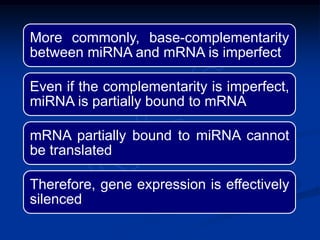
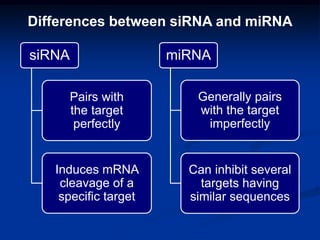
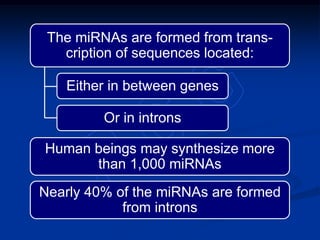
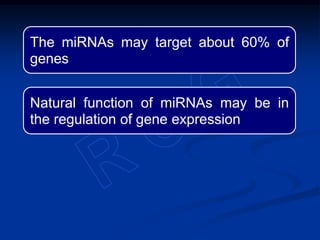
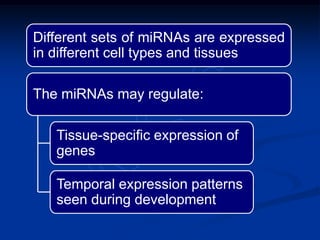


RNA interference is a process where gene expression can be silenced by small RNA molecules like microRNAs (miRNAs) and small interfering RNAs (siRNAs). Both miRNAs and siRNAs are formed from larger precursor molecules that are cleaved by the enzyme Dicer. The mature RNAs are then incorporated into the RNA-induced silencing complex (RISC) which uses the RNA to identify and degrade or silence messenger RNAs (mRNAs) with complementary base sequences, thereby preventing translation and gene expression. While siRNAs induce cleavage of specific mRNA targets, miRNAs typically inhibit multiple targets imperfectly by interfering with translation. This gene regulation process was initially discovered in plants and nematodes but also functions endogenously in mammals.


![PERI-PROSTHETIC FRACTURE NAIL-PLATE CONSTRUCT [NPC].pptx](https://cdn.slidesharecdn.com/ss_thumbnails/drarunkumardrmohamedashrafperiprostheticfrasturenail-plateconstructnpc-260209164459-7e9d15a1-thumbnail.jpg?width=640&height=640&fit=bounds)


![CTEV [ clubfoot] DR ARUN LAL ,DR MOHAMED ASHRAF travancore medical college k...](https://cdn.slidesharecdn.com/ss_thumbnails/ctevclubfootdrarunlaldrmohamedashraftravancoremedicalcollegekollamkeralaindia-260208063247-18fc466c-thumbnail.jpg?width=640&height=640&fit=bounds)


