Oxygen
OXYGEN
the element is very common
highly reactive nonmetallic element
major component of air
the second largest single component of the earth's atmosphere
(21% by volume)
Oxygen is the most abundant element by mass in the Earth‘s
crust as part of oxide compounds such as silicon dioxide.
the atmosphere of Mars contains only about 0.15% oxygen
usually bound with other elements
produced by plants during photosynthesis
necessary for aerobic respiration
Properties
• Name: Oxygen
• Symbol: O
• Atomic number: 8
• Atomic weight:
15.9994
• Group number: 16
• Period number: 2
Introduction
Phase gas
Melting point -218.79C
Boiling point -182.96C
• freshwater contains about 6.04 milliliters (mL) of oxygen per liter
• Oxygen has vital biological role
•6 CO2 + 6 H2O + photons → C6H12O6 + 6 O2
•C6H12O6 + 6 O2 → 6 CO2 + 6 H2O + 2880 kJ·mol−1
Properties
heavier than air
soluble in water
without smell or taste
the gas is colourless, odourless and tasteless
chemical bonds with almost all other elements
three isotopes
Property
liquid O2 and solid O2
have a light blue color
highly paramagnetic
Electronegative
highly oxidizing
releasing heat
Liquid oxygen
Properties
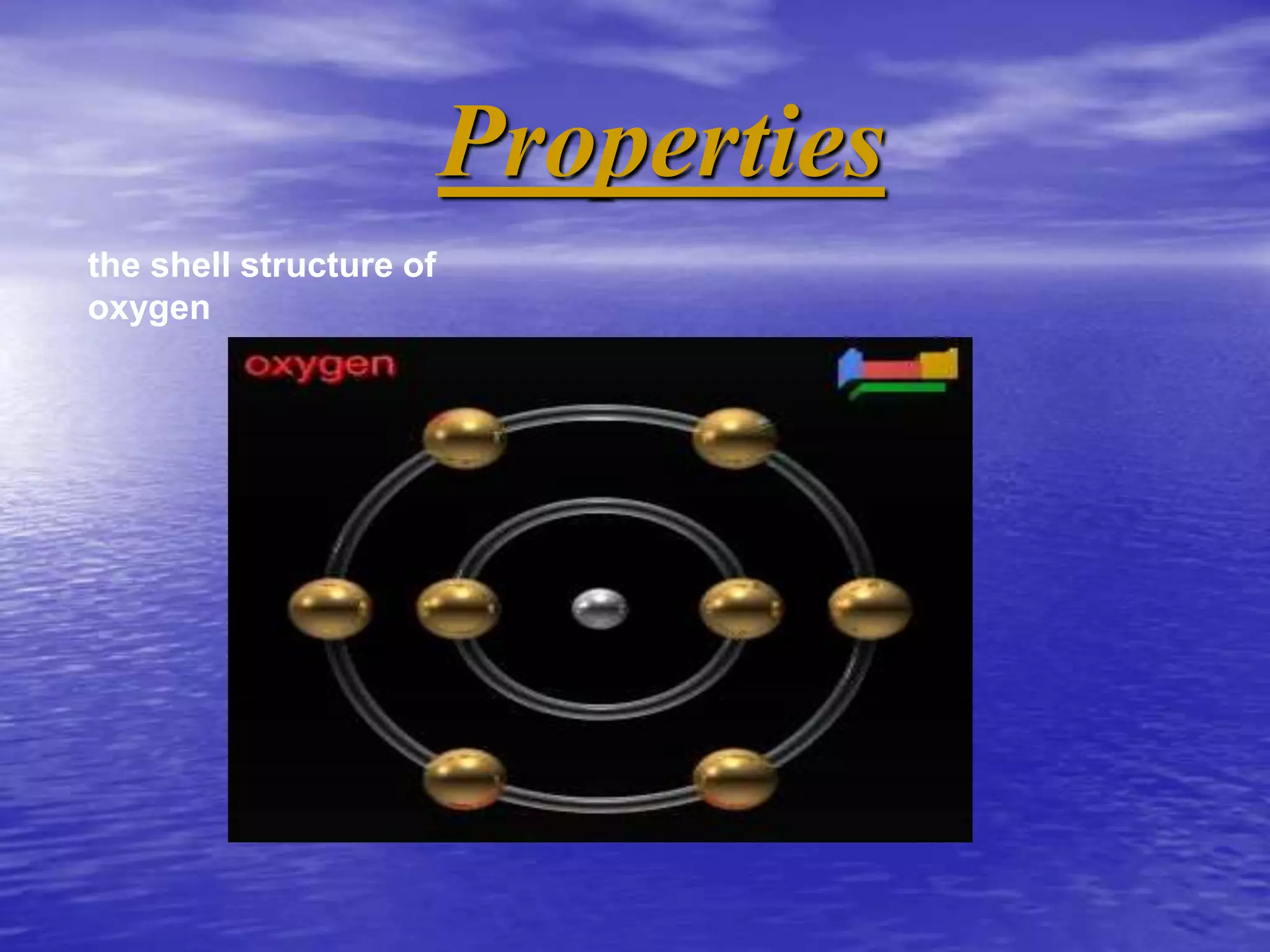
the shell structure of
oxygen
History
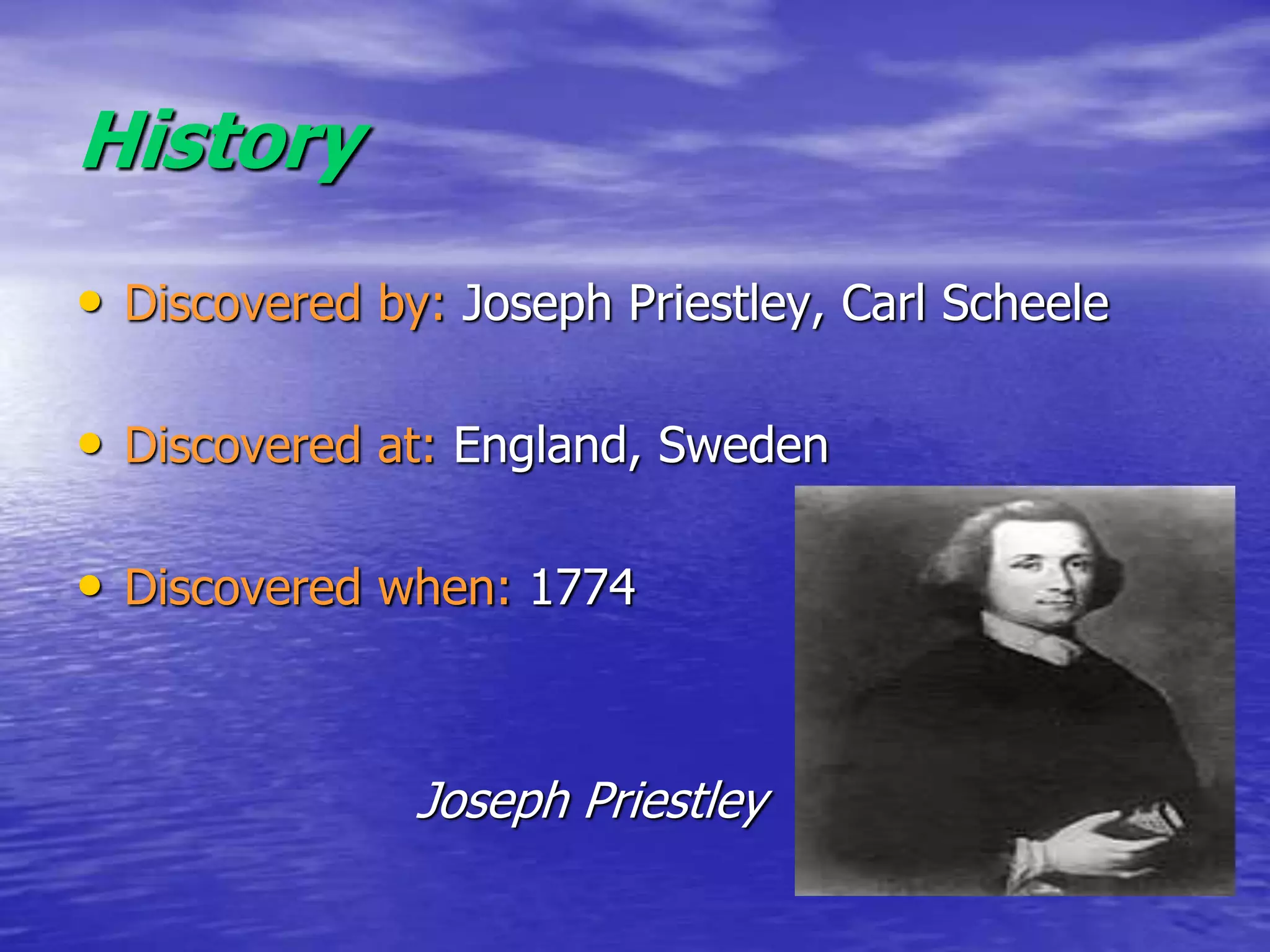
• Discovered by: Joseph Priestley, Carl Scheele
• Discovered at: England, Sweden
• Discovered when: 1774
Joseph Priestley
Preparation
• large number of different methods for its preparation
1) Preparation of oxygen using potassium chlorate
2 KClO3 ==> 2 KCl + 3 O2
2) Preparation of oxygen using hydrogen peroxide
2 H2O2 ==> 2 H2O + O2
Preparation
3) Preparation of oxygen by electrolysis of water
2 H2O ==> 2 H2 + O2
4) Preparation of oxygen by the decomposition of
salts
2 KNO3 ==> 2 KNO2 + O2
5) Preparation of oxygen from air by distillation
Compounds
• oxygen is very reactive
• oxygen forms chemical bonds with almost all other
elements
• oxygen derivatives are prone to form free radicals
• the most common oxidation numbers are -1,-2
Compounds
Hydroxide
Aluminium hydroxide, Al(OH)3
Barium hydroxide, Ba(OH)2
Oxide
Carbon dioxide, CO2
Water
has the chemical formula H2O
Alcohols (R-OH)
methanol, CH3OH
Methanol burns in air forming carbon dioxide and water:
2CH3OH + 3 O2 → 2CO2 + 4H2O
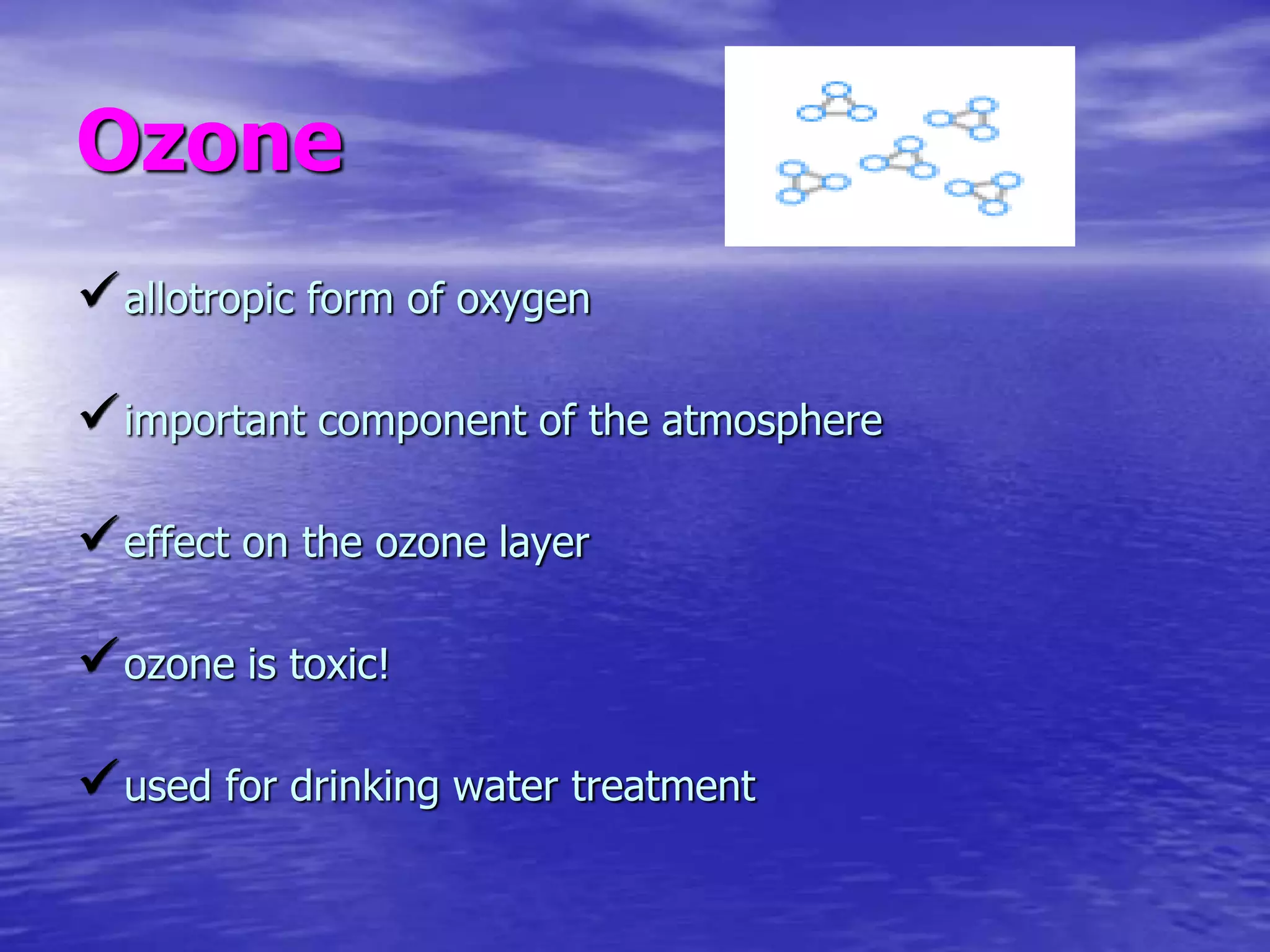
Ozone
allotropic form of oxygen
important component of the atmosphere
effect on the ozone layer
ozone is toxic!
used for drinking water treatment
Applications
 oxygen is essential to respiration
 used in medicine
 used in welding and cutting (3,500 °C)
 making of steel and methanol
 Smelting process
 A notable application of O2 as a low-
pressure breathing gas is in modern space suits
and in diving.
Applications
• Oxygen cutting
Thank You

Oxygen

  • 1.
  • 2.
    OXYGEN the element isvery common highly reactive nonmetallic element major component of air the second largest single component of the earth's atmosphere (21% by volume) Oxygen is the most abundant element by mass in the Earth‘s crust as part of oxide compounds such as silicon dioxide. the atmosphere of Mars contains only about 0.15% oxygen usually bound with other elements produced by plants during photosynthesis necessary for aerobic respiration
  • 3.
    Properties • Name: Oxygen •Symbol: O • Atomic number: 8 • Atomic weight: 15.9994 • Group number: 16 • Period number: 2
  • 4.
    Introduction Phase gas Melting point-218.79C Boiling point -182.96C • freshwater contains about 6.04 milliliters (mL) of oxygen per liter • Oxygen has vital biological role •6 CO2 + 6 H2O + photons → C6H12O6 + 6 O2 •C6H12O6 + 6 O2 → 6 CO2 + 6 H2O + 2880 kJ·mol−1
  • 5.
    Properties heavier than air solublein water without smell or taste the gas is colourless, odourless and tasteless chemical bonds with almost all other elements three isotopes
  • 6.
    Property liquid O2 andsolid O2 have a light blue color highly paramagnetic Electronegative highly oxidizing releasing heat Liquid oxygen
  • 7.
  • 8.
    History • Discovered by:Joseph Priestley, Carl Scheele • Discovered at: England, Sweden • Discovered when: 1774 Joseph Priestley
  • 9.
    Preparation • large numberof different methods for its preparation 1) Preparation of oxygen using potassium chlorate 2 KClO3 ==> 2 KCl + 3 O2 2) Preparation of oxygen using hydrogen peroxide 2 H2O2 ==> 2 H2O + O2
  • 10.
    Preparation 3) Preparation ofoxygen by electrolysis of water 2 H2O ==> 2 H2 + O2 4) Preparation of oxygen by the decomposition of salts 2 KNO3 ==> 2 KNO2 + O2 5) Preparation of oxygen from air by distillation
  • 11.
    Compounds • oxygen isvery reactive • oxygen forms chemical bonds with almost all other elements • oxygen derivatives are prone to form free radicals • the most common oxidation numbers are -1,-2
  • 12.
    Compounds Hydroxide Aluminium hydroxide, Al(OH)3 Bariumhydroxide, Ba(OH)2 Oxide Carbon dioxide, CO2 Water has the chemical formula H2O Alcohols (R-OH) methanol, CH3OH Methanol burns in air forming carbon dioxide and water: 2CH3OH + 3 O2 → 2CO2 + 4H2O
  • 13.
    Ozone allotropic form ofoxygen important component of the atmosphere effect on the ozone layer ozone is toxic! used for drinking water treatment
  • 14.
    Applications  oxygen isessential to respiration  used in medicine  used in welding and cutting (3,500 °C)  making of steel and methanol  Smelting process  A notable application of O2 as a low- pressure breathing gas is in modern space suits and in diving.
  • 15.
  • 16.