
Dr. Luxy K L, MA; M Sc; M Phil.
Al Soor Specialty Clinic, Sharjah, UAE
www.alsoorpsychiatry.ae
LEARNING DIFFICULTIES (LD)
Early Detection & Intervention
BRIEF COMMENTS ON PARENTING
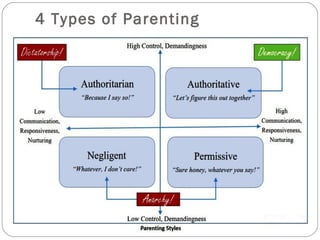
4 Types of Parenting
Parents are not Friends
Often parents behave like friends
If you play like friends you will lose your power as parents.
Inculcate Trust
Answer Questions - then their creativity and imagination
will improve. They will become real explorers and at the
end scientists.
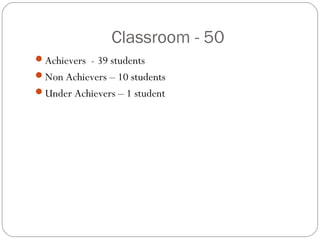
Classroom - 50
Achievers - 39 students
Non Achievers – 10 students
Under Achievers – 1 student
LEARNING DISABILITY (LD)
ACADEMIC SKILLS
• 3 main academic skills
• Comprehension – Reading and Listening
• Expression - Oral or Written
• Arithmetic Ability
• 3 types of LD
• Dyslexia – is the difficulty to read
• Dysgraphia – is the difficulty to write
• Dyscalculia – is the difficulty with arithmetic skills
LD Statistics
• Among children with normal intelligence, as many as 1 out
of every 5 children have some degree of LD.
• LD occurs 2 to 3 times more often in males than in females.
• There is an increased risk of 4 to 8 times in first degree
relatives for reading deficits, and about 5 to 10 times for
mathematical deficits – showing a strong genetic tendency.
LD Basics
• LD varies from person to person.
• Often the LD subtypes are mixed.
• It is caused by differences in how the brain processes
information.
• LD children are not intellectually disabled, lazy or adamant.
Learning Disability (LD) Versus
Intellectual Disability (ID)
• In fact, children with LD often have average or above average
intelligence.
• Children with LD exhibit significant discrepancy between the
potential for academic achievement and actual performance.
• Intellectual Disability (ID) is a global delay in brain
development; and their academic performance, in general,
matches the brain’s potential.
LD Research Shows…
• LD is a chronic condition. However, children with LD can do
well and can be taught ways to get around their LD. With the
right help, children with LD can and do learn successfully.
• Children with LD get frustrated and intolerant when they are not
able to perform well in academics.
• Parents and teachers often pressurize them and this often has
consequences
• fear and anxiety
• low self-esteem
• low confidence
• loss of interest
• emotional disturbances
• school phobia and school refusal.
Assessment & Management
• LD assessment by a clinical psychologist forms the basis
establishing eligibility for academic services and concessions
through Government Regulatory Bodies.
Assessment & Management
• Some other psychological disorders are commonly seen associated
with LD
• Communication Disorders
• Attention Deficit Hyperactivity Disorder
• Fine Motor Difficulties
• Oppositional Defiance
• Conduct Problems
• Tics
• Obsessive Compulsive Disorder
• Social Anxiety
• Depression.
• Diagnosis and Management of these associated problems is vital
for the overall wellbeing and improved academic performance of
the child.
Remedies
• If I can’t learn the way you teach, will you teach me the way
I can learn? Remedial Training
• Consistent/intensive one to one training.
• Extensive Support from the school
• Simplifying the lessons, using flow charts, etc
• Use various modalities (Visual, Auditory, and Tactile) to
enhance learning. Learning is more effective when concepts
are experienced or seen.
• Ensure understanding of content learned by making him/her
work regularly on assessment sheets/question papers
prepared along similar lines to those followed in school.
Recommendations
• Assistance of a peer buddy to cope with work in class (diary work,
notes).
• Individual attention during exams.
• Overlooking spelling errors, grammatical mistakes and evaluating on
content (wherever possible).
• Board provisions such as Scribes, Extra Time and Dropping
Language/Subjects could be granted by the CBSE Board for Dyslexic
children.
• Parents to coordinate and cooperate with the teachers and counsellor for
the benefit of the child.
• Involving children in extracurricular activities such as sports, arts (and
other areas s/he is good in) and assigning him/her class responsibilities
would be a boost to his/her self-esteem.
Other Options
Look for Skills & Interests
Vocational Training
Keep the focus clearly on the long term goals of life.
Most importantly, they must acquire initiative, confidence
and self-esteem which ultimately defines every child’s
success in life.
Conclusion
Early detection and early intervention are vital. When a
child has troubles in learning to read, to write, to listen, to
speak or to do math, teachers and parents must get it
investigated at the earliest
The End
If a country is to be free of
corruption and become a
nation of beautiful minds, I
strongly feel there are
three key societal members
who can make a difference.
They are father, mother
and teacher.

Learning difficulties

  • 1.
    Dr. Luxy KL, MA; M Sc; M Phil. Al Soor Specialty Clinic, Sharjah, UAE www.alsoorpsychiatry.ae LEARNING DIFFICULTIES (LD) Early Detection & Intervention
  • 2.
  • 3.
    4 Types ofParenting
  • 4.
    Parents are notFriends Often parents behave like friends If you play like friends you will lose your power as parents. Inculcate Trust Answer Questions - then their creativity and imagination will improve. They will become real explorers and at the end scientists.
  • 5.
    Classroom - 50 Achievers- 39 students Non Achievers – 10 students Under Achievers – 1 student
  • 6.
  • 7.
    ACADEMIC SKILLS • 3main academic skills • Comprehension – Reading and Listening • Expression - Oral or Written • Arithmetic Ability • 3 types of LD • Dyslexia – is the difficulty to read • Dysgraphia – is the difficulty to write • Dyscalculia – is the difficulty with arithmetic skills
  • 8.
    LD Statistics • Amongchildren with normal intelligence, as many as 1 out of every 5 children have some degree of LD. • LD occurs 2 to 3 times more often in males than in females. • There is an increased risk of 4 to 8 times in first degree relatives for reading deficits, and about 5 to 10 times for mathematical deficits – showing a strong genetic tendency.
  • 9.
    LD Basics • LDvaries from person to person. • Often the LD subtypes are mixed. • It is caused by differences in how the brain processes information. • LD children are not intellectually disabled, lazy or adamant.
  • 10.
    Learning Disability (LD)Versus Intellectual Disability (ID) • In fact, children with LD often have average or above average intelligence. • Children with LD exhibit significant discrepancy between the potential for academic achievement and actual performance. • Intellectual Disability (ID) is a global delay in brain development; and their academic performance, in general, matches the brain’s potential.
  • 11.
    LD Research Shows… •LD is a chronic condition. However, children with LD can do well and can be taught ways to get around their LD. With the right help, children with LD can and do learn successfully. • Children with LD get frustrated and intolerant when they are not able to perform well in academics. • Parents and teachers often pressurize them and this often has consequences • fear and anxiety • low self-esteem • low confidence • loss of interest • emotional disturbances • school phobia and school refusal.
  • 12.
    Assessment & Management •LD assessment by a clinical psychologist forms the basis establishing eligibility for academic services and concessions through Government Regulatory Bodies.
  • 13.
    Assessment & Management •Some other psychological disorders are commonly seen associated with LD • Communication Disorders • Attention Deficit Hyperactivity Disorder • Fine Motor Difficulties • Oppositional Defiance • Conduct Problems • Tics • Obsessive Compulsive Disorder • Social Anxiety • Depression. • Diagnosis and Management of these associated problems is vital for the overall wellbeing and improved academic performance of the child.
  • 14.
    Remedies • If Ican’t learn the way you teach, will you teach me the way I can learn? Remedial Training • Consistent/intensive one to one training. • Extensive Support from the school • Simplifying the lessons, using flow charts, etc • Use various modalities (Visual, Auditory, and Tactile) to enhance learning. Learning is more effective when concepts are experienced or seen. • Ensure understanding of content learned by making him/her work regularly on assessment sheets/question papers prepared along similar lines to those followed in school.
  • 15.
    Recommendations • Assistance ofa peer buddy to cope with work in class (diary work, notes). • Individual attention during exams. • Overlooking spelling errors, grammatical mistakes and evaluating on content (wherever possible). • Board provisions such as Scribes, Extra Time and Dropping Language/Subjects could be granted by the CBSE Board for Dyslexic children. • Parents to coordinate and cooperate with the teachers and counsellor for the benefit of the child. • Involving children in extracurricular activities such as sports, arts (and other areas s/he is good in) and assigning him/her class responsibilities would be a boost to his/her self-esteem.
  • 16.
    Other Options Look forSkills & Interests Vocational Training Keep the focus clearly on the long term goals of life. Most importantly, they must acquire initiative, confidence and self-esteem which ultimately defines every child’s success in life.
  • 17.
    Conclusion Early detection andearly intervention are vital. When a child has troubles in learning to read, to write, to listen, to speak or to do math, teachers and parents must get it investigated at the earliest
  • 18.
    The End If acountry is to be free of corruption and become a nation of beautiful minds, I strongly feel there are three key societal members who can make a difference. They are father, mother and teacher.