Auditory Processing 
Disorder 
(APD)
Auditory Processing Disorder 
(APD) 
 Also known as Central Auditory 
Processing Disorder
SIGNS and SYMPTOMS
SIGNS and SYMPTOMS 
 Has difficulty processing and remembering or 
recalling non-verbal environmental sounds. 
 May process thoughts and ideas slowly and 
have difficulty explaining them. 
 Misspells and mispronounces similar-sounding 
words or omit syllables
 Maybe confused with figurative language 
 Often distracted by background 
sounds/noises 
 Finds it difficult to stay focused on or 
remember a verbal presentation or lecture
 No sense of direction 
 Has difficulty comprehending complex 
sentence structure or rapid speech 
 “ Ignores” people 
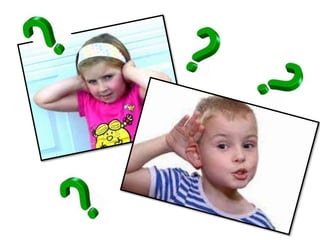
 Says “ WHAT?” a lot
STRATEGIES
 Show rather than explain 
 Supplement with more intact senses 
 Reword or help decipher confusing oral 
and/or written directions 
 Teach abstract vocabulary, word roots, 
synonyms/antonyms
 Vary pitch and tone of voice, alter pace, stress 
key words 
 Ask specific questions 
 Allow them 5-6 seconds to respond (“think 
time”) 
 Have the student constantly verbalize 
concepts, vocabulary words, rules, etc.
DYSCALCULIA
DYSCALCULIA 
A term referring to a wide range of life-long 
learning disabilities involving math.
SIGNS and SYMPTOMS
SIGNS and SYMPTOMS 
 Shows difficulty understanding concepts of 
math 
 Has difficulty understanding and doing word 
problems 
 Has difficulty sequencing information or 
events
 Exhibits difficulty using steps involved in math 
operations 
 Shows difficulty understanding fractions 
 Is challenged making change and handling 
money 
 Displays difficulty recognizing patterns when 
adding, subtracting, multiplying, or dividing
 Has difficulty putting language to math 
processes 
 Has difficulty understanding concepts related 
to time 
 Exhibits difficulty organizing problems
STRATEGIES
STRATEGIES 
 Allow use of fingers and scratch paper 
 Use diagrams and draw math concepts 
 Provide peer assistance 
 Suggest use of graph paper 
 Suggest use of colored pencils to differentiate 
problems 
 Work with manipulatives
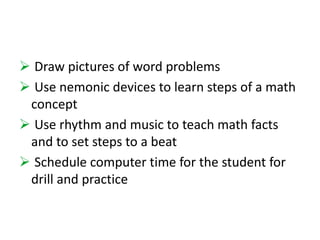
 Draw pictures of word problems 
 Use nemonic devices to learn steps of a math 
concept 
 Use rhythm and music to teach math facts 
and to set steps to a beat 
 Schedule computer time for the student for 
drill and practice
DYSGRAPHIA
DYSGRAPHIA 
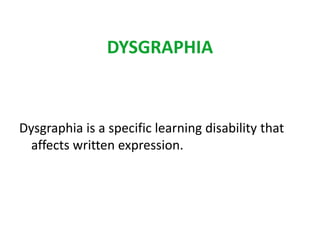
Dysgraphia is a specific learning disability that 
affects written expression.
SIGNS and SYMPTOMS
SIGNS and SYMPTOMS 
 May have illegible printing and cursive 
writing 
 Shows inconsistencies: 
 Has unfinished words or letters, omitted 
words
 Inconsistent spacing between words and letters 
 Exhibits strange wrist, body or paper position 
 Has difficulty pre-visualizing letter formation 
 Copying or writing is slow or labored 
 Shows poor spatial planning on paper 
 Has cramped or unusual grip/may complain of 
sore hand 
 Has great difficulty thinking and writing at the 
same time
STRATEGIES
STRATEGIES 
 Suggest use of word processor 
 Avoid chastising student for sloppy, careless 
work 
 Use oral exams 
 Allow use of tape recorder for lectures 
 Allow the use of a note taker 
 Provide notes or outlines to reduce the 
amount of writing required
 Reduce copying aspects of work 
 Allow use of wide rule paper and graph 
paper 
 Suggest use of pencil grips and /or specially 
designed writing aids 
 Provide alternatives to written assignments 
(video-taped reports, audio-taped reports)
DYSLEXIA
DYSLEXIA 
Dyslexia is a learning disorder characterized by 
difficulty reading
SIGNS and SYMPTOMS
SIGNS and SYMPTOMS 
Before school 
 Late talking 
 Learning new words slowly 
 Difficulty learning nursery rhymes 
 Difficulty playing rhyming games

School age 
 Reading well below the expected level for 
your child's age 
 Problems processing and understanding what 
he or she hears 
 Difficulty comprehending rapid instructions 
 Problems remembering the sequence of 
things
 Difficulty seeing (and occasionally hearing) 
similarities and differences in letters and 
words 
 Inability to sound out the pronunciation of an 
unfamiliar word 
 Difficulty spelling 
 Trouble learning a foreign language
Teens and adults 
 Difficulty reading, including reading aloud 
 Trouble understanding jokes or expressions 
that have a meaning not easily understood 
from the specific words (idioms), such as 
"piece of cake" meaning "easy“ 
 Difficulty with time management
 Difficulty summarizing a story 
 Trouble learning a foreign language 
 Difficulty memorizing 
 Difficulty doing math problems
STRATEGIES
STRATEGIES 
 Expose the child to early oral reading, writing, 
drawing, and practice to encourage 
development of print knowledge, basic letter 
formation, recognition skills and linguistic 
awareness (the relationship between sound 
and meaning).
 Have your child practice reading different 
kinds of texts. This includes books, magazines, 
ads and comics. 
 Include multi-sensory, structured language 
instruction. Practice using sight, sound and 
touch when introducing new ideas.
 Seek modifications in the classroom. 
 Use books on tape and assistive technology. 
 Get help with the emotional issues that arise 
from struggling to overcome academic 
difficulties.
DYSPRAXIA
DYSPRAXIA 
A disorder that is characterized by difficulty in 
muscle control.
SIGNS and SYMPTOMS
SIGNS and SYMPTOMS 
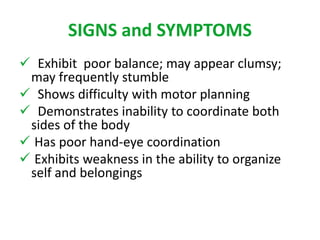
 Exhibit poor balance; may appear clumsy; 
may frequently stumble 
 Shows difficulty with motor planning 
 Demonstrates inability to coordinate both 
sides of the body 
 Has poor hand-eye coordination 
 Exhibits weakness in the ability to organize 
self and belongings
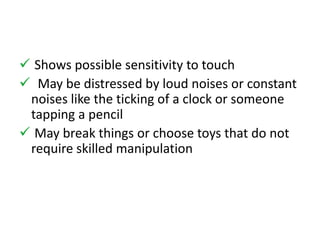
 Shows possible sensitivity to touch 
 May be distressed by loud noises or constant 
noises like the ticking of a clock or someone 
tapping a pencil 
 May break things or choose toys that do not 
require skilled manipulation
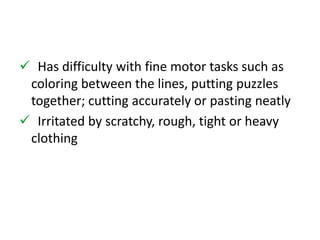
 Has difficulty with fine motor tasks such as 
coloring between the lines, putting puzzles 
together; cutting accurately or pasting neatly 
 Irritated by scratchy, rough, tight or heavy 
clothing
STRATEGIES
STRATEGIES 
 Pre-set students for touch with verbal 
prompts, “I’m going to touch your right hand.” 
 Avoid touching from behind or getting too 
close and make sure peers are aware of this 
 Provide a quiet place
 Warn the student when bells will ring or if a 
fire drill is scheduled 
 Whisper when working one to one with the 
child 
 Allow parents to provide earplugs or sterile 
waxes for noisy events such as assemblies 
 Make sure the parent knows about what is 
observed about the student in the classroom
 Refer student for occupational therapy or 
sensory integration training 
 Be cognizant of light and light sources that 
may be irritating to child 
 Use manipulatives, but make sure they are in 
students field of vision and don’t force 
student to touch them

Types of Learning Disabilities

  • 2.
  • 4.
    Auditory Processing Disorder (APD)  Also known as Central Auditory Processing Disorder
  • 5.
  • 6.
    SIGNS and SYMPTOMS  Has difficulty processing and remembering or recalling non-verbal environmental sounds.  May process thoughts and ideas slowly and have difficulty explaining them.  Misspells and mispronounces similar-sounding words or omit syllables
  • 7.
     Maybe confusedwith figurative language  Often distracted by background sounds/noises  Finds it difficult to stay focused on or remember a verbal presentation or lecture
  • 8.
     No senseof direction  Has difficulty comprehending complex sentence structure or rapid speech  “ Ignores” people  Says “ WHAT?” a lot
  • 9.
  • 10.
     Show ratherthan explain  Supplement with more intact senses  Reword or help decipher confusing oral and/or written directions  Teach abstract vocabulary, word roots, synonyms/antonyms
  • 11.
     Vary pitchand tone of voice, alter pace, stress key words  Ask specific questions  Allow them 5-6 seconds to respond (“think time”)  Have the student constantly verbalize concepts, vocabulary words, rules, etc.
  • 12.
  • 13.
    DYSCALCULIA A termreferring to a wide range of life-long learning disabilities involving math.
  • 14.
  • 15.
    SIGNS and SYMPTOMS  Shows difficulty understanding concepts of math  Has difficulty understanding and doing word problems  Has difficulty sequencing information or events
  • 16.
     Exhibits difficultyusing steps involved in math operations  Shows difficulty understanding fractions  Is challenged making change and handling money  Displays difficulty recognizing patterns when adding, subtracting, multiplying, or dividing
  • 17.
     Has difficultyputting language to math processes  Has difficulty understanding concepts related to time  Exhibits difficulty organizing problems
  • 18.
  • 19.
    STRATEGIES  Allowuse of fingers and scratch paper  Use diagrams and draw math concepts  Provide peer assistance  Suggest use of graph paper  Suggest use of colored pencils to differentiate problems  Work with manipulatives
  • 20.
     Draw picturesof word problems  Use nemonic devices to learn steps of a math concept  Use rhythm and music to teach math facts and to set steps to a beat  Schedule computer time for the student for drill and practice
  • 21.
  • 22.
    DYSGRAPHIA Dysgraphia isa specific learning disability that affects written expression.
  • 23.
  • 24.
    SIGNS and SYMPTOMS  May have illegible printing and cursive writing  Shows inconsistencies:  Has unfinished words or letters, omitted words
  • 25.
     Inconsistent spacingbetween words and letters  Exhibits strange wrist, body or paper position  Has difficulty pre-visualizing letter formation  Copying or writing is slow or labored  Shows poor spatial planning on paper  Has cramped or unusual grip/may complain of sore hand  Has great difficulty thinking and writing at the same time
  • 26.
  • 27.
    STRATEGIES  Suggestuse of word processor  Avoid chastising student for sloppy, careless work  Use oral exams  Allow use of tape recorder for lectures  Allow the use of a note taker  Provide notes or outlines to reduce the amount of writing required
  • 28.
     Reduce copyingaspects of work  Allow use of wide rule paper and graph paper  Suggest use of pencil grips and /or specially designed writing aids  Provide alternatives to written assignments (video-taped reports, audio-taped reports)
  • 29.
  • 31.
    DYSLEXIA Dyslexia isa learning disorder characterized by difficulty reading
  • 32.
  • 33.
    SIGNS and SYMPTOMS Before school  Late talking  Learning new words slowly  Difficulty learning nursery rhymes  Difficulty playing rhyming games
  • 34.
    School age Reading well below the expected level for your child's age  Problems processing and understanding what he or she hears  Difficulty comprehending rapid instructions  Problems remembering the sequence of things
  • 35.
     Difficulty seeing(and occasionally hearing) similarities and differences in letters and words  Inability to sound out the pronunciation of an unfamiliar word  Difficulty spelling  Trouble learning a foreign language
  • 36.
    Teens and adults  Difficulty reading, including reading aloud  Trouble understanding jokes or expressions that have a meaning not easily understood from the specific words (idioms), such as "piece of cake" meaning "easy“  Difficulty with time management
  • 37.
     Difficulty summarizinga story  Trouble learning a foreign language  Difficulty memorizing  Difficulty doing math problems
  • 38.
  • 39.
    STRATEGIES  Exposethe child to early oral reading, writing, drawing, and practice to encourage development of print knowledge, basic letter formation, recognition skills and linguistic awareness (the relationship between sound and meaning).
  • 40.
     Have yourchild practice reading different kinds of texts. This includes books, magazines, ads and comics.  Include multi-sensory, structured language instruction. Practice using sight, sound and touch when introducing new ideas.
  • 41.
     Seek modificationsin the classroom.  Use books on tape and assistive technology.  Get help with the emotional issues that arise from struggling to overcome academic difficulties.
  • 42.
  • 43.
    DYSPRAXIA A disorderthat is characterized by difficulty in muscle control.
  • 44.
  • 45.
    SIGNS and SYMPTOMS  Exhibit poor balance; may appear clumsy; may frequently stumble  Shows difficulty with motor planning  Demonstrates inability to coordinate both sides of the body  Has poor hand-eye coordination  Exhibits weakness in the ability to organize self and belongings
  • 46.
     Shows possiblesensitivity to touch  May be distressed by loud noises or constant noises like the ticking of a clock or someone tapping a pencil  May break things or choose toys that do not require skilled manipulation
  • 47.
     Has difficultywith fine motor tasks such as coloring between the lines, putting puzzles together; cutting accurately or pasting neatly  Irritated by scratchy, rough, tight or heavy clothing
  • 48.
  • 49.
    STRATEGIES  Pre-setstudents for touch with verbal prompts, “I’m going to touch your right hand.”  Avoid touching from behind or getting too close and make sure peers are aware of this  Provide a quiet place
  • 50.
     Warn thestudent when bells will ring or if a fire drill is scheduled  Whisper when working one to one with the child  Allow parents to provide earplugs or sterile waxes for noisy events such as assemblies  Make sure the parent knows about what is observed about the student in the classroom
  • 51.
     Refer studentfor occupational therapy or sensory integration training  Be cognizant of light and light sources that may be irritating to child  Use manipulatives, but make sure they are in students field of vision and don’t force student to touch them