ORGANIZING
Prepared By:
Prof.Chhaya Patel
Definition….
• Organizing is the act of rearranging
elements following one or more rules.
-Anything is commonly considered organized
when it looks like everything has a correct
order of placement.
-But it's only ultimately organized if any
element has no difference on time taken to
find it.
In Short….
• organizing can also be defined as to place
different objects in logical arrangement for
better searching.
• Organizations are groups of people
frequently trying to organize some
specific subject
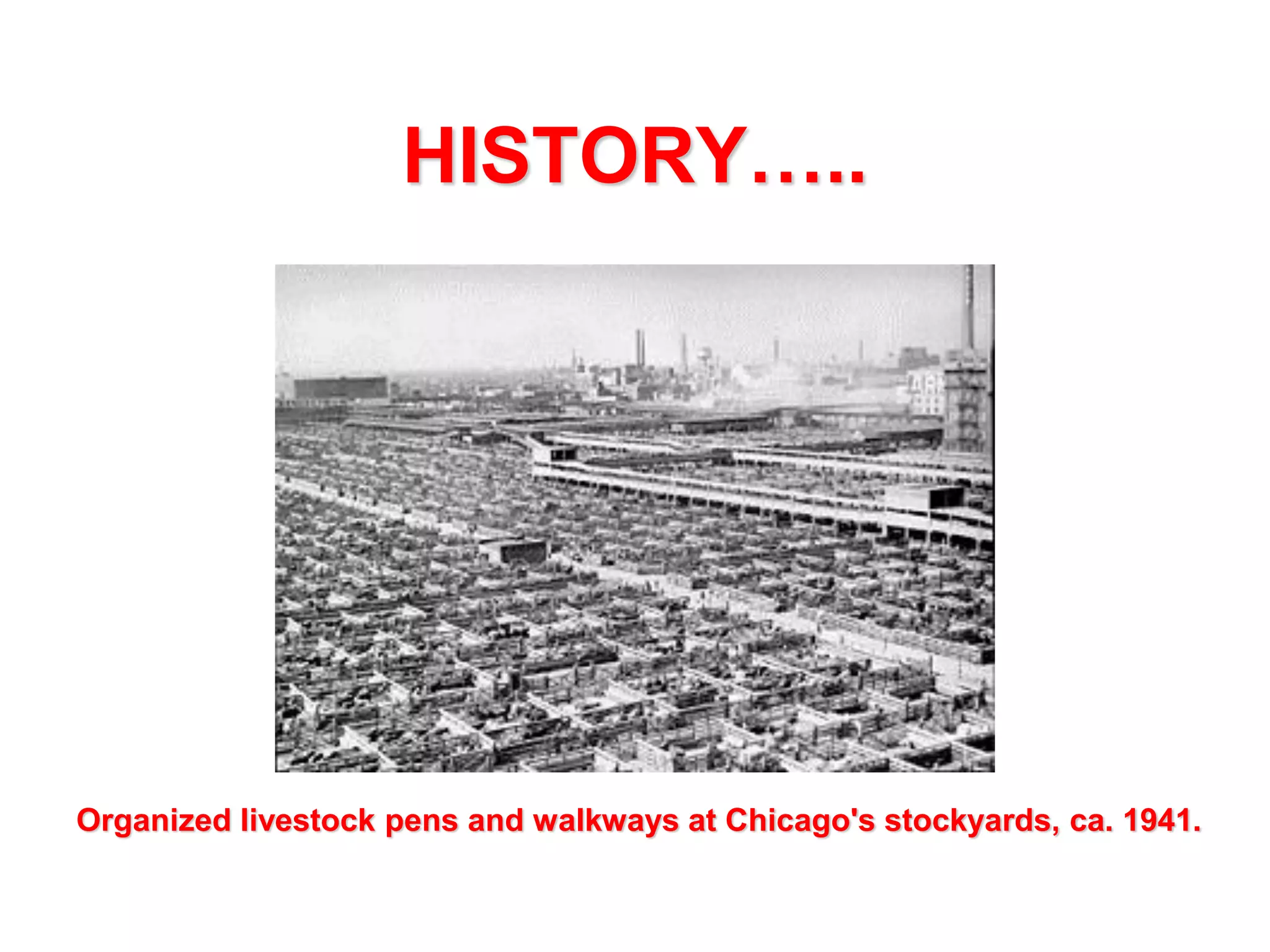
HISTORY…..

Organized livestock pens and walkways at Chicago's stockyards, ca. 1941.
Structure
• The framework in which the organization defines
how tasks are divided, resources are deployed, and
departments are coordinated.
• A set of formal tasks assigned to individuals and
departments.
• Formal reporting relationships, including lines of
authority, decision responsibility, number of
hierarchical levels and span of managers control.
• The design of systems to ensure effective
coordination of employees across departments.
Work specialization
• The degree to which organizational tasks are
sub divided into individual jobs; also called
division of labour
• With too much specialization, employees are
isolated and do only a single, tiny, boring
job.
• Many organizations enlarge jobs or rotate
assigned tasks in order to provide greater
challenges.
Chain of command
• An unbroken line of authority that links all
individuals in the organization and specifies
who reports to whom.
– Unity of Command - one employee is held
accountable to only one supervisor
– Scalar principle - clearly defined line of
authority in the organization that includes
all employees
Authority,
responsibility, and
accountability
• Authority - formal and legitimate right of a
manager to make decisions, issue orders,
and allocate resources to achieve
organizationally desired outcomes.
• Responsibility - duty to perform the task or
activity an employee has been assigned
• Accountability - the fact that the people with
authority and responsibility are subject to
reporting and justifying task outcomes to
those above them in the chain of command
Delegation
• The process managers use to transfer
authority and responsibility to positions
below them in the hierarchy
• Organizations today tend to encourage
delegation from highest to lowest possible
levels
• Can improve flexibility to meet customers’
needs and adaptation to competitive
environments
• Managers often find delegation difficult
Types of authority
• Line authority - in which individuals in management positions
have the formal power to direct and control immediate
subordinates.
• Staff authority - granted to staff specialists in their areas of
expertise. Narrower than line authority and includes the right to
advise, recommend, and counsel in the staff specialists' area of
expertise. It is a communication relationship with management.
It has an influence that derives indirectly from line authority at a
higher level.
• Functional authority - in which individuals in management
positions have formal power over a specific subset of activities.
A legal department, for instance, may have functional authority
to interfere in any activity that could have legal consequences.
Span of management
•
•
•
•
•
•
•
•
•

Factors influencing larger span of management.
Work performed by subordinates is stable and routine.
Subordinates perform similar work tasks.
Subordinates are concentrated in a single location.
Subordinates are highly trained and need little direction in
performing tasks.
Rules and procedures defining task activities are available.
Support systems and personnel are available for the managers.
Little time is required in non-supervisory activities such as
coordination with other departments or planning.
Managers' personal preferences and styles favour a large span.
Tall versus flat structure
• Tall - A management structure characterized by an
overall narrow span of management and a relatively
large number of hierarchical levels. Tight control.
• Flat - A management structure characterized by a
wide span of control and relatively few hierarchical
levels. Loose control. Facilitates delegation.
Centralization,
decentralization, and
formalization
• Centralization - The location of decision making
authority near top organizational levels.
• Decentralization - The location of decision
making authority near lower organizational
levels.
• Formalization - The written documentation used
to direct and control employees.
Departmentalization
• The basis on which individuals are grouped into
departments and departments into total
organizations.
• Approach options include;
• Functional - by common skills and work tasks
• Divisional - common product, programme or
geographical location
• Matrix - combination of Functional and Divisional
• Team - to accomplish specific tasks
• Network - departments are independent providing
functions for a central core breaker
Importance of
organizing
• Organizations are often troubled by
how to organize, particularly when a
new strategy is developed
• Changing market conditions or new
technology requires change
• Organizations seek efficiencies through
improvements in organizing
Organizing

Organizing

  • 1.
  • 2.
    Definition…. • Organizing isthe act of rearranging elements following one or more rules. -Anything is commonly considered organized when it looks like everything has a correct order of placement. -But it's only ultimately organized if any element has no difference on time taken to find it.
  • 3.
    In Short…. • organizingcan also be defined as to place different objects in logical arrangement for better searching.
  • 4.
    • Organizations aregroups of people frequently trying to organize some specific subject
  • 5.
    HISTORY….. Organized livestock pensand walkways at Chicago's stockyards, ca. 1941.
  • 6.
    Structure • The frameworkin which the organization defines how tasks are divided, resources are deployed, and departments are coordinated. • A set of formal tasks assigned to individuals and departments. • Formal reporting relationships, including lines of authority, decision responsibility, number of hierarchical levels and span of managers control. • The design of systems to ensure effective coordination of employees across departments.
  • 7.
    Work specialization • Thedegree to which organizational tasks are sub divided into individual jobs; also called division of labour • With too much specialization, employees are isolated and do only a single, tiny, boring job. • Many organizations enlarge jobs or rotate assigned tasks in order to provide greater challenges.
  • 8.
    Chain of command •An unbroken line of authority that links all individuals in the organization and specifies who reports to whom. – Unity of Command - one employee is held accountable to only one supervisor – Scalar principle - clearly defined line of authority in the organization that includes all employees
  • 9.
    Authority, responsibility, and accountability • Authority- formal and legitimate right of a manager to make decisions, issue orders, and allocate resources to achieve organizationally desired outcomes. • Responsibility - duty to perform the task or activity an employee has been assigned • Accountability - the fact that the people with authority and responsibility are subject to reporting and justifying task outcomes to those above them in the chain of command
  • 10.
    Delegation • The processmanagers use to transfer authority and responsibility to positions below them in the hierarchy • Organizations today tend to encourage delegation from highest to lowest possible levels • Can improve flexibility to meet customers’ needs and adaptation to competitive environments • Managers often find delegation difficult
  • 11.
    Types of authority •Line authority - in which individuals in management positions have the formal power to direct and control immediate subordinates. • Staff authority - granted to staff specialists in their areas of expertise. Narrower than line authority and includes the right to advise, recommend, and counsel in the staff specialists' area of expertise. It is a communication relationship with management. It has an influence that derives indirectly from line authority at a higher level. • Functional authority - in which individuals in management positions have formal power over a specific subset of activities. A legal department, for instance, may have functional authority to interfere in any activity that could have legal consequences.
  • 12.
    Span of management • • • • • • • • • Factorsinfluencing larger span of management. Work performed by subordinates is stable and routine. Subordinates perform similar work tasks. Subordinates are concentrated in a single location. Subordinates are highly trained and need little direction in performing tasks. Rules and procedures defining task activities are available. Support systems and personnel are available for the managers. Little time is required in non-supervisory activities such as coordination with other departments or planning. Managers' personal preferences and styles favour a large span.
  • 13.
    Tall versus flatstructure • Tall - A management structure characterized by an overall narrow span of management and a relatively large number of hierarchical levels. Tight control. • Flat - A management structure characterized by a wide span of control and relatively few hierarchical levels. Loose control. Facilitates delegation.
  • 14.
    Centralization, decentralization, and formalization • Centralization- The location of decision making authority near top organizational levels. • Decentralization - The location of decision making authority near lower organizational levels. • Formalization - The written documentation used to direct and control employees.
  • 15.
    Departmentalization • The basison which individuals are grouped into departments and departments into total organizations. • Approach options include; • Functional - by common skills and work tasks • Divisional - common product, programme or geographical location • Matrix - combination of Functional and Divisional • Team - to accomplish specific tasks • Network - departments are independent providing functions for a central core breaker
  • 16.
    Importance of organizing • Organizationsare often troubled by how to organize, particularly when a new strategy is developed • Changing market conditions or new technology requires change • Organizations seek efficiencies through improvements in organizing