Directing
Prof. Chhaya Patel
• DIRECTING is said to be a process in which
the managers instruct, guide and oversee the
performance of the workers to achieve
predetermined goals.
• Directing is said to be all those activities
which are designed to encourage the
subordinates to work effectively and
efficiently.
• “Directing consists of process or technique by
which instruction can be issued and
operations can be carried out as originally
planned”
• Directing is influencing people's behavior
through motivation, communication, group
dynamics, leadership and discipline.
• influencing,
coaching,
motivating,
interpersonal relations, and human relations.
Characteristics
• Pervasive Function - Directing is required at all
levels of organization. Every manager provides
guidance and inspiration to his subordinates.
• Continuous Activity - Direction is a continuous
activity as it continuous throughout the life of
organization.
• Human Factor - Directing function is related to
subordinates and therefore it is related to human
factor. Since human factor is complex and
behaviour is unpredictable, direction function
becomes important.
• Creative Activity - Direction function helps in
converting plans into performance. Without this
function, people become inactive and physical
resources are meaningless.
• Executive Function - Direction function is carried out
by all managers and executives at all levels throughout
the working of an enterprise, a subordinate receives
instructions from his superior only.
• Delegate Function - Direction is supposed to be a
function dealing with human beings. Human behaviour
is unpredictable by nature and conditioning the
people’s behaviour towards the goals of the enterprise
is what the executive does in this function. Therefore,
it is termed as having delicacy in it to tackle human
behaviour.
Importance…
•
•
•
•
•
•

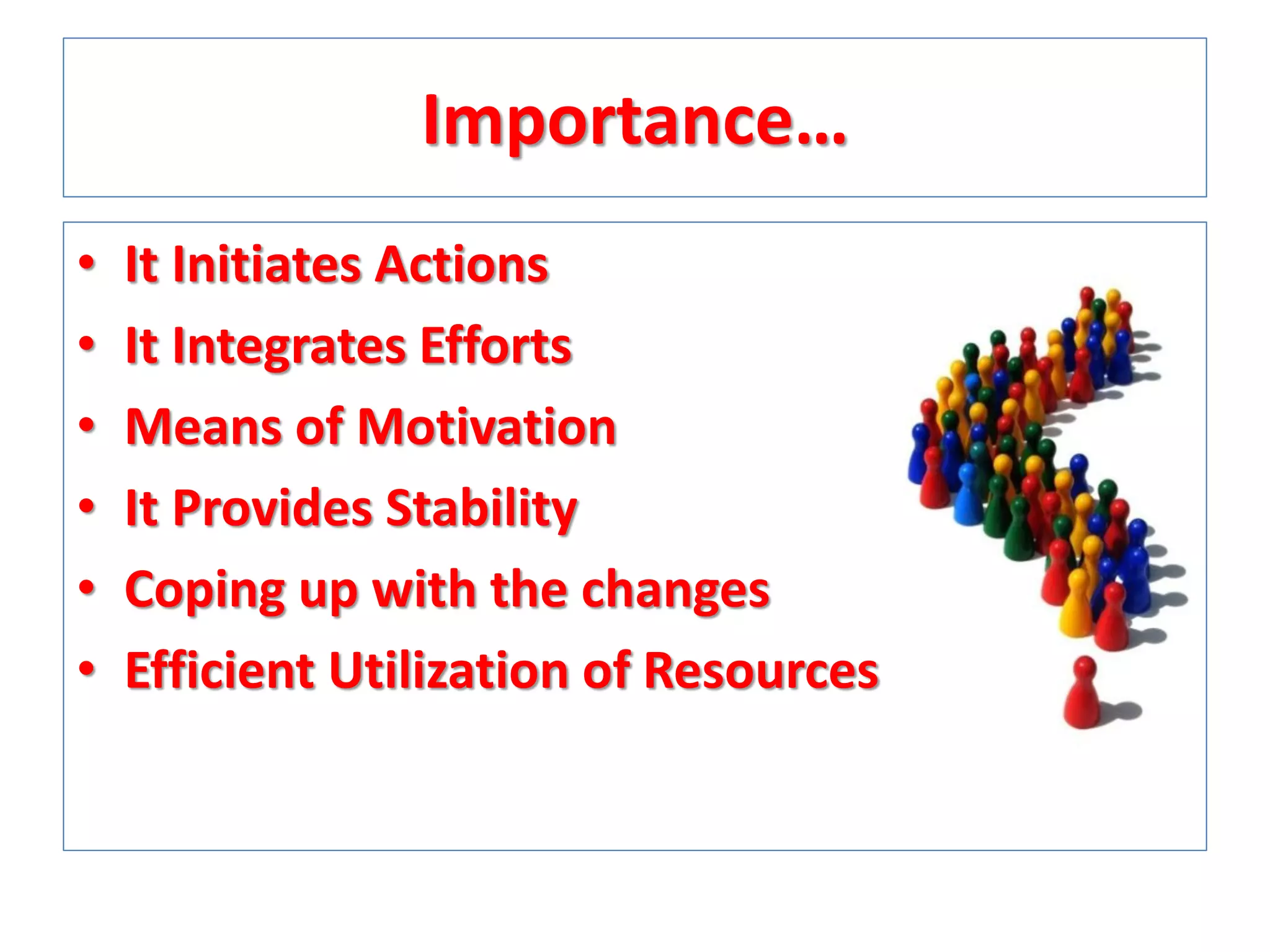
It Initiates Actions
It Integrates Efforts
Means of Motivation
It Provides Stability
Coping up with the changes
Efficient Utilization of Resources
Role Of Manager…
• As a Planner - A supervisor has to plan the daily
work schedules in the factory. At the same time
he has to divide the work to various workers
according to their abilities.
• As a Manager - It is righty said that a supervisor is
a part of the management team of an enterprise.
He is ,in fact, an operative manager.
• As a Guide and Leader - A factory supervisor
leads the workers by guiding them the way of
perform their daily tasks. In fact, he plays a role
of an inspirer by telling them.
• As a Mediator - A Supervisor is called a linking pin
between management and workers. He is the
spokesperson of management as well as worker.
• As an Inspector - An important role of supervisor is to
enforce discipline in the factory. For this, the work
includes checking progress of work against the time
schedule, recording the work performances at regular
intervals and reporting the deviations if any from
those. He can also frame rules and regulations which
have to be followed by workers during their work.
• As a Counselor - A supervisor plays the role of a
counselor to the worker’s problem. He has to perform
this role in order to build good relations and cooperation from workers. This can be done not only by
listening to the grievances but also handling the
grievances and satisfying the workers.
•
•
•
•
•
•
•
•
•
•

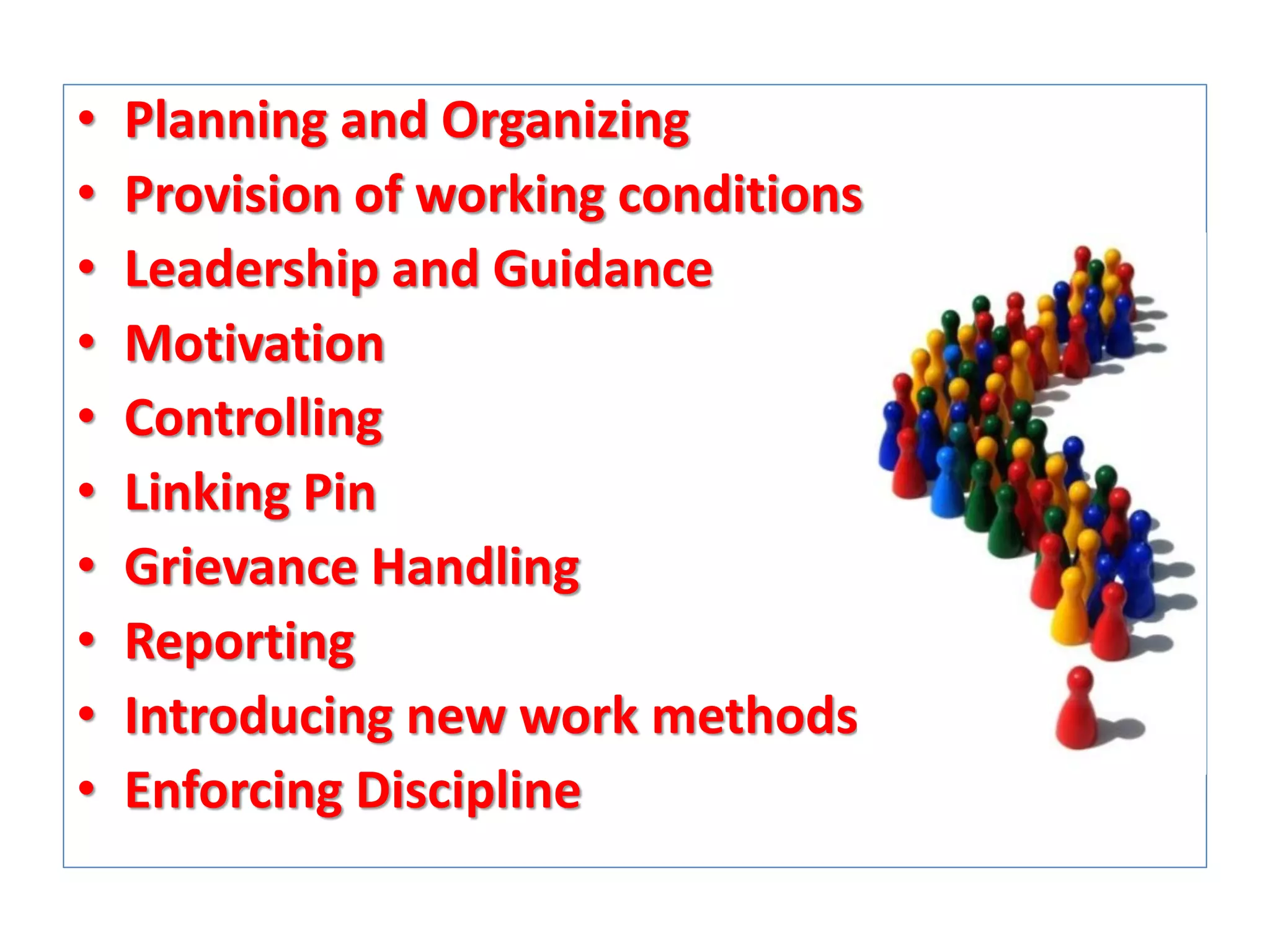
Planning and Organizing
Provision of working conditions
Leadership and Guidance
Motivation
Controlling
Linking Pin
Grievance Handling
Reporting
Introducing new work methods
Enforcing Discipline
.
.

Directing

  • 1.
  • 2.
    • DIRECTING issaid to be a process in which the managers instruct, guide and oversee the performance of the workers to achieve predetermined goals. • Directing is said to be all those activities which are designed to encourage the subordinates to work effectively and efficiently.
  • 3.
    • “Directing consistsof process or technique by which instruction can be issued and operations can be carried out as originally planned” • Directing is influencing people's behavior through motivation, communication, group dynamics, leadership and discipline.
  • 4.
  • 5.
    Characteristics • Pervasive Function- Directing is required at all levels of organization. Every manager provides guidance and inspiration to his subordinates. • Continuous Activity - Direction is a continuous activity as it continuous throughout the life of organization. • Human Factor - Directing function is related to subordinates and therefore it is related to human factor. Since human factor is complex and behaviour is unpredictable, direction function becomes important.
  • 6.
    • Creative Activity- Direction function helps in converting plans into performance. Without this function, people become inactive and physical resources are meaningless. • Executive Function - Direction function is carried out by all managers and executives at all levels throughout the working of an enterprise, a subordinate receives instructions from his superior only. • Delegate Function - Direction is supposed to be a function dealing with human beings. Human behaviour is unpredictable by nature and conditioning the people’s behaviour towards the goals of the enterprise is what the executive does in this function. Therefore, it is termed as having delicacy in it to tackle human behaviour.
  • 7.
    Importance… • • • • • • It Initiates Actions ItIntegrates Efforts Means of Motivation It Provides Stability Coping up with the changes Efficient Utilization of Resources
  • 8.
    Role Of Manager… •As a Planner - A supervisor has to plan the daily work schedules in the factory. At the same time he has to divide the work to various workers according to their abilities. • As a Manager - It is righty said that a supervisor is a part of the management team of an enterprise. He is ,in fact, an operative manager. • As a Guide and Leader - A factory supervisor leads the workers by guiding them the way of perform their daily tasks. In fact, he plays a role of an inspirer by telling them.
  • 9.
    • As aMediator - A Supervisor is called a linking pin between management and workers. He is the spokesperson of management as well as worker. • As an Inspector - An important role of supervisor is to enforce discipline in the factory. For this, the work includes checking progress of work against the time schedule, recording the work performances at regular intervals and reporting the deviations if any from those. He can also frame rules and regulations which have to be followed by workers during their work. • As a Counselor - A supervisor plays the role of a counselor to the worker’s problem. He has to perform this role in order to build good relations and cooperation from workers. This can be done not only by listening to the grievances but also handling the grievances and satisfying the workers.
  • 10.
    • • • • • • • • • • Planning and Organizing Provisionof working conditions Leadership and Guidance Motivation Controlling Linking Pin Grievance Handling Reporting Introducing new work methods Enforcing Discipline
  • 12.