CCeellllss -- 22001144 
Structure and Function
BByy tthhee eenndd ooff tthhiiss cchhaapptteerr II mmuusstt 
kknnooww>>>>>>>> 
 What are the parts to the cell theory and 2 exceptions to the 
cell theory. 
 What are the organelles and functions of the organelles in a 
Animal cell? Plant Cell? A Basic Prokaryotic Cell? 
 What are the structural differences between a Eukaryotic and 
Prokaryotic cell? 
 What are the structural differences between a Plant and 
Animal cell? 
 What is the Secretory pathway?**** 
 Can I draw/diagram a plant, animal, and bacterial cell with all 
the proper organelles
VVooccaabbuullaarryy 
 Prokaryote (ic) 
 Eukaryote (ic) 
 Cell Theory 
 Organelle 
 cytoplasm 
 Nucleus 
 Nucleolus 
 Cell membrane 
 Nuclear envelope 
 Chromatin 
 Ribosome 
 Endoplasmic reticulum 
– Smooth 
– Rough 
 Golgi Apparatus 
 Mitochondria 
 Chloroplast 
 Cell wall 
 Vacuole 
 Lysosome 
 peroxisome 
 Centriole 
 Cytoskelton 
 Slime capsule 
 Mesosome 
 Plasmid 
 Naked DNA
SSeeccttiioonn 11:: IInnttrroodduuccttiioonn ttoo tthhee CCeellll
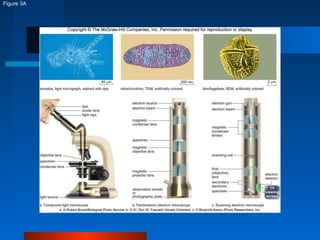
Figure 3A
DDiissccoovveerryy ooff CCeellllss 
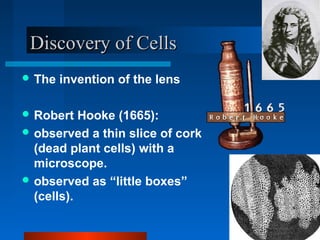
The invention of the lens 
Robert Hooke (1665): 
observed a thin slice of cork 
(dead plant cells) with a 
microscope. 
observed as “little boxes” 
(cells).
DDiissccoovveerryy ooff CCeellllss 
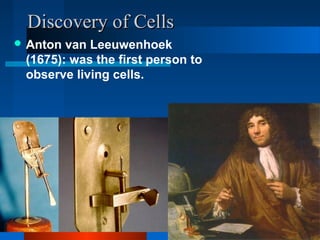
Anton van Leeuwenhoek 
(1675): was the first person to 
observe living cells.
TThhee CCeellll TThheeoorryy 
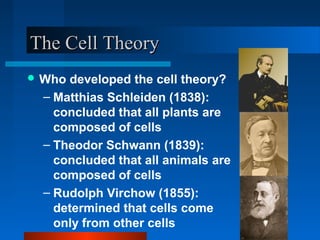
Who developed the cell theory? 
– Matthias Schleiden (1838): 
concluded that all plants are 
composed of cells 
– Theodor Schwann (1839): 
concluded that all animals are 
composed of cells 
– Rudolph Virchow (1855): 
determined that cells come 
only from other cells
TThhee CCeellll TThheeoorryy 
1. All living things are composed of one 
or more cells. 
2. Cells are organisms’ basic units of 
structure and function. 
3. Cells come only from existing cells.
EEXXCCEEPPTTIIOONNSS 
Skeletal muscles are made of fibers with 
hundreds of nuclei. Much larger than 
regular cells. 
Bone, blood and cartilage have 
extracellular material…proteins and fluids. 
Mitochondria and chloroplast contain DNA 
Viruses – have DNA and RNA surrounded 
by a protein coat!! NOT classified as a 
cell!
NNeeeeddeedd CCyyttoollooggiiccaall DDeeffiinniittiioonnss:: 
 Cell – basic unit of structure and function in a living organism. 
 Organelle – tiny structures in cells with specific functions. 
 Tissue – collection of cells that develop in the same way 
 Organs – groups of tissue that combine to form a single 
structure. 
 Organ System – groups of organs that together carry out a 
process 
 Autotroph – organism that can make its own food. 
(photosynthetic) 
 Heterotroph – organism that cannot make its own food. 
 Differentiate – the ability of multicellular organisms to have 
cells that specialize in a certain function.
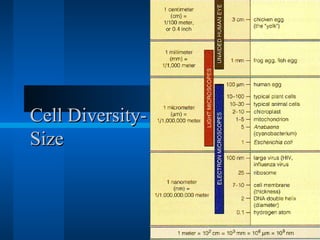
CCeellll DDiivveerrssiittyy-- 
SSiizzee
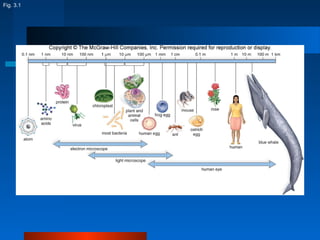
Fig. 3.1
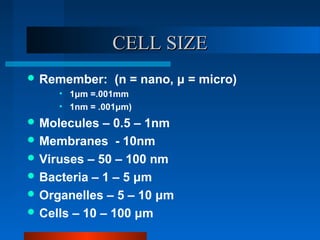
CCEELLLL SSIIZZEE 
Remember: (n = nano, μ = micro) 
• 1μm =.001mm 
• 1nm = .001μm) 
Molecules – 0.5 – 1nm 
Membranes - 10nm 
Viruses – 50 – 100 nm 
Bacteria – 1 – 5 μm 
Organelles – 5 – 10 μm 
Cells – 10 – 100 μm
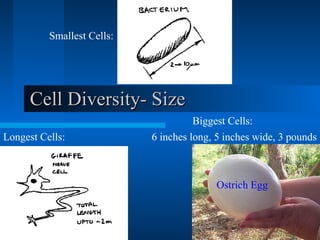
CCeellll DDiivveerrssiittyy-- SSiizzee 
Biggest Cells: 
6 inches long, 5 inches wide, 3 pounds 
Smallest Cells: 
Longest Cells: 
Ostrich Egg
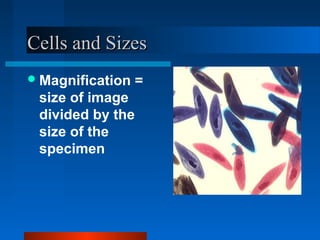
CCeellllss aanndd SSiizzeess 
Magnification = 
size of image 
divided by the 
size of the 
specimen
CCeellll DDiivveerrssiittyy-- SShhaappee 
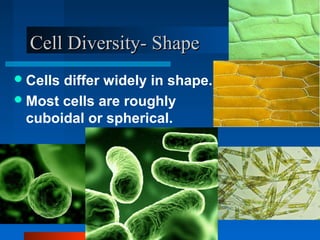
Cells differ widely in shape. 
Most cells are roughly 
cuboidal or spherical.
CCeellllss 
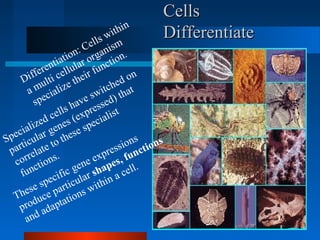
DDiiffffeerreennttiiaattee 
Differentiation: Cells within 
a multi cellular organism 
specialize their function. 
Specialized cells have switched on 
particular genes (expressed) that 
correlate to these specialist 
functions. 
These specific gene expressions 
produce particular shapes, functions 
and adaptations within a cell.
PPrrookkaarryyoottiicc CCeellllss 
Cells Video – You’ll Love this one!!!!
PPrrookkaarryyootteess vvss.. EEuukkaarryyootteess 
AANN OOvveerrvviieeww !!!! 
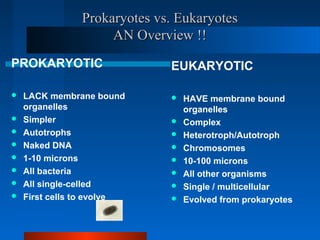
PROKARYOTIC 
 LACK membrane bound 
organelles 
 Simpler 
 Autotrophs 
 Naked DNA 
 1-10 microns 
 All bacteria 
 All single-celled 
 First cells to evolve 
EUKARYOTIC 
 HAVE membrane bound 
organelles 
 Complex 
 Heterotroph/Autotroph 
 Chromosomes 
 10-100 microns 
 All other organisms 
 Single / multicellular 
 Evolved from prokaryotes
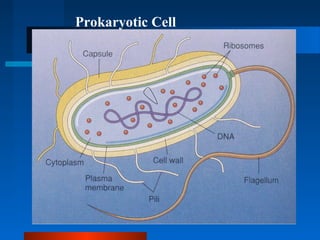
Prokaryotic Cell
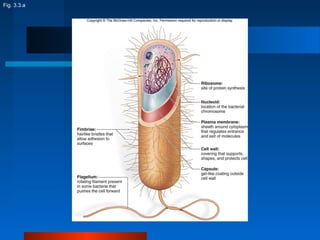
Fig. 3.3.a
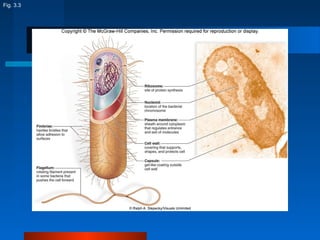
Fig. 3.3
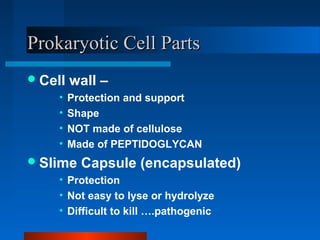
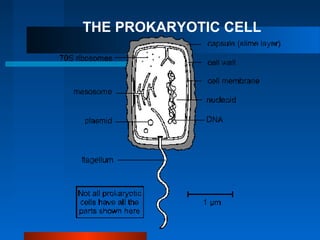
PPrrookkaarryyoottiicc CCeellll PPaarrttss 
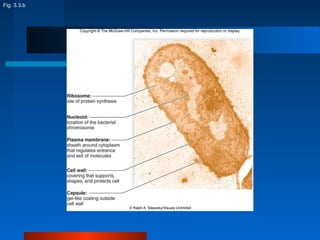
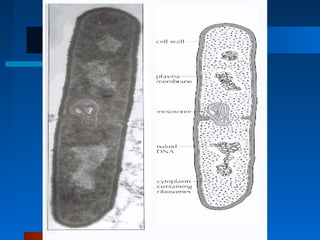
Cell wall – 
• Protection and support 
• Shape 
• NOT made of cellulose 
• Made of PEPTIDOGLYCAN 
Slime Capsule (encapsulated) 
• Protection 
• Not easy to lyse or hydrolyze 
• Difficult to kill ….pathogenic
PPrrookkaarryyoottiicc CCeellll PPaarrttss 
Plasma membrane 
• Controls passage of materials 
• Selectively permeable (semi permeable) 
Flagella 
– Movement in a liquid environment 
Pilli (us) 
– Hair like projection 
– Help bacteria stick to its background 
– Allows 2 bacterial cells to stick together: 
conjugation!!
PPrrookkaarryyoottiicc CCeellll PPaarrttss 
Ribosome – protein synthesis 
Plasmid – small circular DNA chain. 
Codes for synthesis of certain proteins. 
Used in genetic engineering.
PPrrookkaarryyoottiicc CCeellll PPaarrttss 
Ribosome – protein synthesis 
Plasmid – small circular DNA chain. 
Codes for synthesis of certain proteins. 
Used in genetic engineering.
PPrrookkaarryyoottiicc CCeellll PPaarrttss 
Naked DNA – Naked nucleic acid. DNA not 
surrounded by a membrane. Carries genetic 
code. Located in the “nucleoid” region. 
Mesosome 
• Helps in cell division 
• Increases surface area 
• In aerobic bacteria: holds respiratory chain 
• In photosynthetic bacteria: holds photosynthetic pigments.
Fig. 3.3.b
THE PROKARYOTIC CELL
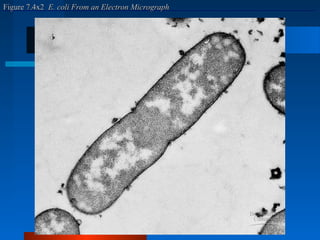
FFiigguurree 77..44xx22 EE.. ccoollii FFrroomm aann EElleeccttrroonn MMiiccrrooggrraapphh
Other Characteristics ooff PPrrookkaarryyootteess
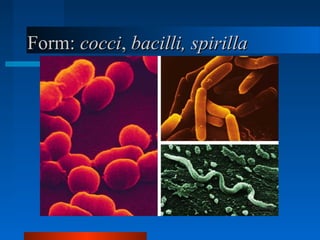
FFoorrmm:: ccooccccii,, bbaacciillllii,, ssppiirriillllaa
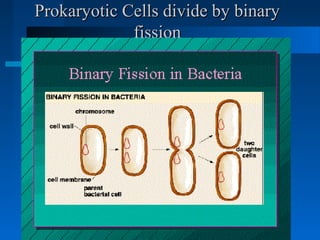
Prokaryotic CCeellllss ddiivviiddee bbyy bbiinnaarryy 
ffiissssiioonn
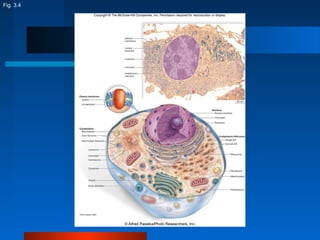
EEuukkaarryyoottiicc CCeellllss
Fig. 3.4
Fig. 3.4.a
Fig. 3.4.b
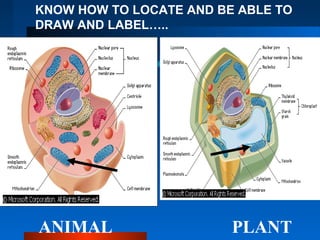
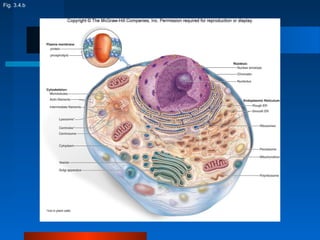
KNOW HOW TO LOCATE AND BE ABLE TO 
DRAW AND LABEL….. 
ANIMAL PLANT
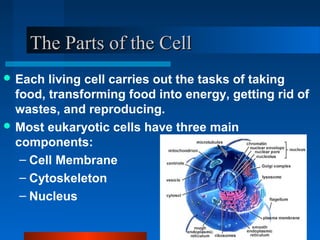
TThhee PPaarrttss ooff tthhee CCeellll 
Each living cell carries out the tasks of taking 
food, transforming food into energy, getting rid of 
wastes, and reproducing. 
Most eukaryotic cells have three main 
components: 
– Cell Membrane 
– Cytoskeleton 
– Nucleus
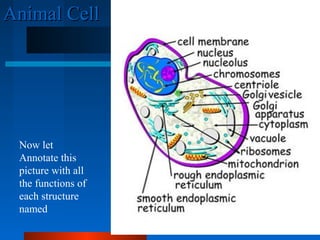
AAnniimmaall CCeellll 
Now let 
Annotate this 
picture with all 
the functions of 
each structure 
named
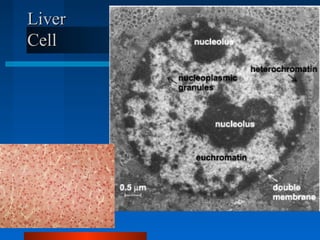
LLiivveerr 
CCeellll
SSttrruuccttuurree aanndd FFuunnccttiioonn ooff OOrrggaanneelllleess
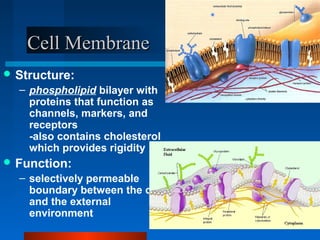
CCeellll MMeemmbbrraannee 
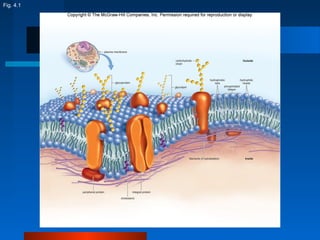
Structure: 
– phospholipid bilayer with 
proteins that function as 
channels, markers, and 
receptors 
-also contains cholesterol 
which provides rigidity 
Function: 
– selectively permeable 
boundary between the cell 
and the external 
environment
Fig. 4.1
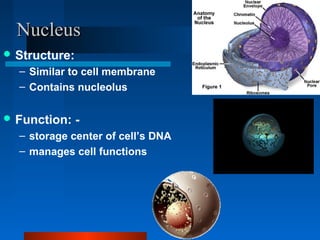
NNuucclleeuuss 
Structure: 
– Similar to cell membrane 
– Contains nucleolus 
Function: - 
– storage center of cell’s DNA 
– manages cell functions
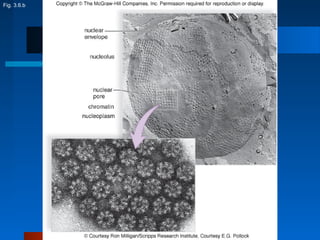
Fig. 3.6.b
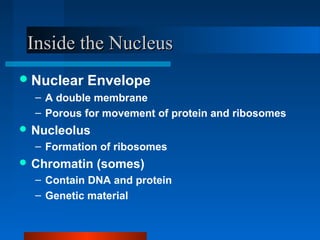
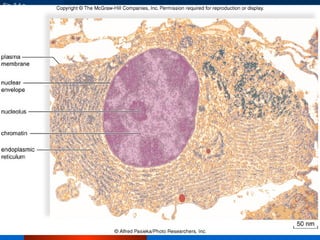
IInnssiiddee tthhee NNuucclleeuuss 
Nuclear Envelope 
– A double membrane 
– Porous for movement of protein and ribosomes 
Nucleolus 
– Formation of ribosomes 
Chromatin (somes) 
– Contain DNA and protein 
– Genetic material
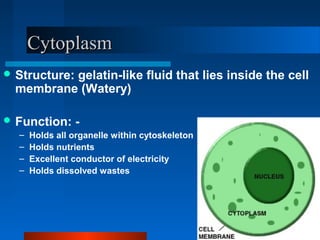
CCyyttooppllaassmm 
Structure: gelatin-like fluid that lies inside the cell 
membrane (Watery) 
Function: - 
– Holds all organelle within cytoskeleton 
– Holds nutrients 
– Excellent conductor of electricity 
– Holds dissolved wastes
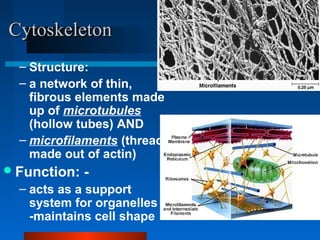
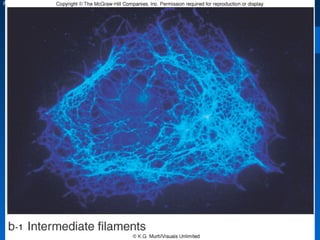
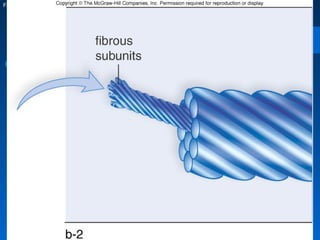
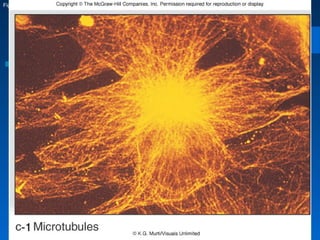
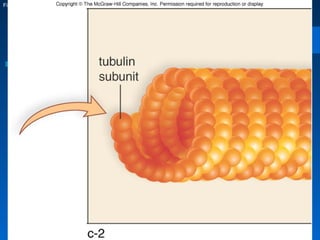
CCyyttoosskkeelleettoonn 
– Structure: 
– a network of thin, 
fibrous elements made 
up of microtubules 
(hollow tubes) AND 
– microfilaments (threads 
made out of actin) 
Function: - 
– acts as a support 
system for organelles 
-maintains cell shape
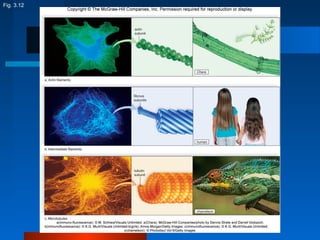
Fig. 3.12
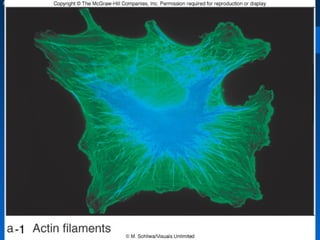
Fig. 3.12.a1
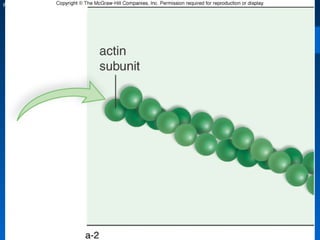
Fig. 3.12.a2
Fig. 3.12.a3
Fig. 3.12.b1
Fig. 3.12.b2
Fig. 3.12.c1
Fig. 3.12.c2
Fig. 3.13.a
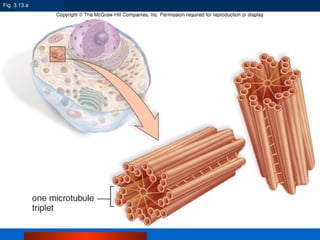
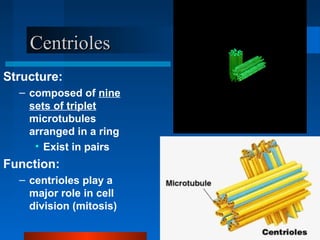
CCeennttrriioolleess 
Structure: 
– composed of nine 
sets of triplet 
microtubules 
arranged in a ring 
• Exist in pairs 
Function: 
– centrioles play a 
major role in cell 
division (mitosis)
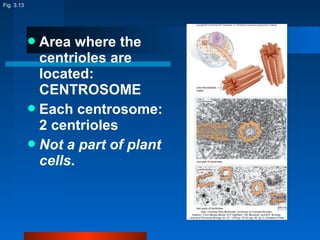
Area where the 
centrioles are 
located: 
CENTROSOME 
Each centrosome: 
2 centrioles 
Not a part of plant 
cells. 
Fig. 3.13
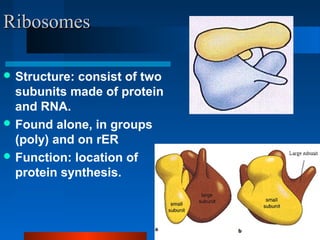
RRiibboossoommeess 
Structure: consist of two 
subunits made of protein 
and RNA. 
Found alone, in groups 
(poly) and on rER 
Function: location of 
protein synthesis.
Fig. 3.7.a
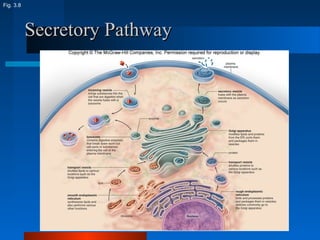
TThhee SSeeccrreettoorryy PPaatthhwwaayy 
Endoplasmic Reticulum 
Golgi Apparatus 
Lysosome 
Peroxisome
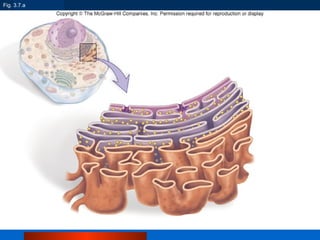
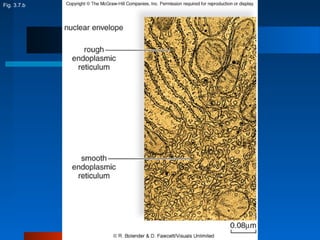
EEnnddooppllaassmmiicc RReettiiccuulluumm 
Structure: a system of membranous tubes and 
sacs 
Function: 
– intracellular “highway” (a path along which molecules 
move from one part of the cell to another) 
– Forms transport vesicles 
Two types: 
– Rough Endoplasmic Reticulum – always near 
nucleus 
– Smooth Endoplasmic Reticulum – attached to 
rER
Fig. 3.7.b
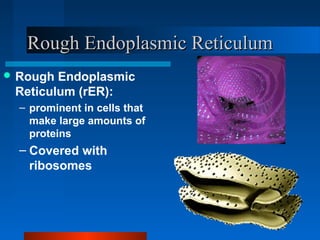
RRoouugghh EEnnddooppllaassmmiicc RReettiiccuulluumm 
Rough Endoplasmic 
Reticulum (rER): 
– prominent in cells that 
make large amounts of 
proteins 
– Covered with 
ribosomes
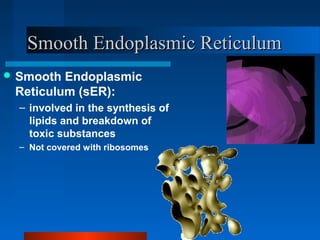
SSmmooootthh EEnnddooppllaassmmiicc RReettiiccuulluumm 
Smooth Endoplasmic 
Reticulum (sER): 
– involved in the synthesis of 
lipids and breakdown of 
toxic substances 
– Not covered with ribosomes
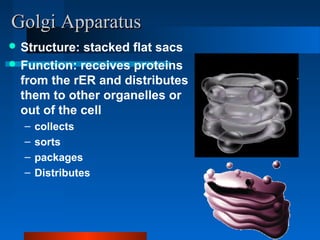
GGoollggii AAppppaarraattuuss 
Structure: stacked flat sacs 
Function: receives proteins 
from the rER and distributes 
them to other organelles or 
out of the cell 
– collects 
– sorts 
– packages 
– Distributes
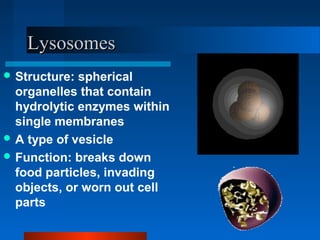
LLyyssoossoommeess 
Structure: spherical 
organelles that contain 
hydrolytic enzymes within 
single membranes 
A type of vesicle 
Function: breaks down 
food particles, invading 
objects, or worn out cell 
parts
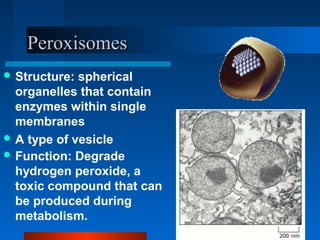
PPeerrooxxiissoommeess 
Structure: spherical 
organelles that contain 
enzymes within single 
membranes 
A type of vesicle 
Function: Degrade 
hydrogen peroxide, a 
toxic compound that can 
be produced during 
metabolism.
Fig. 3.8
SSeeccrreettoorryy PPaatthhwwaayy 
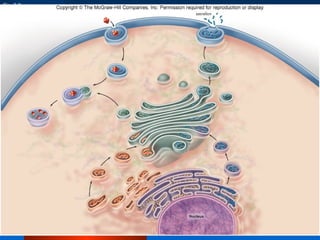
rER packages protein into vesicles that 
separate from ER 
Vesicles travel and fuse with Golgi 
Apparatus 
Golgi modifies & repackages protein into 
new secretory vesicles. 
Secretory Vesicles released into 
cytoplasm 
Vesicles fuse with Cell Membrane 
Contents released – SECRETION!
SSeeccrreettoorryy PPaatthhwwaayy 
Fig. 3.8
MITOCHONDRIA
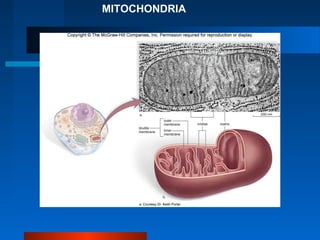
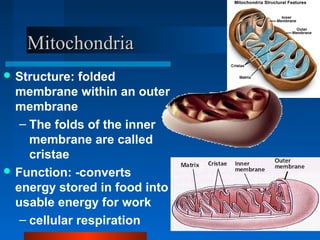
MMiittoocchhoonnddrriiaa 
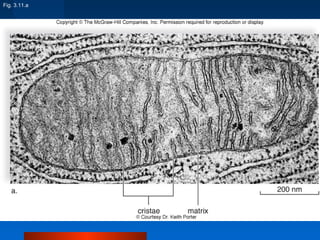
Structure: folded 
membrane within an outer 
membrane 
– The folds of the inner 
membrane are called 
cristae 
Function: -converts 
energy stored in food into 
usable energy for work 
– cellular respiration
Fig. 3.11.a
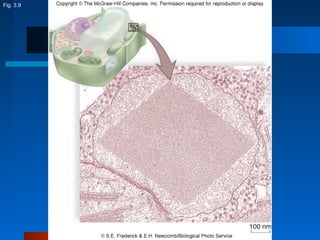
Fig. 3.9
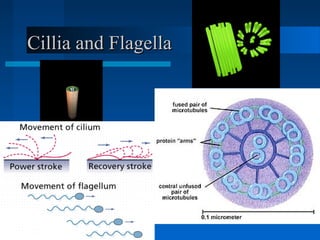
CCiilliiaa aanndd FFllaaggeellllaa 
Structure: hair-like organelles that extend from the 
surface of cells 
– When they are present in large numbers on a 
cell they are called cilia 
– When they are less numerous and longer they 
are called flagella 
– Both organelles are composed of nine pairs of 
microtubules arranged around a central pair. 
Function: cell motility
CCiilllliiaa aanndd FFllaaggeellllaa
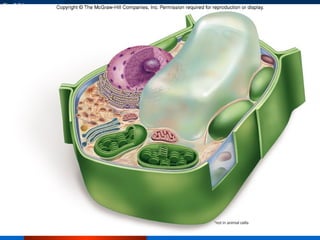
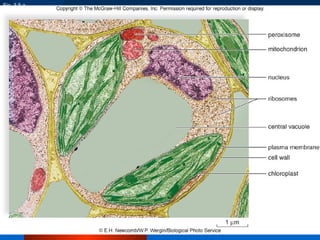
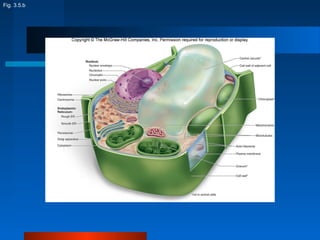
PPLLAANNTT CCEELLLLSS 
The other Eukaryotic Cell
Fig. 3.5.b
Fig. 3.5.a
Fig. 3.5.b
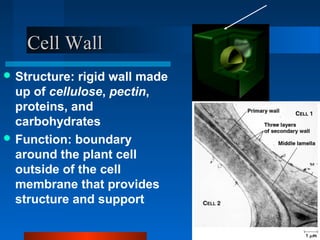
CCeellll WWaallll 
Structure: rigid wall made 
up of cellulose, pectin, 
proteins, and 
carbohydrates 
Function: boundary 
around the plant cell 
outside of the cell 
membrane that provides 
structure and support
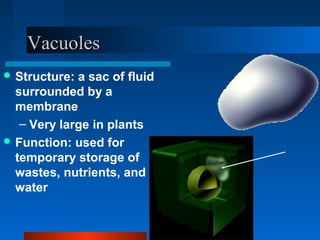
VVaaccuuoolleess 
Structure: a sac of fluid 
surrounded by a 
membrane 
– Very large in plants 
Function: used for 
temporary storage of 
wastes, nutrients, and 
water
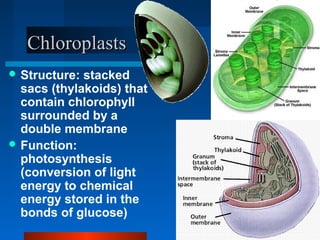
CChhlloorrooppllaassttss 
Structure: stacked 
sacs (thylakoids) that 
contain chlorophyll 
surrounded by a 
double membrane 
Function: 
photosynthesis 
(conversion of light 
energy to chemical 
energy stored in the 
bonds of glucose)
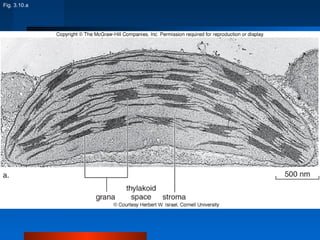
Fig. 3.10.a
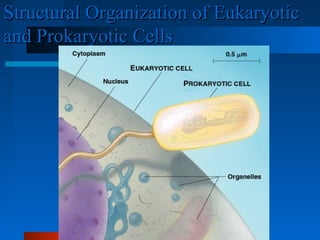
O Structural Orrggaanniizzaattiioonn ooff EEuukkaarryyoottiicc 
aanndd PPrrookkaarryyoottiicc CCeellllss
EEuukkaarryyootteess vvss.. PPrrookkaarryyootteess 
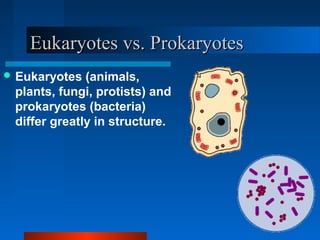
Eukaryotes (animals, 
plants, fungi, protists) and 
prokaryotes (bacteria) 
differ greatly in structure.
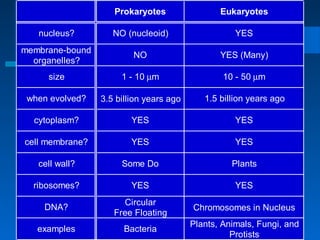
Prokaryotes Eukaryotes 
nucleus? NO (nucleoid) YES 
membrane-bound 
organelles? NO YES (Many) 
size 1 - 10 mm 10 - 50 mm 
when evolved? 3.5 billion years ago 1.5 billion years ago 
cytoplasm? YES YES 
cell membrane? YES YES 
cell wall? Some Do Plants 
ribosomes? YES YES 
DNA? Circular 
Free Floating Chromosomes in Nucleus 
examples Bacteria Plants, Animals, Fungi, and 
Protists
PPllaanntt CCeellllss vvss.. AAnniimmaall CCeellllss 
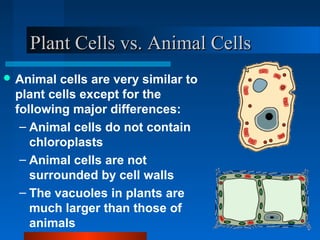
Animal cells are very similar to 
plant cells except for the 
following major differences: 
– Animal cells do not contain 
chloroplasts 
– Animal cells are not 
surrounded by cell walls 
– The vacuoles in plants are 
much larger than those of 
animals
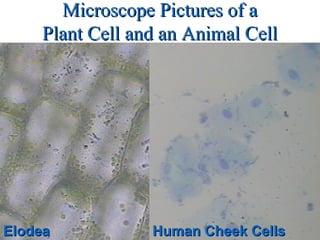
MMiiccrroossccooppee PPiiccttuurreess ooff aa 
PPllaanntt CCeellll aanndd aann AAnniimmaall CCeellll 
EEllooddeeaa HHuummaann CChheeeekk CCeellllss
CCeelllluullaarr LLeevveellss ooff OOrrggaanniizzaattiioonn 
Cell 
Tissue 
Organ 
Organ System 
Organism
TTHHEE EENNDD!!

Hbcells15

Editor's Notes

  • #12 tissue a group of cells of one type with similar structure and function for example: plant parenchyma and squamous epithelium organ a group of at least two tissue types combined to carry out a function together for example: plant root, animal kidney organ system an integrated group of organs with a common (shared) function for example: vascular system, endocrine system)
  • #15 Define organelle = a discrete structure within a cell, and has a specific function 7. Compare the relative sizes of molecules, cell membrane thickness, viruses, bacteria, organelles and cells, using appropriate SI units molecules: ~ 1 nm cell membrane thickness: ~ 10 nm viruses: ~ 100 nm bacteria: ~ 1 µm organelles: up to 10 µm eukaryotic cells: up to 100 µm
  • #21 Compare prokaryotic and eukaryotic cells. Prokaryotic Nucleoid (no membrane) No membrane-found organelles Only bacteria Size: 1 - 10 µm Evolved at least 3.5 billion years ago Eukaryotic True nucleus (membrane enclosed) Many organelles All cells other than bacteria Size: 2 - 1000 µm Evolved 1.5 - 2 billion years ago