The Similarities and Differences of
                  Animal and Plant Cells
                       Created by
                         C. Rhein
Teacher’s Page     Hazelwood Central            Forward
Cells
• Cells are the basic units of function in all
  living things.
• Cells in animals and plants have unique
  forms that allow each to take part in
  processes that are necessary for the cell and
  or/living thing to survive.
  Let’s take a closer look at the
  similarities and differences between
  animal and plant cells.
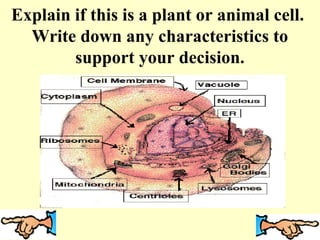
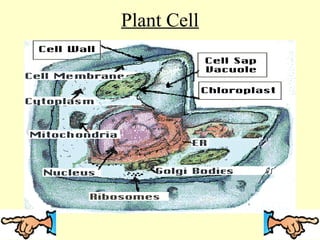
Explain if this is a plant or animal cell.
  Write down any characteristics to
        support your decision.
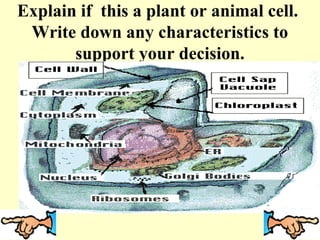
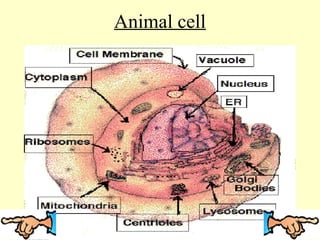
Explain if this a plant or animal cell.
 Write down any characteristics to
       support your decision.
Plant Cell
Animal cell
Now that you have seen pictures of the
cells, exactly what are the organelles.
  • What is an organelle?
  • Organelles are to cells what organs are to
    the body.
  • They carry out the individual tasks of
    gaining and working with energy, as well
    as directing the overall behavior of the
    cells.
  • Let’s familiarize yourself with the
    organelles of the animal and plant cell.
Organelles :        Function :
Nucleus:            Contains the DNA and RNA
                    and manufactures proteins
Nucleolus:          In nuclei where ribosomes are
                    synthesized.
Nuclear Envelope:   Membrane of lipids and
                    proteins that surrounds nucleus
Centrioles:         structure that appears during
                    mitosis(cell division)
Mitochondria:       Energy producers of the cell
Ribosomes:          Produce proteins

                                 More Organelles
Organelles     Function
Golgi Bodies:  Packages Proteins
Chloroplasts:  Involved in photosynthesis
Vacuoles:      Store waste, nutrients, and
               water
Lysosome:      Contains digestive
               enzymes, mostly in animal
               cells
Endoplasmic Reticulum: Passageway that
               transports proteins from
               the nucleus
     Rough ER covered in ribosomes,
     Smooth ER is not!
While not exactly organelles, the
following are important parts of
           the cells:
• Cell membrane:   Semi-permeable lining
                   that surrounds the cell
• Cell Wall:       Is a stiff non-living
                   wall that surrounds the
                   cell membrane made of
                   cellulose
• Cytoplasm:       Jelly-like material
                   surrounding the
                   organelles
There are a few important
 processes in which the plant and
      animal cell engages:
• Diffusion:            How food, air, and
                        water gets in and out
                        of the cell.
• Cellular Respiration: How an animal cell
                        gets energy.
• Photosynthesis:       How a plant cell gets
                        energy.
Animal and Plant cells have many
  similarities. Can you write the
organelles and cell parts they both
         have in common.
Similarities
• Both contain:
• Nucleus, Nuclear Envelope, Chromosomes-
  which carry the genes or the DNA.
• Cytoplasm
• Mitochondria
• Cell membranes
• Any others?
Animal and plant cells are also
different. Can you explain four
reasons as to how plant cells are
  different from animal cells?
Differences
• Plant cells have non-living rigid cell walls.
• Plant cells contain chloroplasts which
  contain chlorophyll, a green chemical
  needed for photosynthesis.
• Plant cells contain a large vacuole; animal
  cells never contain large vacuoles.
• Plant cells are regular in shape; animal cells
  are irregular in shape.
                                   Back to
                                   Home Page

Animal plantcells

  • 1.
    The Similarities andDifferences of Animal and Plant Cells Created by C. Rhein Teacher’s Page Hazelwood Central Forward
  • 2.
    Cells • Cells arethe basic units of function in all living things. • Cells in animals and plants have unique forms that allow each to take part in processes that are necessary for the cell and or/living thing to survive. Let’s take a closer look at the similarities and differences between animal and plant cells.
  • 3.
    Explain if thisis a plant or animal cell. Write down any characteristics to support your decision.
  • 4.
    Explain if thisa plant or animal cell. Write down any characteristics to support your decision.
  • 5.
  • 6.
  • 7.
    Now that youhave seen pictures of the cells, exactly what are the organelles. • What is an organelle? • Organelles are to cells what organs are to the body. • They carry out the individual tasks of gaining and working with energy, as well as directing the overall behavior of the cells. • Let’s familiarize yourself with the organelles of the animal and plant cell.
  • 8.
    Organelles : Function : Nucleus: Contains the DNA and RNA and manufactures proteins Nucleolus: In nuclei where ribosomes are synthesized. Nuclear Envelope: Membrane of lipids and proteins that surrounds nucleus Centrioles: structure that appears during mitosis(cell division) Mitochondria: Energy producers of the cell Ribosomes: Produce proteins More Organelles
  • 9.
    Organelles Function Golgi Bodies: Packages Proteins Chloroplasts: Involved in photosynthesis Vacuoles: Store waste, nutrients, and water Lysosome: Contains digestive enzymes, mostly in animal cells Endoplasmic Reticulum: Passageway that transports proteins from the nucleus Rough ER covered in ribosomes, Smooth ER is not!
  • 10.
    While not exactlyorganelles, the following are important parts of the cells: • Cell membrane: Semi-permeable lining that surrounds the cell • Cell Wall: Is a stiff non-living wall that surrounds the cell membrane made of cellulose • Cytoplasm: Jelly-like material surrounding the organelles
  • 11.
    There are afew important processes in which the plant and animal cell engages: • Diffusion: How food, air, and water gets in and out of the cell. • Cellular Respiration: How an animal cell gets energy. • Photosynthesis: How a plant cell gets energy.
  • 12.
    Animal and Plantcells have many similarities. Can you write the organelles and cell parts they both have in common.
  • 13.
    Similarities • Both contain: •Nucleus, Nuclear Envelope, Chromosomes- which carry the genes or the DNA. • Cytoplasm • Mitochondria • Cell membranes • Any others?
  • 14.
    Animal and plantcells are also different. Can you explain four reasons as to how plant cells are different from animal cells?
  • 15.
    Differences • Plant cellshave non-living rigid cell walls. • Plant cells contain chloroplasts which contain chlorophyll, a green chemical needed for photosynthesis. • Plant cells contain a large vacuole; animal cells never contain large vacuoles. • Plant cells are regular in shape; animal cells are irregular in shape. Back to Home Page