Cell Membrane & Transport
Cell Membrane Transport In & Out of the Cell Cell membrane is   semi-permeable,  meaning it is a barrier to most, but not all molecules
Cell membranes are bilayers of phospholipids with the hydrophobic regions facing each other and the hydrophilic regions facing out
The  Fluid Mosaic Model  is the theory by which the properties of the plasma membrane are explained. Mosaic:  mixture of phospholipids, cholesterol, & proteins Fluid:  components may move or shift but are kept ordered due to hydrophobic forces
Osmosis The Diffusion of  Water Through a Biological Membrane.
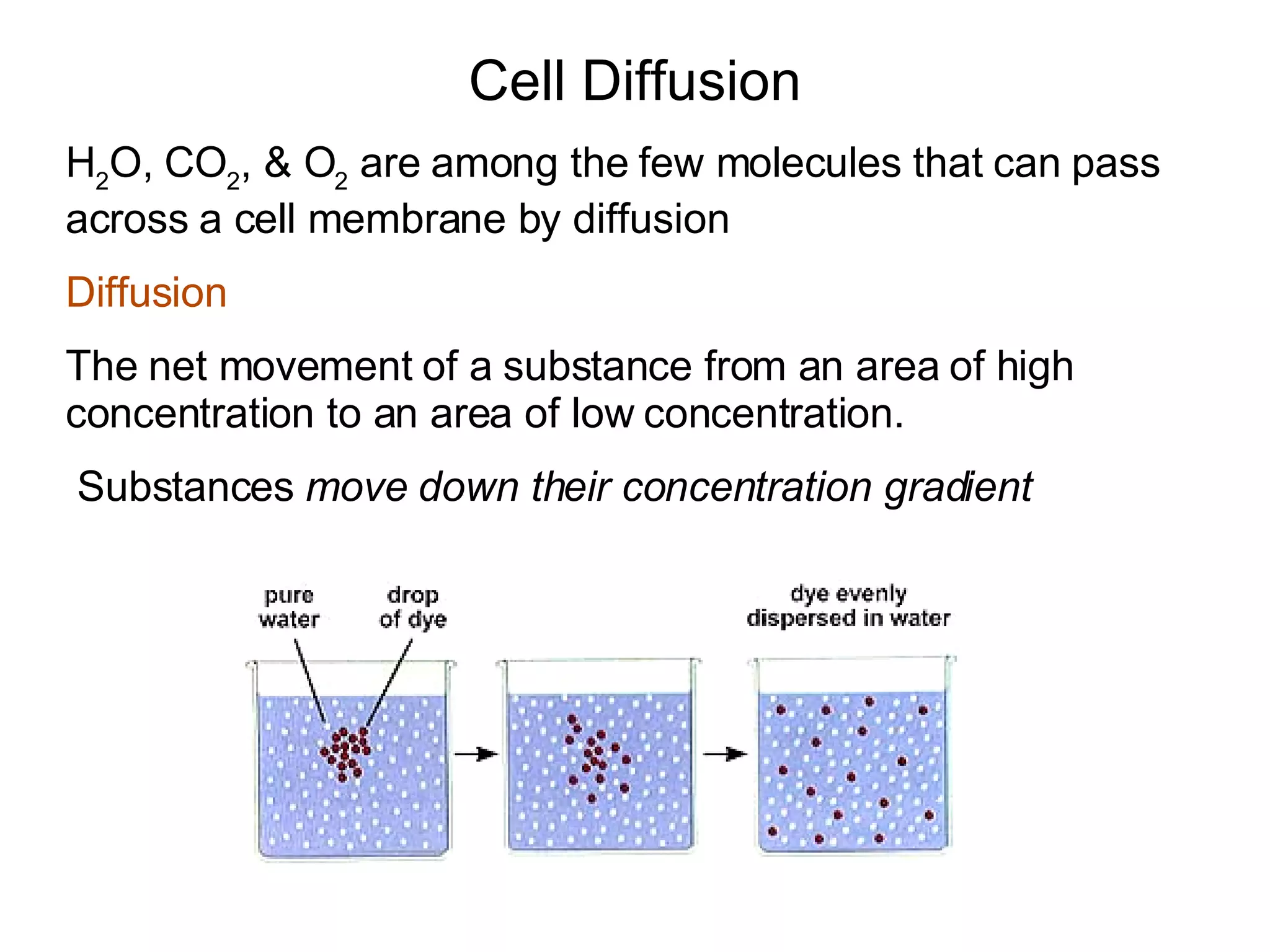
Cell Diffusion H 2 O, CO 2 , & O 2  are among the few molecules that can pass across a cell membrane by diffusion Diffusion The net movement of a substance from an area of high concentration to an area of low concentration. Substances  move down their concentration gradient
Osmosis : Diffusion of H 2 O across a semi-permeable membrane As the concentration of  solute  increases the concentration of  solvent  (H 2 O) decreases Compared to an equal volume of water, the solute/H 2 O mixture has less H 2 O molecules as that space is taken up by the solute
What is Osmosis? Osmosis is a form of diffusion. It is a passive process because it does not require outside energy to start the process. It is the movement of water molecules from a higher concentration to a lower concentration through a semi permeable membrane.
How does it Work? The cell is a closed structure protected by its semi permeable plasma membrane. This membrane will allow certain molecules to enter or leave the cell, depending on their size and or charge (+ or -). Water will to enter or leave the cell based upon its concentration on either side of the cell’s membrane.
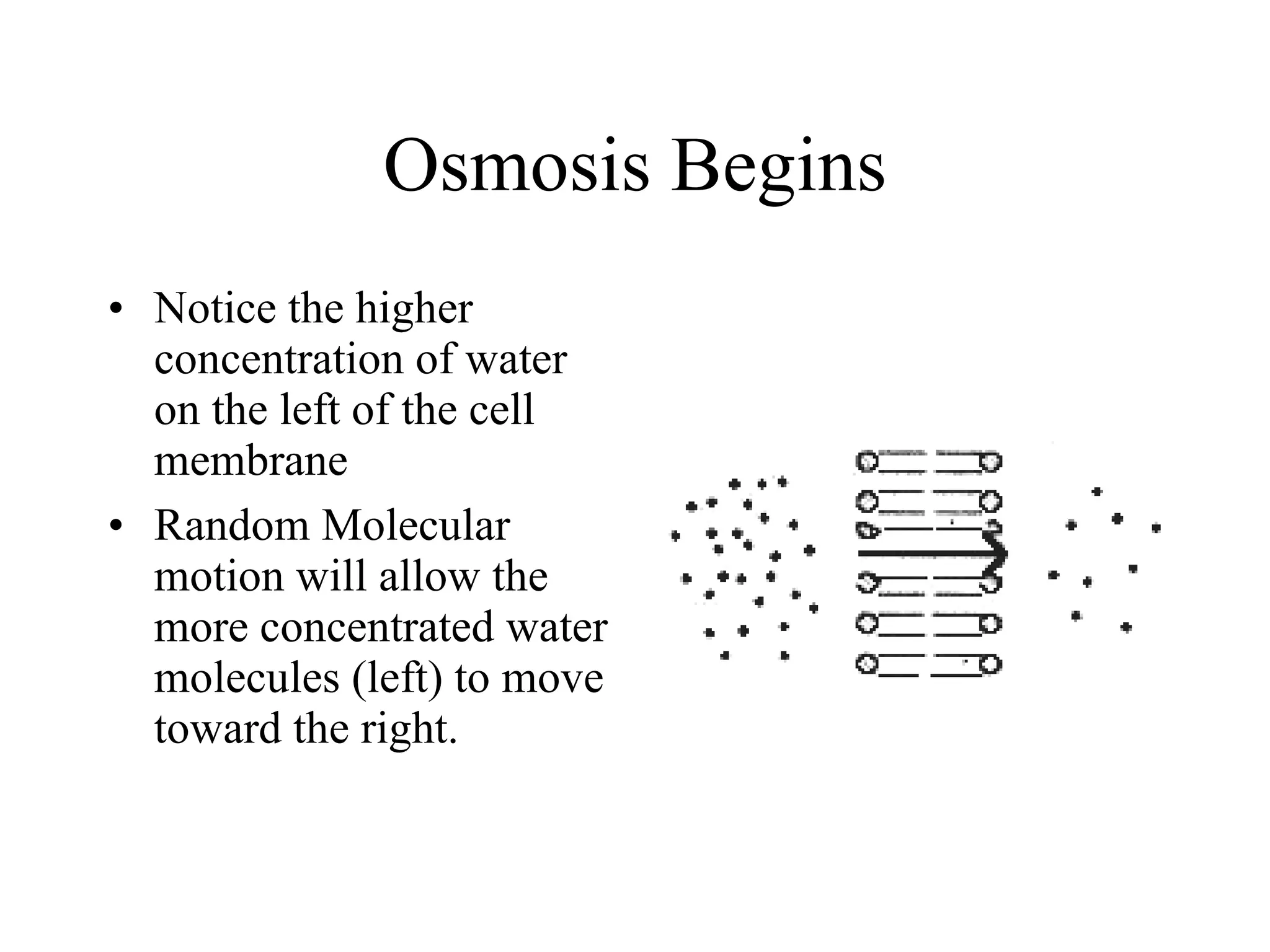
Osmosis Begins Notice the higher concentration of water on the left of the cell membrane Random Molecular motion will allow the more concentrated water molecules (left) to move toward the right.
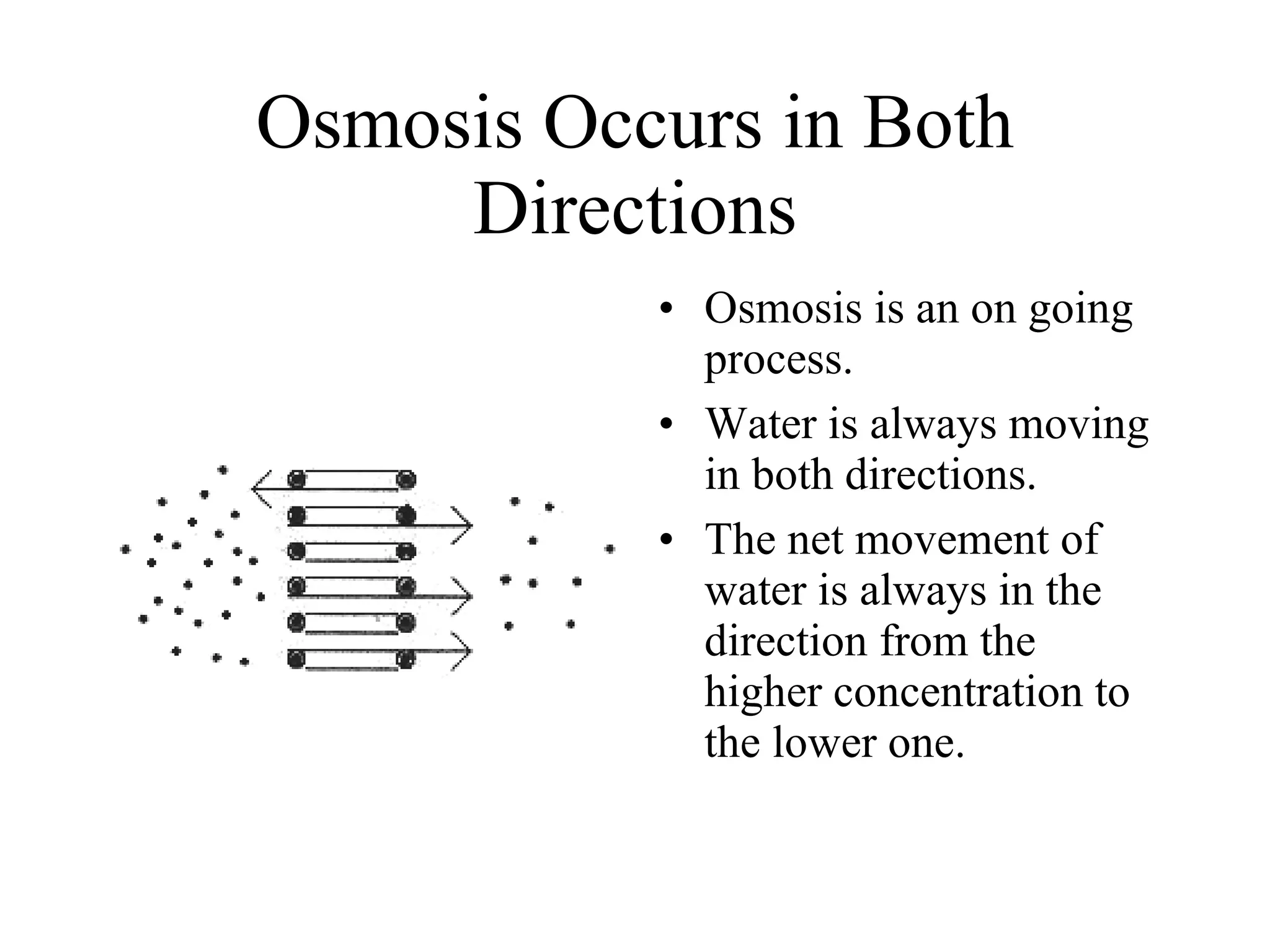
Osmosis Occurs in Both Directions Osmosis is an on going process.  Water is always moving in both directions. The net movement of water is always in the direction from the higher concentration to the lower one.
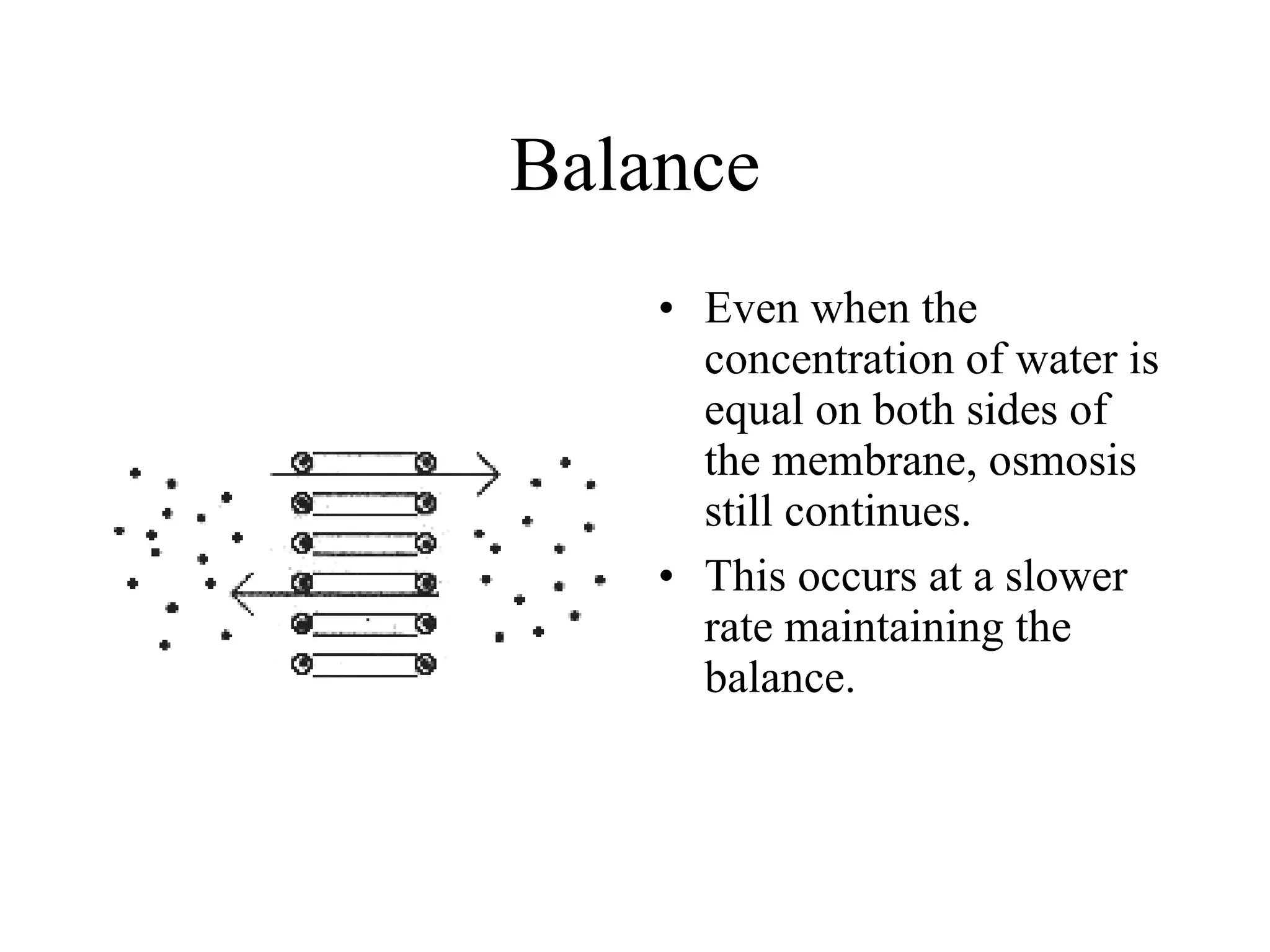
Balance Even when the concentration of water is equal on both sides of the membrane, osmosis still continues. This occurs at a slower rate maintaining the balance.
Let’s Apply this to a Real Situation What can cause a human blood cell to swell and burst or shrink?
Hypertonic Solution When the solution inside the blood cell has a high solute concentration than its environment, the cell is said to be hypertonic to its environment. Water will diffuse in. The cell cannot get rid of the  water fast enough, and the cell  swells and lysis.
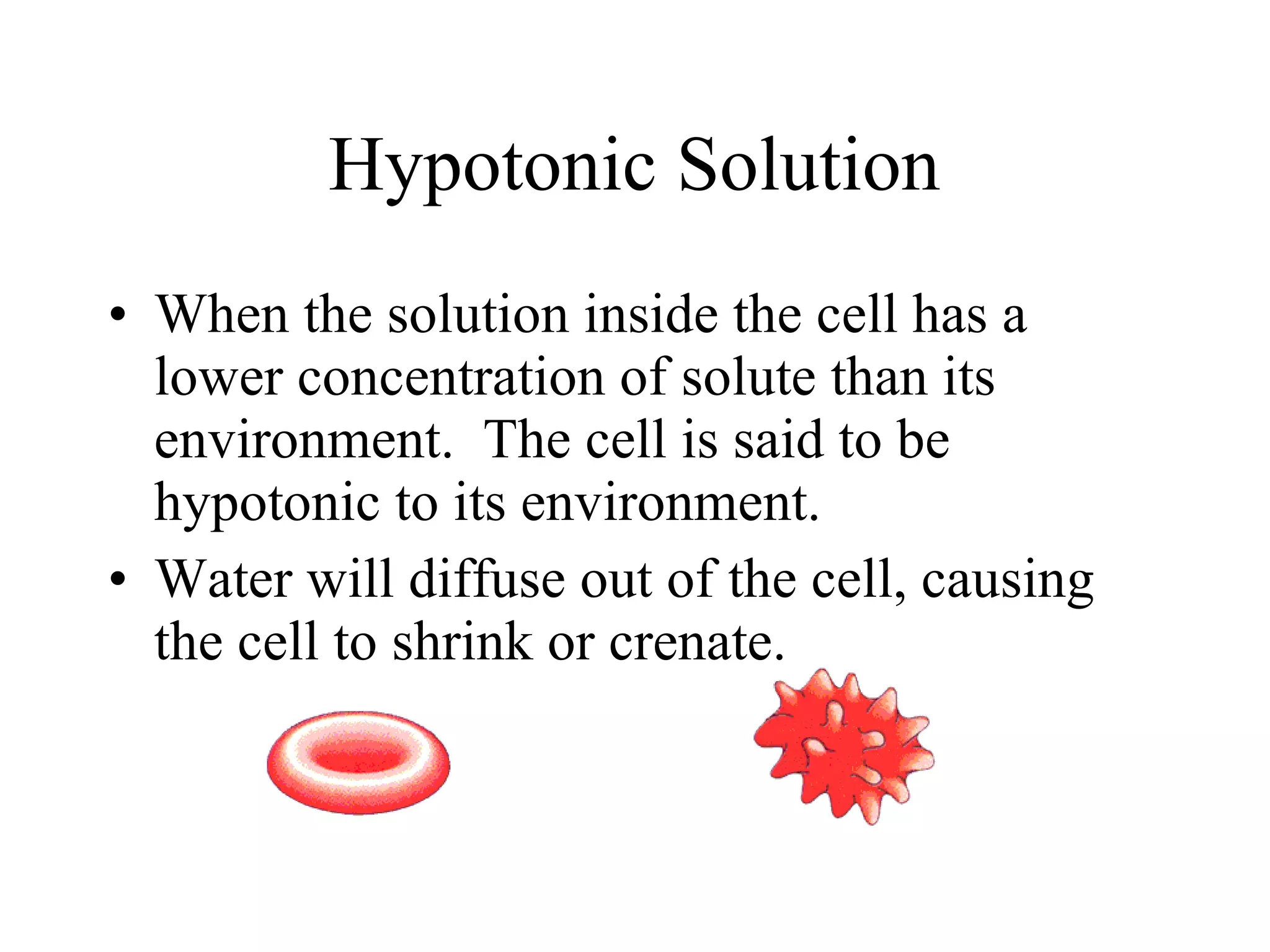
Hypotonic Solution When the solution inside the cell has a lower concentration of solute than its environment.  The cell is said to be hypotonic to its environment. Water will diffuse out of the cell, causing the cell to shrink or crenate.
Isotonic Solution When the solute concentration outside the cell equals the solute concentration inside the cell, the cell retains its shape.
Osmosis in Plant Cells The cell wall of a plant will prevent the cell from exploding if placed in a hypotonic solution. Instead the extra water will push against the wall making the cell stiff or turgid. Cell Membrane Cell Wall Tonoplast Chloroplast Nucleus
Why Salt Water Fish die in Fresh Water. The cells of a salt water fish are hypertonic to the fresh water that surround them.  The water will move into the cells causing them to swell and lyse. The gill and blood cells die, eventually killing the fish.
Why a Fresh Water Fish dies in Salt Water. The cells of a freshwater fish are hypotonic to the salt water that surround them.  The water will move out of the cells causing them to shrink or crenate. The gill and blood cells die, eventually killing the fish.
Practice Why is the water leaving the cell? What must be done to allow the water to reenter the cell?  What does the 3 and 5  % represent? 3% salt 5% salt

Cell membrane and Osmosis

  • 1.
    Cell Membrane &Transport
  • 2.
    Cell Membrane TransportIn & Out of the Cell Cell membrane is semi-permeable, meaning it is a barrier to most, but not all molecules
  • 3.
    Cell membranes arebilayers of phospholipids with the hydrophobic regions facing each other and the hydrophilic regions facing out
  • 4.
    The FluidMosaic Model is the theory by which the properties of the plasma membrane are explained. Mosaic: mixture of phospholipids, cholesterol, & proteins Fluid: components may move or shift but are kept ordered due to hydrophobic forces
  • 5.
    Osmosis The Diffusionof Water Through a Biological Membrane.
  • 6.
    Cell Diffusion H2 O, CO 2 , & O 2 are among the few molecules that can pass across a cell membrane by diffusion Diffusion The net movement of a substance from an area of high concentration to an area of low concentration. Substances move down their concentration gradient
  • 7.
    Osmosis : Diffusionof H 2 O across a semi-permeable membrane As the concentration of solute increases the concentration of solvent (H 2 O) decreases Compared to an equal volume of water, the solute/H 2 O mixture has less H 2 O molecules as that space is taken up by the solute
  • 8.
    What is Osmosis?Osmosis is a form of diffusion. It is a passive process because it does not require outside energy to start the process. It is the movement of water molecules from a higher concentration to a lower concentration through a semi permeable membrane.
  • 9.
    How does itWork? The cell is a closed structure protected by its semi permeable plasma membrane. This membrane will allow certain molecules to enter or leave the cell, depending on their size and or charge (+ or -). Water will to enter or leave the cell based upon its concentration on either side of the cell’s membrane.
  • 10.
    Osmosis Begins Noticethe higher concentration of water on the left of the cell membrane Random Molecular motion will allow the more concentrated water molecules (left) to move toward the right.
  • 11.
    Osmosis Occurs inBoth Directions Osmosis is an on going process. Water is always moving in both directions. The net movement of water is always in the direction from the higher concentration to the lower one.
  • 12.
    Balance Even whenthe concentration of water is equal on both sides of the membrane, osmosis still continues. This occurs at a slower rate maintaining the balance.
  • 13.
    Let’s Apply thisto a Real Situation What can cause a human blood cell to swell and burst or shrink?
  • 14.
    Hypertonic Solution Whenthe solution inside the blood cell has a high solute concentration than its environment, the cell is said to be hypertonic to its environment. Water will diffuse in. The cell cannot get rid of the water fast enough, and the cell swells and lysis.
  • 15.
    Hypotonic Solution Whenthe solution inside the cell has a lower concentration of solute than its environment. The cell is said to be hypotonic to its environment. Water will diffuse out of the cell, causing the cell to shrink or crenate.
  • 16.
    Isotonic Solution Whenthe solute concentration outside the cell equals the solute concentration inside the cell, the cell retains its shape.
  • 17.
    Osmosis in PlantCells The cell wall of a plant will prevent the cell from exploding if placed in a hypotonic solution. Instead the extra water will push against the wall making the cell stiff or turgid. Cell Membrane Cell Wall Tonoplast Chloroplast Nucleus
  • 18.
    Why Salt WaterFish die in Fresh Water. The cells of a salt water fish are hypertonic to the fresh water that surround them. The water will move into the cells causing them to swell and lyse. The gill and blood cells die, eventually killing the fish.
  • 19.
    Why a FreshWater Fish dies in Salt Water. The cells of a freshwater fish are hypotonic to the salt water that surround them. The water will move out of the cells causing them to shrink or crenate. The gill and blood cells die, eventually killing the fish.
  • 20.
    Practice Why isthe water leaving the cell? What must be done to allow the water to reenter the cell? What does the 3 and 5 % represent? 3% salt 5% salt