Inside a Magnet
Domain Theory Atoms point in random directions in most materials therefore canceling out each others magnetic fields If magnetic fields in a group of atoms are aligned with one another they create a magnetic domain.
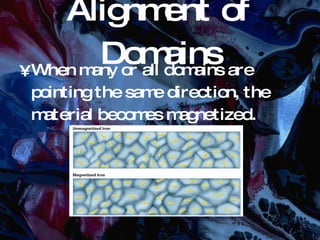
Alignment of Domains When many or all domains are pointing the same direction, the material becomes magnetized.
Magnetic Materials Ferromagnetic Materials-  materials that show strong magnetic properties (its magnetic domains are aligned) Examples in nature:  iron, nickel, cobalt, and gadolinium
Alloy magnets- made from several different materials Alnico ( Al uminum,  ni ckel,  i ron,  co balt) Ferrite magnets- mixture of substances that contain ferromagnetic elements Stronger and less expensive than metal magnets
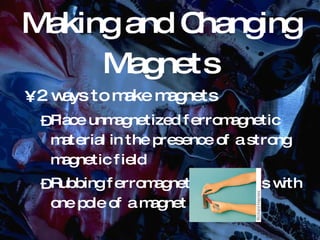
Making and Changing Magnets 2 ways to make magnets Place unmagnetized ferromagnetic material in the presence of a strong magnetic field Rubbing ferromagnetic materials with one pole of a magnet
Temporary magnet-  easy to magnetize, but easily loses its magnetism Permanent magnet-  hard to magnetize, but keeps its magnetism for a long period of time
2 Ways to destroy a magnet Drop or strike a magnet hard Heat a magnet
Breaking Magnets
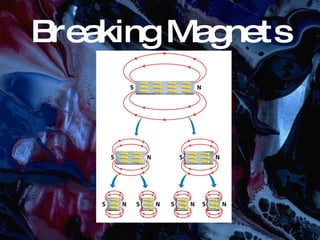
Breaking magnets When you break a magnet, you end up with two smaller magnets Due to domains all being aligned, the more times you break a magnet, the more mini magnets you end up with.

Inside A Magnet

  • 1.
  • 2.
    Domain Theory Atomspoint in random directions in most materials therefore canceling out each others magnetic fields If magnetic fields in a group of atoms are aligned with one another they create a magnetic domain.
  • 3.
    Alignment of DomainsWhen many or all domains are pointing the same direction, the material becomes magnetized.
  • 4.
    Magnetic Materials FerromagneticMaterials- materials that show strong magnetic properties (its magnetic domains are aligned) Examples in nature: iron, nickel, cobalt, and gadolinium
  • 5.
    Alloy magnets- madefrom several different materials Alnico ( Al uminum, ni ckel, i ron, co balt) Ferrite magnets- mixture of substances that contain ferromagnetic elements Stronger and less expensive than metal magnets
  • 6.
    Making and ChangingMagnets 2 ways to make magnets Place unmagnetized ferromagnetic material in the presence of a strong magnetic field Rubbing ferromagnetic materials with one pole of a magnet
  • 7.
    Temporary magnet- easy to magnetize, but easily loses its magnetism Permanent magnet- hard to magnetize, but keeps its magnetism for a long period of time
  • 8.
    2 Ways todestroy a magnet Drop or strike a magnet hard Heat a magnet
  • 9.
  • 10.
    Breaking magnets Whenyou break a magnet, you end up with two smaller magnets Due to domains all being aligned, the more times you break a magnet, the more mini magnets you end up with.