DR. CHRISTINA SAMUEL
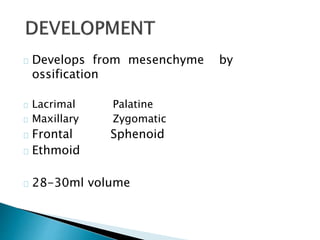
Develops from mesenchyme by 
ossification 
Lacrimal Palatine 
Maxillary Zygomatic 
Frontal Sphenoid 
Ethmoid 
28-30ml volume
Roof 
Floor 
Side walls 
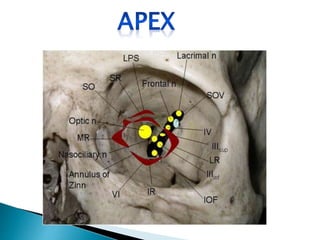
Orbital apex
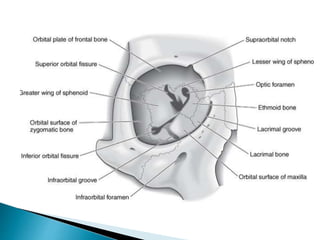
Roof of orbit 
Frontal bone [Orbital plate] & lesser wing of sphenoid 
Separated from frontal sinus and anterior 
cranial fossa above 
Lacrimal gland fossa and trochlear fossa 
behind orbital rim
Medial wall 
Body of sphenoid 
Ethmoid 
Lacrimal 
Maxilla[frontal 
process]
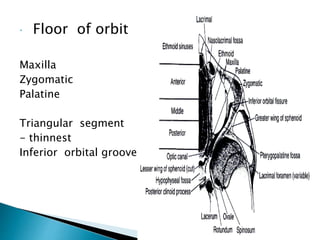
 Floor of orbit 
Maxilla 
Zygomatic 
Palatine 
Triangular segment 
- thinnest 
Inferior orbital groove
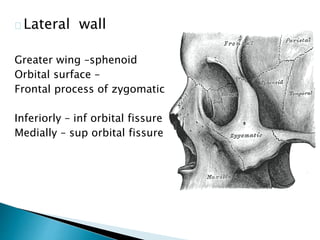
Lateral wall 
Greater wing –sphenoid 
Orbital surface – 
Frontal process of zygomatic 
Inferiorly – inf orbital fissure 
Medially – sup orbital fissure
Eye ball 
Orbital fat 
Connective tissue system 
Blood vessels 
Nerves 
Extraocular muscles
Def: Purulent inflammation of the cellular 
tissue of the orbit. 
Cause: 
-Spread of inflammation from neighboring 
parts – nasal sinuses, Dacryocystitis, dental 
infection, deep injuries, retained foreign 
body, 
-septic operations, DCR, RD, SQUINT 
-posterior extension of suppurative infection 
of eye lid, panophthalmitis, facial erysipelas, 
- Metastases in pyaemia
Streptococcus pneumoniae. 
Staphylococcus aureus 
Streptococcus pyogenes 
Haemophilus influenzae. (children 
below 5 years)
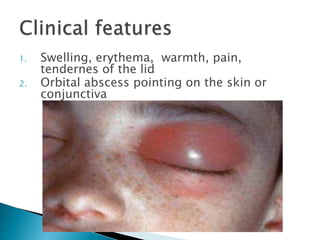
1. Swelling, erythema, warmth, pain, 
tendernes of the lid 
2. Orbital abscess pointing on the skin or 
conjunctiva
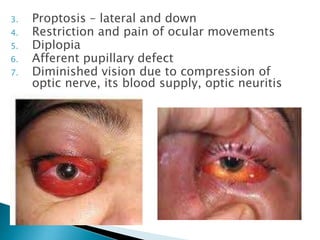
3. Proptosis – lateral and down 
4. Restriction and pain of ocular movements 
5. Diplopia 
6. Afferent pupillary defect 
7. Diminished vision due to compression of 
optic nerve, its blood supply, optic neuritis
1. Periorbital abscess 
2. Exposure keratopathy 
3. C.R.A and C.R.V occlusion 
4. Panophthalmitis 
5. Intracranial complications 
- meningitis, brain abscess, 
- Cavernous Sinus thrombosis
1. T.C.D.C,ESR 
2. CT orbit, sinus, brain 
3. Blood, nasal, conjunctival and 
throat culture and sensitivity
1. Broad spectrum antibiotic 
2. N.S.A.I.D 
3. Steroids 
4. Close monitoring by 
ophthalmologist, neuro surgeon, ENT 
surgeon 
5. Surgical – drainage of the abscess, 
biopsy, orbital decompression.
ORBIT Anatomy

ORBIT Anatomy

  • 1.
  • 2.
    Develops from mesenchymeby ossification Lacrimal Palatine Maxillary Zygomatic Frontal Sphenoid Ethmoid 28-30ml volume
  • 4.
    Roof Floor Sidewalls Orbital apex
  • 5.
    Roof of orbit Frontal bone [Orbital plate] & lesser wing of sphenoid Separated from frontal sinus and anterior cranial fossa above Lacrimal gland fossa and trochlear fossa behind orbital rim
  • 6.
    Medial wall Bodyof sphenoid Ethmoid Lacrimal Maxilla[frontal process]
  • 7.
     Floor oforbit Maxilla Zygomatic Palatine Triangular segment - thinnest Inferior orbital groove
  • 8.
    Lateral wall Greaterwing –sphenoid Orbital surface – Frontal process of zygomatic Inferiorly – inf orbital fissure Medially – sup orbital fissure
  • 10.
    Eye ball Orbitalfat Connective tissue system Blood vessels Nerves Extraocular muscles
  • 11.
    Def: Purulent inflammationof the cellular tissue of the orbit. Cause: -Spread of inflammation from neighboring parts – nasal sinuses, Dacryocystitis, dental infection, deep injuries, retained foreign body, -septic operations, DCR, RD, SQUINT -posterior extension of suppurative infection of eye lid, panophthalmitis, facial erysipelas, - Metastases in pyaemia
  • 12.
    Streptococcus pneumoniae. Staphylococcusaureus Streptococcus pyogenes Haemophilus influenzae. (children below 5 years)
  • 13.
    1. Swelling, erythema,warmth, pain, tendernes of the lid 2. Orbital abscess pointing on the skin or conjunctiva
  • 14.
    3. Proptosis –lateral and down 4. Restriction and pain of ocular movements 5. Diplopia 6. Afferent pupillary defect 7. Diminished vision due to compression of optic nerve, its blood supply, optic neuritis
  • 15.
    1. Periorbital abscess 2. Exposure keratopathy 3. C.R.A and C.R.V occlusion 4. Panophthalmitis 5. Intracranial complications - meningitis, brain abscess, - Cavernous Sinus thrombosis
  • 16.
    1. T.C.D.C,ESR 2.CT orbit, sinus, brain 3. Blood, nasal, conjunctival and throat culture and sensitivity
  • 17.
    1. Broad spectrumantibiotic 2. N.S.A.I.D 3. Steroids 4. Close monitoring by ophthalmologist, neuro surgeon, ENT surgeon 5. Surgical – drainage of the abscess, biopsy, orbital decompression.