
Oral Communication
Week 1
Marie Joy Trinidad
Reminders
Make sure that you have your module with you before the class startsMake
Have a pen and paper readyHave
Actively participate inside the classParticipate
Use class signals when necessaryUse
Keep your mic on mute, only unmute when calledKeep
Turn your camera onTurn
Raise hand if you want to answerRaise
Use ? if you want to ask a questionUse
Use ! if you need helpUse
This Photo by Unknown Author is licensed under CC BY-NC
Our Main Goal
– Explains the functions,
nature and process of
communication.
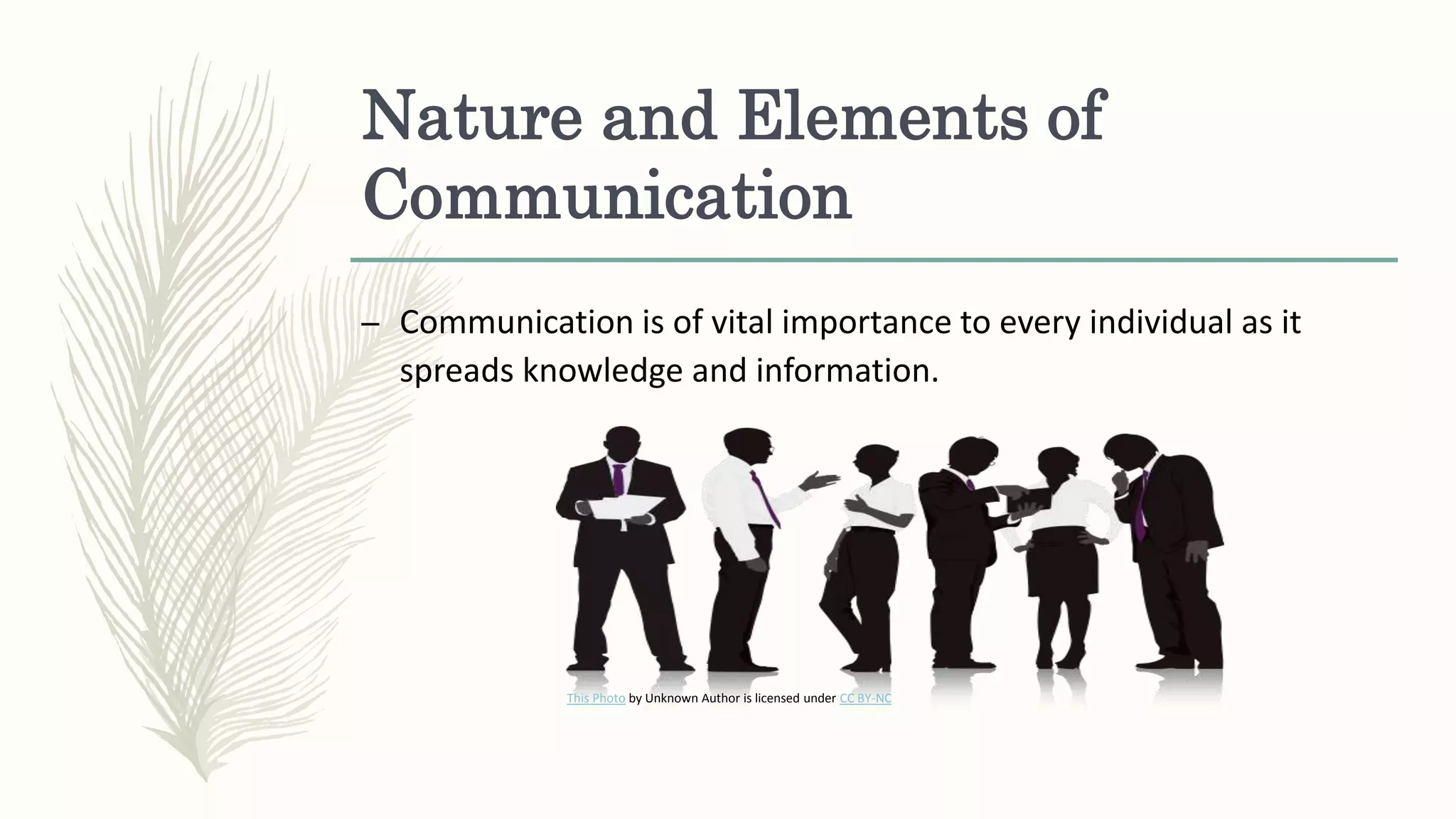
Think about this…
 For you what is communication?
 Why is communication important?
 How do people communicate?
This Photo by Unknown Author is licensed under CC BY
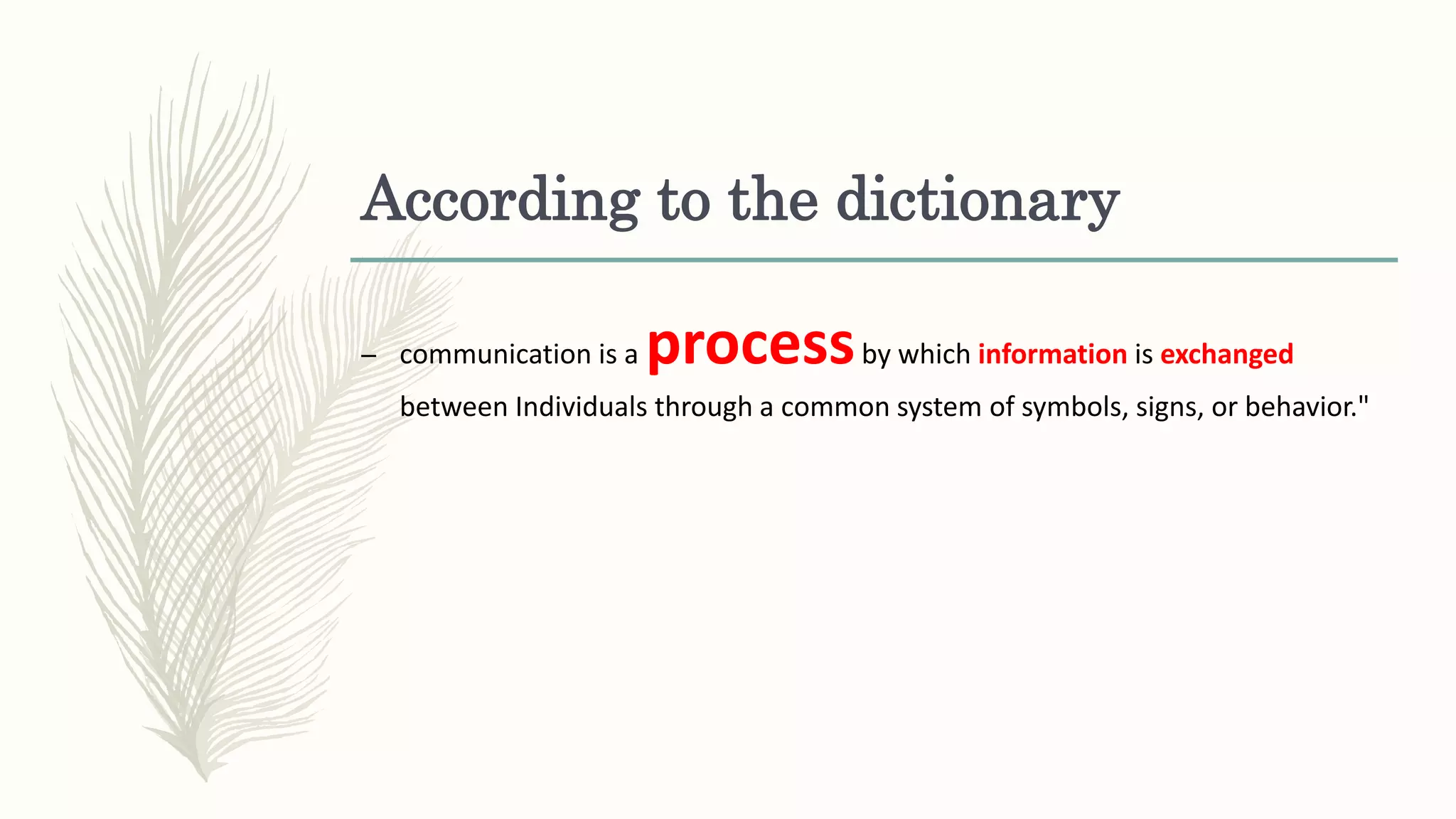
Nature and Elements of
Communication
– Communication is of vital importance to every individual as it
spreads knowledge and information.
This Photo by Unknown Author is licensed under CC BY-NC
According to the dictionary
– communication is a processby which information is exchanged
between Individuals through a common system of symbols, signs, or behavior."
McCornack (2014)
– defined communication as a process of
sharing and conveying messages or
information from one person to another
within and across channels, contexts,
media, and cultures."
Nature of Communication
– It is a process ;
– It occurs between the sender and the receiver;
– It can be conveyed verbally or nonverbally or both
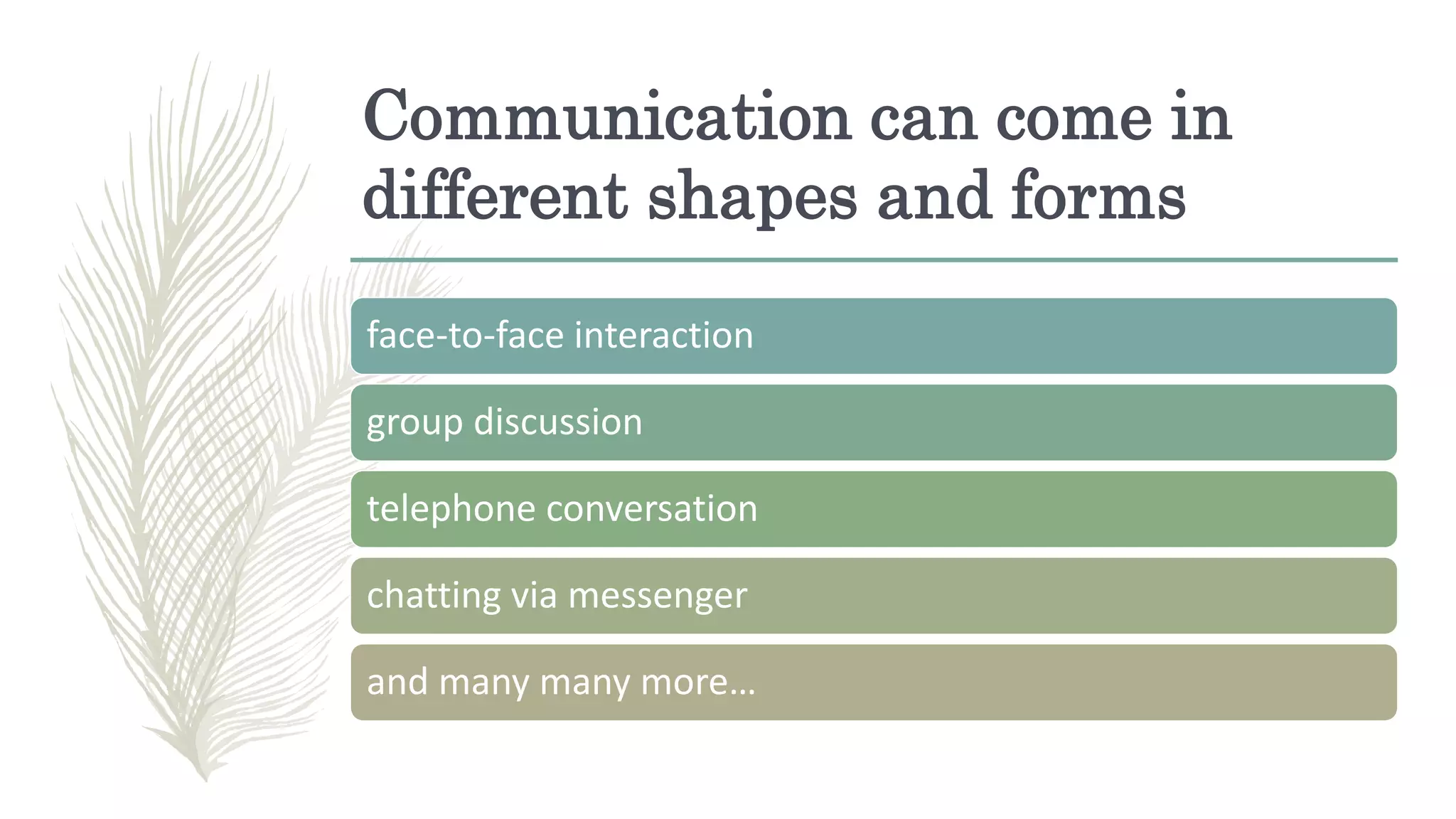
Communication can come in
different shapes and forms
face-to-face interaction
group discussion
telephone conversation
chatting via messenger
and many many more…
Communication…
Its process can also be explained through various
models made by experts
Since it is a process, it involves certain situations
showing transmitting or exchanging of ideas
among people.
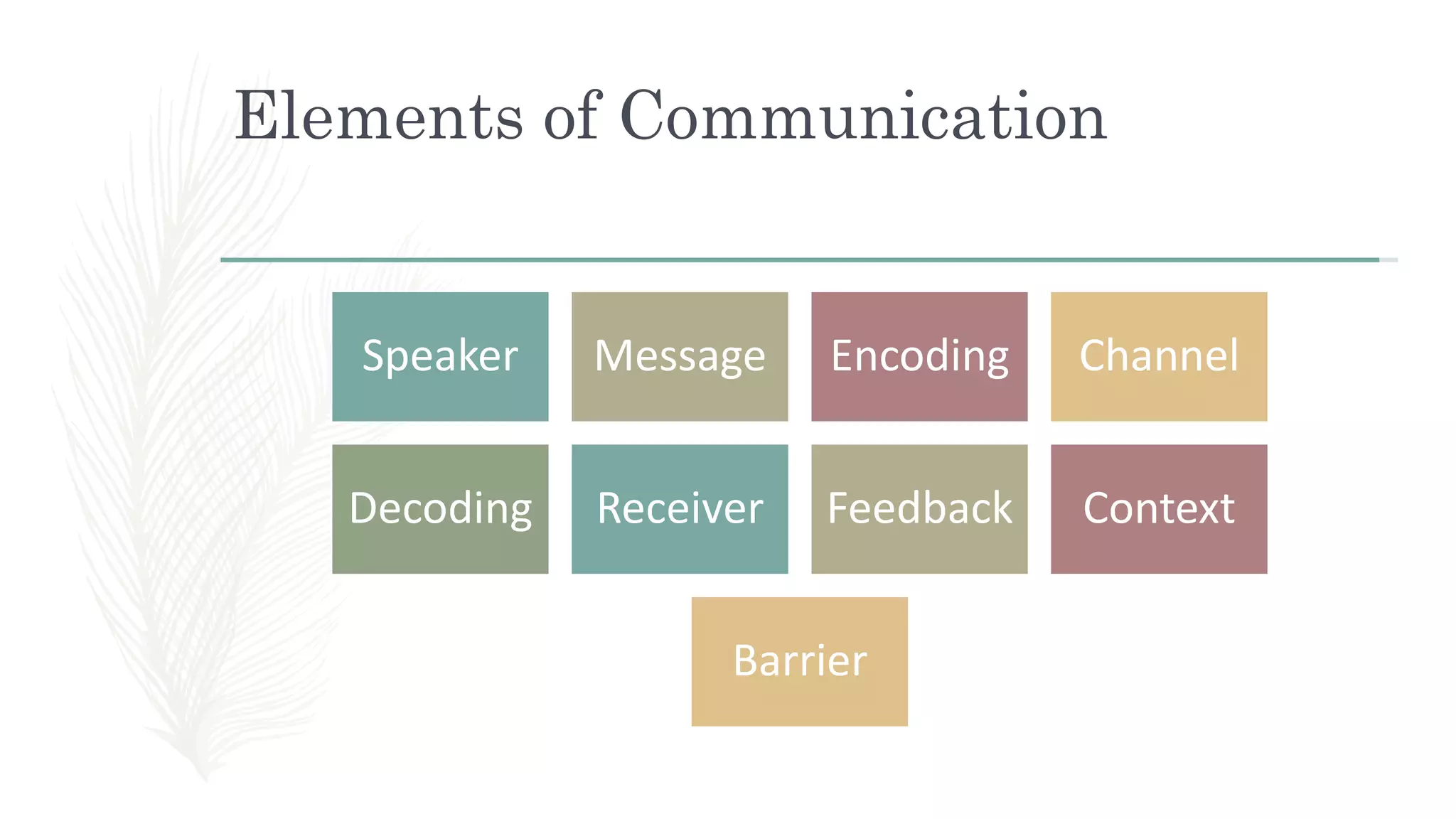
Elements of Communication
Speaker Message Encoding Channel
Decoding Receiver Feedback Context
Barrier
Speaker
– Aka the sender
– the source of information or message
Message
– the information, ideas, or
thoughts conveyed by the
speaker in words or in actions
message
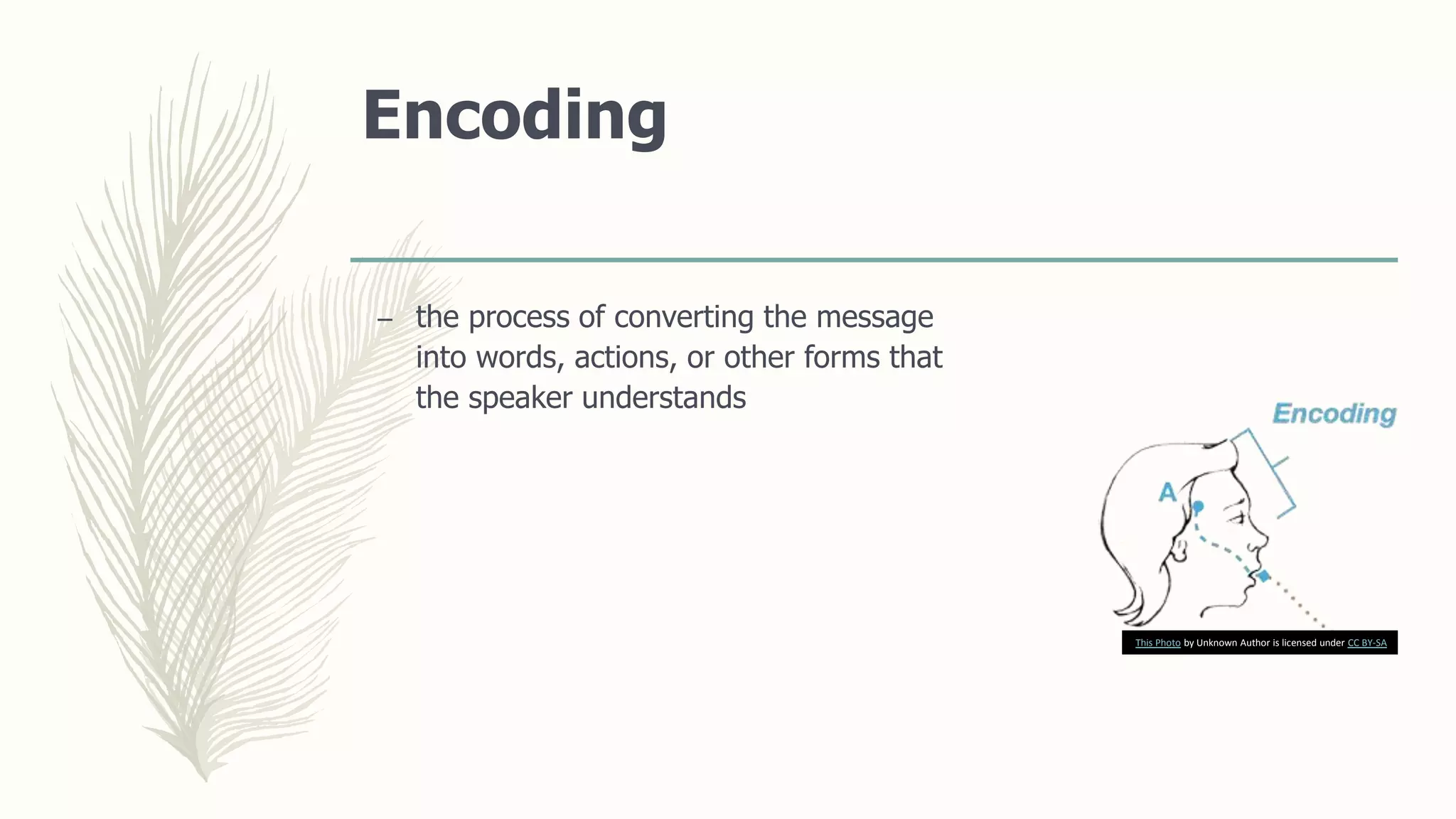
Encoding
– the process of converting the message
into words, actions, or other forms that
the speaker understands
This Photo by Unknown Author is licensed under CC BY-SA
Channel
– the medium or the means, such as personal
or non-personal, verbal or nonverbal, in
which the encoded message is conveyed
CHANNEL
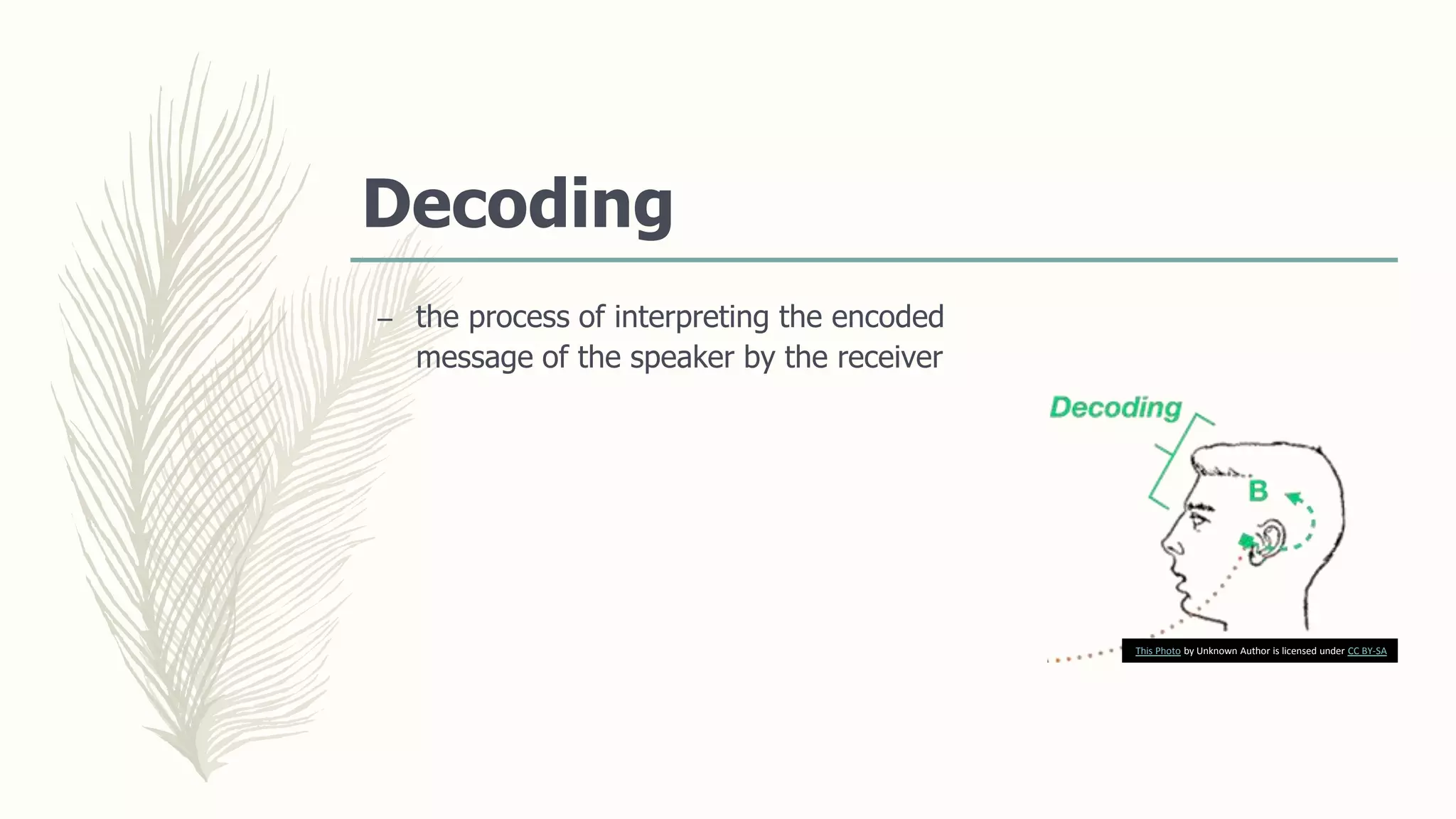
Decoding
– the process of interpreting the encoded
message of the speaker by the receiver
This Photo by Unknown Author is licensed under CC BY-SA
Receiver
– the recipient of the message, or someone
who decodes the message
Feedback
– the reactions, responses, or information
provided by the receiver
(FEEDBACK)
Context
– the environment where communication
takes place
Barrier
– the factor that affects the flow of
communication
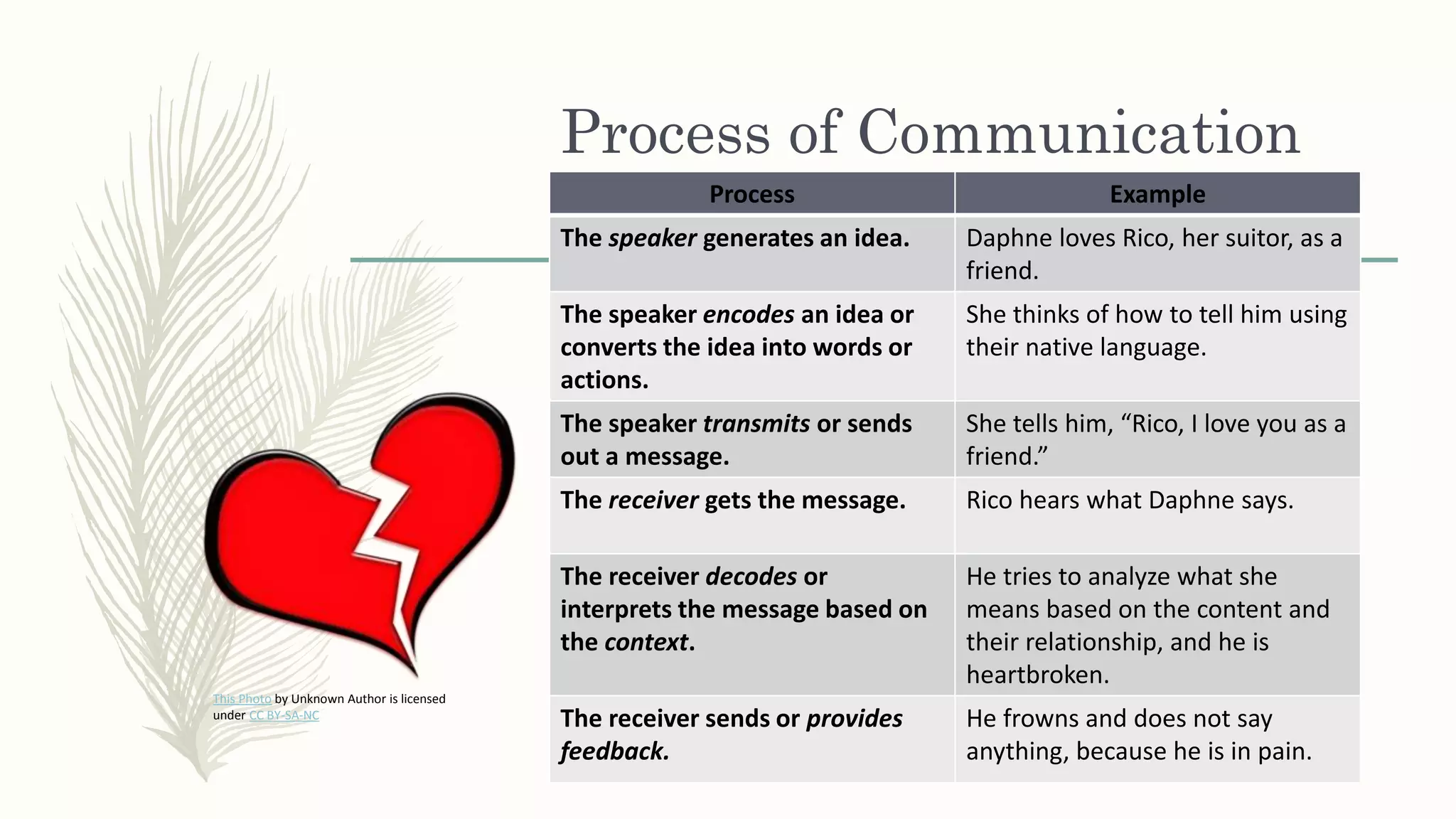
Process of Communication
Process Example
The speaker generates an idea. Daphne loves Rico, her suitor, as a
friend.
The speaker encodes an idea or
converts the idea into words or
actions.
She thinks of how to tell him using
their native language.
The speaker transmits or sends
out a message.
She tells him, “Rico, I love you as a
friend.”
The receiver gets the message. Rico hears what Daphne says.
The receiver decodes or
interprets the message based on
the context.
He tries to analyze what she
means based on the content and
their relationship, and he is
heartbroken.
The receiver sends or provides
feedback.
He frowns and does not say
anything, because he is in pain.
This Photo by Unknown Author is licensed
under CC BY-SA-NC
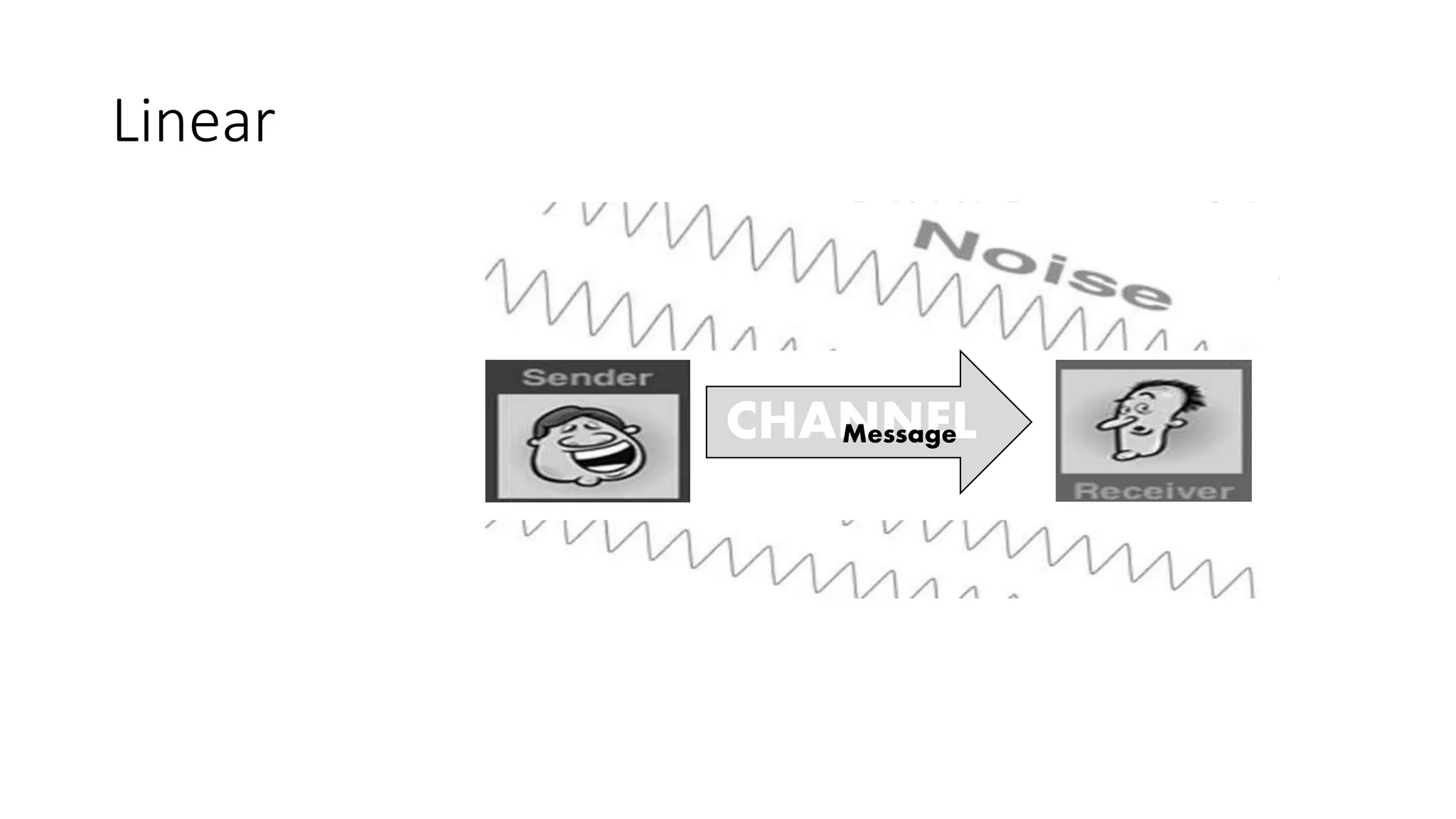
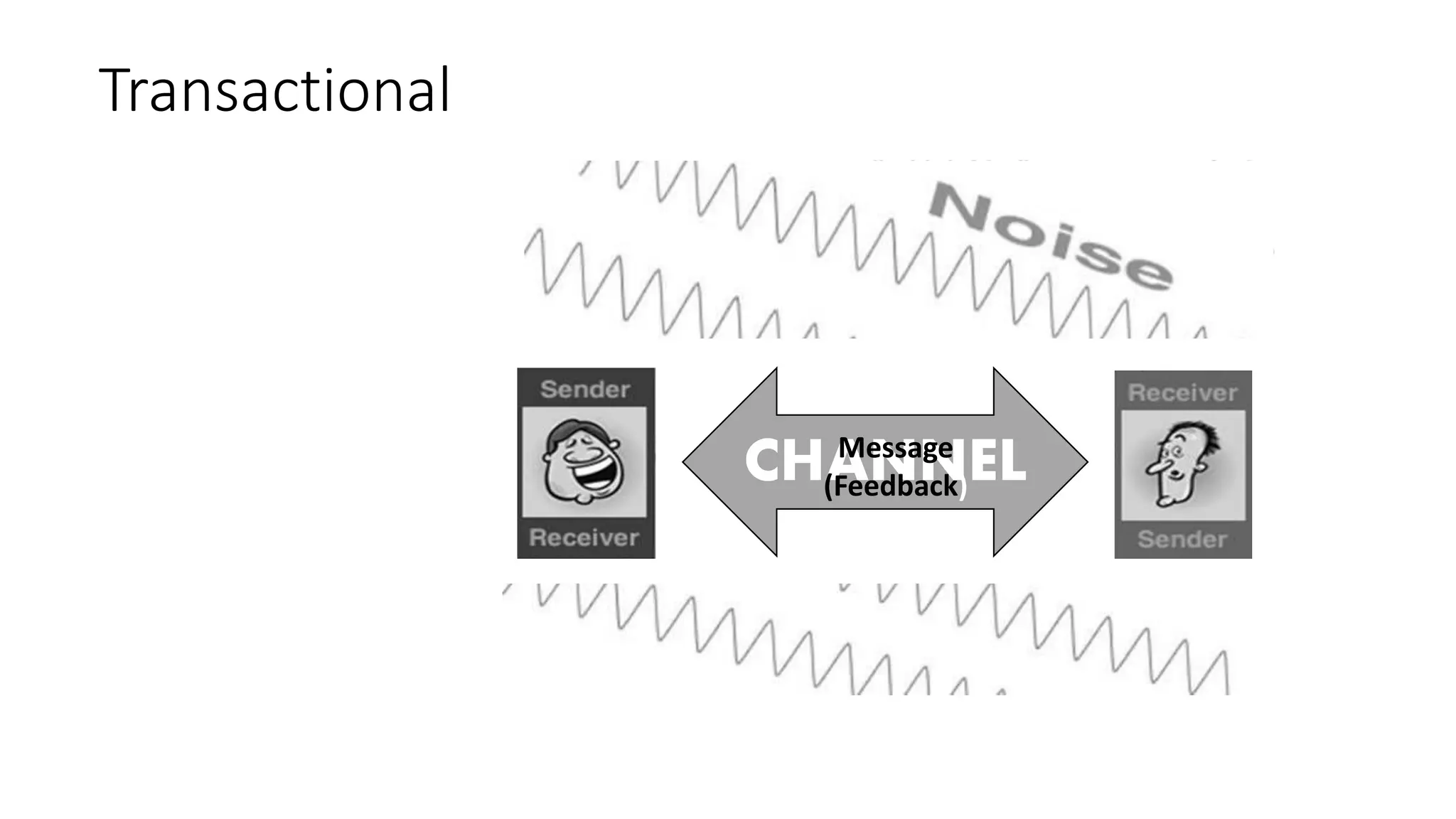
Models of Communication
– Linear
– Interactive
– Transactional
Linear
CHANNELMessage
CHANNELMessage
Interactive
CHANNELMessage
CHANNELMessage
(Feedback)
Transactional
This Photo by Unknown Author is licensed under CC BY-NC-ND

Oral comm week 1 final

  • 1.
  • 2.
    Reminders Make sure thatyou have your module with you before the class startsMake Have a pen and paper readyHave Actively participate inside the classParticipate Use class signals when necessaryUse Keep your mic on mute, only unmute when calledKeep Turn your camera onTurn Raise hand if you want to answerRaise Use ? if you want to ask a questionUse Use ! if you need helpUse
  • 4.
    This Photo byUnknown Author is licensed under CC BY-NC Our Main Goal – Explains the functions, nature and process of communication.
  • 5.
    Think about this… For you what is communication?  Why is communication important?  How do people communicate? This Photo by Unknown Author is licensed under CC BY
  • 6.
    Nature and Elementsof Communication – Communication is of vital importance to every individual as it spreads knowledge and information. This Photo by Unknown Author is licensed under CC BY-NC
  • 7.
    According to thedictionary – communication is a processby which information is exchanged between Individuals through a common system of symbols, signs, or behavior."
  • 8.
    McCornack (2014) – definedcommunication as a process of sharing and conveying messages or information from one person to another within and across channels, contexts, media, and cultures."
  • 9.
    Nature of Communication –It is a process ; – It occurs between the sender and the receiver; – It can be conveyed verbally or nonverbally or both
  • 10.
    Communication can comein different shapes and forms face-to-face interaction group discussion telephone conversation chatting via messenger and many many more…
  • 11.
    Communication… Its process canalso be explained through various models made by experts Since it is a process, it involves certain situations showing transmitting or exchanging of ideas among people.
  • 12.
    Elements of Communication SpeakerMessage Encoding Channel Decoding Receiver Feedback Context Barrier
  • 13.
    Speaker – Aka thesender – the source of information or message
  • 14.
    Message – the information,ideas, or thoughts conveyed by the speaker in words or in actions message
  • 15.
    Encoding – the processof converting the message into words, actions, or other forms that the speaker understands This Photo by Unknown Author is licensed under CC BY-SA
  • 16.
    Channel – the mediumor the means, such as personal or non-personal, verbal or nonverbal, in which the encoded message is conveyed CHANNEL
  • 17.
    Decoding – the processof interpreting the encoded message of the speaker by the receiver This Photo by Unknown Author is licensed under CC BY-SA
  • 18.
    Receiver – the recipientof the message, or someone who decodes the message
  • 19.
    Feedback – the reactions,responses, or information provided by the receiver (FEEDBACK)
  • 20.
    Context – the environmentwhere communication takes place
  • 21.
    Barrier – the factorthat affects the flow of communication
  • 22.
    Process of Communication ProcessExample The speaker generates an idea. Daphne loves Rico, her suitor, as a friend. The speaker encodes an idea or converts the idea into words or actions. She thinks of how to tell him using their native language. The speaker transmits or sends out a message. She tells him, “Rico, I love you as a friend.” The receiver gets the message. Rico hears what Daphne says. The receiver decodes or interprets the message based on the context. He tries to analyze what she means based on the content and their relationship, and he is heartbroken. The receiver sends or provides feedback. He frowns and does not say anything, because he is in pain. This Photo by Unknown Author is licensed under CC BY-SA-NC
  • 23.
    Models of Communication –Linear – Interactive – Transactional
  • 24.
  • 25.
  • 26.
  • 27.
    This Photo byUnknown Author is licensed under CC BY-NC-ND