Downloaded 770 times
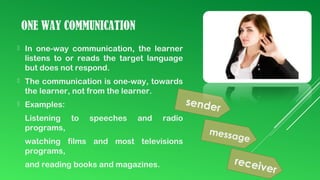
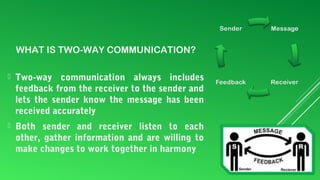
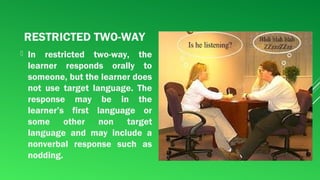
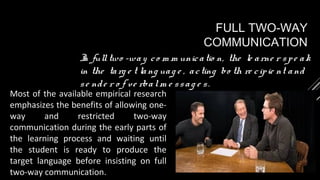
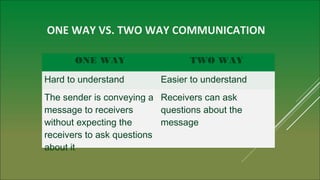
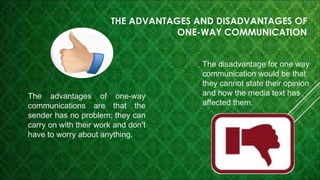



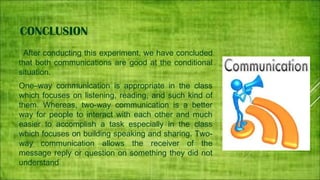


The document compares one-way and two-way communication in classroom learning. One-way communication involves the learner listening or reading without responding, such as during lectures, films, or reading. Two-way communication allows feedback and includes restricted two-way, where the learner responds without using the target language, and full two-way, where the learner speaks in the target language. While one-way communication is easier for the sender, two-way communication helps understanding and allows questions. The document concludes that both have benefits depending on the classroom focus, with one-way better for listening and reading, and two-way better for interaction and accomplishing tasks.


