UCSP Week 2
Marie Joy Trinidad
Reminders
Make sure that you have your module with you before the class startsMake
Have a pen and paper readyHave
Actively participate inside the classParticipate
Use class signals when necessaryUse
Keep your mic on mute, only unmute when calledKeep
Turn your camera onTurn
Raise hand if you want to answerRaise
Use ? if you want to ask a questionUse
Use ! if you need helpUse
CONCEPTS, ASPECTS & CHANGES IN
CULTURE AND SOCIETY
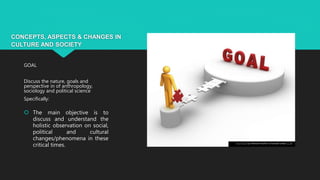
GOAL
Discuss the nature, goals and
perspective in of anthropology,
sociology and political science
Specifically:
 The main objective is to
discuss and understand the
holistic observation on social,
political and cultural
changes/phenomena in these
critical times. This Photo by Unknown Author is licensed under CC BY
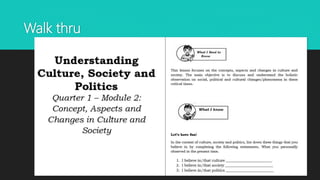
Walk thru
Review
 https://quizizz.com/admin/quiz/5f7e2ac8e55f9f001bf77112/ucsp-week-review
CONCEPTS,
ASPECTS &
CHANGES IN
CULTURE
AND SOCIETY
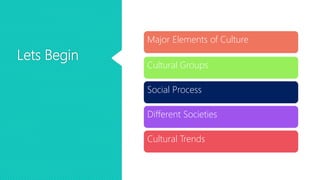
Lets Begin
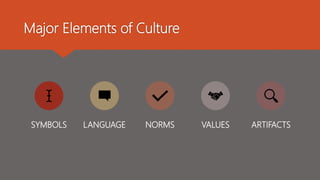
Major Elements of Culture
Cultural Groups
Social Process
Different Societies
Cultural Trends
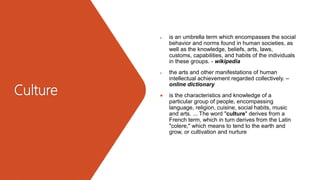
Culture
 is an umbrella term which encompasses the social
behavior and norms found in human societies, as
well as the knowledge, beliefs, arts, laws,
customs, capabilities, and habits of the individuals
in these groups. - wikipedia
 the arts and other manifestations of human
intellectual achievement regarded collectively. –
online dictionary
 is the characteristics and knowledge of a
particular group of people, encompassing
language, religion, cuisine, social habits, music
and arts. ... The word "culture" derives from a
French term, which in turn derives from the Latin
"colere," which means to tend to the earth and
grow, or cultivation and nurture
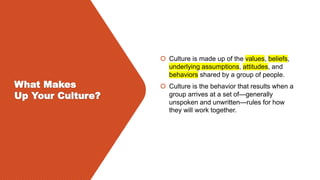
What Makes
Up Your Culture?
 Culture is made up of the values, beliefs,
underlying assumptions, attitudes, and
behaviors shared by a group of people.
 Culture is the behavior that results when a
group arrives at a set of—generally
unspoken and unwritten—rules for how
they will work together.
Major Elements of Culture
SYMBOLS LANGUAGE NORMS VALUES ARTIFACTS
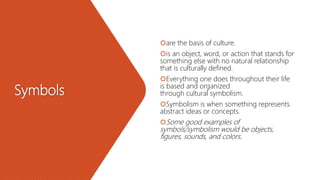
Symbols
are the basis of culture.
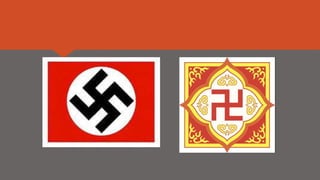
is an object, word, or action that stands for
something else with no natural relationship
that is culturally defined.
Everything one does throughout their life
is based and organized
through cultural symbolism.
Symbolism is when something represents
abstract ideas or concepts.
Some good examples of
symbols/symbolism would be objects,
figures, sounds, and colors.
Language Language always carries meanings and references beyond
itself: The meanings of a particular language represent
the culture of a particular social group.
To interact with a language means to do so with
the culture which is its reference point.
... A particular language points to the culture of a particular
social group.
What is cultural
language
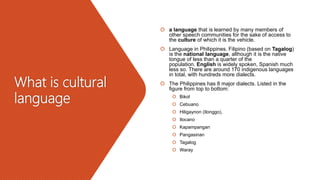
 a language that is learned by many members of
other speech communities for the sake of access to
the culture of which it is the vehicle.
 Language in Philippines. Filipino (based on Tagalog)
is the national language, although it is the native
tongue of less than a quarter of the
population. English is widely spoken, Spanish much
less so. There are around 170 indigenous languages
in total, with hundreds more dialects.
 The Philippines has 8 major dialects. Listed in the
figure from top to bottom:
 Bikol
 Cebuano
 Hiligaynon (Ilonggo),
 Ilocano
 Kapampangan
 Pangasinan
 Tagalog
 Waray
Norms
• Norms are something that is usual, typical,
or standard.
 They are most commonly defined as rules
or expectations that are socially enforced.
 Norms may be prescriptive (encouraging
positive behavior; for example, “be
honest”) or proscriptive (discouraging
negative behavior; for example, “do not
cheat”).
Some
examples of
Gender-
Specific Norms
Include the
following
 Girls wear pink; boys wear blue.
 Men should be strong and not show
emotion.
 Women should be caring and nurturing.
 Men should do repairs at the house and be
the one to work and make money while
women are expected to take care of the
housework and children.
What are the
norms of
society?
Every society has expectations about how its members
should and should not behave.
A norm is a guideline or an expectation for behavior.
Each society makes up its own rules for behavior and
decides when those rules have been violated and
to do about it.
Values
 Values are a person's or society's beliefs
about good behavior and what things are
important
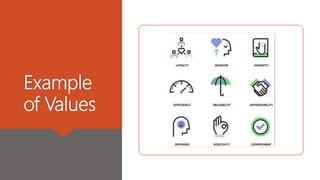
Example
of Values
Artifacts an object made by a human being, typically an
item of cultural or historical interest. "gold and
silver artifacts"
something observed in a scientific investigation
or experiment that is not naturally present but
occurs as a result of the preparative or
investigative procedure.
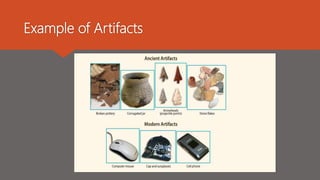
Example of Artifacts
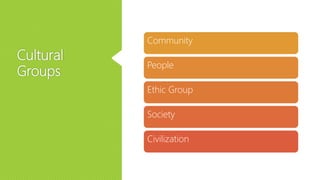
Cultural
Groups
Community
People
Ethic Group
Society
Civilization
Community
 a social unit of any size that shares
common values.
 Communities range in size and scope
from neighborhoods to national
communities to international
communities.
 They can be physical (face-to-face) or
virtual (online).
People
 a plurality of persons considered as a
whole, as is the case with an ethnic group
or nation.
 Collectively, for example, the
contemporary Frisians and Danes are two
related Germanic peoples, while various
Middle Eastern ethnic groups are often
linguistically categorized as the Semitic
people.
Ethnic Group
 socially defined category of people who
identify with each other based on common
ancestral, social, cultural or national
experience.
 Membership of an ethnic group tends to be
defined by a shared cultural heritage,
ancestry, origin myth, history, homeland,
language and/or dialect, symbolic systems
such as religion, mythology and ritual,
cuisine, dressing style, physical
appearance, etc.
Society
 a group of people involved in persistent
interpersonal relationships, or a large
social grouping sharing the same
geographical or social territory, typically
subject to the same political authority and
dominant cultural expectations.
 Human societies are characterized by
patterns of relationships (social relations)
between individuals who share a
distinctive culture and institutions; a given
society may be described as the total of
such relationships among its constituent
members.
Civilization
 any complex society characterized by
urban development, social stratification,
symbolic communication forms (typically,
writing systems), and a perceived
separation from and domination over the
natural environment.
Mechanism of Change
 With a society changing as fast as the society found inside America, sociologist found it easiest to
predict changer based on three essential "social processes". These processes are the causes that
result in significant social change.
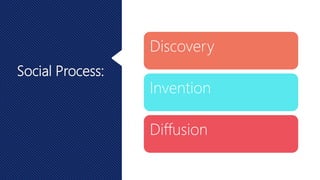
Social Process:
Discovery
Invention
Diffusion
Discovery:
 "the process by which something is
learned or reinterpreted".
 influences change by causing people to
learn new things which may change their
viewpoints, or change their routine to
better themselves based off of the new
information found through discovery.
 For example, when early explorers began
to explore the ocean, they discovered that
the Earth wasn't flat, but rather was round.
 This lead to new maps being printed, as
well as new waterways and trade-routes
developing due to new exploration under
the idea that there was no "end of the
Earth" to fall off of.
Invention
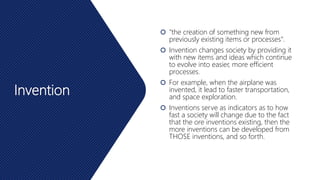
 "the creation of something new from
previously existing items or processes".
 Invention changes society by providing it
with new items and ideas which continue
to evolve into easier, more efficient
processes.
 For example, when the airplane was
invented, it lead to faster transportation,
and space exploration.
 Inventions serve as indicators as to how
fast a society will change due to the fact
that the ore inventions existing, then the
more inventions can be developed from
THOSE inventions, and so forth.
Diffusion
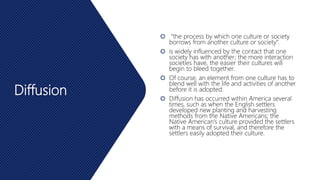
 “the process by which one culture or society
borrows from another culture or society”.
 is widely influenced by the contact that one
society has with another; the more interaction
societies have, the easier their cultures will
begin to bleed together.
 Of course, an element from one culture has to
blend well with the life and activities of another
before it is adopted.
 Diffusion has occurred within America several
times, such as when the English settlers
developed new planting and harvesting
methods from the Native Americans; the
Native American’s culture provided the settlers
with a means of survival, and therefore the
settlers easily adopted their culture.
SOCIETY
 is a group of individuals involved in persistent social interaction, or a large social group sharing
the same spatial or social territory, typically subject to the same political authority and dominant
cultural expectations.
 Societies are characterized by patterns of relationships (social relations) between individuals who
share a distinctive culture and institutions; a given society may be described as the sum total of
such relationships among its constituent of members. In the social sciences, a larger society often
exhibits stratification or dominance patterns in subgroups.
 Societies are social groups that differ according to subsistence strategies, the ways that humans use
technology to provide needs for themselves. Although humans have established many types of
societies throughout history, anthropologists tend to classify different societies according to the
degree to which different groups within a society have unequal access to advantages such as
resources, prestige, or power. Virtually all societies have developed some degree of inequality
among their people through the process of social stratification, the division of members of a society
into levels with unequal wealth, prestige, or power. Sociologists place societies in three broad
categories: pre-industrial, industrial, and postindustrial.
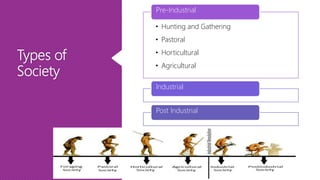
Types of
Society
• Hunting and Gathering
• Pastoral
• Horticultural
• Agricultural
Pre-Industrial
Industrial
Post Industrial
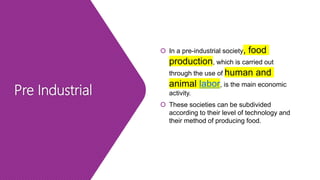
Pre Industrial
 In a pre-industrial society, food
production, which is carried out
through the use of human and
animal labor, is the main economic
activity.
 These societies can be subdivided
according to their level of technology and
their method of producing food.
Pre
Industrial
Hunting and Gathering
Pastoral
Horticultural
Agricultural
Hunting
 The main form of food production in
such societies is the daily collection
of wild plants and the hunting of
wild animals.
 Hunter-gatherers move around
constantly in search of food.
 As a result, they do not build
permanent villages or create a wide
variety of artifacts, and usually only
form small groups such
as bands and tribes.
Pastoral
 Pastoralism is a slightly more efficient form
of subsistence.
 Rather than searching for food on a daily
basis, members of a pastoral society rely
on domesticated herd animals to meet
their food needs.
 Pastoralists live a nomadic life, moving
their herds from one pasture to another.
 Because their food supply is far more
reliable, pastoral societies can support
larger populations.
Horticultural
 Fruits and vegetables grown in garden plots
that have been cleared from the jungle or forest
provide the main source of food in a
horticultural society.
 These societies have a level of technology and
complexity similar to pastoral societies.
 Some horticultural groups use the slash-and-
burn method to raise crops.
 The wild vegetation is cut and burned, and
ashes are used as fertilizers.
 Horticulturists use human labor and simple
tools to cultivate the land for one or more
seasons. When the land becomes barren,
horticulturists clear a new plot and leave the old
plot to revert to its natural state.
Agrarian
 Agrarian societies use
agricultural technological advances to
cultivate crops over a large area.
 Sociologists use the phrase agricultural
revolution to refer to the technological
changes that occurred as long as 8,500
years ago that led to cultivating crops and
raising farm animals.
 Increases in food supplies then led to
larger populations than in earlier
communities.
 This meant a greater surplus, which
resulted in towns that became centers of
trade supporting various rulers, educators,
craftspeople, merchants, and religious
leaders who did not have to worry about
locating nourishment.
Industrial
a society driven by the use of technology to
enable mass production, supporting a large
population with a high capacity for division
of labour.
Examples of
Pre Industrial
Society
 China, for example, is an industrial
society because a considerable portion of
its economy is tied to jobs that involve
mechanized labor, like factory farming or
auto-assembly plants, which involve a
combination of machines and human
employees to produce consumer products.
.
Post Industrial
 In sociology, the post-industrial
society is the stage
of society's development when the
service sector generates more wealth than
the manufacturing sector of the economy.
Post Industrial
1. A transition from the production of goods to the production of
services, with very few firms directly manufacturing any
goods.
2. The replacement of blue-collar manual labourers with
technical and professional workers—such as computer
engineers, doctors, and bankers—as the direct production of
goods is moved elsewhere.
3. The replacement of practical knowledge with theoretical
knowledge.
4. Greater attention being paid to the theoretical
and ethical implications of new technologies, which helps
society avoid some of the negative features of introducing
new technologies, such as environmental accidents and
massive widespread power outages.
5. The development of newer scientific disciplines—such as
those that involve new forms of information
technology, cybernetics, or artificial intelligence—to assess
the theoretical and ethical implications of new technologies.
6. A stronger emphasis on the university and polytechnic
institutes, which produce graduates who create and guide the
new technologies crucial to a postindustrial society.
Examples of
Post Industrial
Society
 Post-industrialization exists in Europe,
Japan, and the United States, and the U.S.
was the first country with more than 50
percent of its workers employed in service
sector jobs. A post-industrial society not
only transforms the economy; it
alters society as a whole
Cultural Trends in the Philippines
 An article by Chiqui Escareal-Go in the Philippine Daily Inquirer outlines some cultural trends that
might affect how Filipinos buy products.
Home
 The absence of parents in a third of homes and the increasing role of schools in instilling values.
 The social disorders associated with the increasing absence of parents in the lives of their children (drugs, child sex
abuse, teen pregnancy, among others).
 The change in the boundaries and sequence of love, marriage, sex and family.
 The rise in the number of single parents.
 The trend towards late marriages and smaller families.
 The upgraded role of music as surrogate companion.
 The rise of “adultescents” (a play of the words adult and adolescent). They are also called the Peter Pan generation, or
the 30-something adults who are still single and without kids, mortgages and responsibilities.
 The rise of stay-at-home “housebands” looking after children and house needs.
 More men becoming purchase decision-makers of grocery products (the mansumers).
 The increasing ratio of people 40 years old and above wanting to take control of their health.
Work
 The desire to migrate and the rise of middle class among overseas Filipino workers (OFW).
 The expanding number of call center workers and their odd working hours to conform to
working time abroad.
 The vanishing breed known as house-helps.
 The desire of senior citizens to have second careers.
Women
 The increasing role of women in the workforce due to better education and social equality.
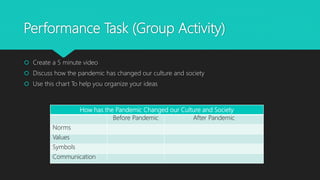
Performance Task (Group Activity)
 Create a 5 minute video
 Discuss how the pandemic has changed our culture and society
 Use this chart To help you organize your ideas
How has the Pandemic Changed our Culture and Society
Before Pandemic After Pandemic
Norms
Values
Symbols
Communication
Rubrics 10 7 4 0
Visual
The visual used is
very effective,
clear, easy to
read and
attractive
The visual used is
somehow
effective, clear,
easy to read and
attractive
The visual used is
not effective,
clear, easy to
read and
attractive
No visual was
used
Audio
The audio used
very effective,
clear, easy to
read and
attractive
The audio used
somehow
effective, clear,
easy to read and
attractive
The audio used
not effective,
clear, easy to
read and
attractive
No audio was
used
Completeness
4 Elements
Included
3 Elements
included
2 Elements
Included
No Element
Included
Punctuality
Submitted on
time Submitted late Not submitted
How to submit:
1
Upload the video on
2
Post a link to the UCSP
Page
3
Don’t forget to Mention your
group number and
This Photo by Unknown Author is licensed under CC BY-NC-ND
This Photo by Unknown Author is licensed under CC BY-NC

Ucsp week 2

  • 1.
    UCSP Week 2 MarieJoy Trinidad
  • 3.
    Reminders Make sure thatyou have your module with you before the class startsMake Have a pen and paper readyHave Actively participate inside the classParticipate Use class signals when necessaryUse Keep your mic on mute, only unmute when calledKeep Turn your camera onTurn Raise hand if you want to answerRaise Use ? if you want to ask a questionUse Use ! if you need helpUse
  • 4.
    CONCEPTS, ASPECTS &CHANGES IN CULTURE AND SOCIETY GOAL Discuss the nature, goals and perspective in of anthropology, sociology and political science Specifically:  The main objective is to discuss and understand the holistic observation on social, political and cultural changes/phenomena in these critical times. This Photo by Unknown Author is licensed under CC BY
  • 5.
  • 10.
  • 12.
  • 13.
    Lets Begin Major Elementsof Culture Cultural Groups Social Process Different Societies Cultural Trends
  • 14.
    Culture  is anumbrella term which encompasses the social behavior and norms found in human societies, as well as the knowledge, beliefs, arts, laws, customs, capabilities, and habits of the individuals in these groups. - wikipedia  the arts and other manifestations of human intellectual achievement regarded collectively. – online dictionary  is the characteristics and knowledge of a particular group of people, encompassing language, religion, cuisine, social habits, music and arts. ... The word "culture" derives from a French term, which in turn derives from the Latin "colere," which means to tend to the earth and grow, or cultivation and nurture
  • 15.
    What Makes Up YourCulture?  Culture is made up of the values, beliefs, underlying assumptions, attitudes, and behaviors shared by a group of people.  Culture is the behavior that results when a group arrives at a set of—generally unspoken and unwritten—rules for how they will work together.
  • 16.
    Major Elements ofCulture SYMBOLS LANGUAGE NORMS VALUES ARTIFACTS
  • 17.
    Symbols are the basisof culture. is an object, word, or action that stands for something else with no natural relationship that is culturally defined. Everything one does throughout their life is based and organized through cultural symbolism. Symbolism is when something represents abstract ideas or concepts. Some good examples of symbols/symbolism would be objects, figures, sounds, and colors.
  • 19.
    Language Language alwayscarries meanings and references beyond itself: The meanings of a particular language represent the culture of a particular social group. To interact with a language means to do so with the culture which is its reference point. ... A particular language points to the culture of a particular social group.
  • 20.
    What is cultural language a language that is learned by many members of other speech communities for the sake of access to the culture of which it is the vehicle.  Language in Philippines. Filipino (based on Tagalog) is the national language, although it is the native tongue of less than a quarter of the population. English is widely spoken, Spanish much less so. There are around 170 indigenous languages in total, with hundreds more dialects.  The Philippines has 8 major dialects. Listed in the figure from top to bottom:  Bikol  Cebuano  Hiligaynon (Ilonggo),  Ilocano  Kapampangan  Pangasinan  Tagalog  Waray
  • 21.
    Norms • Norms aresomething that is usual, typical, or standard.  They are most commonly defined as rules or expectations that are socially enforced.  Norms may be prescriptive (encouraging positive behavior; for example, “be honest”) or proscriptive (discouraging negative behavior; for example, “do not cheat”).
  • 22.
    Some examples of Gender- Specific Norms Includethe following  Girls wear pink; boys wear blue.  Men should be strong and not show emotion.  Women should be caring and nurturing.  Men should do repairs at the house and be the one to work and make money while women are expected to take care of the housework and children.
  • 23.
    What are the normsof society? Every society has expectations about how its members should and should not behave. A norm is a guideline or an expectation for behavior. Each society makes up its own rules for behavior and decides when those rules have been violated and to do about it.
  • 24.
    Values  Values area person's or society's beliefs about good behavior and what things are important
  • 25.
  • 26.
    Artifacts an objectmade by a human being, typically an item of cultural or historical interest. "gold and silver artifacts" something observed in a scientific investigation or experiment that is not naturally present but occurs as a result of the preparative or investigative procedure.
  • 27.
  • 28.
  • 29.
    Community  a socialunit of any size that shares common values.  Communities range in size and scope from neighborhoods to national communities to international communities.  They can be physical (face-to-face) or virtual (online).
  • 30.
    People  a pluralityof persons considered as a whole, as is the case with an ethnic group or nation.  Collectively, for example, the contemporary Frisians and Danes are two related Germanic peoples, while various Middle Eastern ethnic groups are often linguistically categorized as the Semitic people.
  • 31.
    Ethnic Group  sociallydefined category of people who identify with each other based on common ancestral, social, cultural or national experience.  Membership of an ethnic group tends to be defined by a shared cultural heritage, ancestry, origin myth, history, homeland, language and/or dialect, symbolic systems such as religion, mythology and ritual, cuisine, dressing style, physical appearance, etc.
  • 32.
    Society  a groupof people involved in persistent interpersonal relationships, or a large social grouping sharing the same geographical or social territory, typically subject to the same political authority and dominant cultural expectations.  Human societies are characterized by patterns of relationships (social relations) between individuals who share a distinctive culture and institutions; a given society may be described as the total of such relationships among its constituent members.
  • 33.
    Civilization  any complexsociety characterized by urban development, social stratification, symbolic communication forms (typically, writing systems), and a perceived separation from and domination over the natural environment.
  • 34.
    Mechanism of Change With a society changing as fast as the society found inside America, sociologist found it easiest to predict changer based on three essential "social processes". These processes are the causes that result in significant social change.
  • 35.
  • 36.
    Discovery:  "the processby which something is learned or reinterpreted".  influences change by causing people to learn new things which may change their viewpoints, or change their routine to better themselves based off of the new information found through discovery.  For example, when early explorers began to explore the ocean, they discovered that the Earth wasn't flat, but rather was round.  This lead to new maps being printed, as well as new waterways and trade-routes developing due to new exploration under the idea that there was no "end of the Earth" to fall off of.
  • 37.
    Invention  "the creationof something new from previously existing items or processes".  Invention changes society by providing it with new items and ideas which continue to evolve into easier, more efficient processes.  For example, when the airplane was invented, it lead to faster transportation, and space exploration.  Inventions serve as indicators as to how fast a society will change due to the fact that the ore inventions existing, then the more inventions can be developed from THOSE inventions, and so forth.
  • 38.
    Diffusion  “the processby which one culture or society borrows from another culture or society”.  is widely influenced by the contact that one society has with another; the more interaction societies have, the easier their cultures will begin to bleed together.  Of course, an element from one culture has to blend well with the life and activities of another before it is adopted.  Diffusion has occurred within America several times, such as when the English settlers developed new planting and harvesting methods from the Native Americans; the Native American’s culture provided the settlers with a means of survival, and therefore the settlers easily adopted their culture.
  • 39.
    SOCIETY  is agroup of individuals involved in persistent social interaction, or a large social group sharing the same spatial or social territory, typically subject to the same political authority and dominant cultural expectations.  Societies are characterized by patterns of relationships (social relations) between individuals who share a distinctive culture and institutions; a given society may be described as the sum total of such relationships among its constituent of members. In the social sciences, a larger society often exhibits stratification or dominance patterns in subgroups.
  • 40.
     Societies aresocial groups that differ according to subsistence strategies, the ways that humans use technology to provide needs for themselves. Although humans have established many types of societies throughout history, anthropologists tend to classify different societies according to the degree to which different groups within a society have unequal access to advantages such as resources, prestige, or power. Virtually all societies have developed some degree of inequality among their people through the process of social stratification, the division of members of a society into levels with unequal wealth, prestige, or power. Sociologists place societies in three broad categories: pre-industrial, industrial, and postindustrial.
  • 41.
    Types of Society • Huntingand Gathering • Pastoral • Horticultural • Agricultural Pre-Industrial Industrial Post Industrial
  • 42.
    Pre Industrial  Ina pre-industrial society, food production, which is carried out through the use of human and animal labor, is the main economic activity.  These societies can be subdivided according to their level of technology and their method of producing food.
  • 43.
  • 44.
    Hunting  The mainform of food production in such societies is the daily collection of wild plants and the hunting of wild animals.  Hunter-gatherers move around constantly in search of food.  As a result, they do not build permanent villages or create a wide variety of artifacts, and usually only form small groups such as bands and tribes.
  • 45.
    Pastoral  Pastoralism isa slightly more efficient form of subsistence.  Rather than searching for food on a daily basis, members of a pastoral society rely on domesticated herd animals to meet their food needs.  Pastoralists live a nomadic life, moving their herds from one pasture to another.  Because their food supply is far more reliable, pastoral societies can support larger populations.
  • 46.
    Horticultural  Fruits andvegetables grown in garden plots that have been cleared from the jungle or forest provide the main source of food in a horticultural society.  These societies have a level of technology and complexity similar to pastoral societies.  Some horticultural groups use the slash-and- burn method to raise crops.  The wild vegetation is cut and burned, and ashes are used as fertilizers.  Horticulturists use human labor and simple tools to cultivate the land for one or more seasons. When the land becomes barren, horticulturists clear a new plot and leave the old plot to revert to its natural state.
  • 47.
    Agrarian  Agrarian societiesuse agricultural technological advances to cultivate crops over a large area.  Sociologists use the phrase agricultural revolution to refer to the technological changes that occurred as long as 8,500 years ago that led to cultivating crops and raising farm animals.  Increases in food supplies then led to larger populations than in earlier communities.  This meant a greater surplus, which resulted in towns that became centers of trade supporting various rulers, educators, craftspeople, merchants, and religious leaders who did not have to worry about locating nourishment.
  • 48.
    Industrial a society drivenby the use of technology to enable mass production, supporting a large population with a high capacity for division of labour.
  • 49.
    Examples of Pre Industrial Society China, for example, is an industrial society because a considerable portion of its economy is tied to jobs that involve mechanized labor, like factory farming or auto-assembly plants, which involve a combination of machines and human employees to produce consumer products. .
  • 50.
    Post Industrial  Insociology, the post-industrial society is the stage of society's development when the service sector generates more wealth than the manufacturing sector of the economy.
  • 51.
    Post Industrial 1. Atransition from the production of goods to the production of services, with very few firms directly manufacturing any goods. 2. The replacement of blue-collar manual labourers with technical and professional workers—such as computer engineers, doctors, and bankers—as the direct production of goods is moved elsewhere. 3. The replacement of practical knowledge with theoretical knowledge. 4. Greater attention being paid to the theoretical and ethical implications of new technologies, which helps society avoid some of the negative features of introducing new technologies, such as environmental accidents and massive widespread power outages. 5. The development of newer scientific disciplines—such as those that involve new forms of information technology, cybernetics, or artificial intelligence—to assess the theoretical and ethical implications of new technologies. 6. A stronger emphasis on the university and polytechnic institutes, which produce graduates who create and guide the new technologies crucial to a postindustrial society.
  • 52.
    Examples of Post Industrial Society Post-industrialization exists in Europe, Japan, and the United States, and the U.S. was the first country with more than 50 percent of its workers employed in service sector jobs. A post-industrial society not only transforms the economy; it alters society as a whole
  • 53.
    Cultural Trends inthe Philippines  An article by Chiqui Escareal-Go in the Philippine Daily Inquirer outlines some cultural trends that might affect how Filipinos buy products.
  • 54.
    Home  The absenceof parents in a third of homes and the increasing role of schools in instilling values.  The social disorders associated with the increasing absence of parents in the lives of their children (drugs, child sex abuse, teen pregnancy, among others).  The change in the boundaries and sequence of love, marriage, sex and family.  The rise in the number of single parents.  The trend towards late marriages and smaller families.  The upgraded role of music as surrogate companion.  The rise of “adultescents” (a play of the words adult and adolescent). They are also called the Peter Pan generation, or the 30-something adults who are still single and without kids, mortgages and responsibilities.  The rise of stay-at-home “housebands” looking after children and house needs.  More men becoming purchase decision-makers of grocery products (the mansumers).  The increasing ratio of people 40 years old and above wanting to take control of their health.
  • 55.
    Work  The desireto migrate and the rise of middle class among overseas Filipino workers (OFW).  The expanding number of call center workers and their odd working hours to conform to working time abroad.  The vanishing breed known as house-helps.  The desire of senior citizens to have second careers.
  • 56.
    Women  The increasingrole of women in the workforce due to better education and social equality.
  • 57.
    Performance Task (GroupActivity)  Create a 5 minute video  Discuss how the pandemic has changed our culture and society  Use this chart To help you organize your ideas How has the Pandemic Changed our Culture and Society Before Pandemic After Pandemic Norms Values Symbols Communication
  • 58.
    Rubrics 10 74 0 Visual The visual used is very effective, clear, easy to read and attractive The visual used is somehow effective, clear, easy to read and attractive The visual used is not effective, clear, easy to read and attractive No visual was used Audio The audio used very effective, clear, easy to read and attractive The audio used somehow effective, clear, easy to read and attractive The audio used not effective, clear, easy to read and attractive No audio was used Completeness 4 Elements Included 3 Elements included 2 Elements Included No Element Included Punctuality Submitted on time Submitted late Not submitted
  • 59.
    How to submit: 1 Uploadthe video on 2 Post a link to the UCSP Page 3 Don’t forget to Mention your group number and
  • 60.
    This Photo byUnknown Author is licensed under CC BY-NC-ND
  • 61.
    This Photo byUnknown Author is licensed under CC BY-NC