Prepared by:
Ms. Jasmine Nikki M. Versoza
MIRROR
A reflective surface that
bounces off light, thus
producing a real or virtual
image
PLANE MIRROR
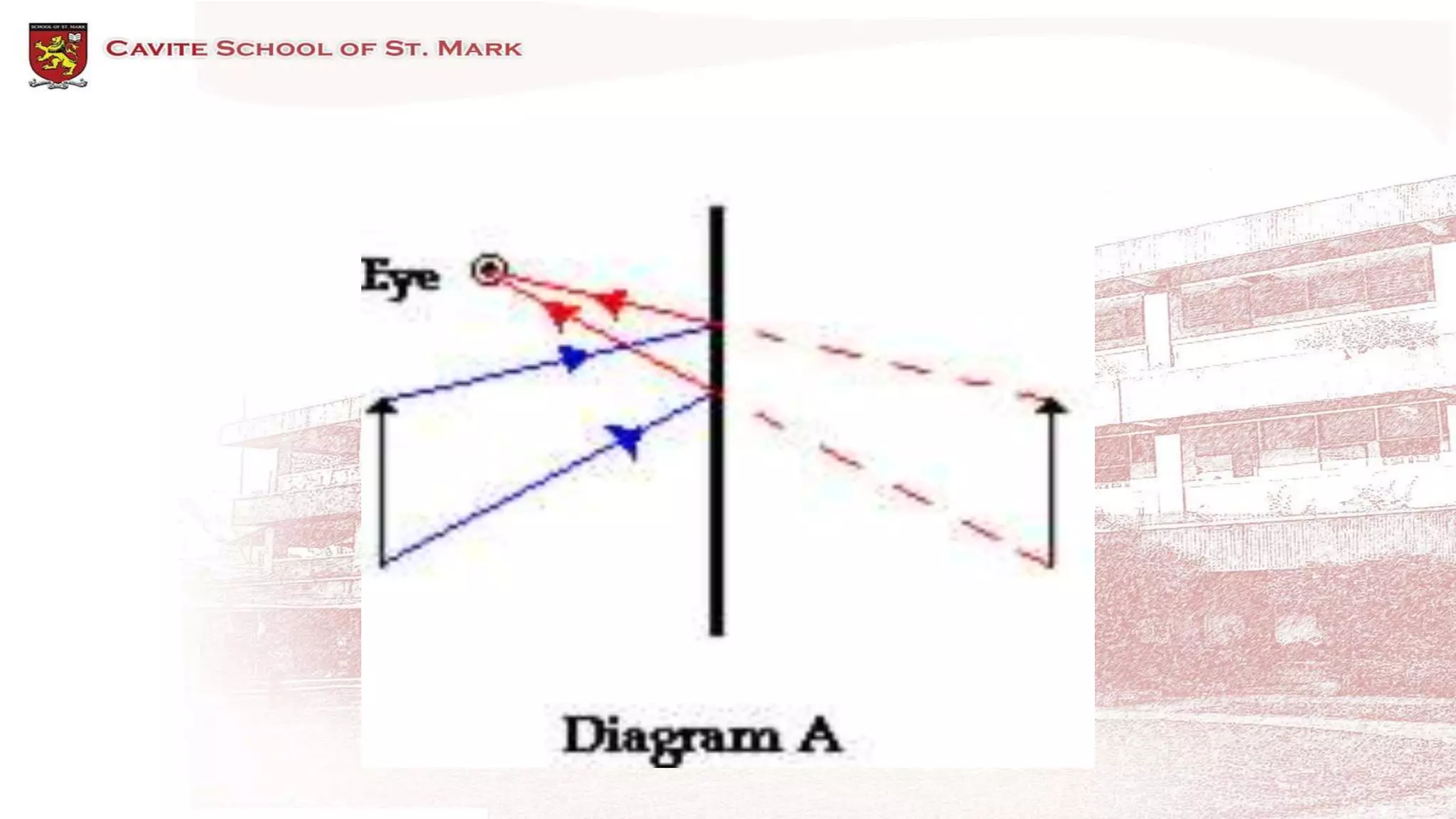
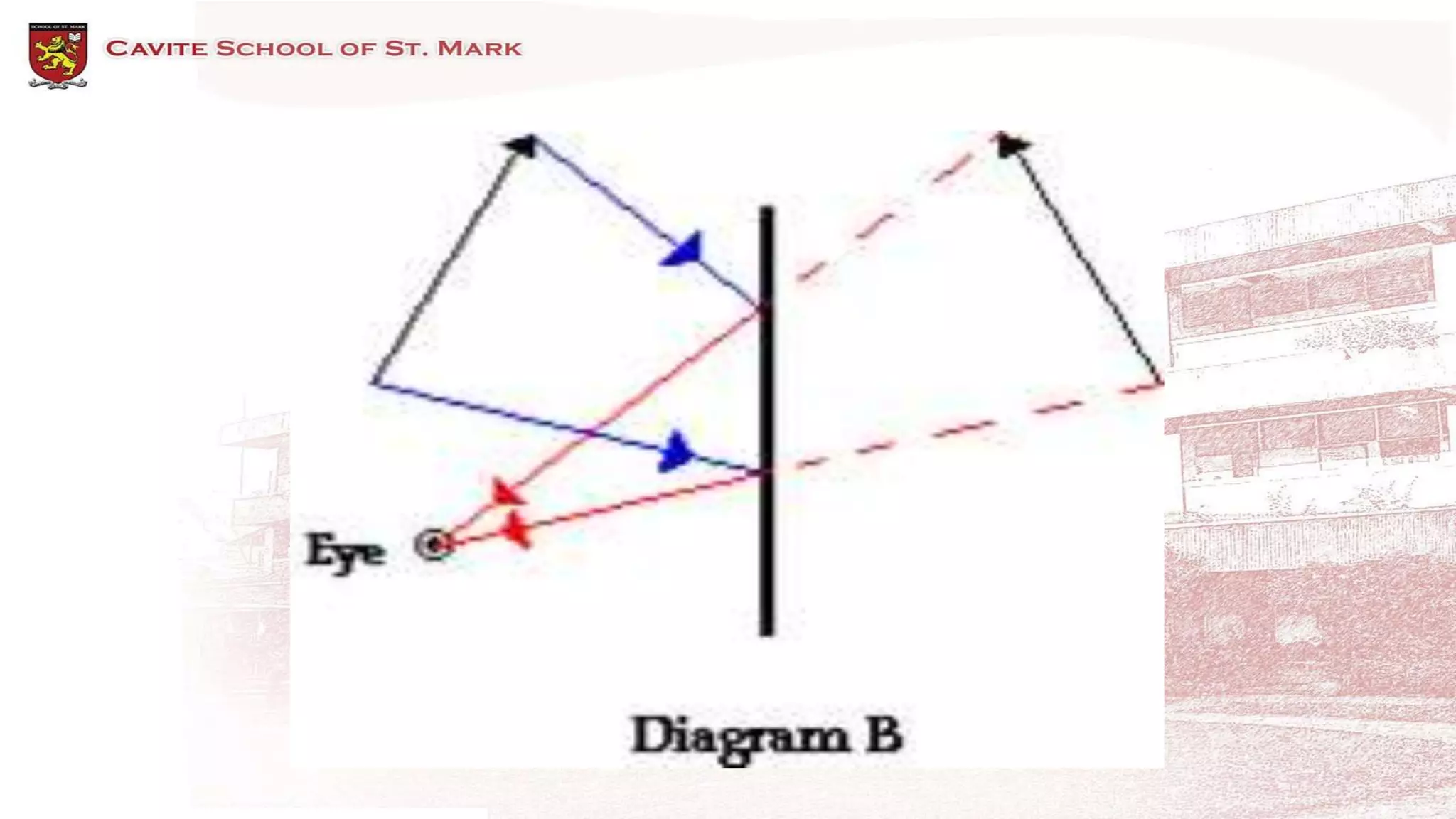
▪ A flat mirror that sends light
out from itself in multiple
directions.
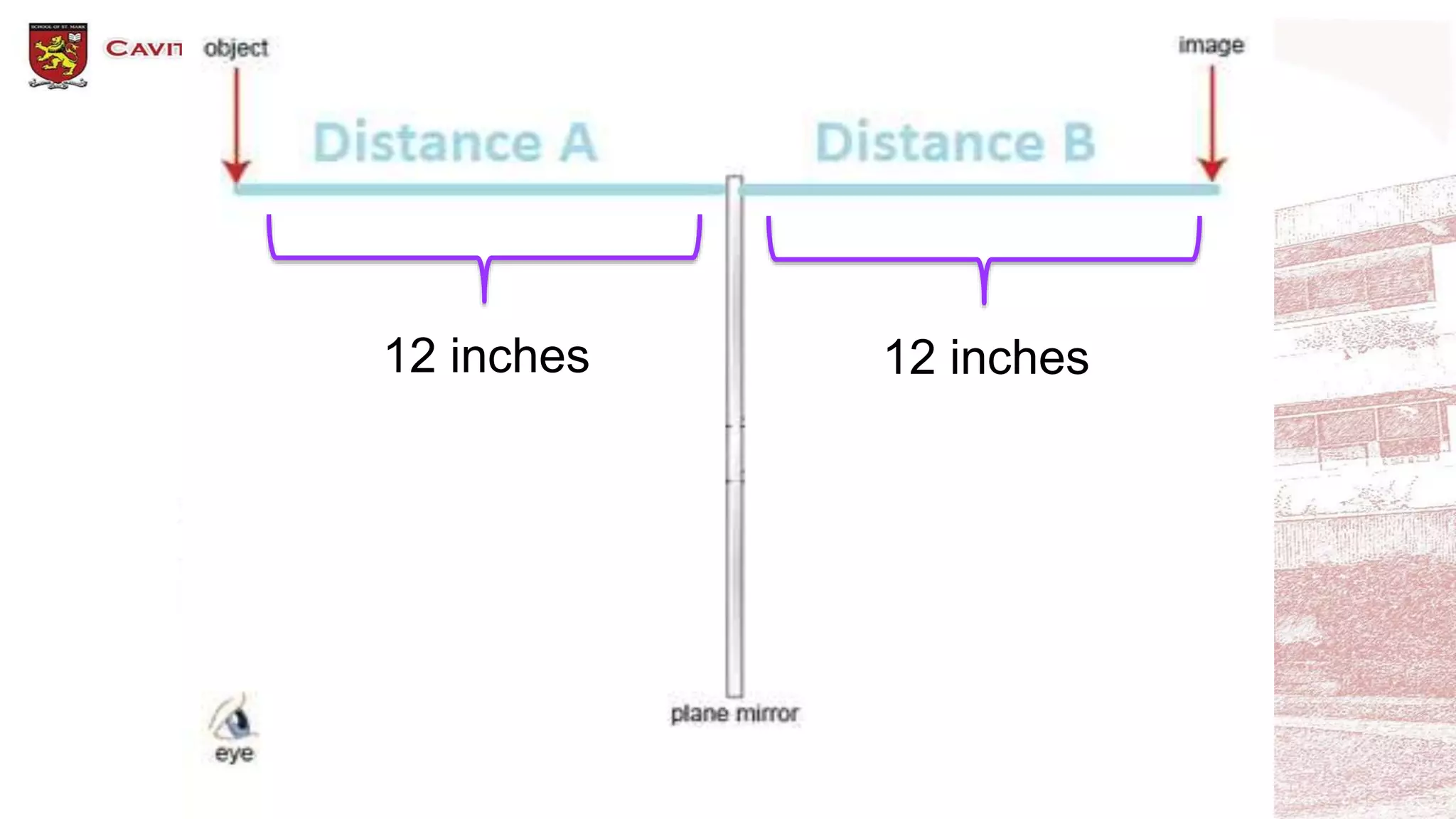
▪ The image formed by a plane
mirror will always be the same
size as the original object.
12 inches 12 inches
PLANE MIRROR
▪ It is virtual
▪ It is erect and of the same
size as the object
▪ It is laterally inverted
CURVED or
SPHERICAL MIRRORS
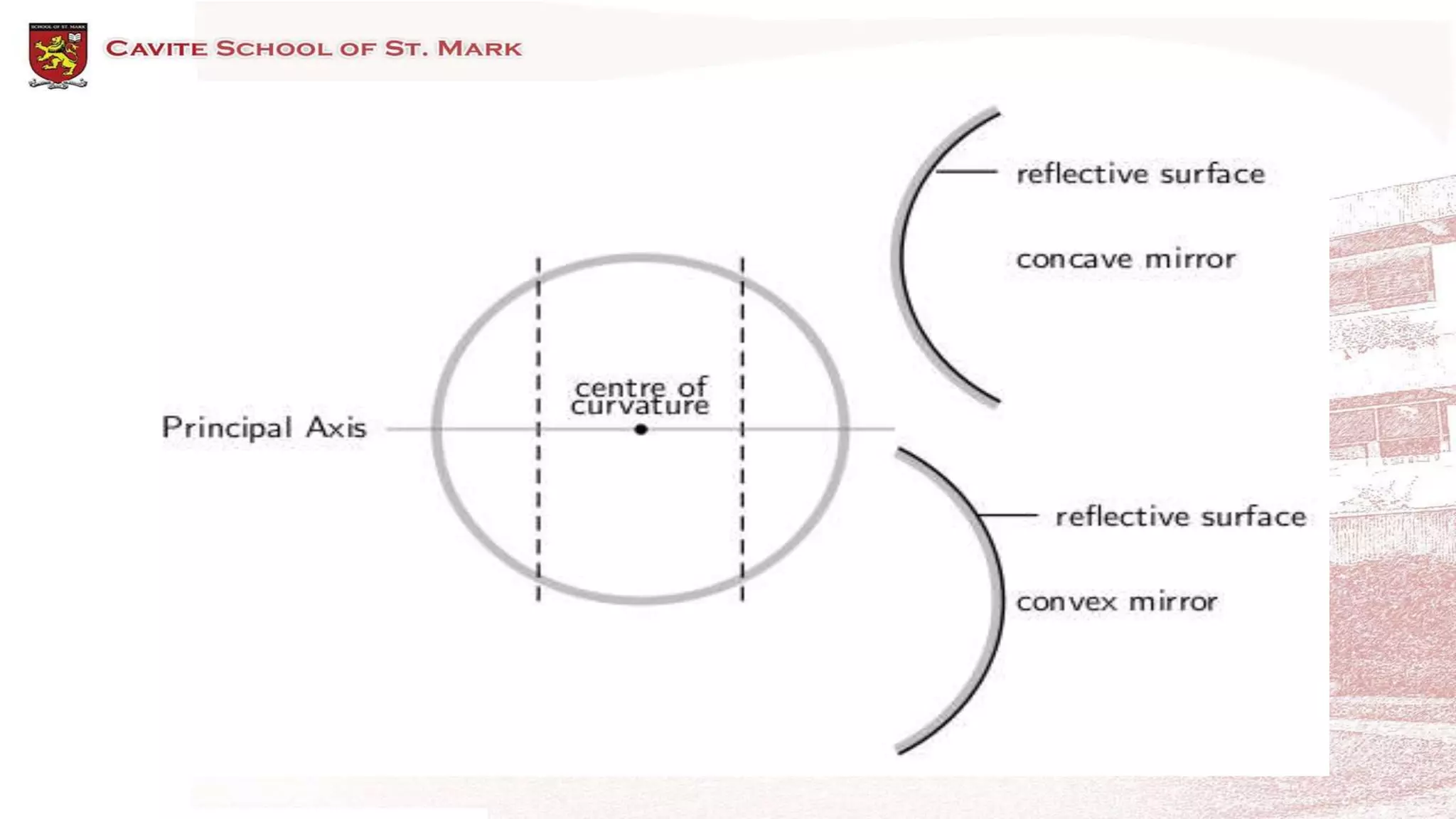
▪ Concave Mirror
▪ Convex Mirror
CONCAVE MIRROR
▪ It bends light further away in the middle,
more like the inside of a bowl.
▪ How images appear depends on the
proximity of objects to the mirror.
CONVEX MIRROR
▪ It curves light away from its middle, like
the outside portion of a bowl.
▪ This type of mirror will produce only
smaller and virtual images.
RAY DIAGRAMS
Diagrams which are used to determine
the location, orientation, size, and type
of image formed in mirrors and lenses
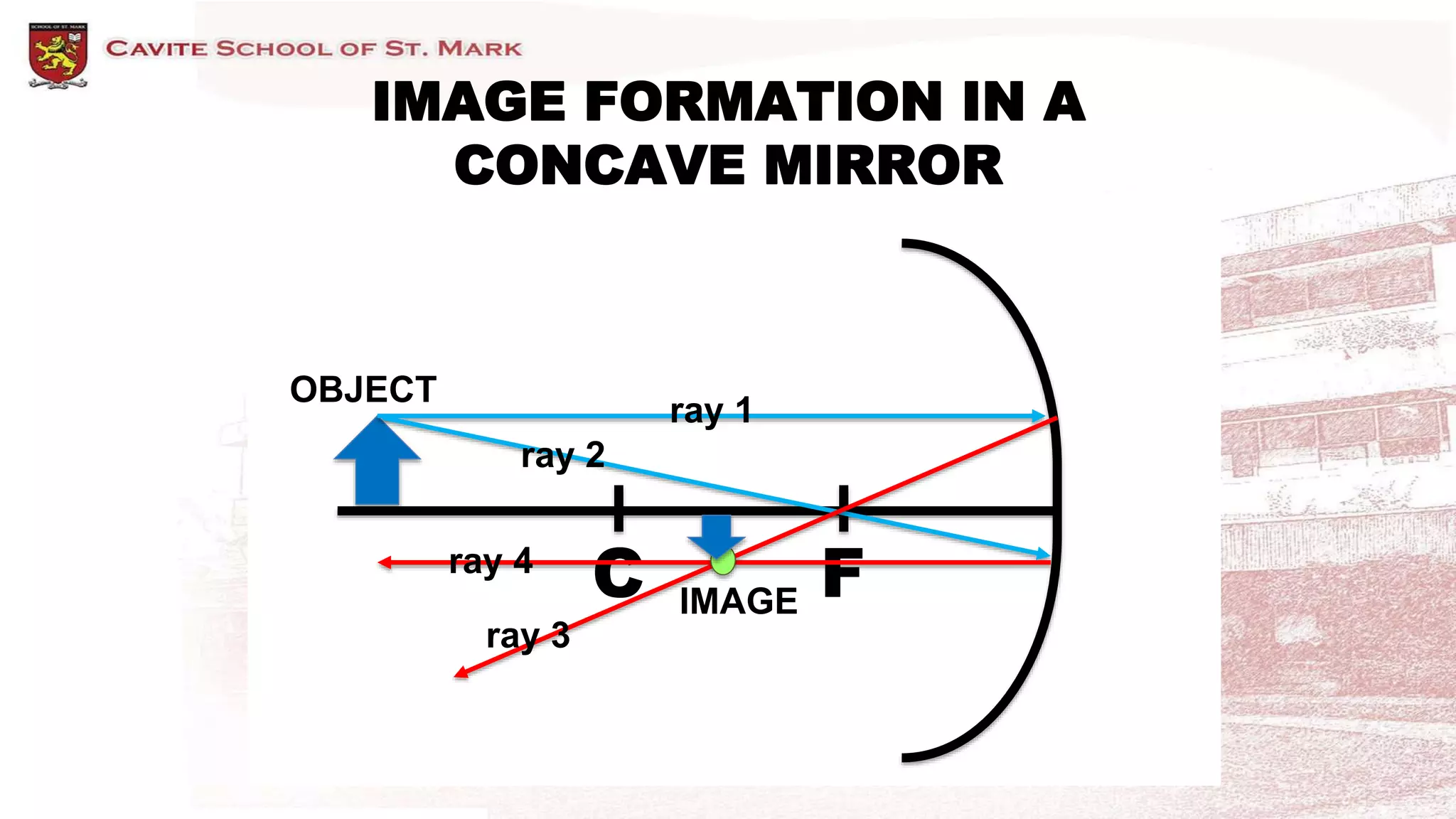
IMAGE FORMATION IN A
CONCAVE MIRROR
C F
ray 1
ray 2
ray 3
ray 4
OBJECT
IMAGE
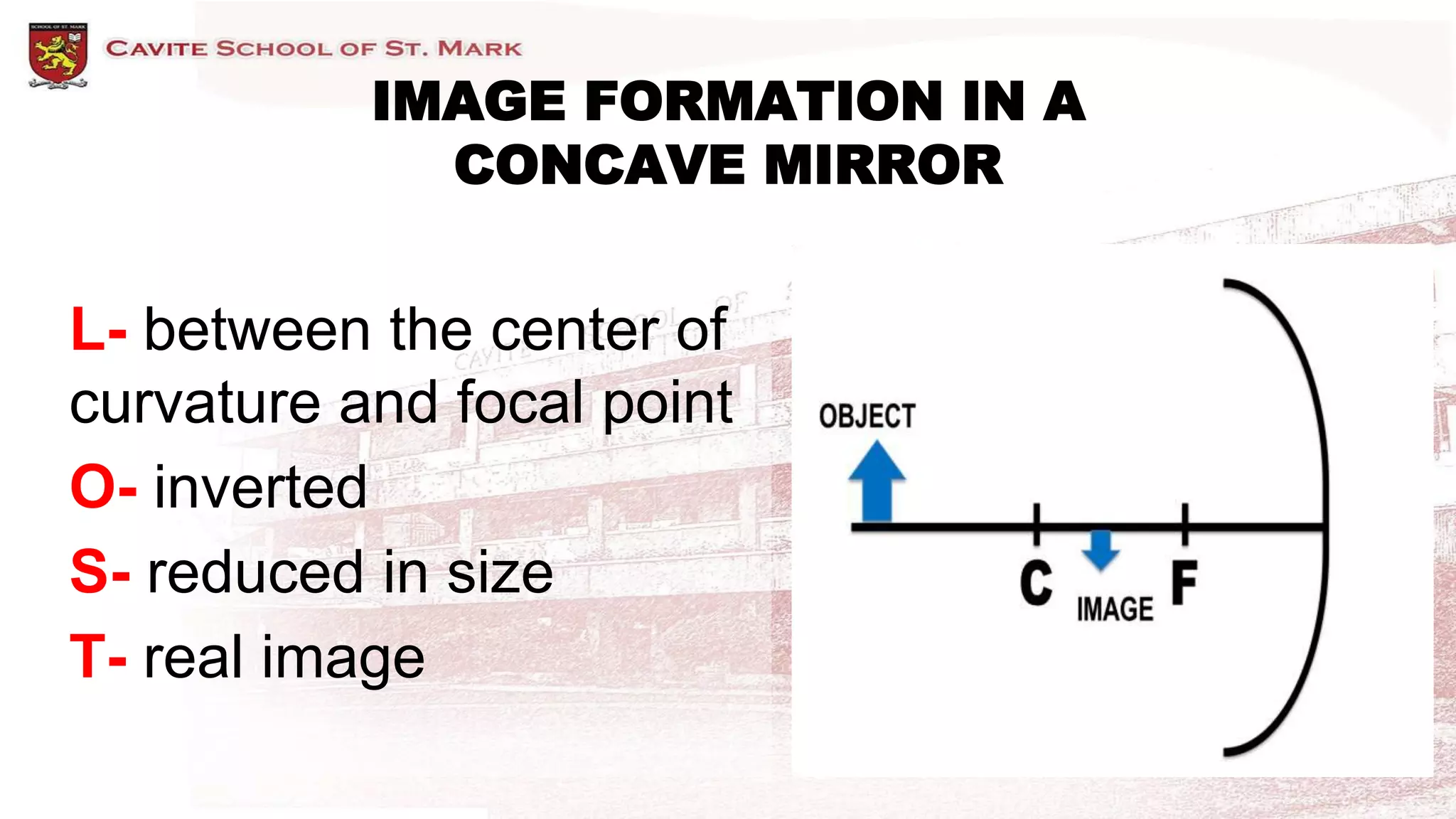
L- between the center of
curvature and focal point
O- inverted
S- reduced in size
T- real image
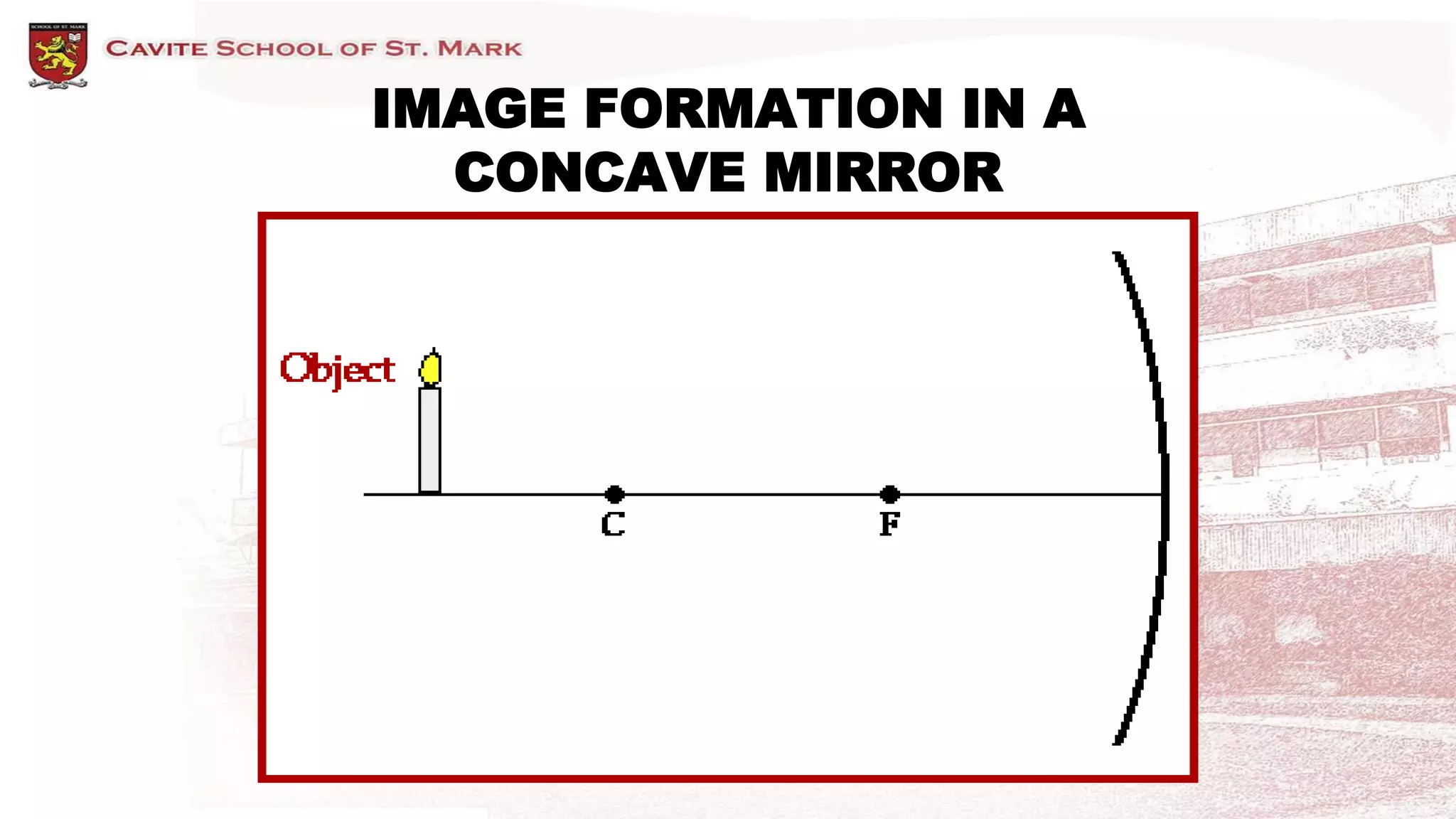
IMAGE FORMATION IN A
CONCAVE MIRROR
IMAGE FORMATION IN A
CONCAVE MIRROR
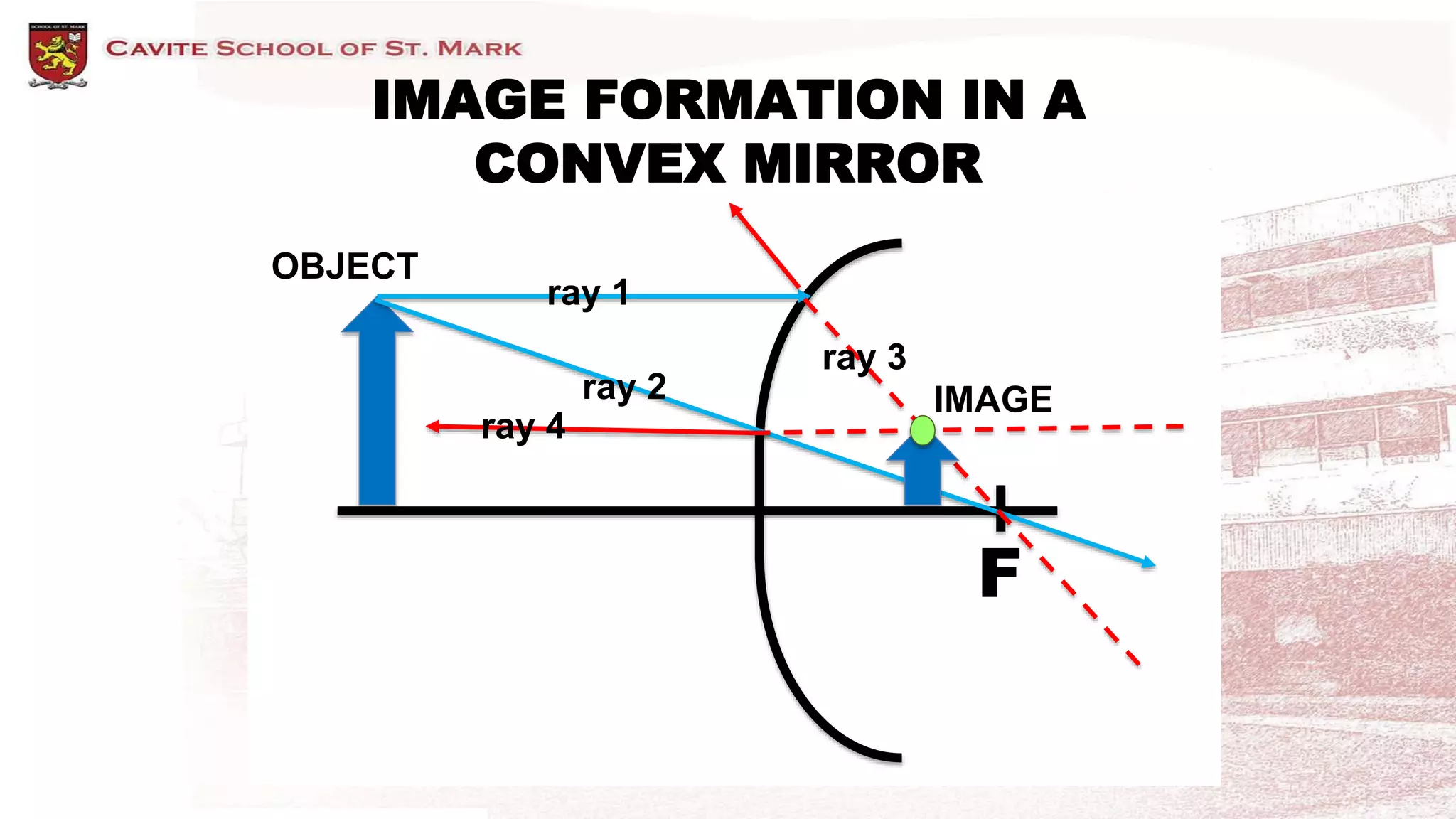
IMAGE FORMATION IN A
CONVEX MIRROR
F
ray 1
ray 2
ray 4
OBJECT
IMAGE
ray 3
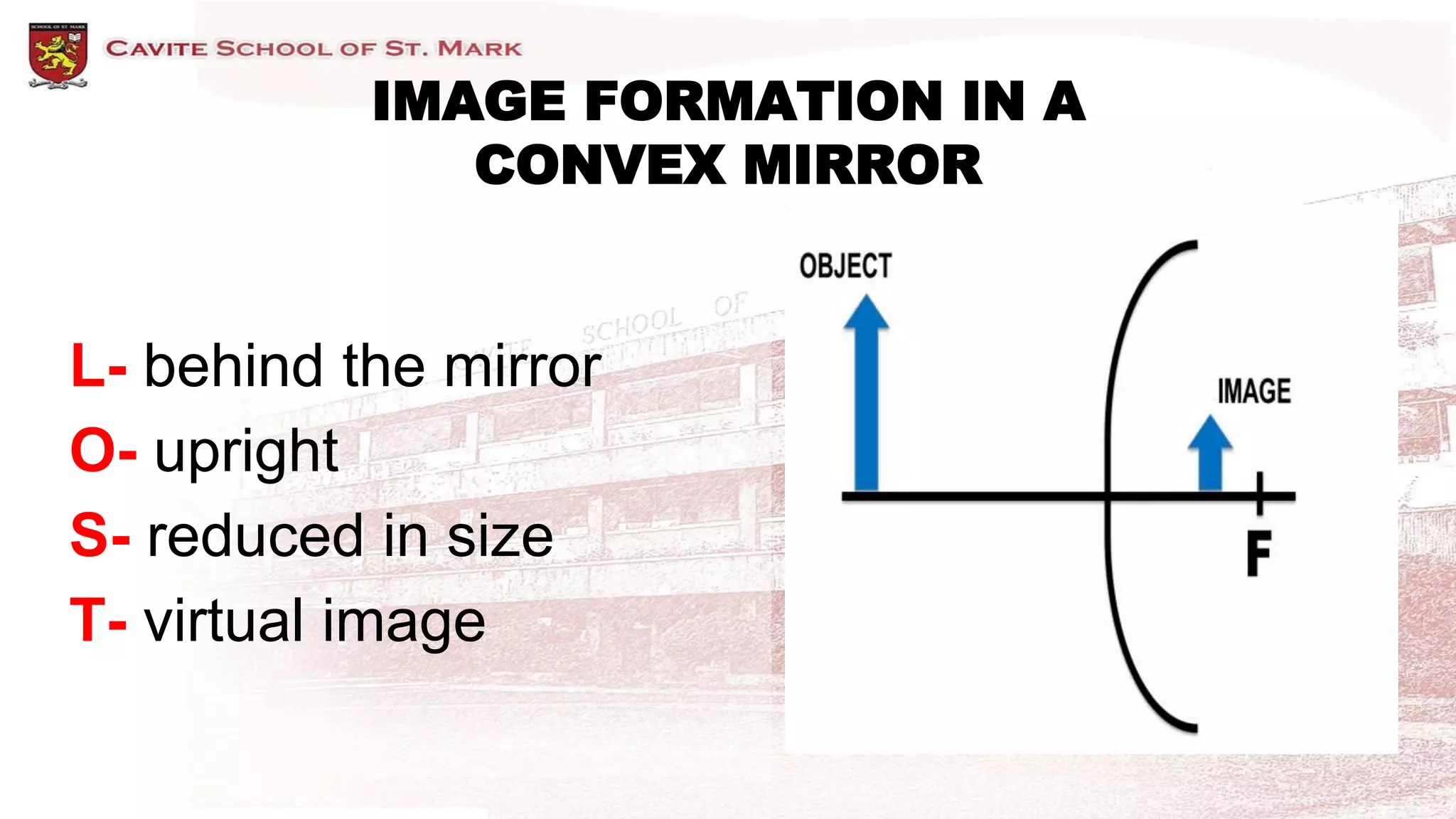
L- behind the mirror
O- upright
S- reduced in size
T- virtual image
IMAGE FORMATION IN A
CONVEX MIRROR

Optics: Reflection of Light in Mirrors

  • 1.
    Prepared by: Ms. JasmineNikki M. Versoza
  • 2.
    MIRROR A reflective surfacethat bounces off light, thus producing a real or virtual image
  • 3.
    PLANE MIRROR ▪ Aflat mirror that sends light out from itself in multiple directions. ▪ The image formed by a plane mirror will always be the same size as the original object.
  • 4.
  • 7.
    PLANE MIRROR ▪ Itis virtual ▪ It is erect and of the same size as the object ▪ It is laterally inverted
  • 8.
    CURVED or SPHERICAL MIRRORS ▪Concave Mirror ▪ Convex Mirror
  • 9.
    CONCAVE MIRROR ▪ Itbends light further away in the middle, more like the inside of a bowl. ▪ How images appear depends on the proximity of objects to the mirror.
  • 10.
    CONVEX MIRROR ▪ Itcurves light away from its middle, like the outside portion of a bowl. ▪ This type of mirror will produce only smaller and virtual images.
  • 12.
    RAY DIAGRAMS Diagrams whichare used to determine the location, orientation, size, and type of image formed in mirrors and lenses
  • 13.
    IMAGE FORMATION INA CONCAVE MIRROR C F ray 1 ray 2 ray 3 ray 4 OBJECT IMAGE
  • 14.
    L- between thecenter of curvature and focal point O- inverted S- reduced in size T- real image IMAGE FORMATION IN A CONCAVE MIRROR
  • 15.
    IMAGE FORMATION INA CONCAVE MIRROR
  • 16.
    IMAGE FORMATION INA CONVEX MIRROR F ray 1 ray 2 ray 4 OBJECT IMAGE ray 3
  • 17.
    L- behind themirror O- upright S- reduced in size T- virtual image IMAGE FORMATION IN A CONVEX MIRROR