

Gandhinagar Institute
OF Technology(012)
Subject:- MMM(2141901)
Active Learning Assignment
Topic Name:-Optical Flat And Optical Square
Branch:- Mechanical B-1
Prepared By:- Jani Parth U.(150120119051)
Guided By:- Prof.Naman Dave
 Contents
i. Introduction
ii. Optical Square
iii.Type Of Optical Square
iv.Use Of Optical Square
v. Optical Flats
vi.Type Of Optical Flat
vii.Use Of Optical Flat
i. introduction
 Laser:- It Is Defined As Light Amplification By Stimulated
Emission Of Radiation
 Characteristics Of Laser Light
1. Monochromatic
2. Coherence
3. Collimated
 Laser Based Instrumentation Is The Best Choice For Precise
Measurement
ii. Optical square
 Optical Square Is Pentagonal Prism
 Optical Square Is Based On Double Reflection Principle
 An Optical Square Is Used For Turning The Line Of Sight By 90
Degree From Its Original Path.
 It Is Used In Pairs In Surveying And In A Singular Block.
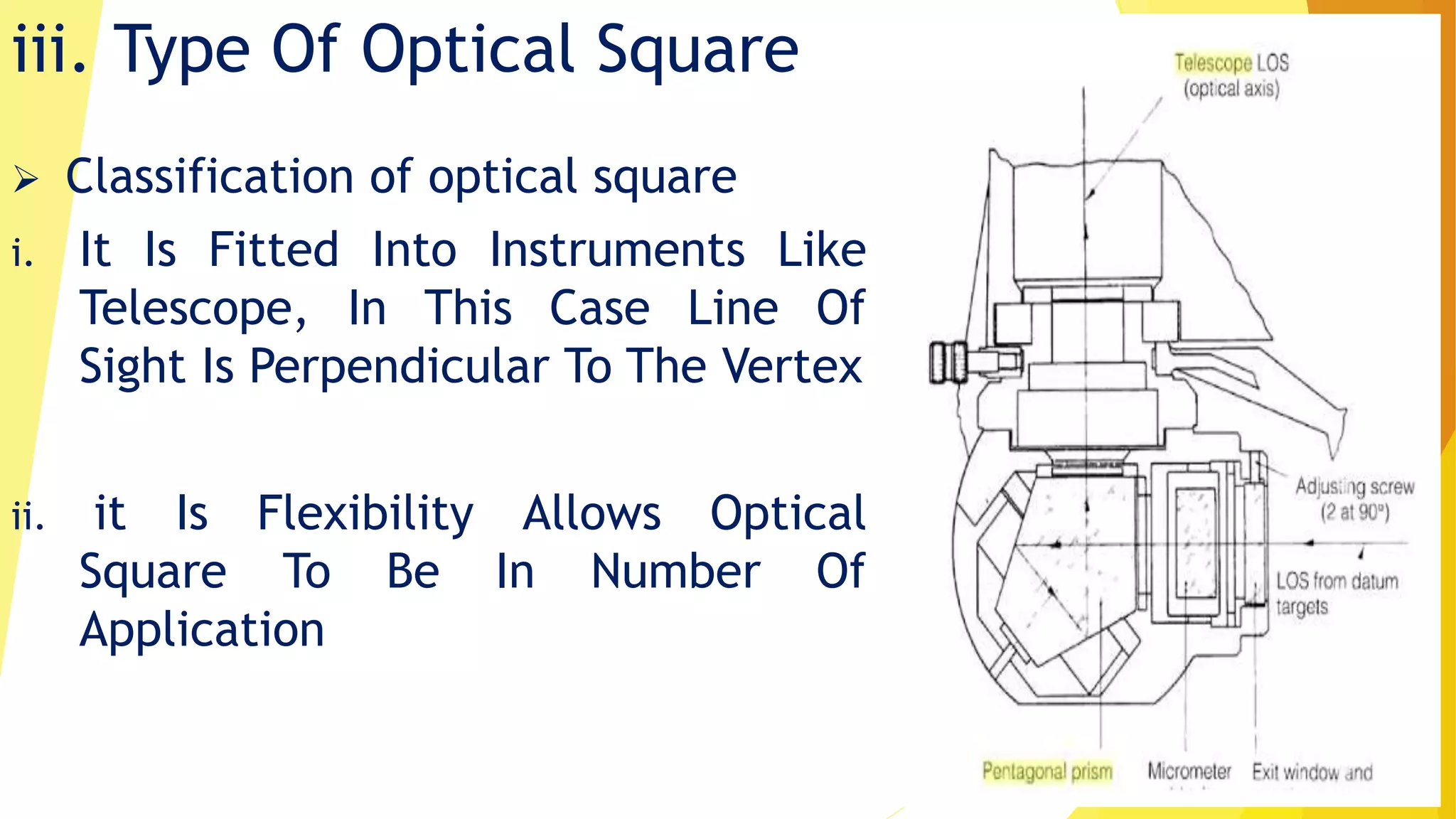
iii. Type Of Optical Square
 Classification of optical square
i. It Is Fitted Into Instruments Like
Telescope, In This Case Line Of
Sight Is Perpendicular To The Vertex
ii. it Is Flexibility Allows Optical
Square To Be In Number Of
Application
iv. Use of optical square
 The Axis Of Incident Beam From The Auto-collimator Form The
Measuring Datum.
 An Optical Square Is Utilised For Turning The Incident Beam Through
Exactly 90 Degree.
 In This Test, It Is Assumed That The Two Surface Are Perfectly Straight.
 Stainless Steel Mirror Block With A Flat Base Is Used For The Horizontal
Surfaces For Aligning The Collimator With The Surface A Reading Is Thus
Taken In Collimator At Position By A
• The Mirror With Base Is Then Transferred To The Vertical Surface And
Optical Square Placed In Angle As Indicated
The Difference Between The Two Reading Would Then Be Squareness
Eror.
v. Optical Flats
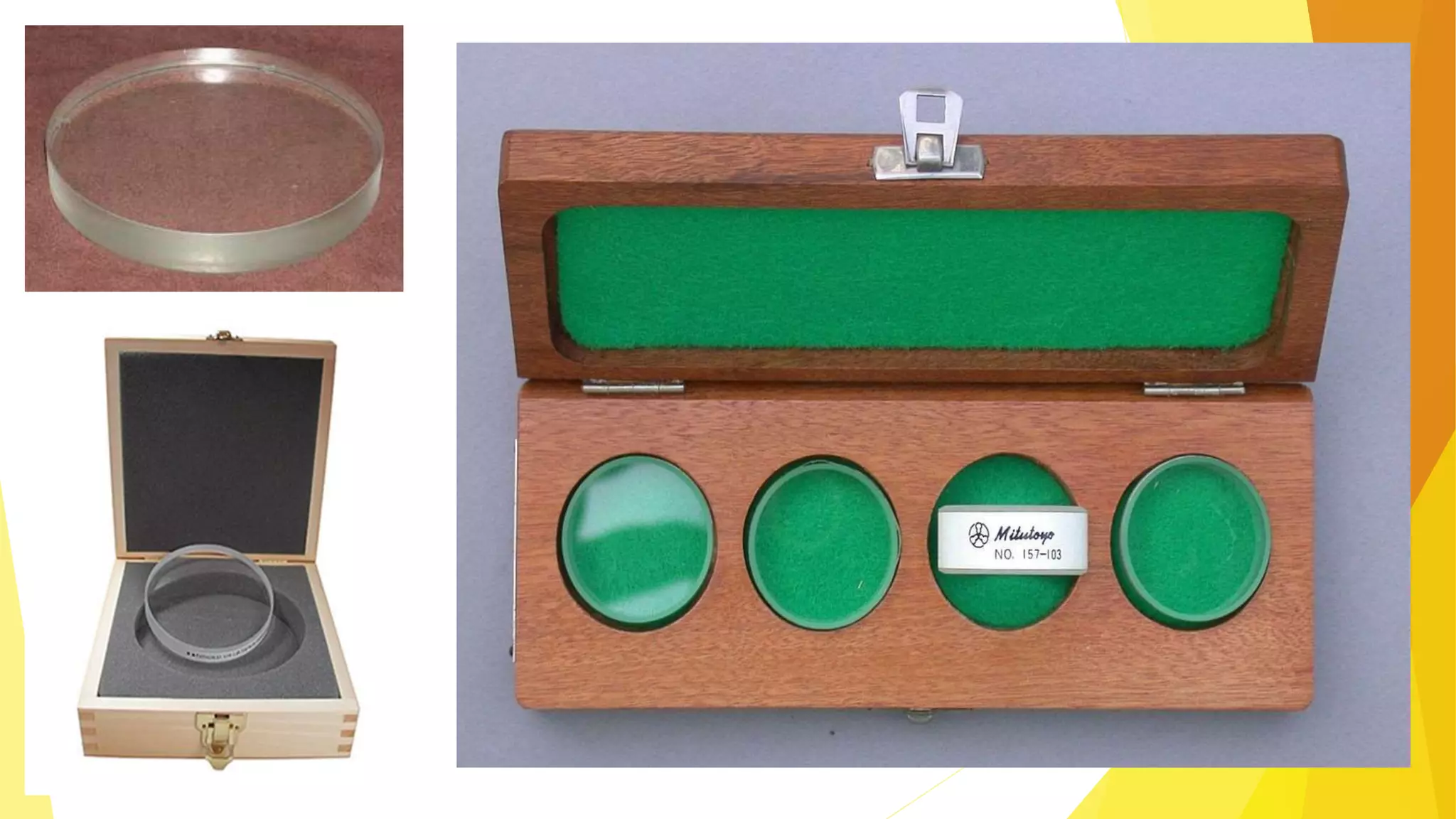
 Optical Flats Are Cylindrical In Form With The Working
Surfaces Flat.
 An Optical Flat May Be Of Any Transparent Material Usually
Glass With Two Highly Polished Surfaces.

 Optical Flats Are Made Of Fused Quartz Or Borosilicate Glass.This Glass
Is Clear And Colourless.
 The Cylindrical Surfaces Of The Optical Flats Are Finished By Grinding
And The Working Surfaces Are Finished By Lapping And Polishing
Process.
vi.Type Of Optical Flat
 Type A
 It Has Only One Surface Flat. The Working Surface Of This Type Of Flat Is Indicated
By An Arrow Head On The Cylindrical Surface Pointing Towards The Working Surface.
 This Type Of Flat Are Used For Testing The Flatness Of Precision Measuring Surfaces
Of Flats , slips Etc.
 Type B
 It Has Both Surfaces Flat And Parallel To Each Other.
 This Type Of Flat Are Used For Testing Measuring Surfaces Of Micrometres ,Measuring
Anvils.
 This Glass Is Clear And Colourless.
 The Cylindrical Surfaces Of The Optical Flats Are Finished By Grinding And The
Working Surfaces Are Finished By Lapping And Polishing Process.
vii. Use Of Optical Flat
 The flatness of the working surface of an optical flat is tested
by comparing its flatness with a master flat of known flatness.
 The testing is usually carried out by observing the interference
fringes using monochromatic light source.
 If the optical flat under test has a perfectly flat surface then
the fringes observed will be straight line.
Optical Flat And Optical Square

Optical Flat And Optical Square

  • 1.
    Gandhinagar Institute OF Technology(012) Subject:-MMM(2141901) Active Learning Assignment Topic Name:-Optical Flat And Optical Square Branch:- Mechanical B-1 Prepared By:- Jani Parth U.(150120119051) Guided By:- Prof.Naman Dave
  • 2.
     Contents i. Introduction ii.Optical Square iii.Type Of Optical Square iv.Use Of Optical Square v. Optical Flats vi.Type Of Optical Flat vii.Use Of Optical Flat
  • 3.
    i. introduction  Laser:-It Is Defined As Light Amplification By Stimulated Emission Of Radiation  Characteristics Of Laser Light 1. Monochromatic 2. Coherence 3. Collimated  Laser Based Instrumentation Is The Best Choice For Precise Measurement
  • 4.
    ii. Optical square Optical Square Is Pentagonal Prism  Optical Square Is Based On Double Reflection Principle  An Optical Square Is Used For Turning The Line Of Sight By 90 Degree From Its Original Path.  It Is Used In Pairs In Surveying And In A Singular Block.
  • 5.
    iii. Type OfOptical Square  Classification of optical square i. It Is Fitted Into Instruments Like Telescope, In This Case Line Of Sight Is Perpendicular To The Vertex ii. it Is Flexibility Allows Optical Square To Be In Number Of Application
  • 6.
    iv. Use ofoptical square  The Axis Of Incident Beam From The Auto-collimator Form The Measuring Datum.  An Optical Square Is Utilised For Turning The Incident Beam Through Exactly 90 Degree.  In This Test, It Is Assumed That The Two Surface Are Perfectly Straight.  Stainless Steel Mirror Block With A Flat Base Is Used For The Horizontal Surfaces For Aligning The Collimator With The Surface A Reading Is Thus Taken In Collimator At Position By A
  • 7.
    • The MirrorWith Base Is Then Transferred To The Vertical Surface And Optical Square Placed In Angle As Indicated The Difference Between The Two Reading Would Then Be Squareness Eror.
  • 8.
    v. Optical Flats Optical Flats Are Cylindrical In Form With The Working Surfaces Flat.  An Optical Flat May Be Of Any Transparent Material Usually Glass With Two Highly Polished Surfaces.   Optical Flats Are Made Of Fused Quartz Or Borosilicate Glass.This Glass Is Clear And Colourless.  The Cylindrical Surfaces Of The Optical Flats Are Finished By Grinding And The Working Surfaces Are Finished By Lapping And Polishing Process.
  • 10.
    vi.Type Of OpticalFlat  Type A  It Has Only One Surface Flat. The Working Surface Of This Type Of Flat Is Indicated By An Arrow Head On The Cylindrical Surface Pointing Towards The Working Surface.  This Type Of Flat Are Used For Testing The Flatness Of Precision Measuring Surfaces Of Flats , slips Etc.  Type B  It Has Both Surfaces Flat And Parallel To Each Other.  This Type Of Flat Are Used For Testing Measuring Surfaces Of Micrometres ,Measuring Anvils.  This Glass Is Clear And Colourless.  The Cylindrical Surfaces Of The Optical Flats Are Finished By Grinding And The Working Surfaces Are Finished By Lapping And Polishing Process.
  • 11.
    vii. Use OfOptical Flat  The flatness of the working surface of an optical flat is tested by comparing its flatness with a master flat of known flatness.  The testing is usually carried out by observing the interference fringes using monochromatic light source.  If the optical flat under test has a perfectly flat surface then the fringes observed will be straight line.