Operating System
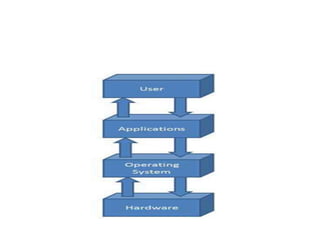
• An operating system is a program that acts as an
interface between the software and the
computer hardware.
• It is an integration set of specialised programs
that are used to manage overall resources and
operations of the computer.
• It is specialised software that controls and
monitors the execution of all other programs that
reside in the computer, including application
programs and other system software.
• Objectives of Operating System
• Making a computer system convenient to use in an efficient manner
• To hide the details of the hardware resources from the users
• To provide users a convenient interface to use the computer
system.
• To act as an intermediary between the hardware and its users and
making it easier for the users to access and use other resources.
• Manage the resources of a computer system.
• keep track of who is using which resource, granting resource
requests, according for resource using and mediating conflicting
requests from different programs and users.
• The efficient and fair sharing of resources among users and
programs
• Characteristics of Operating System
• Memory Management -- It keeps tracks of primary
memory i.e what part of it are in use by whom, what part
are not in use etc.Allocates the memory when the process
or program request it.
• Processor Management -- Allocate the processor(CPU) to a
process. Deallocate processor when processor is no longer
required.
• Device Management -- Keep tracks of all devices.This is also
called I/O controller. Decides which process gets the device
when and for how much time.
• File Management -- Allocates the resources. De-allocates
the resource. Decides who gets the resources.
• Security -- By means of passwords & similar other techniques,
preventing unauthorized access to programs & data.
• Job accounting -- Keeping track of time & resources used by various
jobs and/or users.
• Control over system performance -- Recording delays between
request for a service & from the system.
• Interaction with the operators -- The interaction may take place via
the console of the computer in the form of instructions. Operating
System acknowledges the same, do the corresponding action and
inform the operation by a display screen.
• Error-detecting aids -- Production of dumps, traces, error messages
and other debugging and error-detecting methods.
• Coordination between other software and users -- Coordination
and assignment of compilers, interpreters, assemblers and other
software to the various users of the computer systems.

Operating system

  • 1.
    Operating System • Anoperating system is a program that acts as an interface between the software and the computer hardware. • It is an integration set of specialised programs that are used to manage overall resources and operations of the computer. • It is specialised software that controls and monitors the execution of all other programs that reside in the computer, including application programs and other system software.
  • 2.
    • Objectives ofOperating System • Making a computer system convenient to use in an efficient manner • To hide the details of the hardware resources from the users • To provide users a convenient interface to use the computer system. • To act as an intermediary between the hardware and its users and making it easier for the users to access and use other resources. • Manage the resources of a computer system. • keep track of who is using which resource, granting resource requests, according for resource using and mediating conflicting requests from different programs and users. • The efficient and fair sharing of resources among users and programs
  • 4.
    • Characteristics ofOperating System • Memory Management -- It keeps tracks of primary memory i.e what part of it are in use by whom, what part are not in use etc.Allocates the memory when the process or program request it. • Processor Management -- Allocate the processor(CPU) to a process. Deallocate processor when processor is no longer required. • Device Management -- Keep tracks of all devices.This is also called I/O controller. Decides which process gets the device when and for how much time. • File Management -- Allocates the resources. De-allocates the resource. Decides who gets the resources.
  • 5.
    • Security --By means of passwords & similar other techniques, preventing unauthorized access to programs & data. • Job accounting -- Keeping track of time & resources used by various jobs and/or users. • Control over system performance -- Recording delays between request for a service & from the system. • Interaction with the operators -- The interaction may take place via the console of the computer in the form of instructions. Operating System acknowledges the same, do the corresponding action and inform the operation by a display screen. • Error-detecting aids -- Production of dumps, traces, error messages and other debugging and error-detecting methods. • Coordination between other software and users -- Coordination and assignment of compilers, interpreters, assemblers and other software to the various users of the computer systems.