Wilderness First Aid
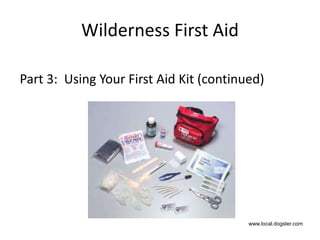
Part 3: Using Your First Aid Kit (continued)
www.local.dogster.com
Using Your First Aid Kit
Dehydration
• When outdoors you can quickly
become dehydrated even in cool
or cold weather.
Signs of dehydration include:
• Headache
• Thirst
• Dry mouth
• Muscle weakness
• Fatigue or Lethargy
• Dizziness
• Lightheadedness
Heat Exhaustion
• Caused by insufficient water
intake
• Body becomes dehydrated and
salt depleted
Signs of heat exhaustion include:
• Nausea
• Faintness
• Weak , rapid pulse and/or cold
clammy skin
http://www.aquasanastore.com/water-you_c01.html
Treating Dehydration and Heat Exhaustion
• Rest in a cool, shaded
area.
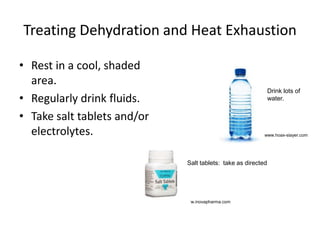
• Regularly drink fluids.
• Take salt tablets and/or
electrolytes. www.hoax-slayer.com
Drink lots of
water.
www.inovapharma.com
Salt tablets: take as directed
Preventing Diarrhoea
• For extended wilderness
excursions you may not be
able to carry enough water
with you.
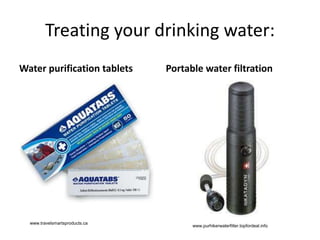
• Use water purification
tablets or filtration systems
to prevent water borne
diseases and sickness.
• Only drink directly from
rivers, lakes etc. as a last
resort to protect you from
harmful bacteria and
amoebas that cause
disease.
• Take anti-diarrhoeal
medication as directed if
symptoms appear
http://bcadventure.com/adventure/wilderness/survival/first.htm
Treating your drinking water:
Water purification tablets Portable water filtration
www.travelsmartsproducts.ca
www.purhikerwaterfilter.topfordeal.info
Using Your First Aid Kit
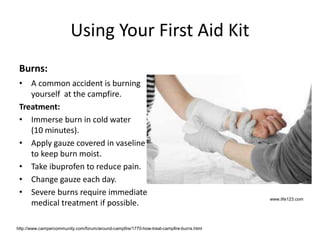
Burns:
• A common accident is burning
yourself at the campfire.
Treatment:
• Immerse burn in cold water
(10 minutes).
• Apply gauze covered in vaseline
to keep burn moist.
• Take ibuprofen to reduce pain.
• Change gauze each day.
• Severe burns require immediate
medical treatment if possible.
www.life123.com
http://www.campercommunity.com/forum/around-campfire/1770-how-treat-campfire-burns.html
Using Your First Aid kit
Cuts and Scrapes:
• Clean the affected area with soap
and water or an antiseptic.
• Apply an antibiotic ointment or
cream.
• Apply an appropriate sized
bandage to cover the cut or
scrape.
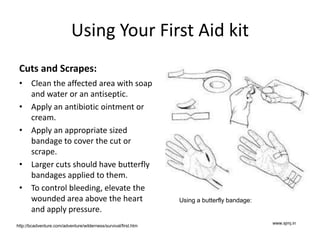
• Larger cuts should have butterfly
bandages applied to them.
• To control bleeding, elevate the
wounded area above the heart
and apply pressure.
www.sjmj.in
Using a butterfly bandage:
http://bcadventure.com/adventure/wilderness/survival/first.htm
Frostbite:
Frostbite:
• Occurs when exposed tissue
of an area is frozen from
direct exposure to the
elements or high wind.
• Most commonly affects the
toes, fingers or face.
• Avoid frostbite by
dressing appropriately.
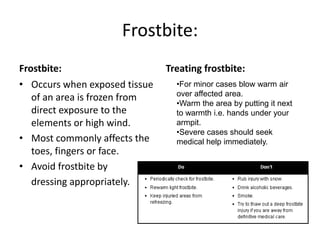
Treating frostbite:
•For minor cases blow warm air
over affected area.
•Warm the area by putting it next
to warmth i.e. hands under your
armpit.
•Severe cases should seek
medical help immediately.
Frostbite (continued)
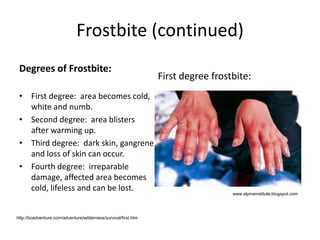
Degrees of Frostbite:
• First degree: area becomes cold,
white and numb.
• Second degree: area blisters
after warming up.
• Third degree: dark skin, gangrene
and loss of skin can occur.
• Fourth degree: irreparable
damage, affected area becomes
cold, lifeless and can be lost.
First degree frostbite:
www.alpineinstitute.blogspot.com
http://bcadventure.com/adventure/wilderness/survival/first.htm
Using Your First Aid kit
Sprains and closed fractures:
• Treat sprains by applying an
ice pack to the area for the
first 24 hours or until
swelling has subsided.
• Take ibuprofen for pain
relief and to help reduce
swelling.
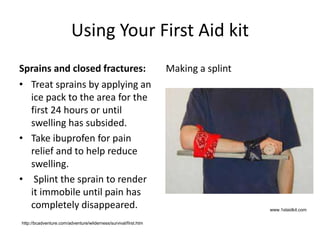
• Splint the sprain to render
it immobile until pain has
completely disappeared.
Making a splint
www.1staidkit.com
http://bcadventure.com/adventure/wilderness/survival/first.htm
Using Your First Aid Kit
Compound Fractures (broken bone and open wound)
• Treat patient for shock by
elevating feet at least 30 cm,
cover with blankets or coats.
• Rinse wound gently with water to
clear out any large contaminants
like dirt or even bone fragments.
• Stop bleeding by dressing the
wound with sterile pads. This will
help reduce the chance of
infection. Redress the wound
frequently if bleeding continues,
but avoid using pressure.
• Stabilize the wound by creating a
splint. A splint can easily be made
by placing a strong piece of wood
on each side of the break and
securing it with medical tape or
twine. The idea of the splint is
that it holds the broken bone in
place so no further harm can be
done.
• Keep the wound immobilized as
you work your way toward
medical help. Monitor any
bleeding closely.
http://www.trails.com/how_1020_treating-compound-fracture-wilderness.html
Be Prepared!
• Whether you are on a short or
extended outdoor trip, close to or
far away from medical help, you
can never fully anticipate what
accidents can occur.
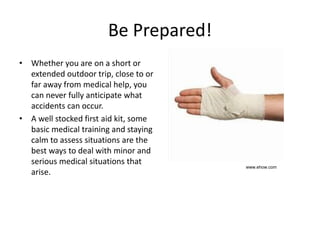
• A well stocked first aid kit, some
basic medical training and staying
calm to assess situations are the
best ways to deal with minor and
serious medical situations that
arise.
www.ehow.com

ONTAP - Wilderness First Aid 3

  • 2.
    Wilderness First Aid Part3: Using Your First Aid Kit (continued) www.local.dogster.com
  • 3.
    Using Your FirstAid Kit Dehydration • When outdoors you can quickly become dehydrated even in cool or cold weather. Signs of dehydration include: • Headache • Thirst • Dry mouth • Muscle weakness • Fatigue or Lethargy • Dizziness • Lightheadedness Heat Exhaustion • Caused by insufficient water intake • Body becomes dehydrated and salt depleted Signs of heat exhaustion include: • Nausea • Faintness • Weak , rapid pulse and/or cold clammy skin http://www.aquasanastore.com/water-you_c01.html
  • 4.
    Treating Dehydration andHeat Exhaustion • Rest in a cool, shaded area. • Regularly drink fluids. • Take salt tablets and/or electrolytes. www.hoax-slayer.com Drink lots of water. www.inovapharma.com Salt tablets: take as directed
  • 5.
    Preventing Diarrhoea • Forextended wilderness excursions you may not be able to carry enough water with you. • Use water purification tablets or filtration systems to prevent water borne diseases and sickness. • Only drink directly from rivers, lakes etc. as a last resort to protect you from harmful bacteria and amoebas that cause disease. • Take anti-diarrhoeal medication as directed if symptoms appear http://bcadventure.com/adventure/wilderness/survival/first.htm
  • 6.
    Treating your drinkingwater: Water purification tablets Portable water filtration www.travelsmartsproducts.ca www.purhikerwaterfilter.topfordeal.info
  • 7.
    Using Your FirstAid Kit Burns: • A common accident is burning yourself at the campfire. Treatment: • Immerse burn in cold water (10 minutes). • Apply gauze covered in vaseline to keep burn moist. • Take ibuprofen to reduce pain. • Change gauze each day. • Severe burns require immediate medical treatment if possible. www.life123.com http://www.campercommunity.com/forum/around-campfire/1770-how-treat-campfire-burns.html
  • 8.
    Using Your FirstAid kit Cuts and Scrapes: • Clean the affected area with soap and water or an antiseptic. • Apply an antibiotic ointment or cream. • Apply an appropriate sized bandage to cover the cut or scrape. • Larger cuts should have butterfly bandages applied to them. • To control bleeding, elevate the wounded area above the heart and apply pressure. www.sjmj.in Using a butterfly bandage: http://bcadventure.com/adventure/wilderness/survival/first.htm
  • 9.
    Frostbite: Frostbite: • Occurs whenexposed tissue of an area is frozen from direct exposure to the elements or high wind. • Most commonly affects the toes, fingers or face. • Avoid frostbite by dressing appropriately. Treating frostbite: •For minor cases blow warm air over affected area. •Warm the area by putting it next to warmth i.e. hands under your armpit. •Severe cases should seek medical help immediately.
  • 10.
    Frostbite (continued) Degrees ofFrostbite: • First degree: area becomes cold, white and numb. • Second degree: area blisters after warming up. • Third degree: dark skin, gangrene and loss of skin can occur. • Fourth degree: irreparable damage, affected area becomes cold, lifeless and can be lost. First degree frostbite: www.alpineinstitute.blogspot.com http://bcadventure.com/adventure/wilderness/survival/first.htm
  • 11.
    Using Your FirstAid kit Sprains and closed fractures: • Treat sprains by applying an ice pack to the area for the first 24 hours or until swelling has subsided. • Take ibuprofen for pain relief and to help reduce swelling. • Splint the sprain to render it immobile until pain has completely disappeared. Making a splint www.1staidkit.com http://bcadventure.com/adventure/wilderness/survival/first.htm
  • 12.
    Using Your FirstAid Kit Compound Fractures (broken bone and open wound) • Treat patient for shock by elevating feet at least 30 cm, cover with blankets or coats. • Rinse wound gently with water to clear out any large contaminants like dirt or even bone fragments. • Stop bleeding by dressing the wound with sterile pads. This will help reduce the chance of infection. Redress the wound frequently if bleeding continues, but avoid using pressure. • Stabilize the wound by creating a splint. A splint can easily be made by placing a strong piece of wood on each side of the break and securing it with medical tape or twine. The idea of the splint is that it holds the broken bone in place so no further harm can be done. • Keep the wound immobilized as you work your way toward medical help. Monitor any bleeding closely. http://www.trails.com/how_1020_treating-compound-fracture-wilderness.html
  • 13.
    Be Prepared! • Whetheryou are on a short or extended outdoor trip, close to or far away from medical help, you can never fully anticipate what accidents can occur. • A well stocked first aid kit, some basic medical training and staying calm to assess situations are the best ways to deal with minor and serious medical situations that arise. www.ehow.com